What a glaze finish tells you
A ceramic glaze is a coating that becomes bonded to a clay body during firing. It can add color, create a surface texture and, when properly chosen and fired, make a piece suitable for its intended use. The word “finish” usually describes what you see and feel on the completed piece: its shine, smoothness, color variation or visible pattern.
A finish alone does not tell you everything about durability. Two bowls may both look glossy yet have different clay bodies, glazes and firing histories. If you plan to use a piece for food or drink, look for clear guidance from its maker or seller about its intended use. For decorative pieces, you can give more weight to appearance and how the surface works with your room.
Glossy, satin and matte: a spectrum of shine
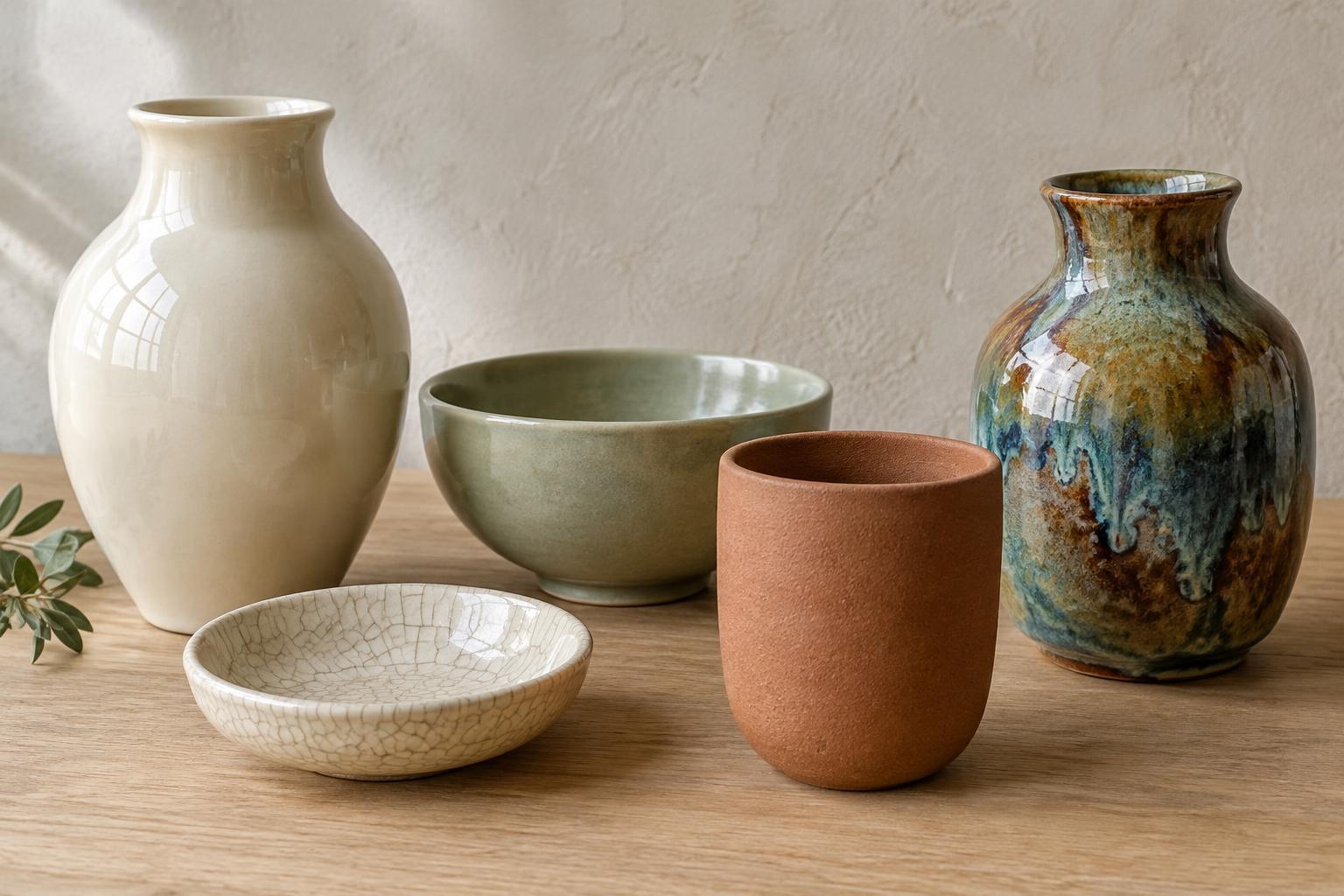
Glossy glaze reflects light clearly and often makes color appear deeper or brighter. It suits objects you want to stand out on a shelf, such as a vivid vase or a small bowl with a simple silhouette. Reflections can also draw attention to curves, ridges and other details in the form. Because the surface catches the light, fingerprints and water spots may be more noticeable on some glossy pieces.
Satin glaze falls between glossy and matte. It has a soft sheen rather than a mirror-like reflection, so it can bring out a form without competing with nearby textures. A satin-finished vessel often sits comfortably beside wood, linen and other natural-looking materials. Descriptions vary among makers, though: one person’s satin may look nearly matte, while another’s has a gentle shine.
Matte glaze scatters light and gives a quieter appearance. It can emphasize shape and make a bold color feel subdued. Matte does not necessarily mean rough; some matte surfaces are smooth to the touch, while others have a dry or slightly textured feel. If you are choosing a frequently handled piece, consider whether that texture feels pleasant and whether marks are easy to wipe away.
Finishes with visible variation
Crackle glaze has a network of fine lines within the glaze surface. These lines, often called crazing, may be intentional and can give an object an aged or intricate appearance. They may become more visible if color settles into them. Because crackle surfaces vary, do not assume that a crackle-glazed piece is suitable for food, drink or holding water; check its intended use with the maker.
Reactive glazes change appearance through interactions among glaze ingredients, the clay body and firing conditions. The result may show flowing color, speckles, darker edges or areas of different opacity. That variation is part of their appeal, especially when a group of cups or vases shares a palette but no two look exactly alike. If you need a closely matched set, examine the individual pieces rather than relying only on a finish name.
You may also encounter crystalline or heavily speckled finishes. A crystalline glaze displays visible crystal-like patterns, while a speckled finish has small contrasting marks distributed across the surface. These terms describe an effect more than a single level of shine. A piece can, for example, be both speckled and glossy.
Choose for use, light and surroundings
Start with the object’s job. A display vase gives you room to choose an unusual surface simply because you enjoy looking at it. For a mug, plate or serving bowl, confirm that it was made for that purpose and follow the maker’s care instructions. Labels such as “dishwasher safe” or “microwave safe” should come from the maker, not from how smooth or shiny a glaze appears.
Next, look at the piece where it will live. Strong daylight can make a gloss finish lively but may produce distracting reflections; softer light can reveal subtle shifts in a satin or reactive glaze. Against a patterned wall or crowded shelf, a quiet matte piece may provide a resting point. On an otherwise simple table, a variegated glaze can supply enough detail without an elaborate arrangement.
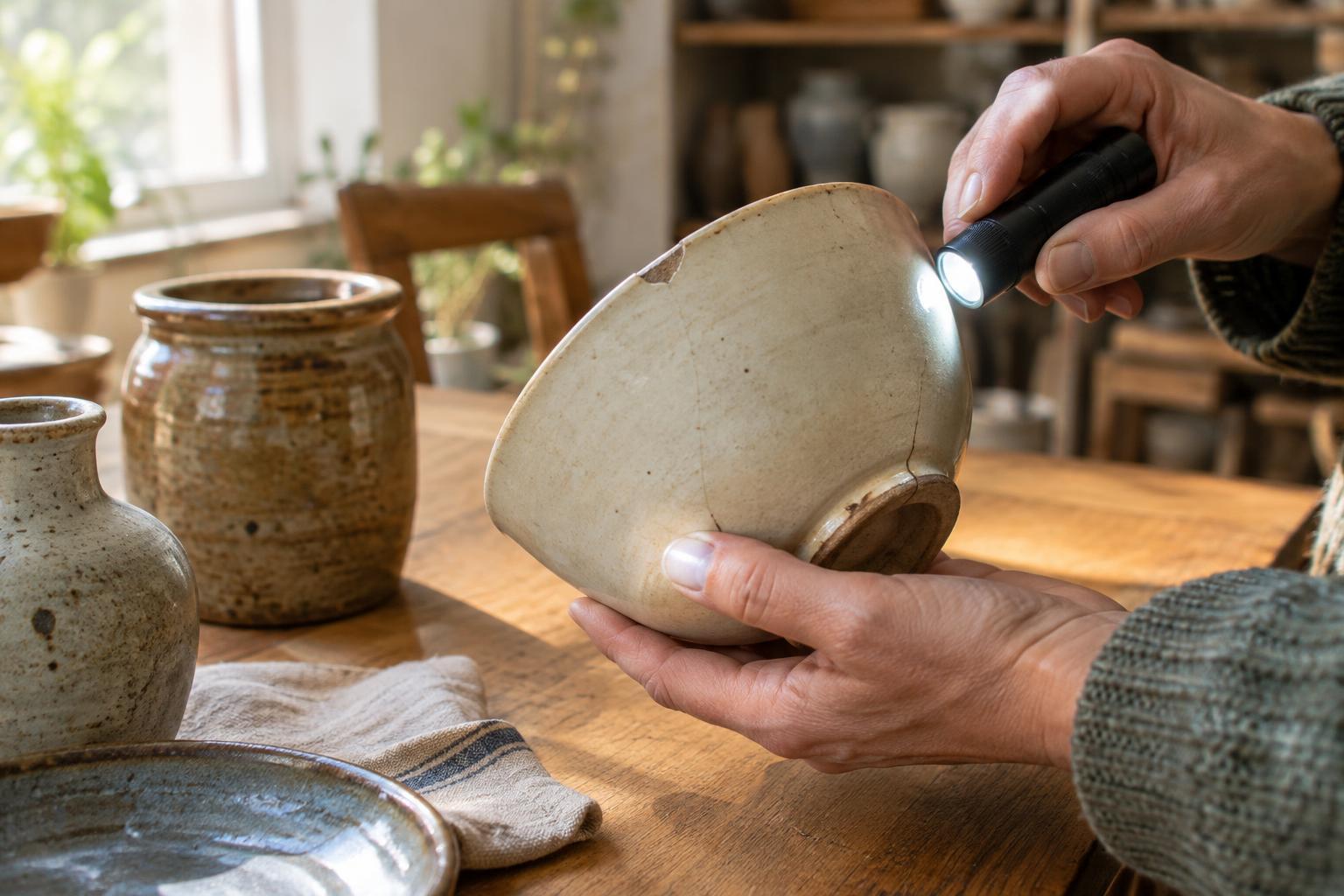
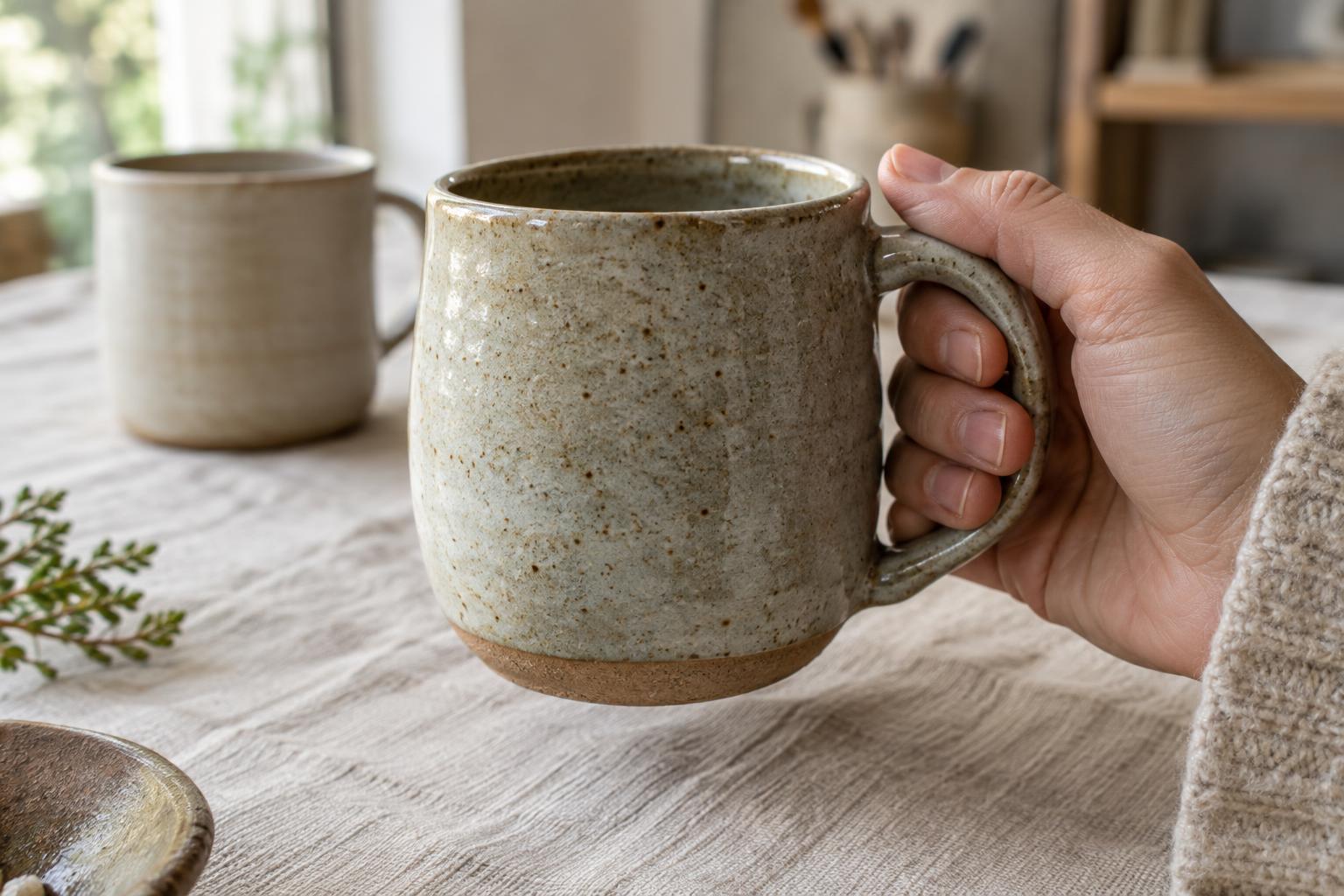
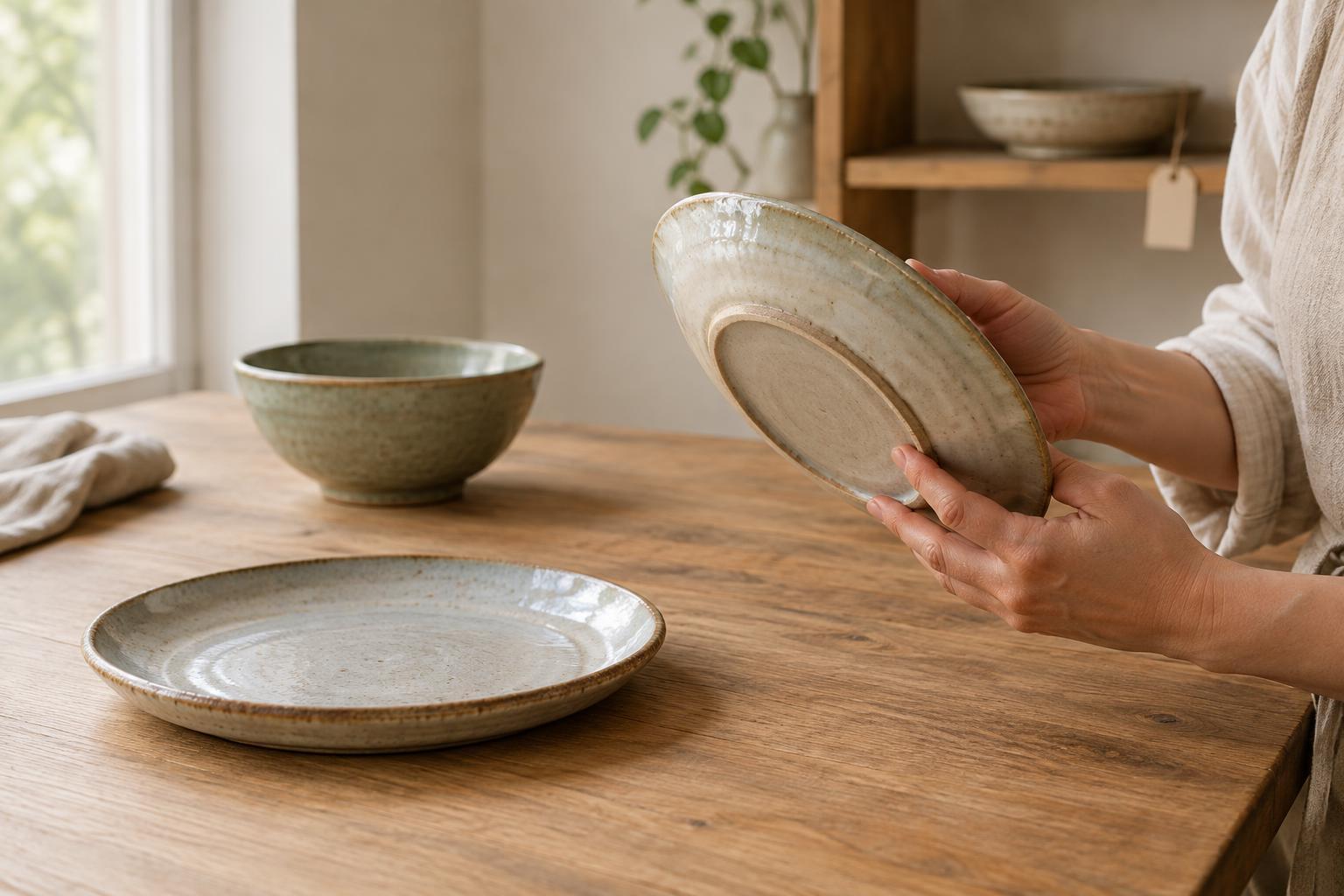
Finally, consider how the finish feels in your hand. Photos can show color and shine, but they cannot fully convey weight, rim texture or the feel of a handle. When shopping in person, turn a piece gently and look at its base as well as its glazed areas. Small differences in thickness and color are common in handmade work; decide whether they add character for you or interfere with how you want to use the object.
Keep the surface looking its best
Follow any care guidance supplied with a ceramic piece. When instructions are unavailable, gentle hand washing with a soft cloth or sponge is a cautious starting point for everyday cleaning. Avoid abrasive pads on finishes that might scratch, and let decorative pieces dry thoroughly after cleaning. If a surface develops persistent staining, a new crack or an unexpected change in texture, pause using it for food or drink until you can check with its maker.
The best finish is not a single category. It is the one that suits the object’s purpose and gives you something to enjoy each time you see or handle it. Learning to recognize a few common glaze effects makes it easier to choose deliberately, whether you are building a practical cupboard or arranging a shelf of favorite forms.