Start with the dish’s intended use
The most useful first question is whether the dish was made and sold for food contact. A plate from a dinnerware range has a different intended purpose from a decorative wall plate, even if they look alike. Check the packaging, product description or any information supplied by the maker. “Food-safe” or “suitable for food contact” is more relevant than broad descriptions such as “handmade,” “natural” or “glazed.”
If the purpose is unclear, ask the seller or maker whether the finished dish is intended for serving food. Be specific about how you hope to use it: holding dry snacks, serving hot soup and storing acidic leftovers are not identical demands. If reliable information is unavailable, use the dish for display or for objects such as keys rather than assuming it is suitable for meals.
Understand what appearance cannot tell you
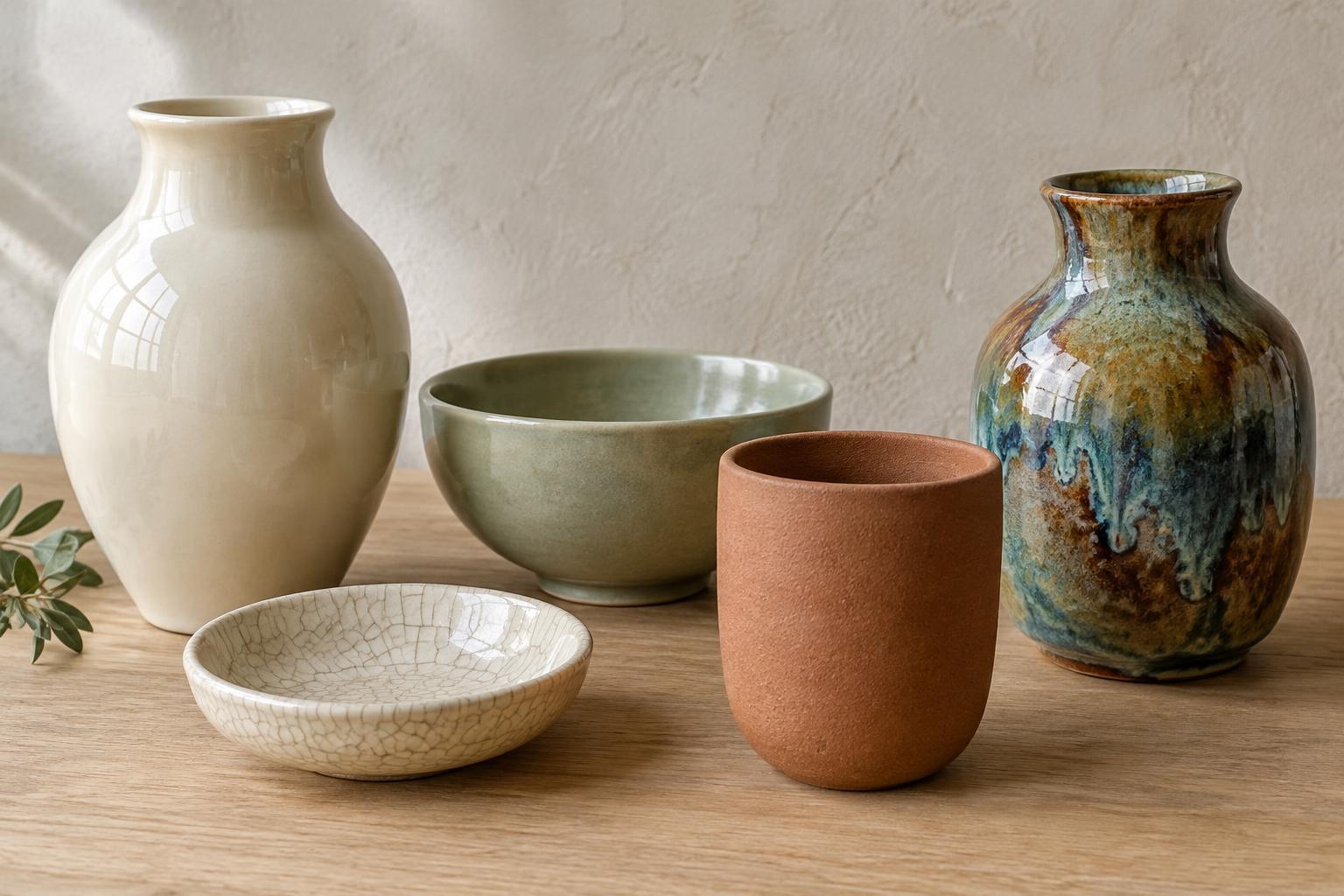
A smooth, shiny surface is not proof of food safety. Glazes vary in composition, and the finished surface can be affected by how a piece was fired. Certain metals in ceramic glazes or decorations may be a concern if they can transfer into food. This is one reason a maker’s knowledge of the materials and the finished ware matters more than how the glaze looks.
Color alone is not a reliable test, either. An unglazed clay surface is not automatically unsafe, and a clear glaze is not automatically safe. Unglazed or porous areas can absorb moisture and be harder to clean, especially on a dish meant for repeated use with wet foods. Look closely at the surfaces food will touch, including the inside of a bowl and any decoration on a plate’s eating surface.
Check labels and ask useful questions
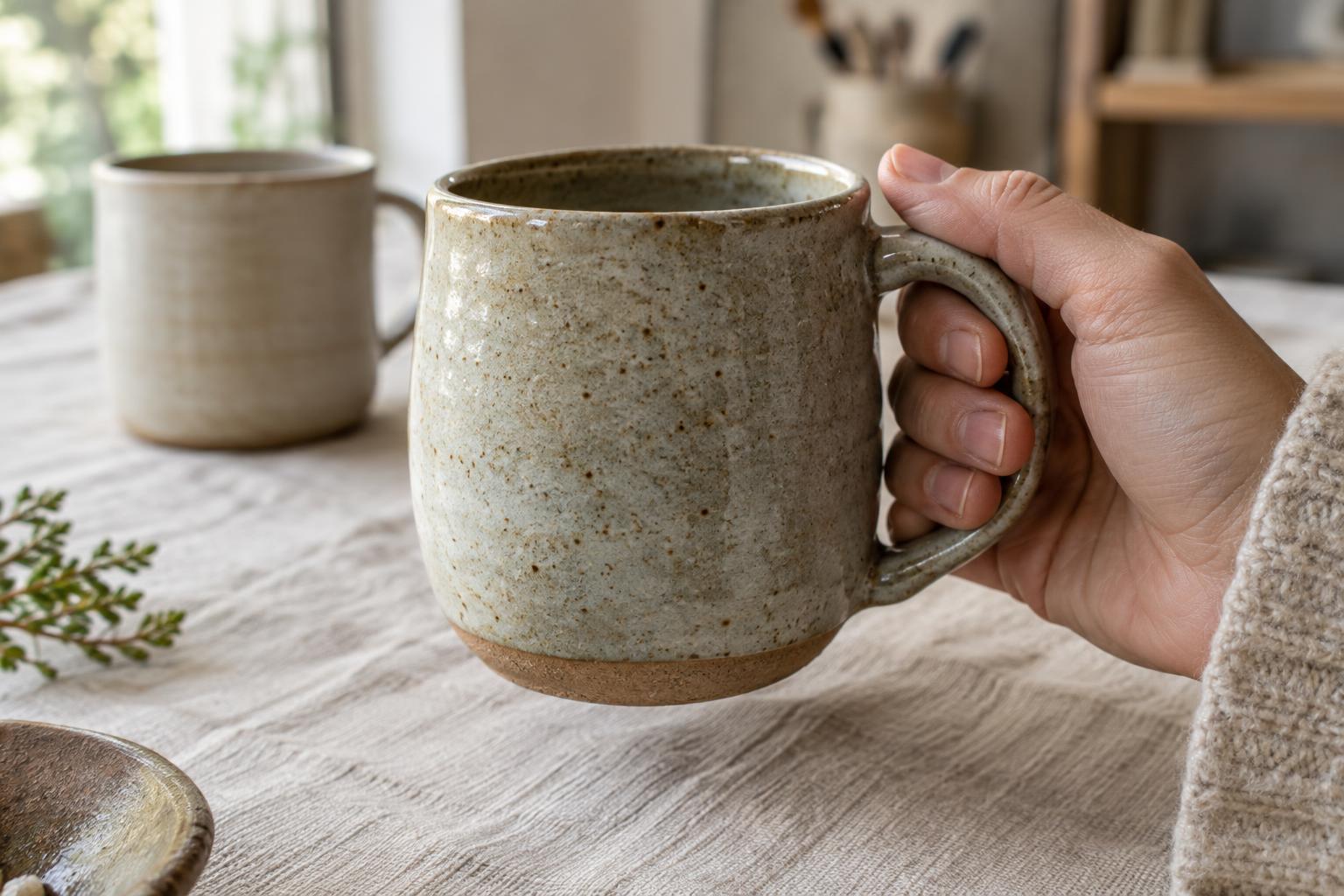
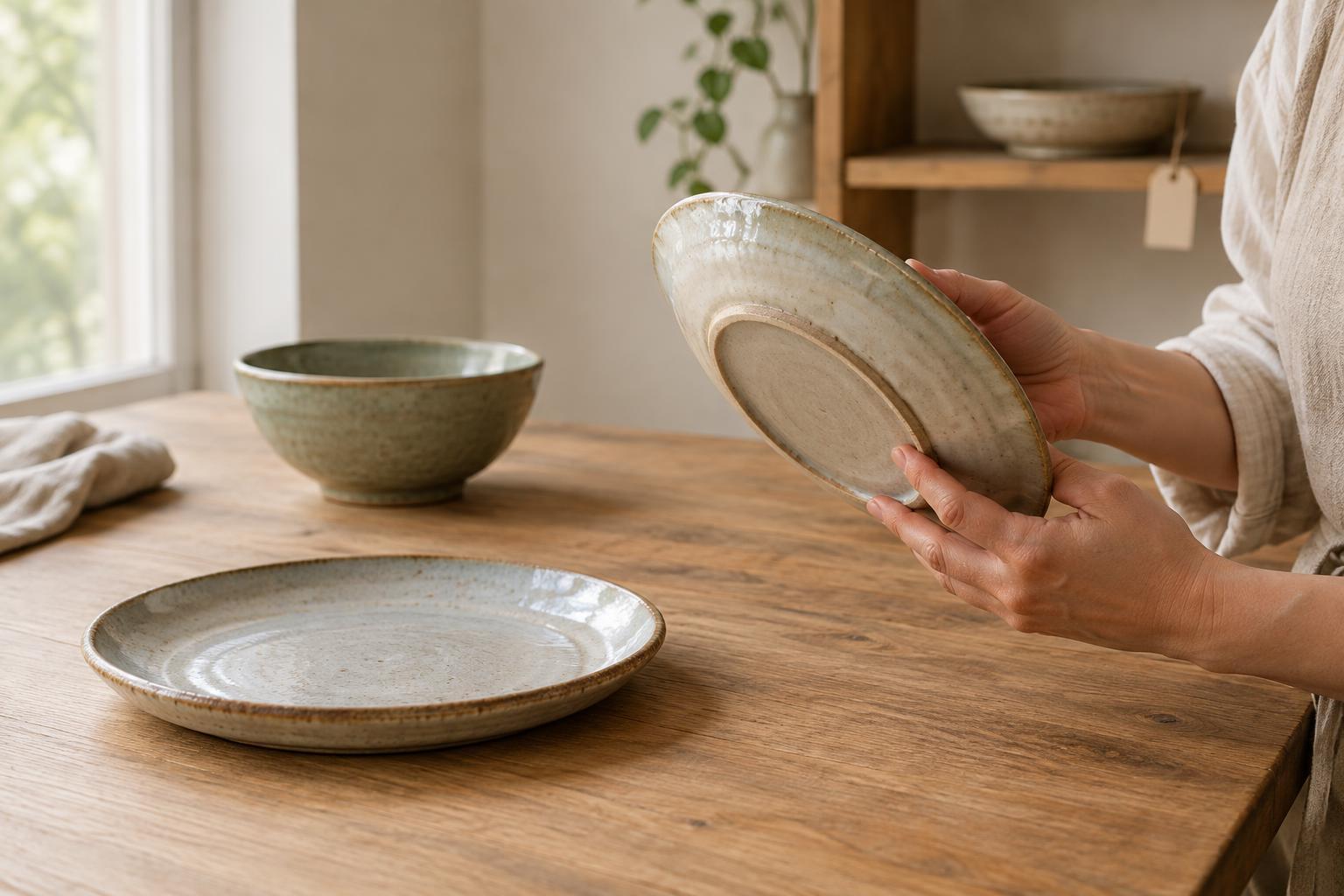
For a new dish, keep the maker’s care information. A food-contact statement gives you a clearer basis for use than an informal assurance that the piece is “probably fine.” If you are buying handmade ceramics, you can ask whether the maker uses materials intended for dinnerware and whether the finished pieces have been assessed for their intended food use. A conscientious maker should also be able to tell you if a particular glaze, metallic detail or decorative technique is for display only.
Older, secondhand and unidentified ceramics call for more caution. A stamp may identify a manufacturer or pattern without telling you whether the dish is suitable for food contact. “Dishwasher-safe” and “microwave-safe” address different questions; neither should be treated as a substitute for food-contact guidance. Likewise, a dish described as food-safe is not necessarily suitable for an oven, microwave or dishwasher. Follow the specific care directions for each use.
Inspect condition before serving
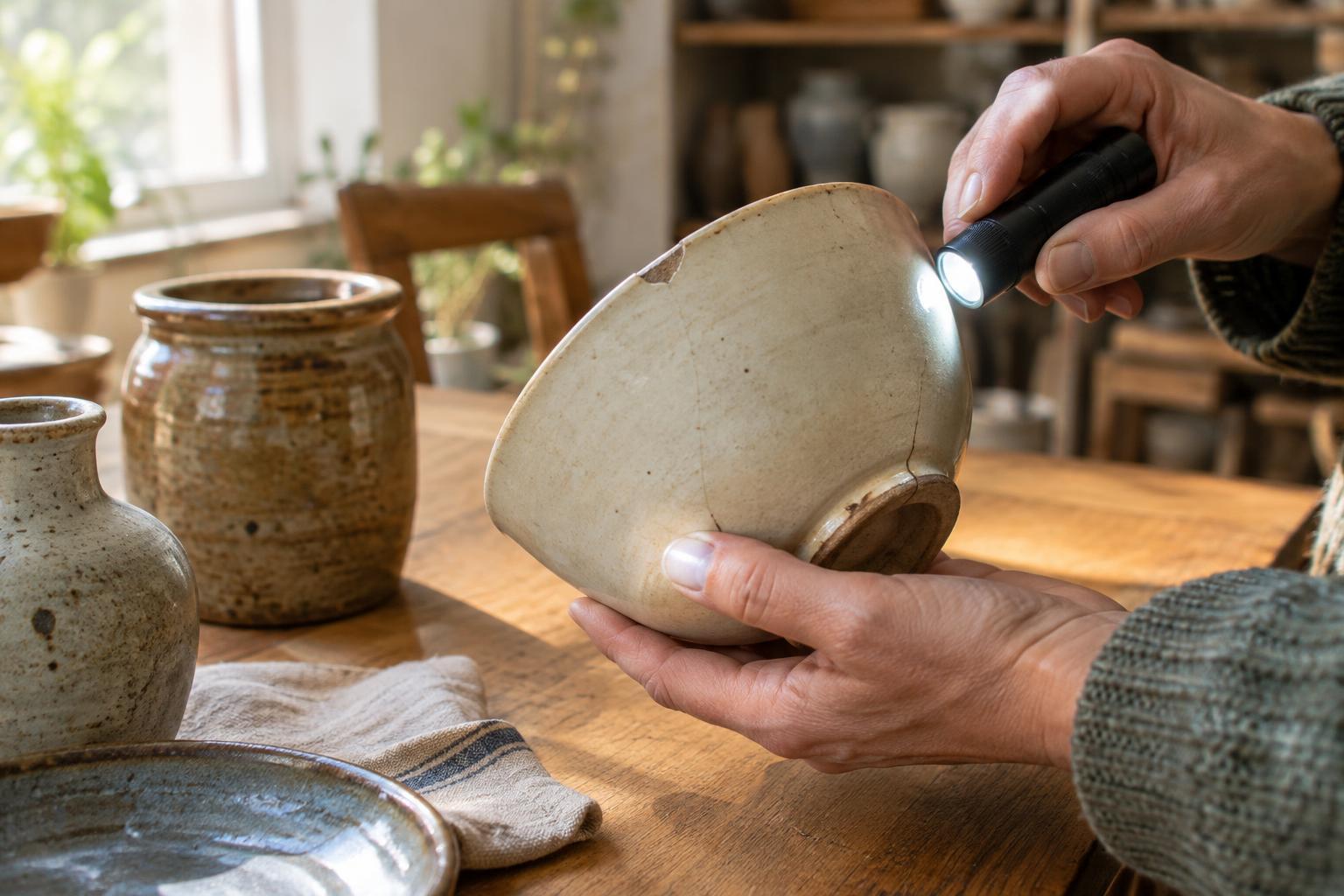
Even a dish originally intended for food can become a poor choice for everyday meals if it is damaged. Check for chips on the rim, cracks through the body and areas where the glaze has flaked away. These spots can trap residue, be difficult to clean or leave a sharp edge. Fine networks of lines in a glaze, often called crazing, deserve attention too: they may make a surface harder to keep clean, particularly when the dish is used with liquids.
Not every visible line is damage; some decorative finishes are designed to look crackled. If you cannot tell whether a surface is sound and cleanable, avoid using it for food. Set aside a damaged dish rather than trying to make it suitable for serving with a household sealant, paint or glue. Such repairs may have their own limitations around food contact, heat and washing.
Know the limits of at-home checks
A vinegar soak, a change in taste or a look at the glaze cannot establish that a dish is safe. Consumer test kits may check for a particular substance under particular conditions, but a negative result is not a complete assessment of every possible issue. If certainty matters for an unidentified piece, seek appropriate professional testing or choose dinnerware with clear food-contact information instead.
A simple decision rule is helpful: use well-documented, sound ceramics as directed; ask questions when the intended use is unclear; and keep uncertain or damaged pieces decorative. That approach lets you enjoy a distinctive dish on a shelf or table without asking it to do a job it may not have been made to do.