Comfort starts with the way you lift it
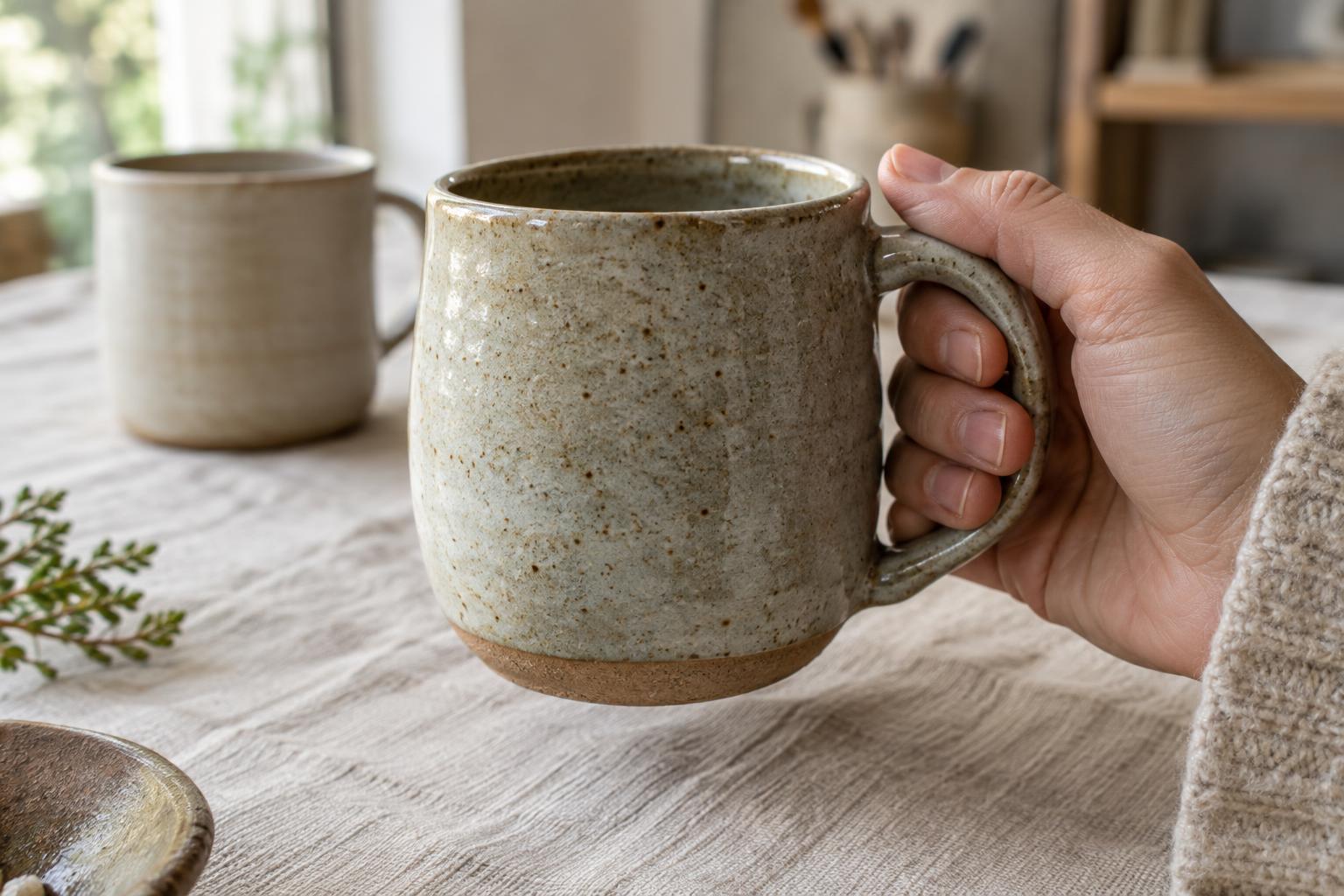
The first test of a mug is not how it looks on a shelf, but how naturally you pick it up. A comfortable handle gives your fingers a place to rest without forcing them into a tight curl. Its opening should have enough room for the fingers you prefer to use, even when the mug is full and you are lifting it carefully. There is no single ideal number of fingers: some people like a roomy loop, while others feel more secure holding a smaller handle with one or two fingers.
Look beyond the size of the opening. A very thin handle may press into your fingers under the weight of a drink; a very thick one can be difficult to grip. Rounded edges generally feel gentler than sharp corners. Where the handle joins the body also matters. If its upper attachment sits too close to the rim, your knuckles may crowd the cup; if the lower attachment is poorly placed, the mug may feel as though it wants to tip forward.
Weight and balance work together
Handmade ceramics vary in wall thickness, base thickness and shape, so two mugs of similar capacity can feel quite different. A substantial mug can feel reassuring when it is resting on a table, yet tiring if you carry it around. A very light mug may be pleasant to lift but feel less steady to someone who prefers a broader base. Comfort is less about finding the lowest weight than finding a weight that suits how you use the mug.
Balance becomes clearer when you lift a mug with water in it. Notice whether your wrist has to work to keep it upright, or whether the vessel settles into a comfortable position. A wide, heavy body paired with a small handle may demand a firm pinch. A handle that projects far from a narrow body can also feel awkward. If you are choosing a mug in person, ask whether you can hold it with water before deciding; an empty mug does not tell the whole story.
The rim shapes the drinking experience
A mug can fit your hand perfectly and still be unpleasant to drink from. The rim meets your lips at every sip, so it should feel smooth and considered. A thick, rounded rim offers a different experience from a thin, lightly tapered one. Neither is automatically better: the important question is whether the edge feels comfortable and lets you drink without needing to tilt the mug at an awkward angle.
Body shape plays a part too. A mug that flares widely at the top may be easy to see into and wash, but its rim can meet your face differently from that of a straighter vessel. A narrow opening may help contain splashes as you walk, while making the inside harder to reach with a sponge. If you make mugs, testing several rim profiles on finished pieces is more useful than judging them only while the clay is wet.
Surface and heat affect the grip
Texture gives handmade pottery much of its character, but a heavily ridged area where the fingers rest can become distracting over a long drink. Check the inside of the handle, the underside of the base and any unglazed areas you are likely to touch. They need not be glossy, but they should not feel abrasive or catch on the skin. A stable, flat-enough base also helps the mug feel dependable each time you set it down.
Hot drinks reveal another aspect of comfort. Some mug walls and handles become warmer than others, depending on their form, thickness and construction. A handle should offer a practical way to lift the mug without relying on gripping its hot body. When trying a new mug, begin with a cautious touch rather than assuming the handle will stay cool. A glaze can change how slippery the surface feels, especially when hands are wet, so consider both dry and damp handling.
A simple way to choose—or refine—a mug
To assess a mug, pick it up the way you would at home. Let your fingers settle into the handle without arranging them deliberately. Lift, pause and set it down. Check for pressure points, knuckle clearance and any urge to tighten your grip. Then imagine the same action with the mug full. If possible, repeat it with water and take a sip to test the rim and balance together.
For makers, these small observations can guide the next batch. Keep the qualities that work, then change one detail at a time: widen the handle opening, soften an inner edge or adjust the rim. For buyers, comfort is personal enough that a mug need not meet a universal ideal. The best everyday choice is one that feels easy to lift, pleasant to drink from and inviting to reach for again.