Start with a slow look at the whole piece
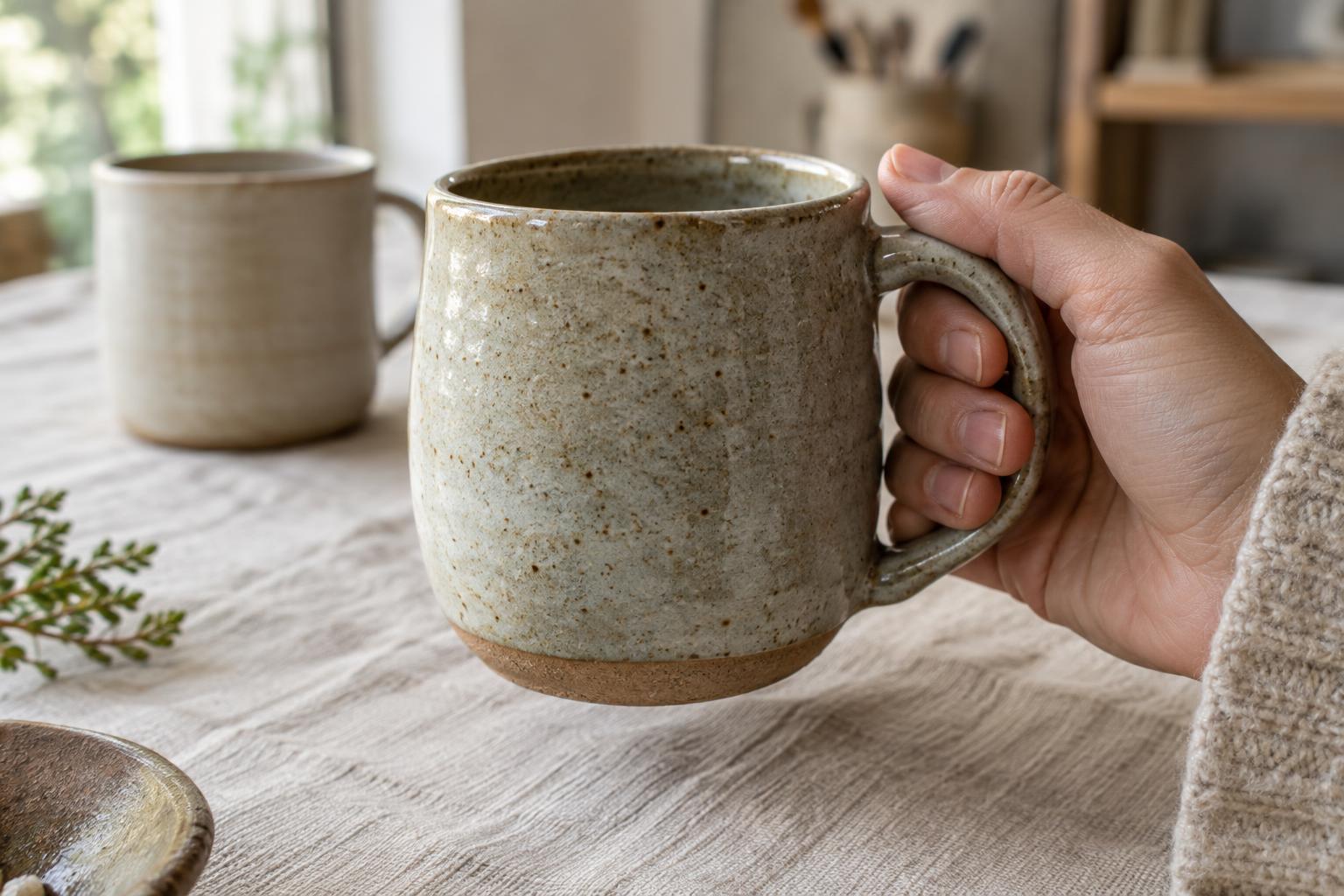
Secondhand pottery can be appealing precisely because it has lived in someone else’s home. A little wear may suit a decorative bowl or vase, but damage is easier to judge before you decide where the piece will go. Hold it in good, even light and turn it slowly. Look at the overall shape first: does the rim appear level, does the piece sit steadily, and are handles or spouts aligned as you would expect?
Next, consider how you hope to use it. A small flaw may be acceptable in an object displayed on a shelf but bothersome in a mug you intend to handle every day. Decide what matters to you before concentrating on individual marks. That makes it easier to distinguish a charming sign of age from damage you would regret overlooking.
Check the places chips like to hide
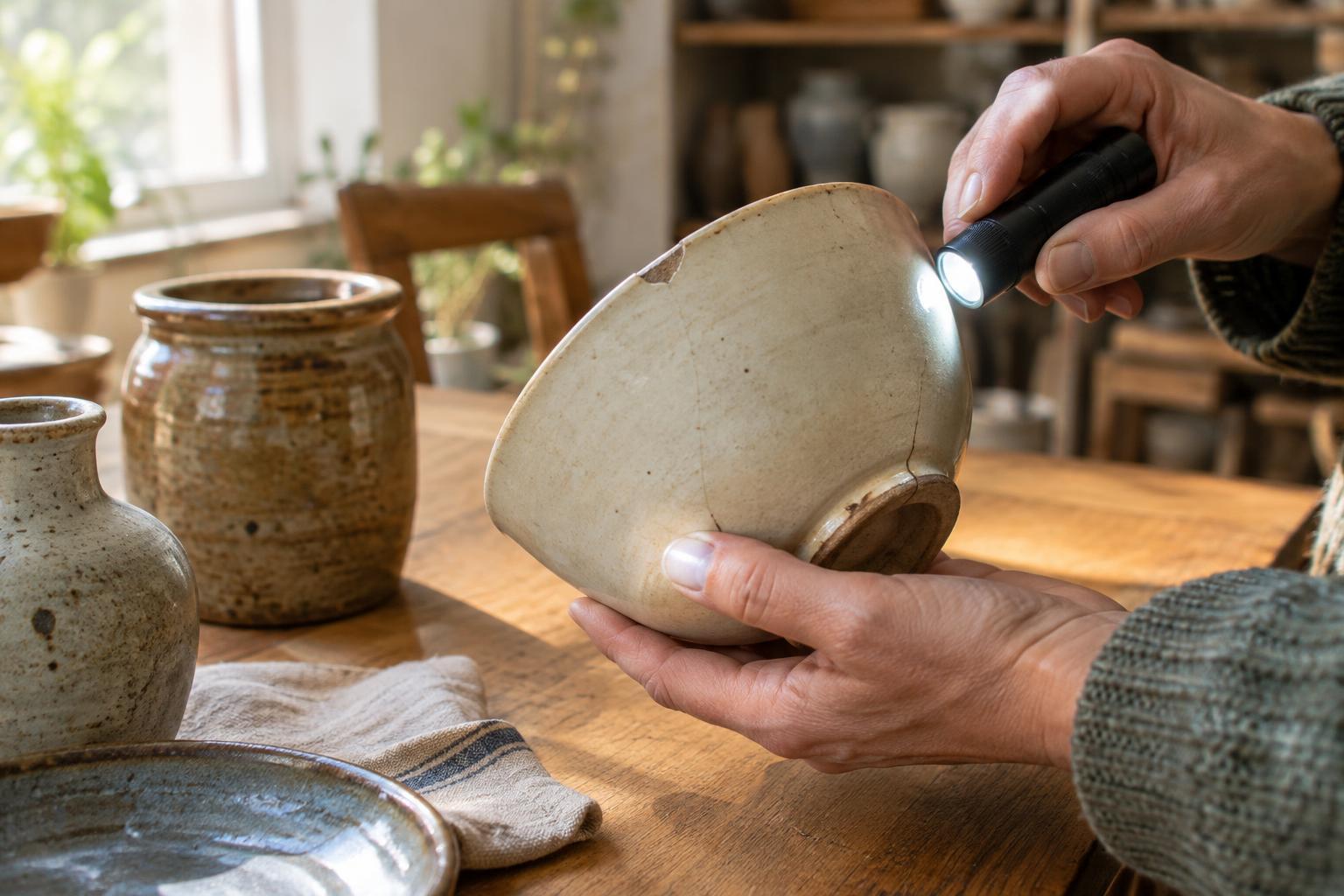
Run your eyes around the rim, then inspect the foot ring, corners, handles, lid edges and the end of any spout. These projecting areas are more likely to have met a hard surface. Tilt the piece so light falls across an edge; a chip may show as a pale patch, a break in the glaze or a change in the outline. On patterned pottery, a small missing section can be less obvious when viewed straight on.
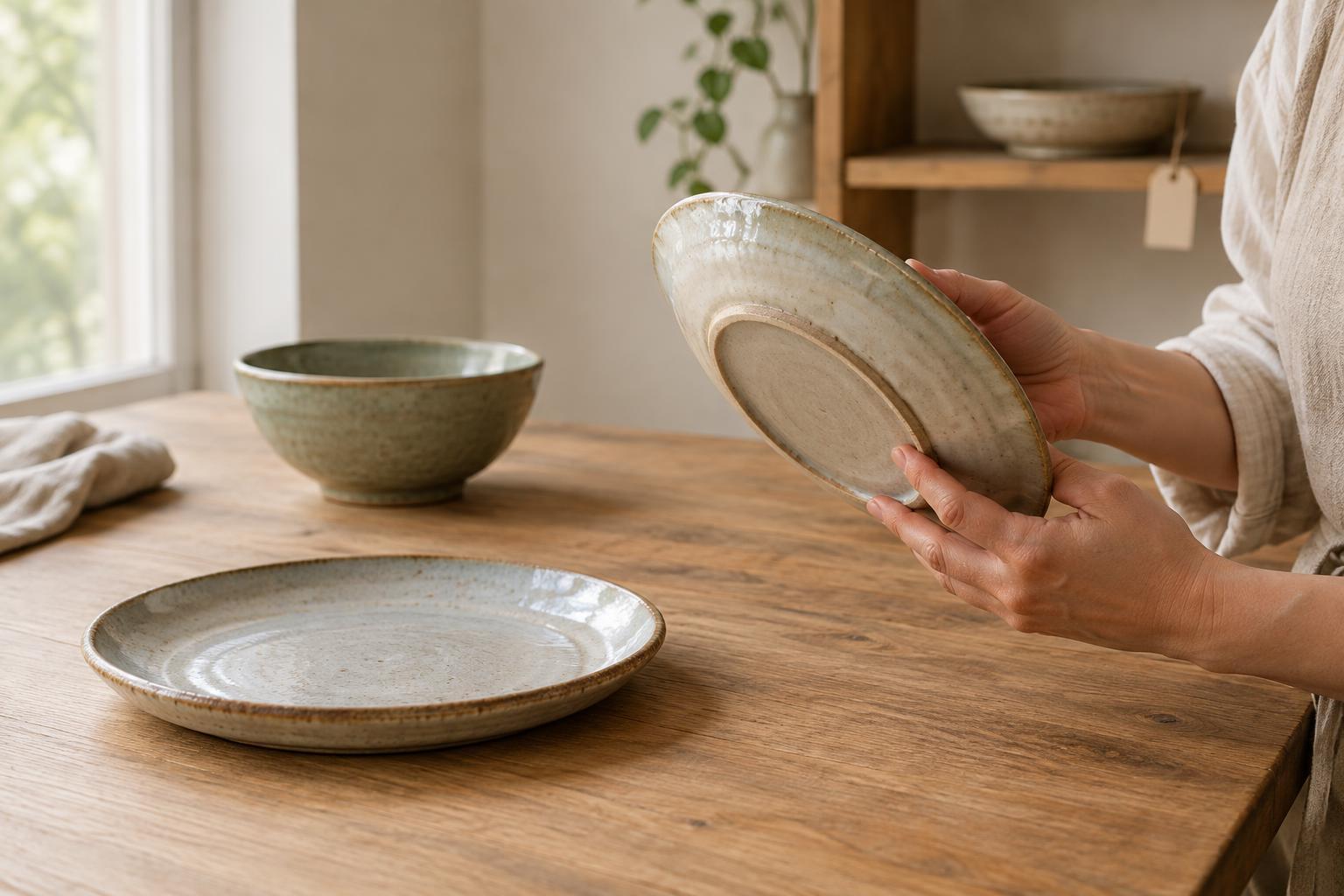
If the seller permits handling, turn the piece over carefully rather than relying on a view from above. The underside can reveal chips that are hidden when an object is standing. A gently worn base is not the same as a fresh-looking break. Avoid testing an edge with your fingernail or scraping at a suspicious spot: a close look is usually more useful, and rough handling can cause further damage.
Look for cracks, not just lines
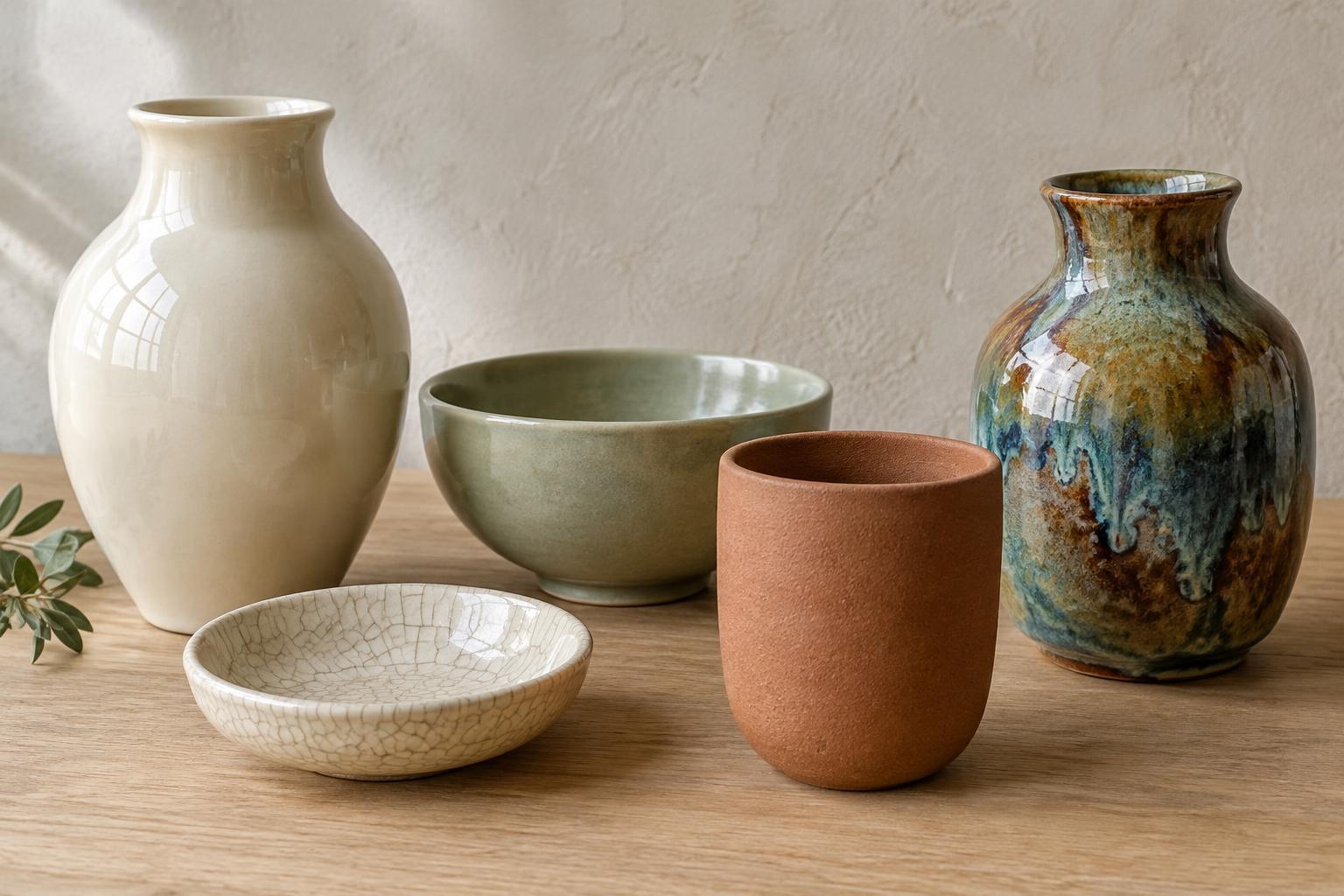
Fine lines in a glazed surface may be crazing: a network of hairline lines in the glaze rather than an obvious break through the clay body. Crazing can affect appearance and may make a piece less appealing for food use, but it is not automatically the same as a structural crack. A crack may appear as a line that continues across an edge, travels from a handle join or remains visible on both the inside and outside of a vessel.
Examine suspicious lines from several angles. Look for a slight gap, a change in level on either side or discoloration concentrated along one line. Pay particular attention to handle attachments and the base of a vessel, where a crack may matter more to its practical use. Some marks are difficult to identify without expert assessment, so if you cannot tell whether a line is surface-deep, treat it as a possible crack when deciding what to pay or how to use the piece.
Spot signs of an earlier repair
Repairs are not necessarily a reason to walk away. A carefully repaired object can still be an enjoyable decorative find. What matters is knowing the repair is there. Check for a line that changes direction abruptly, a section with a different sheen or texture, paint that does not quite match, or filler around a former chip. Inside a vessel, compare the color and finish on either side of a suspected join.
Use ordinary light and a close view before considering any other test. A tap test is not a reliable way to declare pottery sound: shape, thickness and glaze all affect the noise a piece makes. Nor should you use solvents or pick at a finish to investigate it. If a seller knows the piece’s history, ask what was repaired and whether the work is intended for display only. If they do not know, judge the object on what you can see.
Match the condition to the intended use
An attractive plate with a repaired edge may look lovely propped on a shelf, while a cracked jug could hold dried stems without needing to contain water. For items intended to hold liquids or touch food, be more cautious. An unknown coating or adhesive, a crack that traps residue, or uncertainty about the original glaze can make decorative use the simpler choice. A visual inspection cannot establish that an older piece is food-safe.
When shopping online, ask for clear photographs of the rim, base, interior, handles and any stated flaw, with one image showing the entire object. Ask whether it sits steadily and whether the seller has noticed repairs or leaks, while recognizing they may not know its full history. Before buying, balance the condition against your plans: a visible imperfection can be part of a piece’s character when you understand it and choose a suitable place for it.