Start with the table, not the flowers
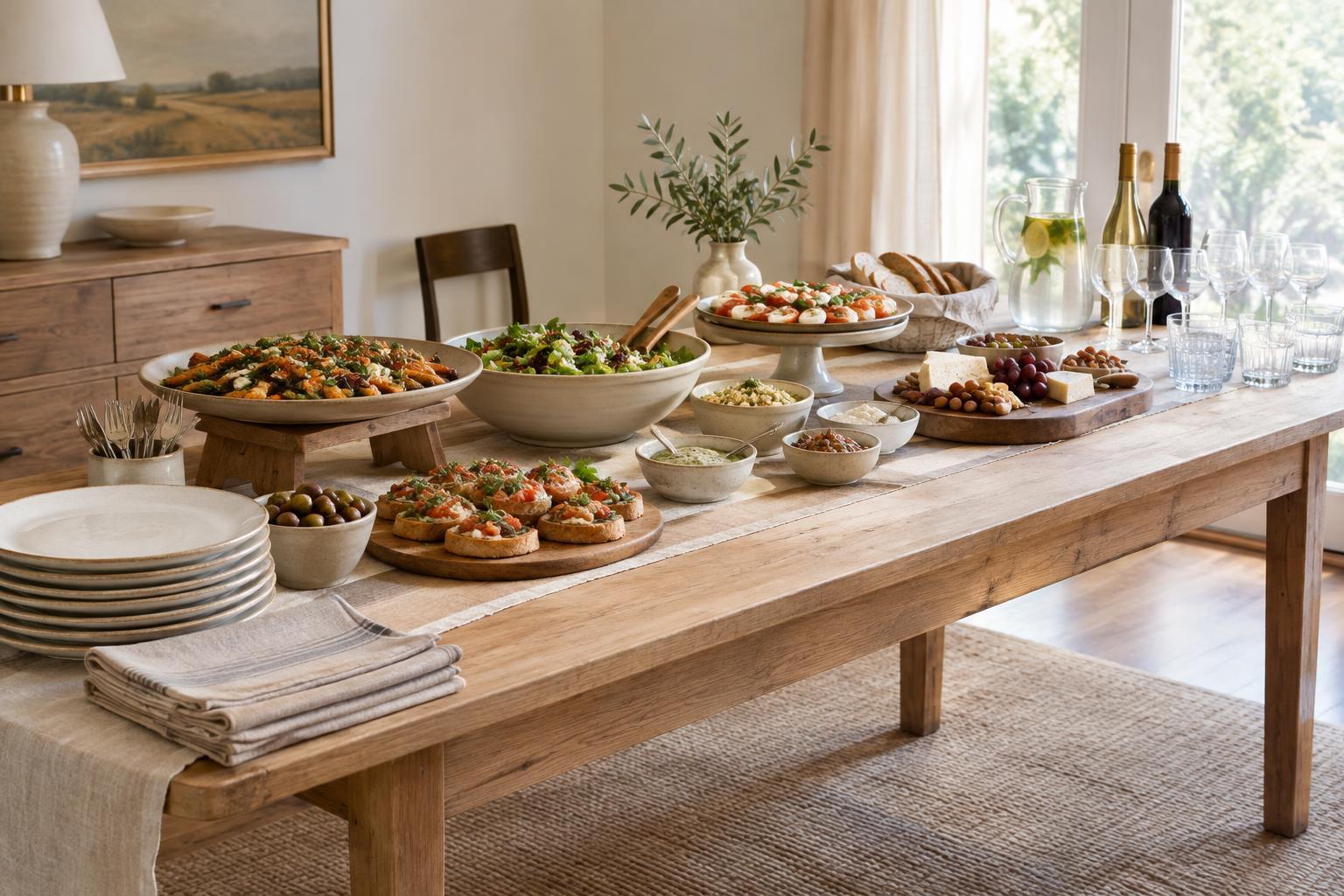
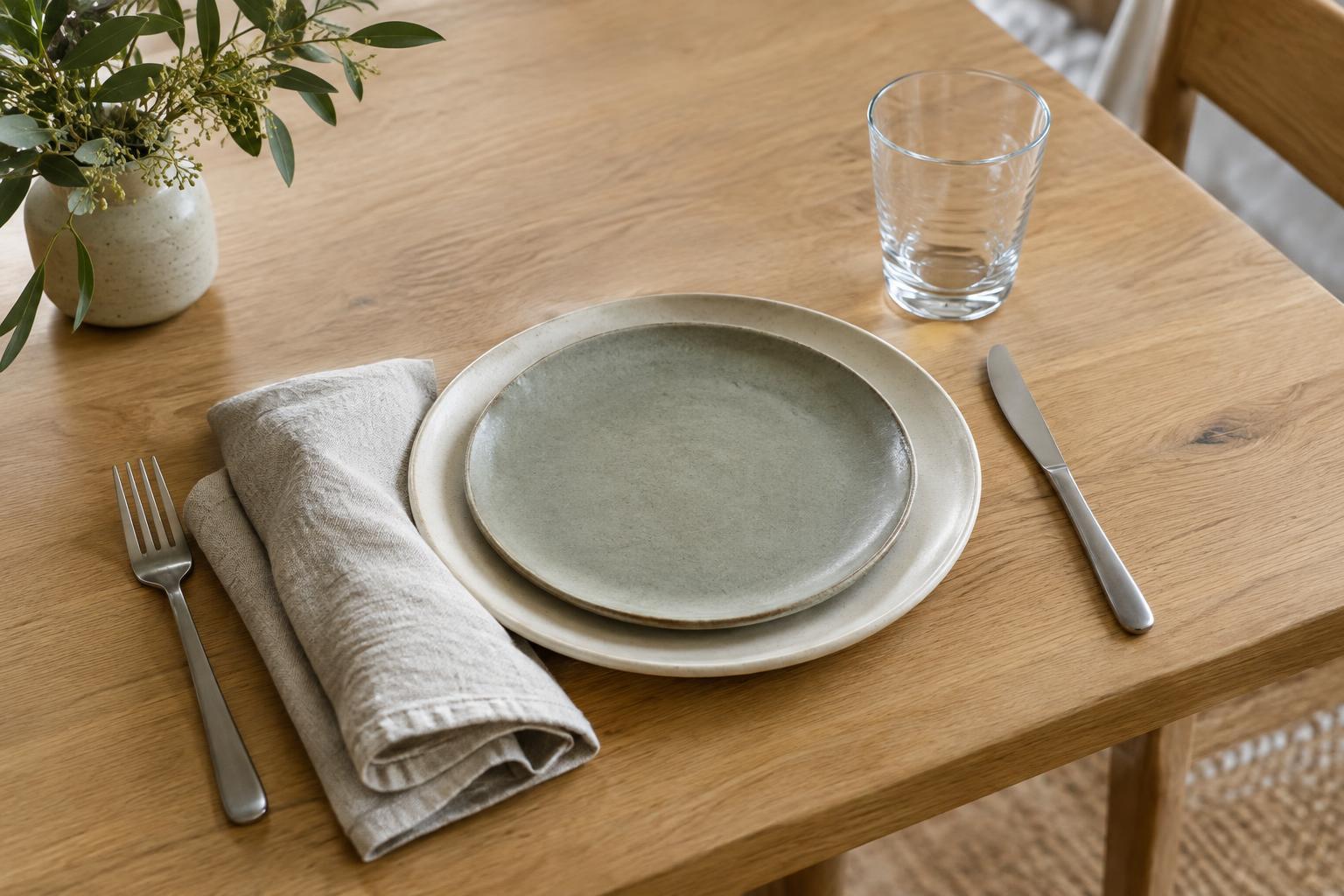
Before choosing stems, look at what the table needs to hold. A dining table may need space for plates, serving dishes and reaching hands. A side table may have only a lamp and a place to set a cup. The flowers should fit the available space rather than require everything else to move.
Mark out a possible footprint with a folded napkin or an empty vase. Leave a comfortable margin around it, especially near the edge of a narrow table. A small arrangement can still feel generous when its shape is considered: a few stems spreading gently outward often have more presence than a tight bundle in an oversized vessel. If the table is used daily, favor an arrangement that is easy to lift and return when the surface needs clearing.
Match the height and width to the setting
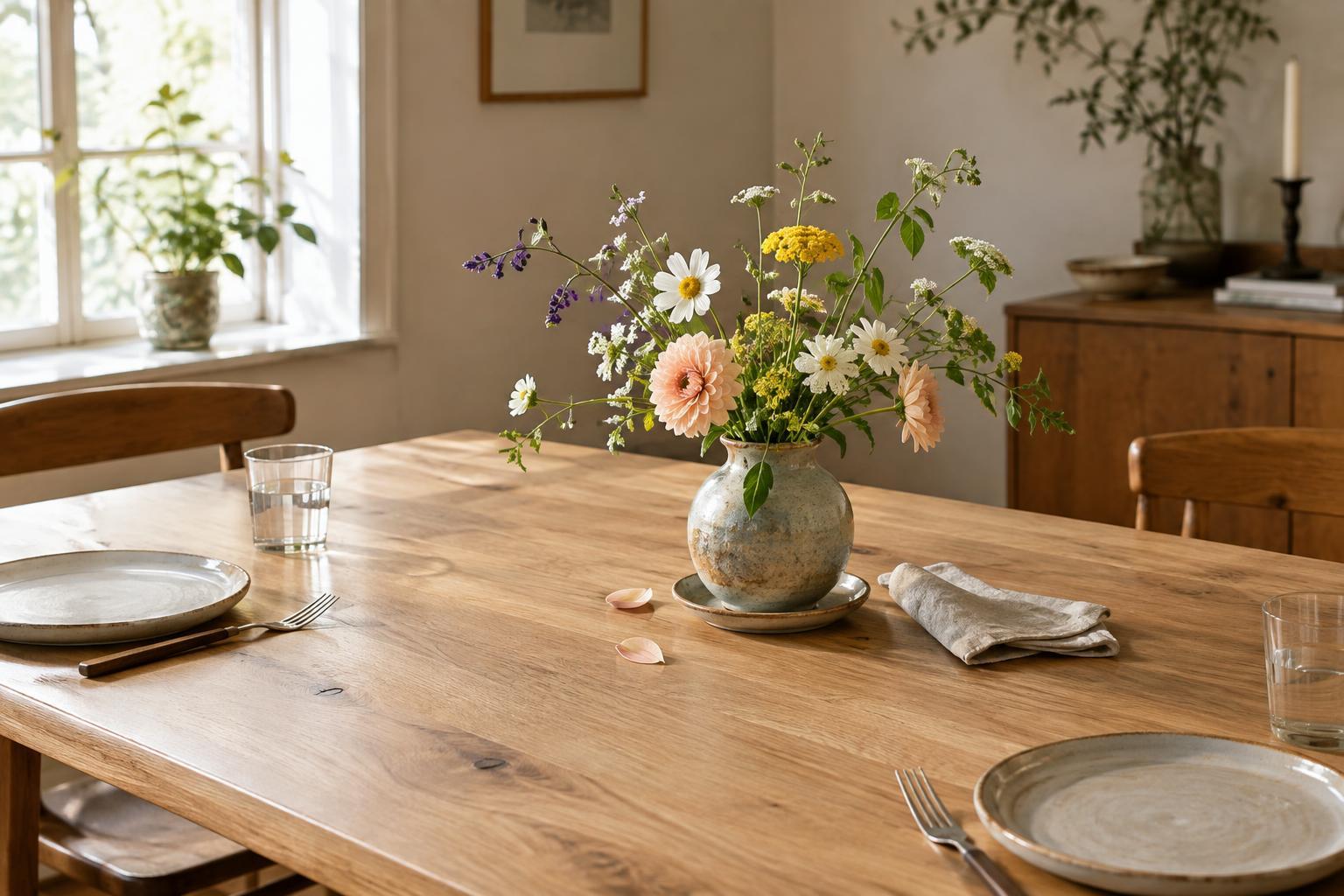
On a dining table, consider the view across the surface. People should be able to see one another without leaning around a mass of flowers. A low bowl with short stems is one option; a tall, narrow vase that keeps most of its volume above seated sightlines can also work. The awkward zone is a broad cluster at face height. Test the arrangement from a chair, not just while standing over it.
The vessel matters as much as the blooms. A heavy ceramic or thick glass vase can give tall stems a steadier base, while a shallow bowl suits flowers cut short and supported by a flower frog or other reusable holder. Keep the widest part of the arrangement in proportion to its surface: flowers that overhang a small table may brush against sleeves or invite a knock. Trim leaves below the waterline and turn the vase as you work so the arrangement looks balanced from more than one seat.
Place it where the table works best
The center is a natural starting point, but it is not always the most useful one. On a long dining table, two or three modest arrangements can create a rhythm without making one large obstacle. Leave clear spaces where shared dishes are likely to go. For a round table, a single compact arrangement usually preserves access from every side.
On an entry or side table, an off-center vase can make room for a tray, books or a practical item such as keys. Keep stems clear of lampshades, candles and frequently opened doors or drawers. If a table sits against a wall, the arrangement can be fuller toward the room, but avoid pushing foliage so far back that it rubs against the wall. Check the placement at the time of day the table is used: strong light or a nearby heat source may make a spot less suitable for cut flowers.
Plan for drips, splashes and falling petals
Water spills often happen during ordinary tasks: carrying a full vase, adding water or pulling out a stem. Fill the vessel below the rim and give its outside a wipe before setting it down. For a delicate tabletop, place the vase on a stable, water-resistant tray or saucer large enough to catch a small drip. A cloth runner may look attractive, but it will not stop moisture from reaching the surface beneath it.
Test the vase for leaks before using it on a valued table, particularly if it is handmade or has an uncertain glaze. If you use a loose flower frog or support inside a shallow dish, make sure it sits securely and cannot slide when the flowers are adjusted. Remove fallen petals and leaves during the day; damp plant matter left under a vase or on a table can stain some finishes. When moving the arrangement, lift it rather than dragging its base across the surface.
Keep the arrangement useful as it changes
Cut flowers rarely stay in exactly the shape you first make. Stems may lean, blooms may open wider and individual flowers may fade before the rest. Check the arrangement from seated height every day or two, and remove any stem that crowds a place setting or drops petals where food will be served. Refresh the water and clean the vessel as needed, following any care guidance supplied with the flowers.
As the arrangement thins, move the remaining stems to a smaller vase instead of trying to preserve its original size. One or two flowers beside a stack of plates or on a side table can feel intentional when the vessel suits them. Good table styling is flexible: the arrangement should be pleasant to look at, simple to care for and easy to live around.