Start with the meal, not the decoration
Before arranging anything, decide what guests will actually need. A one-course supper may call for one dinner plate, a napkin, a drinking glass and the utensils used for that dish. A small bowl or side plate can be added if the menu calls for it. Starting with the meal keeps the setting useful and prevents decorative layers from becoming obstacles.
Give each person a comfortable area at the table. Set out the main plates first, then sit in a chair and check whether there is room to reach the glass and move the utensils. If the table is narrow, leave out pieces that have no clear purpose. A simple setting looks more intentional when every item has space around it.
Build the plate stack from large to small
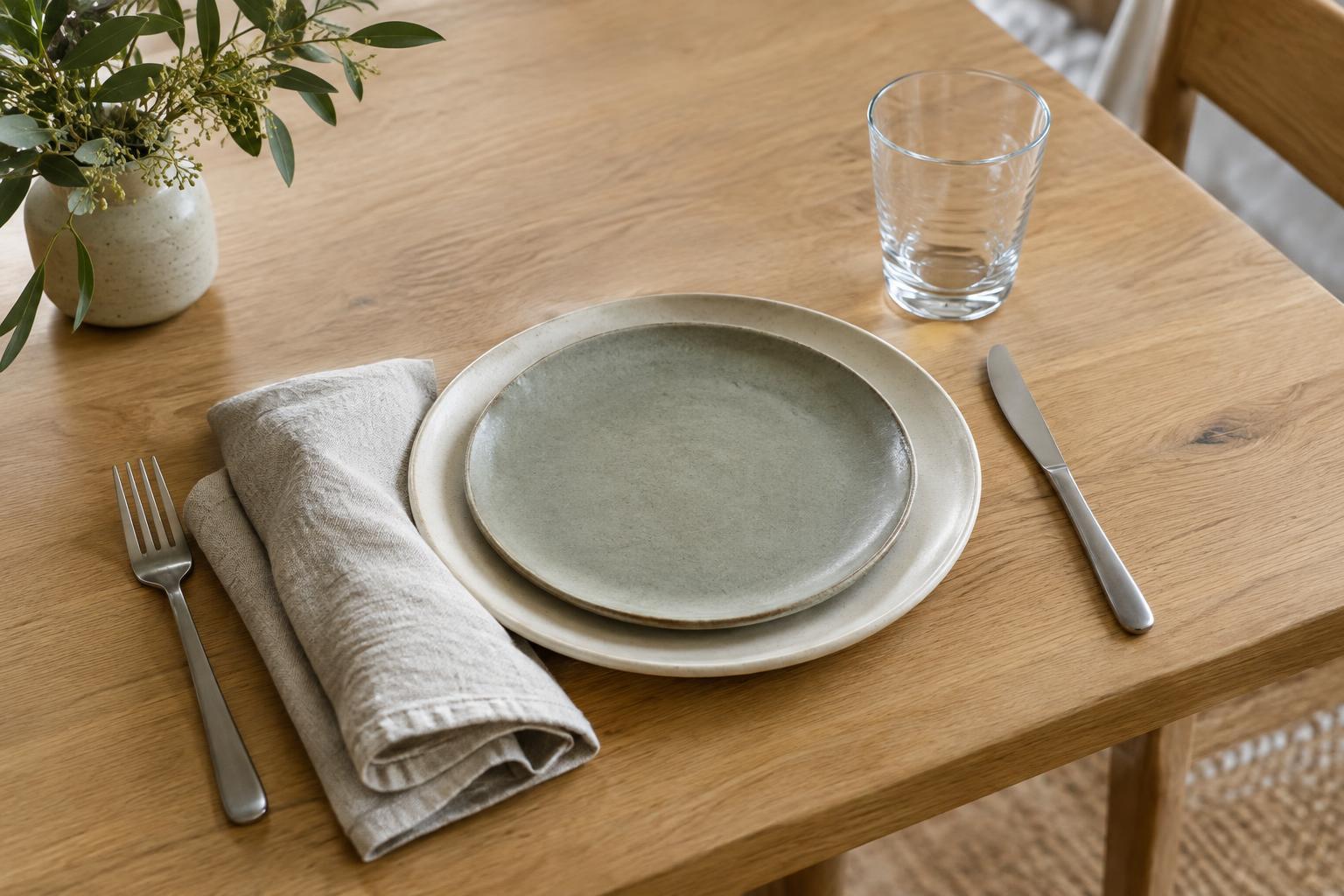
Use the dinner plate as the anchor, roughly centered in front of the chair. If serving a starter in a bowl or on a smaller plate, place that piece on top. The change in size creates a visible border around the upper layer. Plates need not be a matching set: a plain dinner plate can make a patterned bowl stand out, while two similar colors can create a quieter effect.
Pay attention to how the pieces fit together. A small plate should sit steadily on the larger one, and a bowl should not rock or hide the plate beneath it completely. If the top dish will arrive filled from the kitchen, there is no need to display it in the stack beforehand. Let the dinner plate stand alone until it is needed.
A placemat or tablecloth can act as a soft layer beneath the dishes, but it is optional. On a bare tabletop, the shape of the plate becomes more prominent. On a patterned cloth, a simple plate often gives the eye a place to rest.
Use the napkin to add softness
Napkins bring a different texture to a setting dominated by smooth plates and glass. Fold a cloth napkin loosely and place it beside the plate, or set it across the top plate if that dish is empty. A straightforward rectangle or relaxed fold is usually easier to use than an elaborate shape. Paper napkins can work just as well for a casual meal; choose a size that is comfortable to handle.
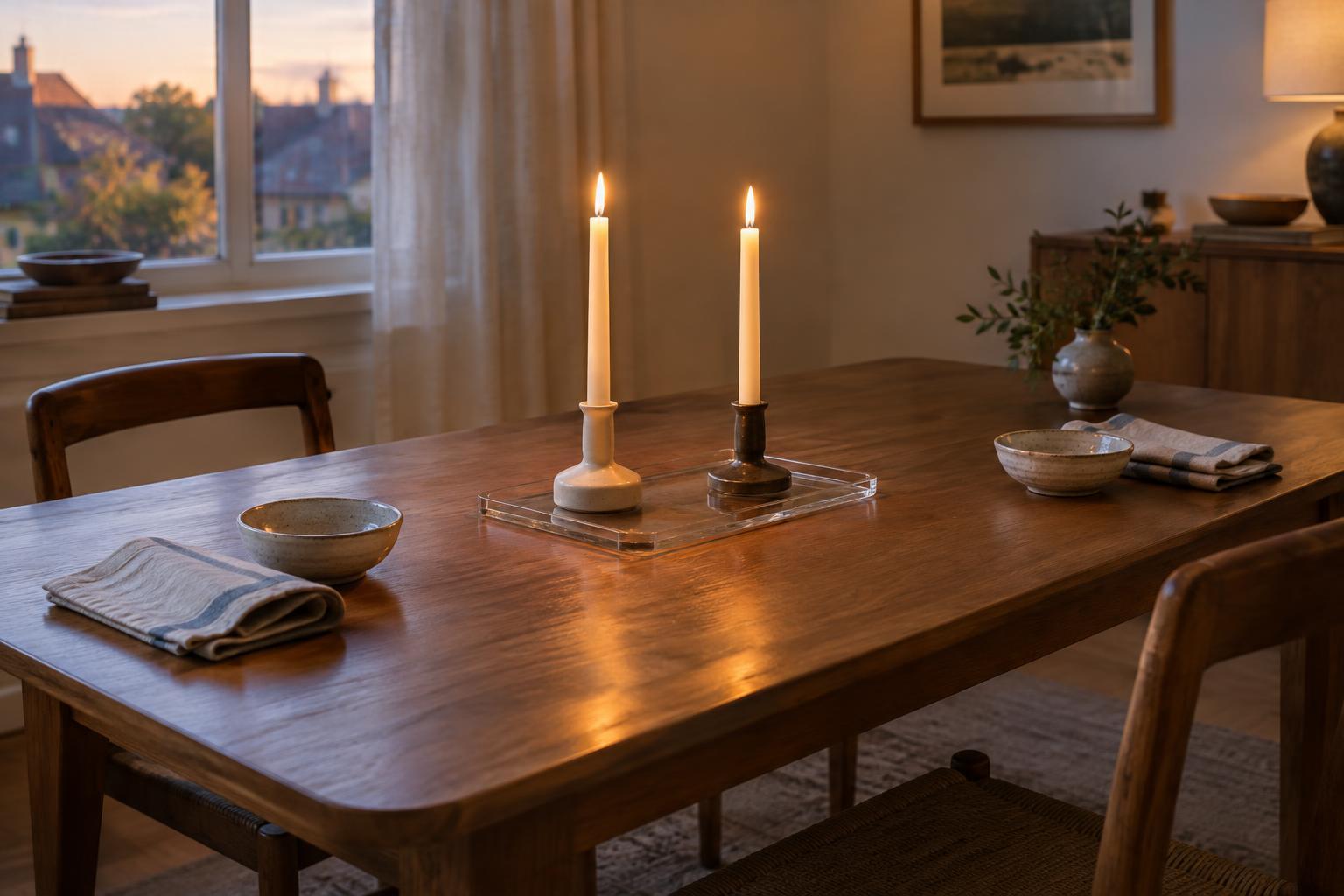
Think of the napkin as a bridge between colors on the table. It might repeat a shade from a patterned plate, soften a strong contrast or provide a muted accent against white ceramics. Linen and cotton often have visible texture, while a smoother weave gives a neater outline. Neither is inherently better; the choice depends on how informal or crisp you want the table to feel.
Keep embellishments easy to remove. A simple napkin ring can hold a fold in place, but string, dried stems or other small details should not make the napkin awkward to open. If guests must undo a complicated arrangement before eating, the decoration is doing too much.
Place glassware where it is easy to reach
For a basic setting, one glass per person is enough. Place it above and to the right of the dinner plate, where it can be reached without crossing over the food. If you are offering two drinks, group the glasses nearby rather than spreading them across the available space. Check that a guest can lift either glass without knocking the other.
Glassware can contribute shape without adding color. A short tumbler feels grounded beside a broad plate; a taller glass adds height to a low arrangement. Clear glass tends to work with many table palettes, while tinted glass can pick up a color already present in a napkin or dish. Choose glasses that suit what you are serving and that feel stable on the table surface.
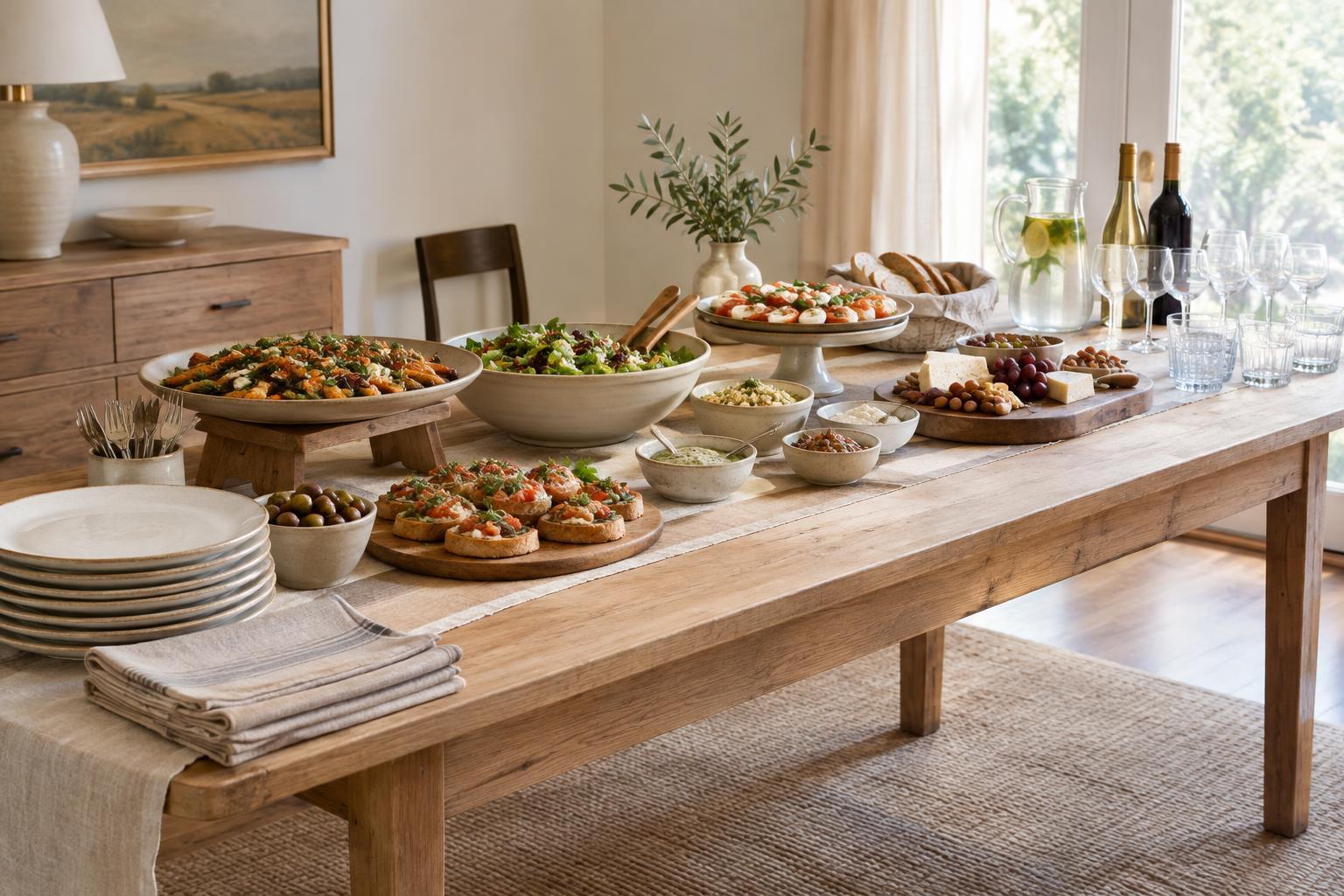
Leave enough open space between the glass and any shared serving dishes. Table styling should make conversation and passing food easier, not require people to navigate a display.
Edit the setting as a whole
Once the plates, napkins and glasses are in place, step back and look at the full table. Repetition makes separate settings feel connected, even if the pieces vary slightly. You might use the same napkin color at every seat while mixing compatible plates, or repeat one glass shape alongside different ceramics. Aim for a clear pattern rather than perfect uniformity.
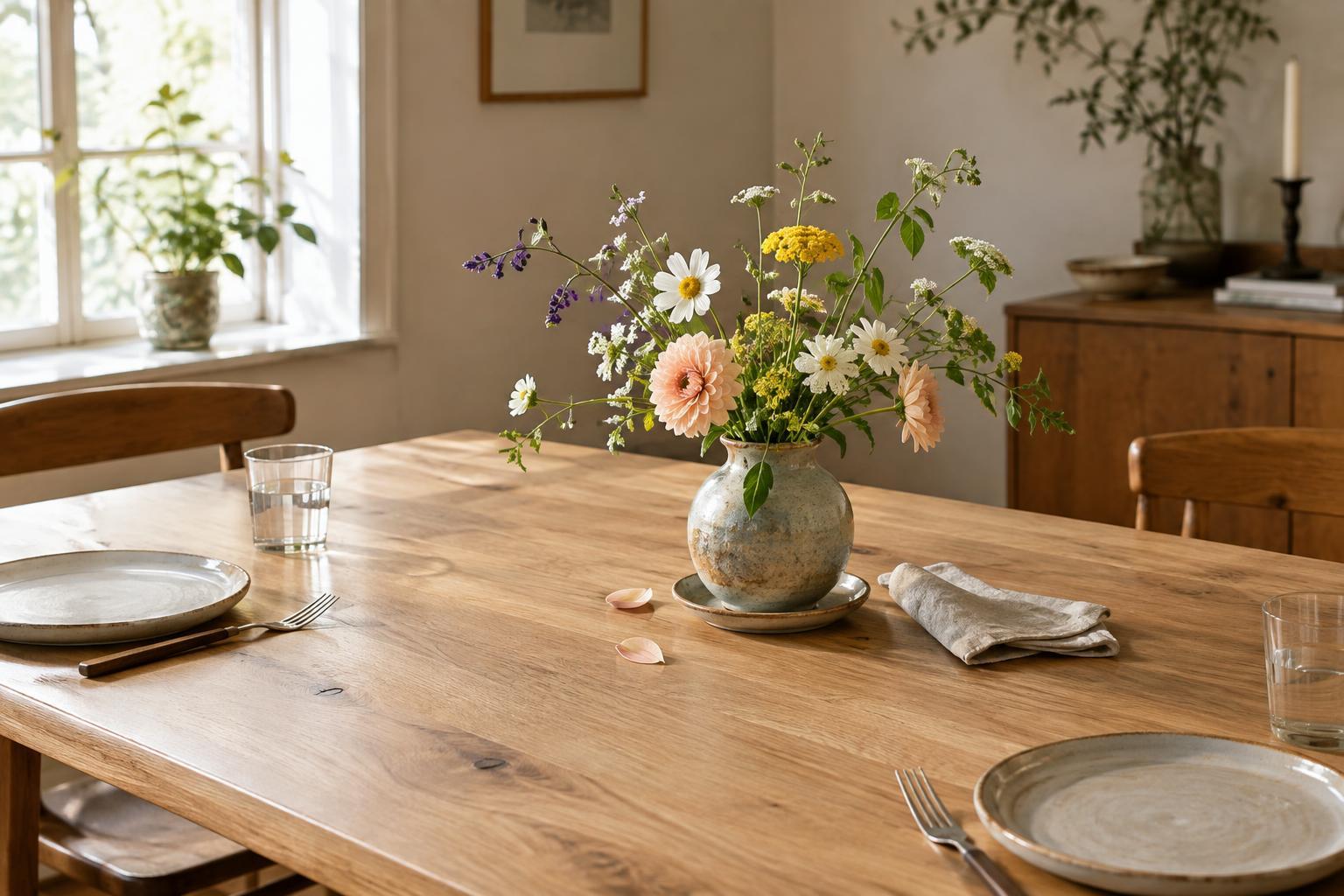
Limit the number of strong details competing for attention. If the plates have bold decoration, choose quieter napkins and glasses. If the dishes are plain, a textured napkin or colored glass can provide the focal point. Small differences in material—matte ceramic, soft fabric and reflective glass—often create enough interest on their own.
Finally, test the setting from a seated position. Make sure there is a comfortable place for utensils, that nothing wobbles and that the napkin is easy to pick up. Remove any piece that gets in the way. The most successful layers are the ones guests can enjoy at a glance and then use without a second thought.