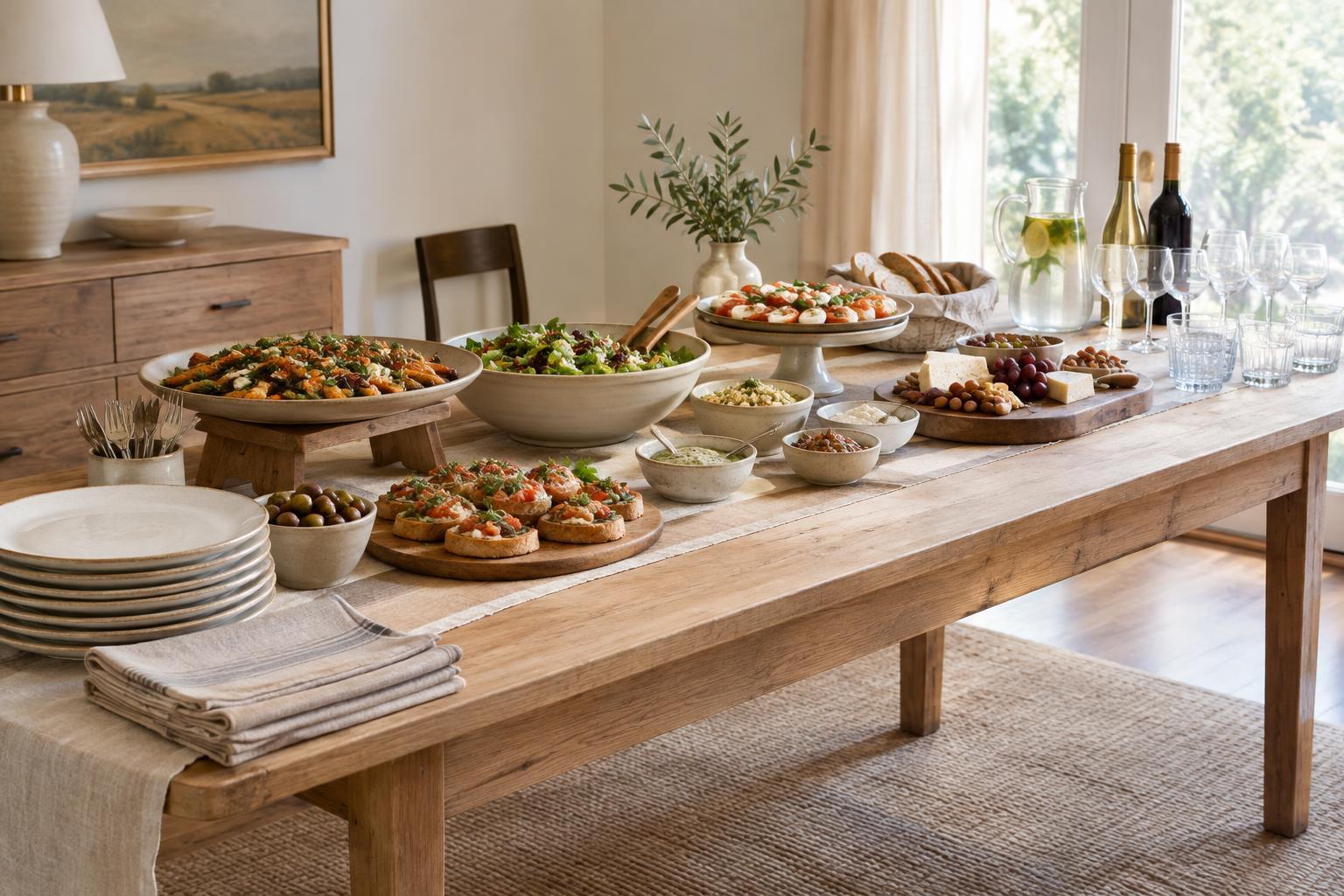
Plan the table around the flame
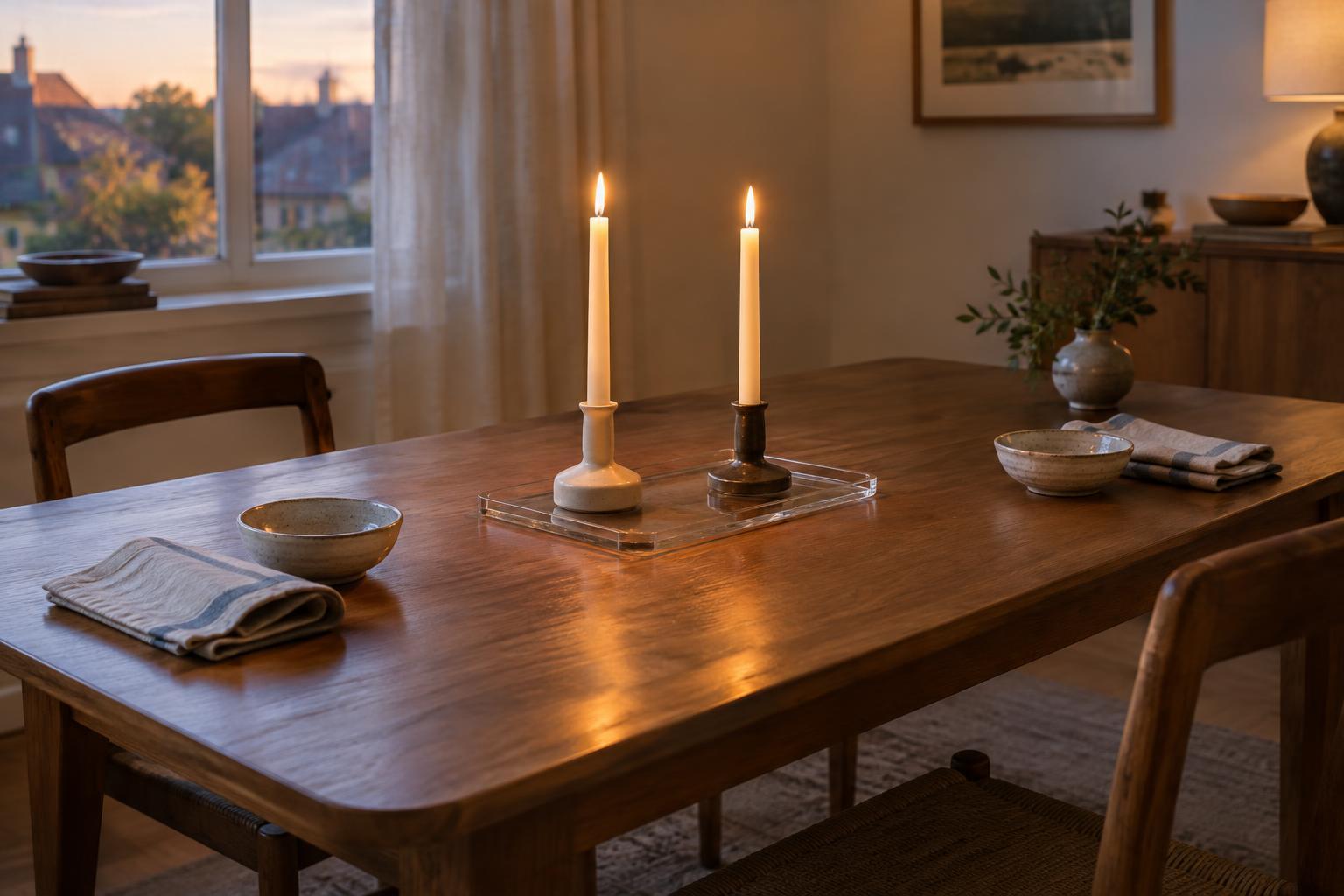
Start with the candles, not the decorations. Place the holders where guests can see one another, reach their plates, and move chairs without brushing past a flame. The center of a wide table may work well; on a narrow table, a few small candles can be easier to place safely than a long centerpiece. Leave room for serving dishes, glasses, and hands in motion.
Treat the space around and above each flame as part of the arrangement. Paper place cards, dried flowers, ribbon, napkins, and low-hanging greenery can shift when someone reaches across the table or when a door opens. Keep them out of the flame’s path, and follow any clearance and use instructions supplied with the candle or holder. If an arrangement only looks balanced when decorations crowd the candle, simplify it rather than squeezing everything together.
Choose holders that suit the surface
A candleholder should stand securely on a level, heat-resistant surface and fit the candle it holds. Check that a taper sits upright without wobbling and that a wider candle has a stable base. A tray can visually group several pieces, but it does not automatically make them safer: its material must be suitable for candle use, and its edges and contents must remain clear of the flames.
Before setting the table, test the arrangement with empty glasses and plates in place. A tall candlestick near the edge may be easy to knock as someone sits down. A low holder surrounded by decorative objects may hide the flame from view. Move either one to a more open spot. Keep candles away from tablecloth folds and runners that could be pulled or displaced during the meal.
Build the decoration in separate zones
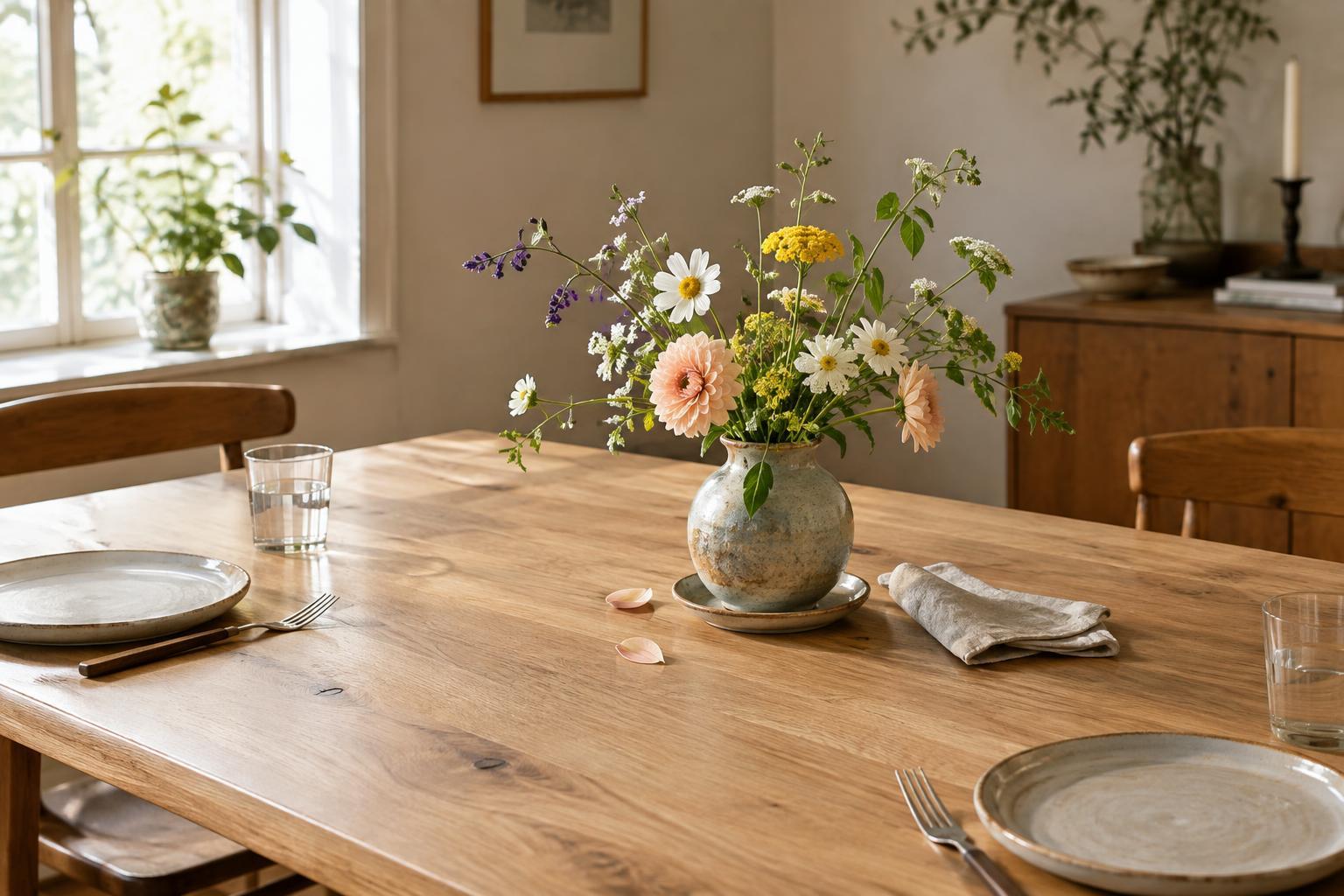
Think of the table as a series of small zones rather than one tightly packed centerpiece. Put candles in open spaces, then add ceramics, bud vases, or other objects farther away. Repetition can make a sparse arrangement feel intentional: two matching holders, a pair of small vases, or evenly spaced accents offer rhythm without filling every gap.
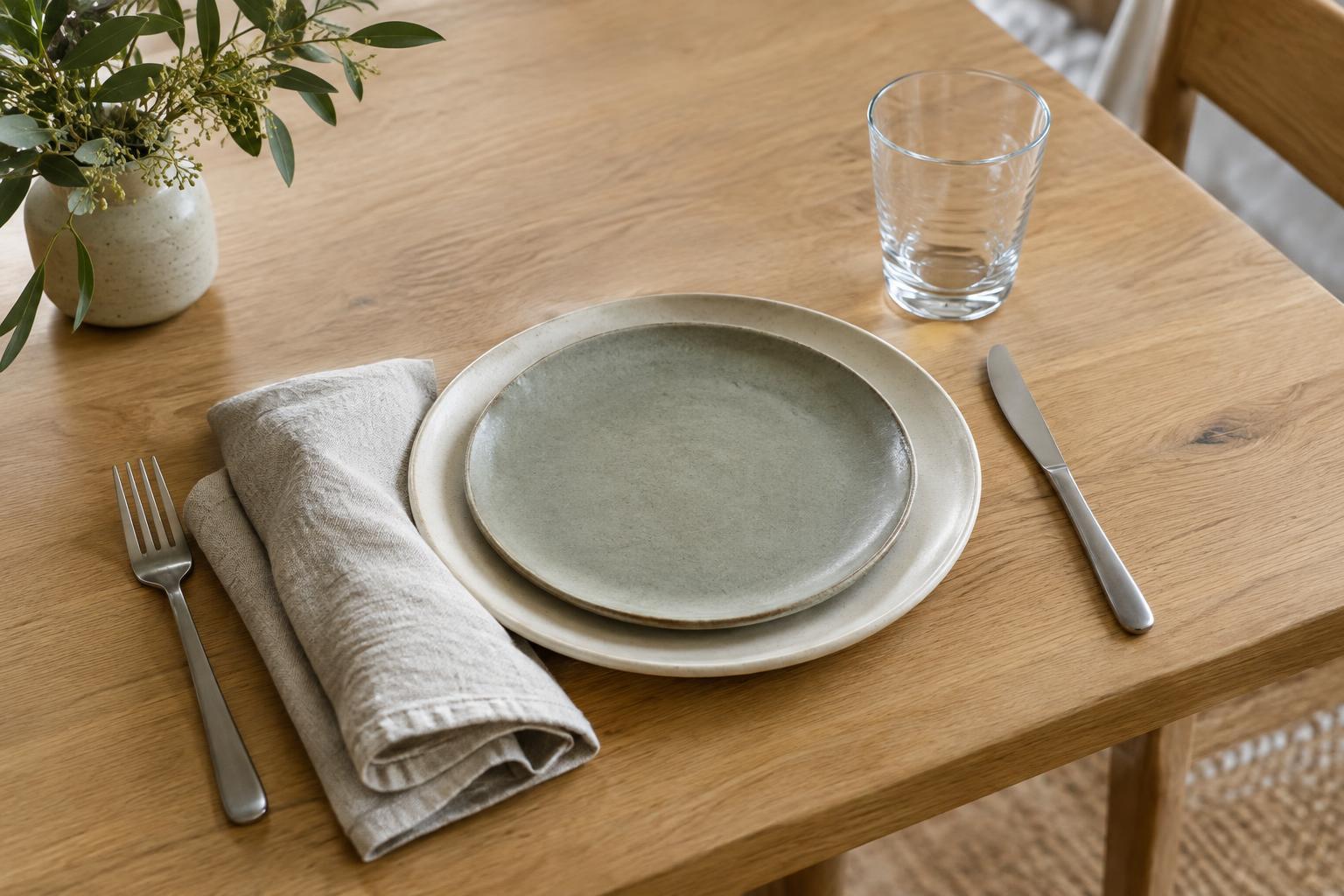
Choose decorations for their shape and color, not for how close they can sit to the glow. A folded linen napkin at each place setting, a cluster of glazed vessels at one end, or a bowl of fruit away from the candles can carry the style across the table. Avoid draping garlands between holders or placing dried stems, loose fibers, or lightweight ornaments where they might lean, fall, or be blown toward a flame.
Check the arrangement from a guest’s point of view
Sit at a place setting and look across the table. Can you see the person opposite you? Is there an easy path for passing a dish? Could a sleeve reach the flame while someone pours water or lifts a serving bowl? This quick check often reveals hazards that are less obvious when you are standing over a neatly styled table.
Recheck the layout after food arrives. Serving platters may push decorations toward the candles, and guests may move objects to make space. Keep matches and lighters out of the dining area when they are not in use. If children or pets can reach the table, an unlit candle display or flameless candles may be a better choice.
Keep the final look easy to manage
A candlelit table should be as practical during the meal as it is attractive beforehand. Follow the candle maker’s directions for lighting, burning, and extinguishing. Never leave burning candles unattended, and put them out before guests leave the table or you begin clearing dishes. Allow candles and holders to cool before moving them.
For a relaxed finish, let a few well-placed objects do the work: sturdy holders, one restrained group of decorative pieces, and open space around every flame. The gaps are not unfinished styling. They help keep the table comfortable to use while allowing the candlelight to stand out.