Start with the route guests will take
Before choosing a tablecloth or setting out flowers, decide where guests will approach the buffet and where they will go once they have filled a plate. A table against a wall usually works best as a one-way line: plates at the entrance, food in the middle, and cutlery and napkins near the exit. If guests can reach both long sides, leave enough room to pass behind one another and consider placing popular dishes where they can be reached from either side.
Walk the route with an empty plate in hand. Check whether a doorway, chair, or nearby cabinet interrupts the flow. Keep the start of the line clear so guests can pick up a plate without leaning across food. For a crowded gathering, a separate spot for drinks can prevent people from stopping in the middle of the serving line to pour a glass.
Put the food in a useful order
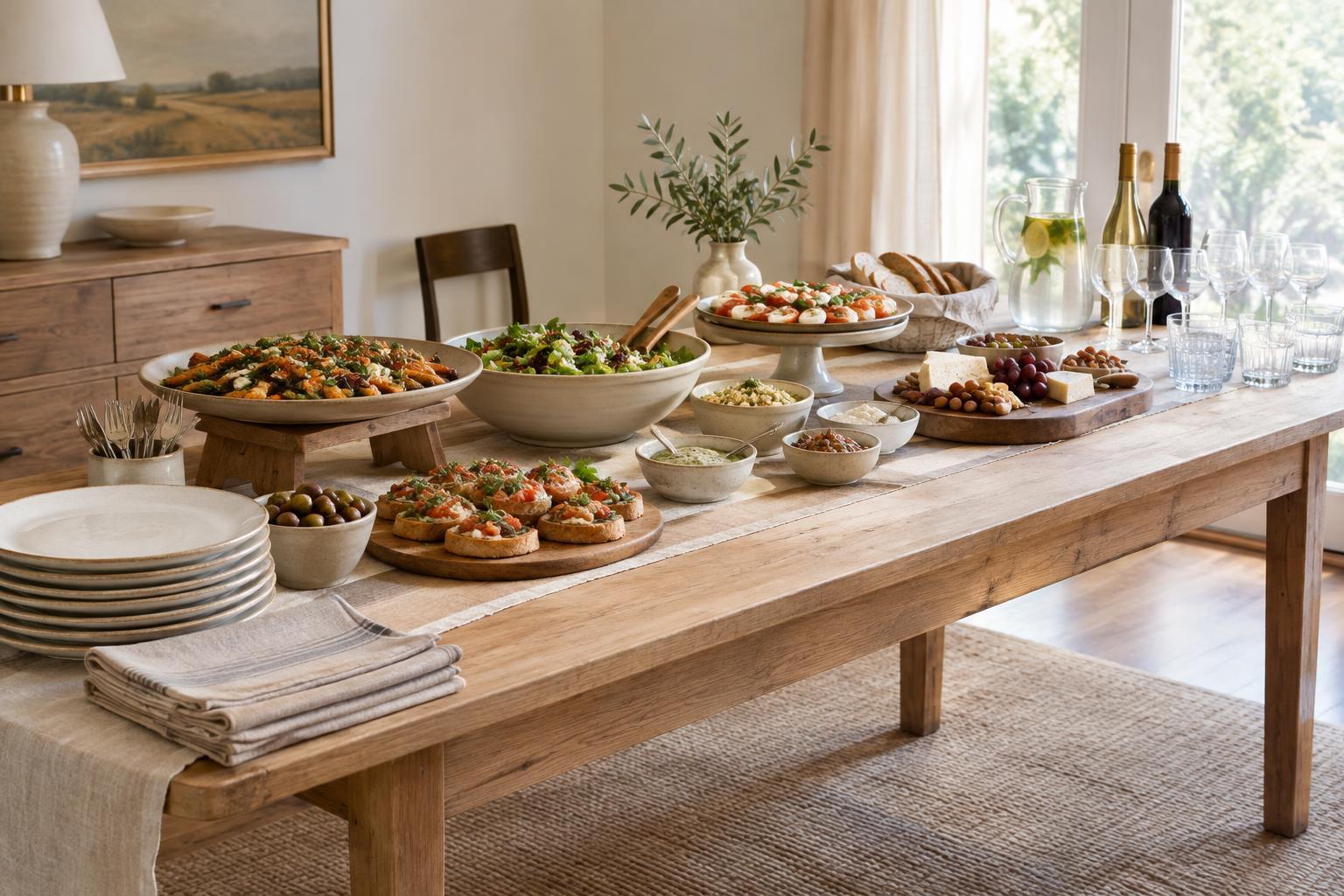
Arrange dishes in roughly the order someone would add them to a plate. Start with substantial foods, follow with sides and accompaniments, and place sauces or small toppings beside the dishes they belong to. Bread can sit near the main food if guests will eat it with the meal. Dessert often works better on a separate surface or can be brought out later, freeing space and keeping the first trip around the buffet straightforward.
Think about the work each dish requires. A bowl that needs careful scooping deserves a stable position with room for an elbow; a platter of ready-to-take portions can fit in a narrower space. Give every dish its own serving utensil, with a rest or small plate for drips where needed. If a dish is difficult to identify by sight, a simple label helps guests make a choice without holding up the line.
Build height without hiding the food
A flat row of dishes can look crowded even when the table has room. A few changes in height make the display easier to scan. Use a sturdy cake stand for finger foods, a low riser beneath a platter, or a shallow bowl beside taller pieces. Keep the heaviest dishes on the table itself, and test any stand before guests arrive. Nothing should wobble when someone takes the last serving from one side.
Height is most helpful toward the back of a table that is served from the front. Keep shorter bowls and frequently used dishes at the front so guests do not need to reach over them. On a table approached from both sides, place taller elements closer to the center. Leave visible gaps between pieces: the empty space gives hands room to move and lets each dish feel like part of an arrangement rather than part of a pile.
Choose a quiet visual thread
Cohesion does not require a matching set of serving ware. Choose one or two elements to repeat, such as warm-toned ceramics, clear glass, or a shared color in the linen and dishes. A plain cloth or runner can give varied platters a common background. If the food itself is colorful, neutral pieces often let it provide most of the decoration.
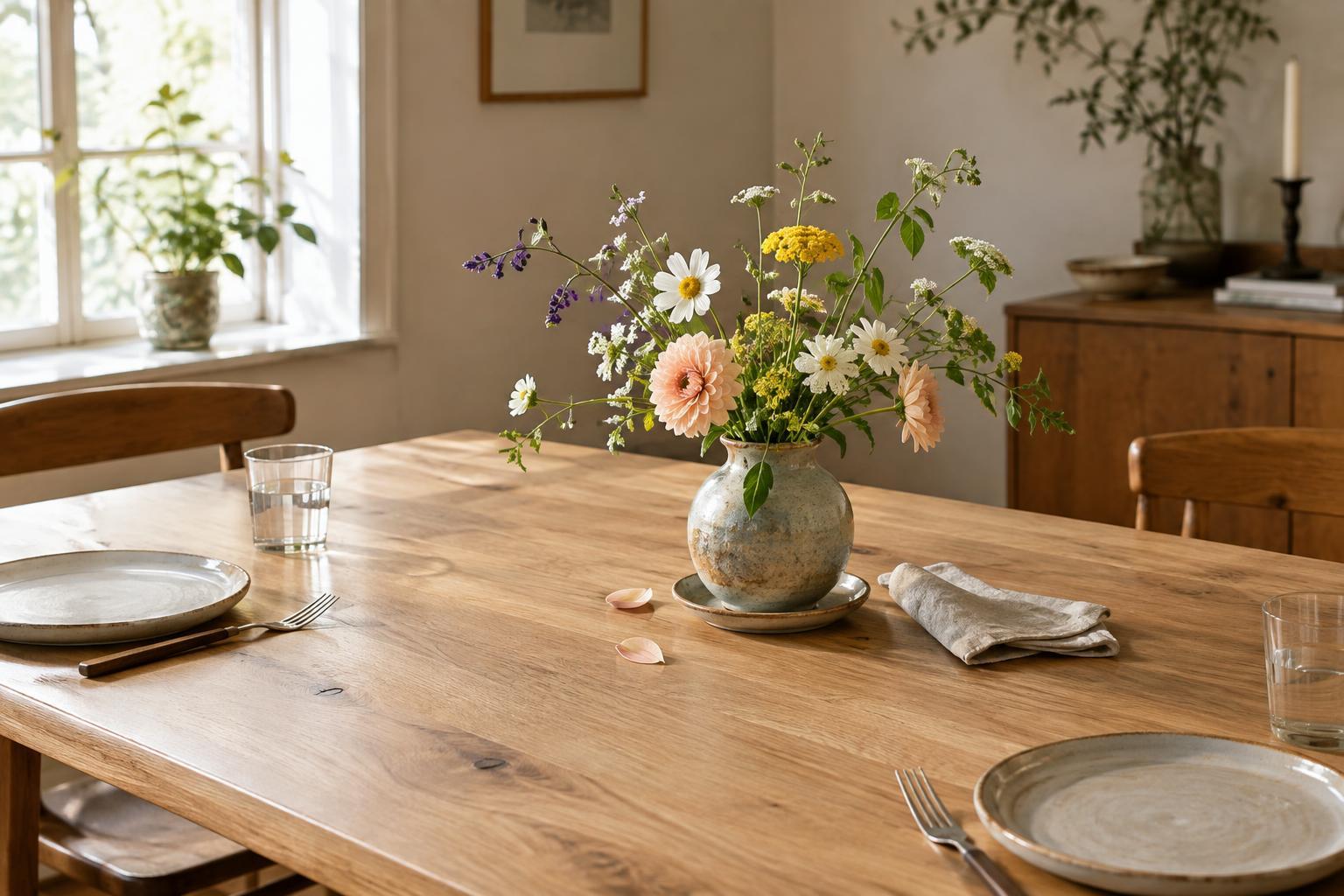
Use decorative objects where they will not compete with serving space. A low vase at the back or end of the table can soften the arrangement, while a tall bouquet in front of the food may block both sightlines and hands. Avoid trailing greenery, loose decorations, or scented items close to dishes. The aim is to frame the meal, not make guests work around the styling.
Make the final pass from a guest’s perspective
Once everything is in place, stand at the beginning of the line and check what you can see. Are plates obvious? Can you tell which utensil belongs to each dish? Is there a sensible place to set a lid, used serving spoon, or empty platter? Small adjustments often matter more than adding another decorative piece. Move anything that requires an awkward reach, and keep spare napkins and utensils nearby for easy replenishment.
Leave some table space unoccupied at the start of the meal. Serving dishes shift, spills need attention, and guests may arrive carrying something to add. A buffet that is easy to maintain will continue to look welcoming after the first few plates have been filled. When the route, reach, and visual rhythm all feel clear, the table is ready to do its main job: let people serve themselves comfortably.