Start with what the shelves need to hold
Before arranging anything, take the dishes and objects off the shelves and group them by use. Put daily plates, bowls, mugs and glasses together. Set serving pieces, vases, jars and purely decorative objects in separate groups. This makes it easier to see whether the shelves have enough space for the things you actually reach for, rather than trying to fit daily life around a finished display.
Give the most convenient shelves to items used often. A stack of breakfast bowls belongs where it can be lifted down without moving a vase first. Less-used serving dishes can sit higher or farther to the side, provided they are comfortable to retrieve. Check that the shelves and their fixings are suitable for the weight you plan to put on them, and avoid precarious stacks. Leave enough clearance above plates and mugs for a hand to grasp them easily.
Build a useful arrangement first
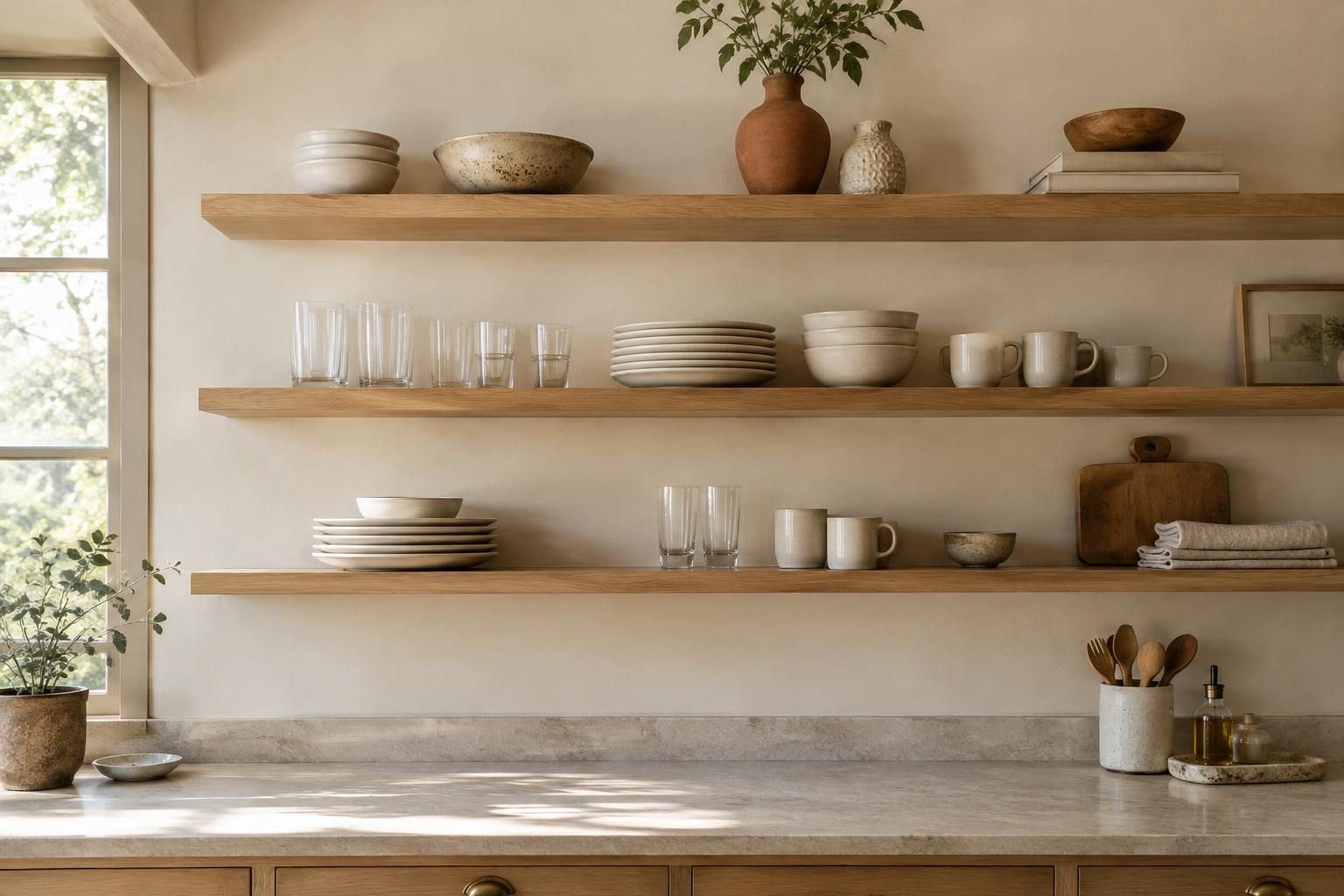
Begin with the largest groups of everyday dishes. Short stacks of matching or similar plates create a calm base, while a row of mugs or glasses breaks up the horizontal lines. Keep pieces from the same daily routine near one another: bowls beside mugs for breakfast, for example, or dinner plates near the serving pieces used with them. The arrangement does not have to be symmetrical, but its most-used items should have predictable places.
Resist the urge to fill every gap. Empty space is useful on a working shelf: it gives hands room to move and stops one object from obscuring another. If a shelf feels crowded before you add decorations, remove something or move occasional-use pieces to a cupboard. Open shelving can display a selection of kitchenware without holding every dish you own.
Add decoration in small, purposeful groups
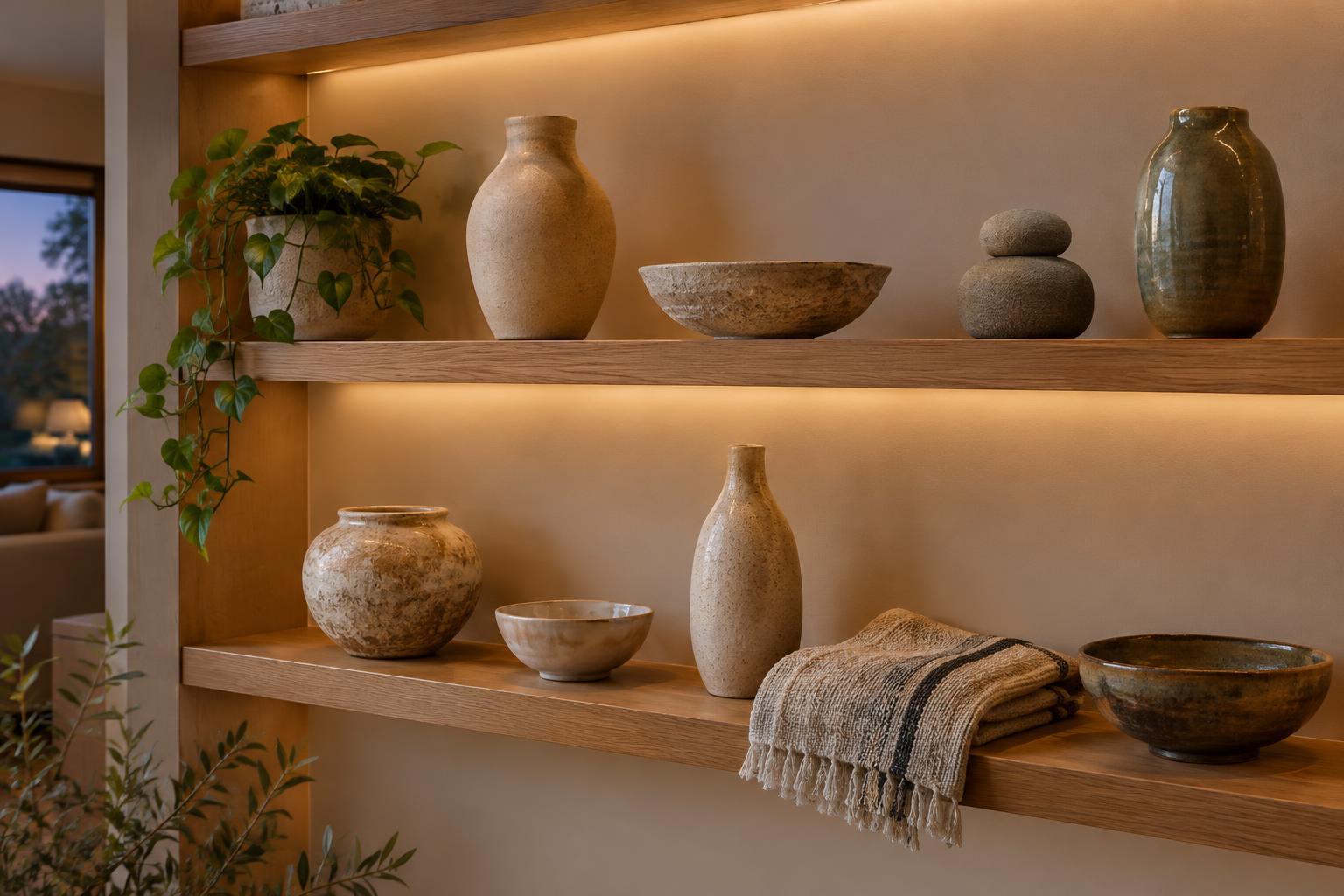
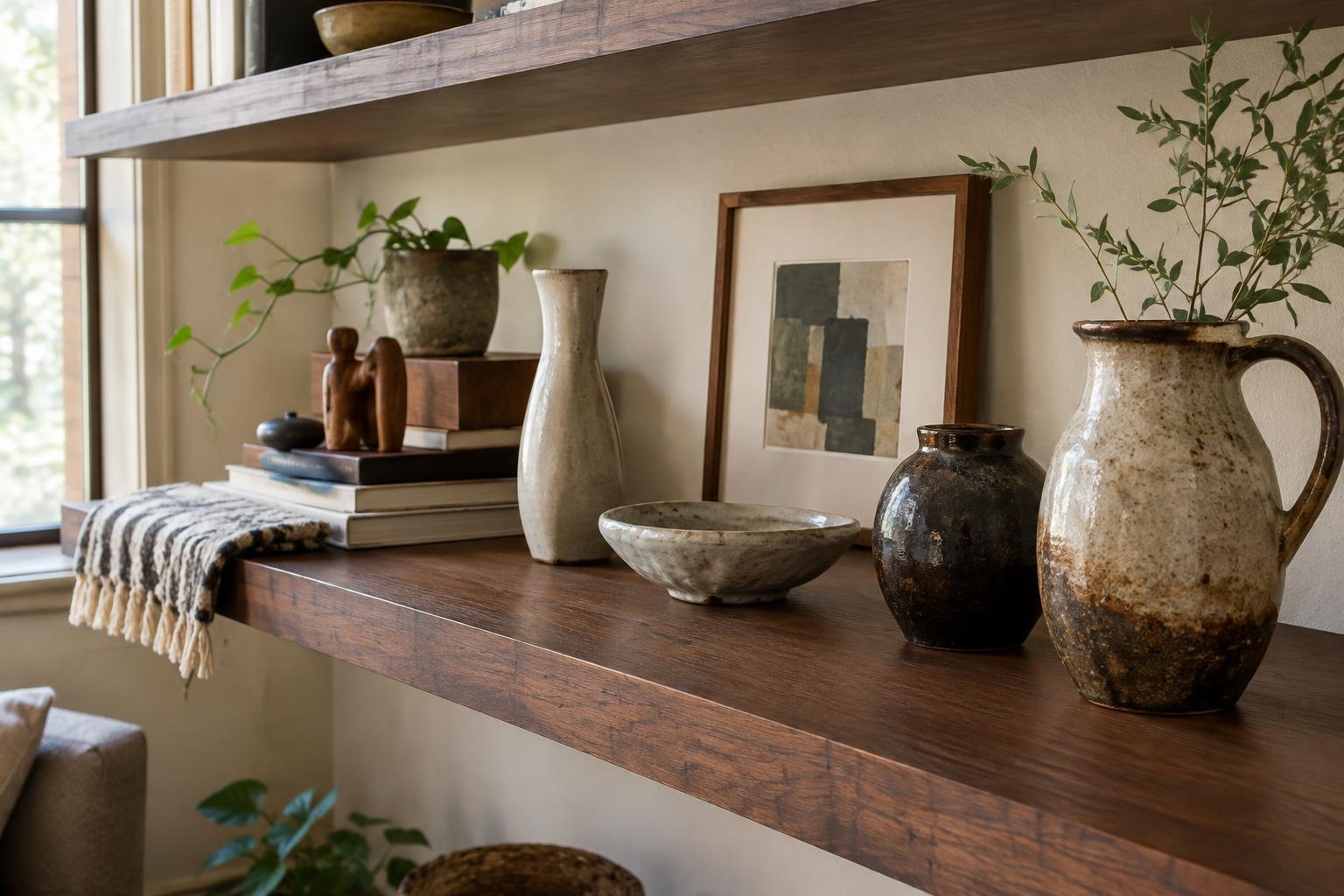
Once the useful pieces have places, add a few objects that suit the kitchen and its available space. A small ceramic vessel, a framed print placed away from splashes, or a lidded container can soften a shelf of repeated plates. Choose objects with a clear reason to be there, whether that is a pleasing shape, a material that complements the dishes, or a container that also stores something useful.
Try placing decoration beside, rather than in front of, dishes you use daily. A vase next to a plate stack adds contrast without becoming an obstacle. Oddly shaped objects can work especially well at the end of a shelf, where they will not interrupt a row of glasses. If you want to display a collection, use only a few pieces at a time and rotate them; the rest can wait elsewhere instead of competing for space.
Create balance through shape, color and texture
Visual balance does not require identical objects at both ends of a shelf. Instead, look at how much space each group appears to occupy. A tall jug may balance several low bowls on the opposite side, while a dense stack of dark plates may need a little open space around it. Stand back occasionally and check whether your eye can move across the shelves without stopping at one crowded patch.
Repeating a few colors or materials helps mixed pieces feel related. For example, cream dishes, a warm wooden board and a textured clay pot can share a gentle palette even though their shapes differ. You can also use contrast deliberately: place a smooth glazed piece near something matte or woven. Keep the number of competing finishes manageable so the everyday dishes still feel like part of the composition, not clutter to be hidden.
Make the display easy to live with
Open shelves are exposed to dust and, depending on their position, kitchen grease or water. Place delicate or difficult-to-clean objects away from the busiest cooking areas, and keep surfaces easy to wipe. Frequently used dishes are handled and washed regularly; purely decorative pieces may need more deliberate attention. If an object makes cleaning awkward, it may be better suited to another room.
Live with the arrangement for a week or two before treating it as finished. Notice which pieces you reach around, which stacks are hard to lift and which gaps become handy resting spots. Then make small changes rather than restyling everything. The most successful open shelves are not perfectly frozen displays: they give useful objects a comfortable home while leaving just enough room for the things you enjoy seeing.