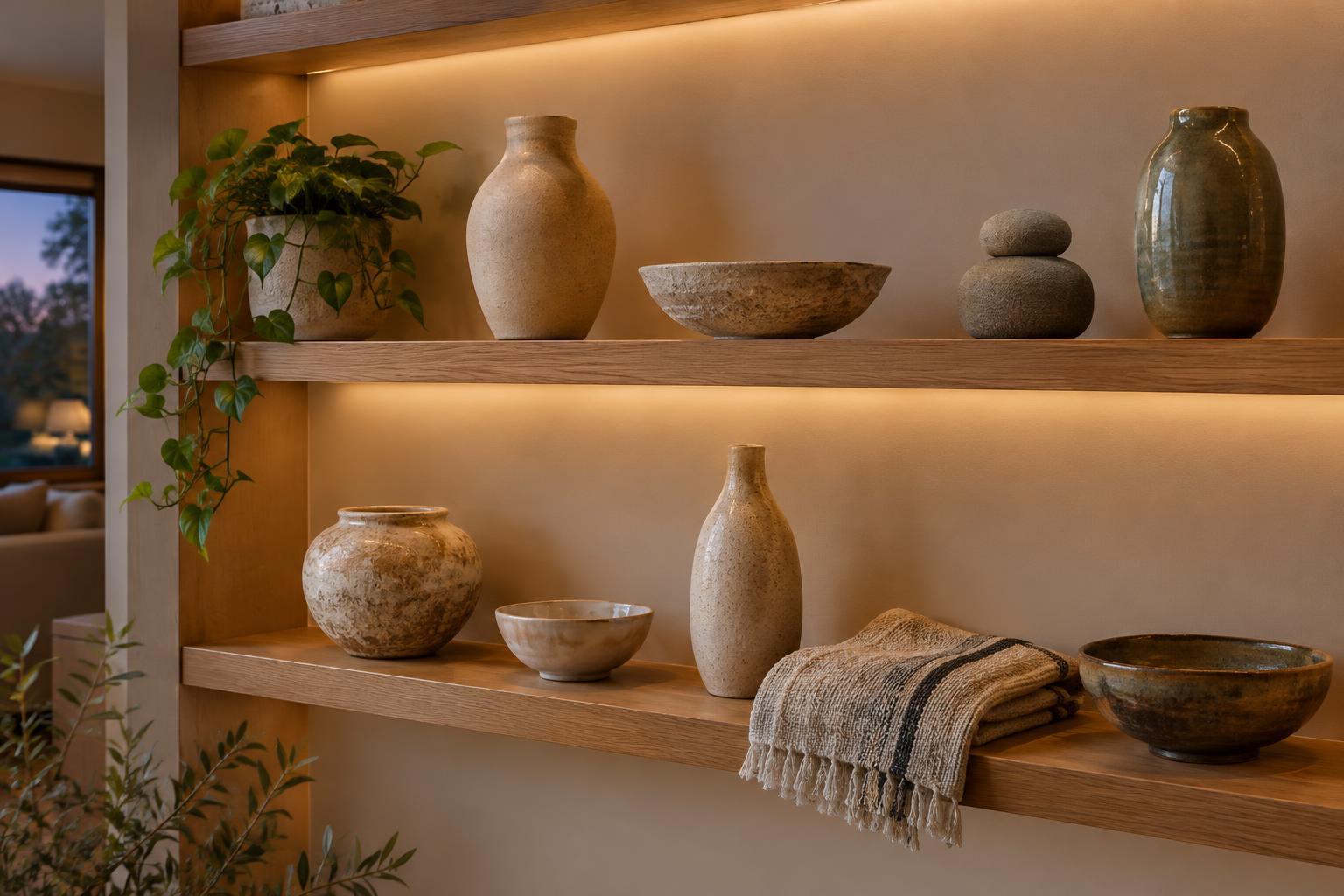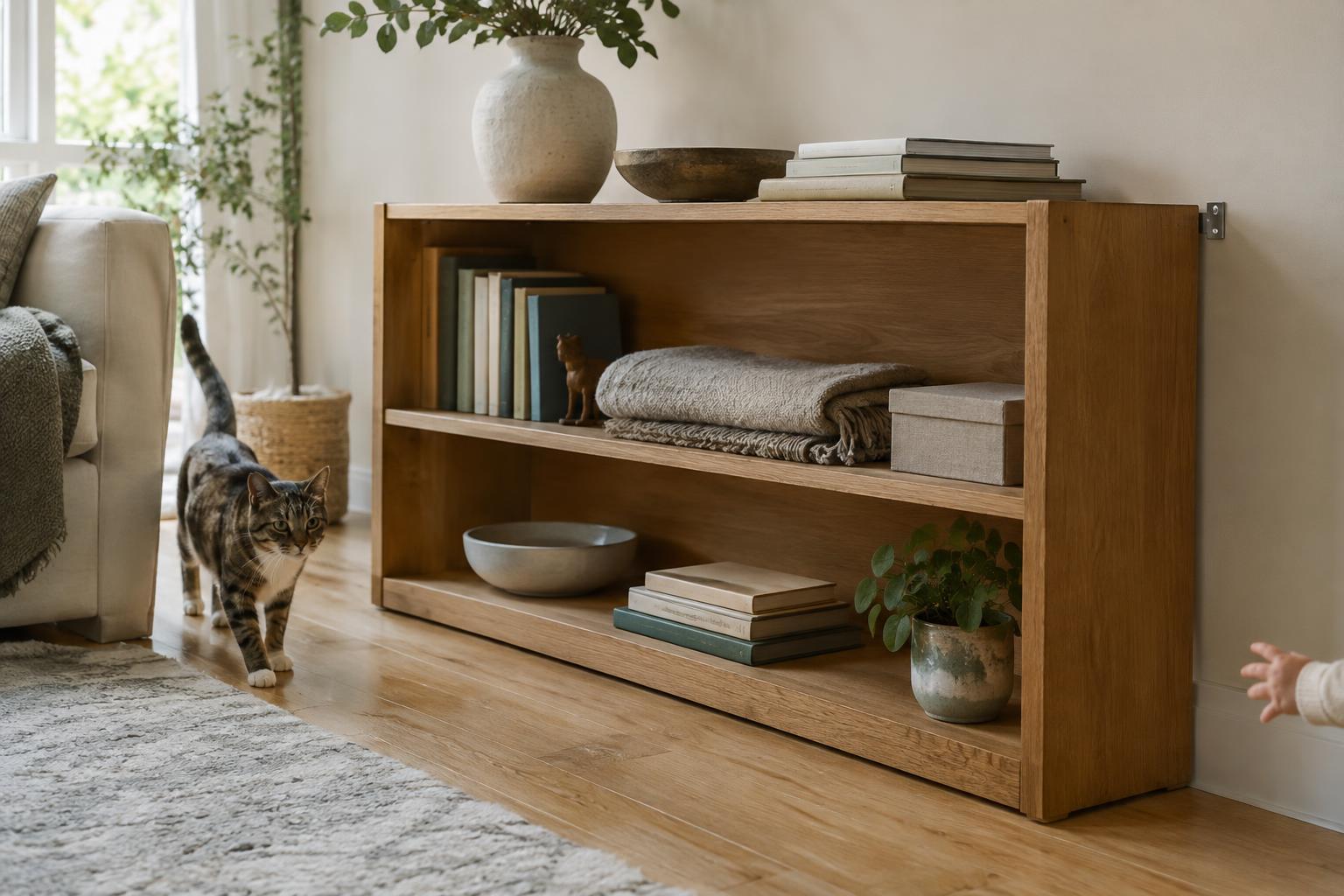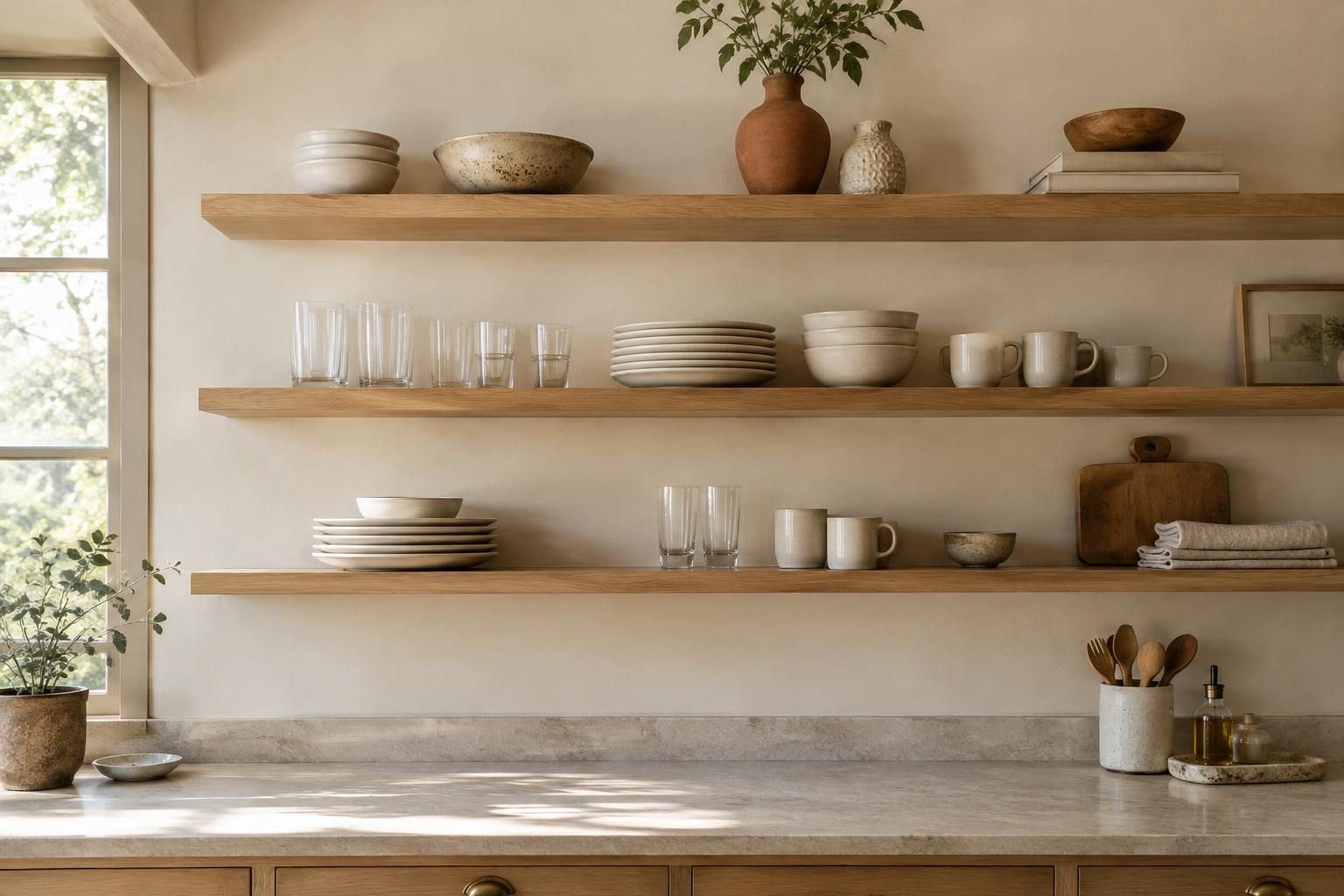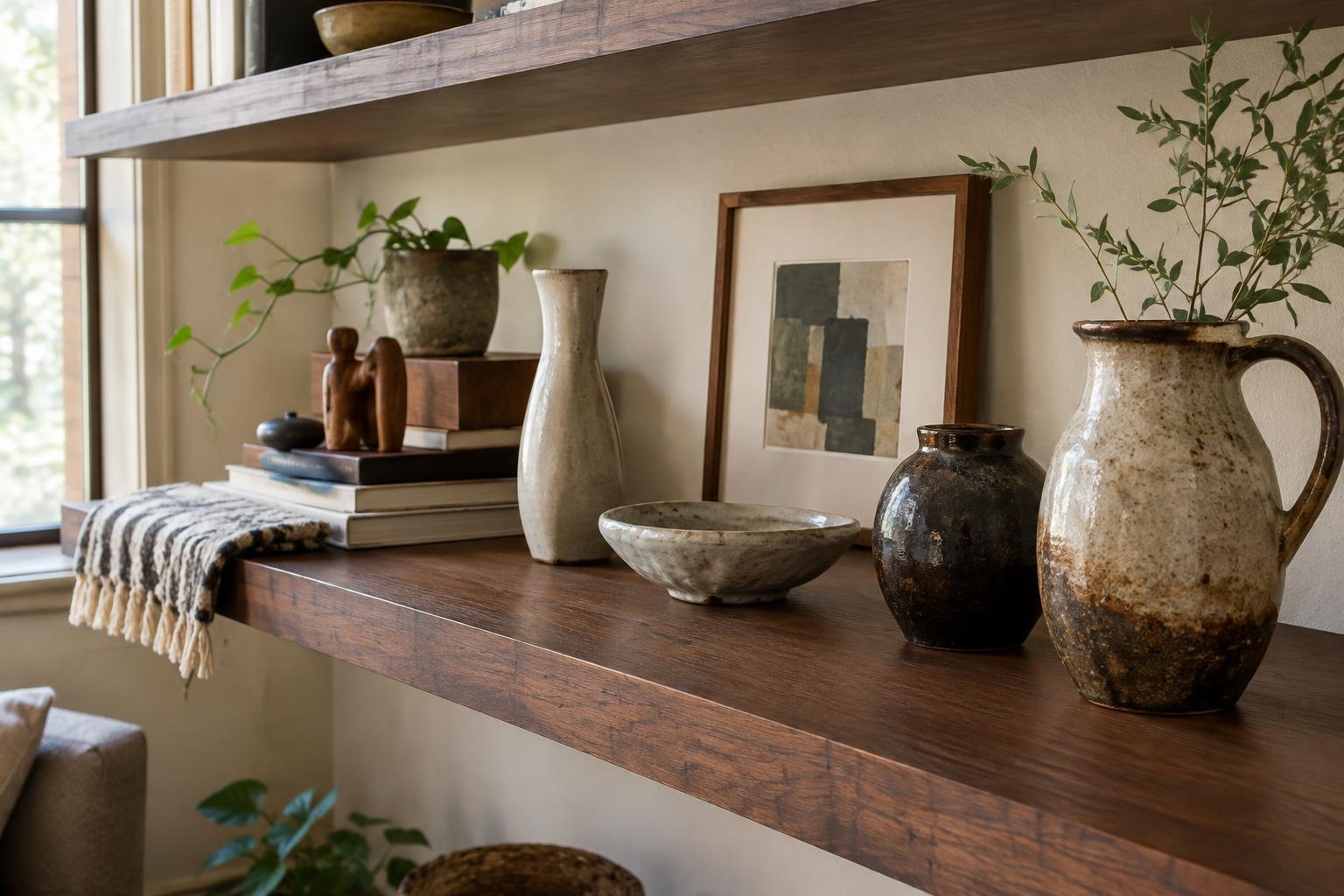
Start with the view from the room
Deep shelves invite you to place objects in rows, but a full front row can turn everything behind it into storage. Before arranging anything, stand where you usually see the shelf: at the doorway, from a chair or while walking past. That view matters more than how the display looks when you are standing directly in front of it.
Clear the shelf and choose a few pieces you want to notice first. Put them toward the back, then step away. As you add other objects, check whether each important piece still has a visible outline. You do not need to see every inch of it; a distinctive shape, color or pattern may be enough. If an object disappears entirely, move it up, sideways or forward rather than adding more around it.
Build height without making a wall
A low riser can bring a small object at the back into view. A sturdy box, a short stack of books or a purpose-made display stand may work, provided it sits flat and supports the object's weight. If the support is visible, choose a finish that belongs with the rest of the shelf. You can also place a shallow tray beneath a group to give several little pieces a shared base.
Vary heights across the shelf rather than lining up every tall object at the back. A tall vase behind a short bowl creates a clear silhouette; several tall vases side by side may simply form a screen. Keep heavy or breakable pieces on stable surfaces, and avoid balancing them near an edge. If a shelf is high or used in a busy household, favor secure arrangements over dramatic stacking.
Leave paths for the eye
Think of the shelf as a series of staggered positions, not two rigid rows. Place one object near the back left, another around the middle right and a third toward the front. The gaps between them create sightlines to the rear. Turning a rectangular box or book slightly can reveal more of its face without taking up much additional space.
Pay attention to the outlines of neighboring pieces. A narrow candlestick can stand in front of a broad platter without hiding much of it, while a squat, wide jar may block a smaller object completely. Try placing opaque objects in front of taller ones and using open shapes, such as a simple frame or a basket with a low rim, where you want the display to feel less dense. Leave some bare shelf visible so the arrangement has room to breathe.
Use contrast to separate the layers
Objects at the back can be technically visible yet hard to distinguish. If a pale ceramic piece blends into a pale wall, put a darker object beside it or set it against a removable backing in a contrasting color. A patterned plate often reads more clearly when nearby pieces are quiet; a textured basket may need space around its edges. Contrast can come from color, finish, texture or shape rather than from bright hues alone.
Lighting also affects what you can see. In a dim recess, pale and glossy surfaces may catch available light more readily than dark matte ones, but reflections can obscure details. Look at the shelf at the times you use the room and adjust the arrangement accordingly. If you add a lamp nearby, position it so light reaches the back without shining uncomfortably into the room.
Edit the display and keep it usable
A deep shelf does not have to be filled to its full depth. Group related small items on a tray, or let one larger piece occupy the back while the front remains mostly open. Repeating a material or color in two or three places can make a layered display feel connected without requiring every item to be on show. Store surplus objects elsewhere and rotate them in when you want a change.
Finally, consider how often you handle what is on the shelf. Everyday objects belong where you can reach them without lifting fragile pieces out of the way. Less-used decorative objects can sit farther back, as long as they remain visible and accessible for cleaning. A successful deep shelf looks composed from across the room and still makes sense when you reach into it.