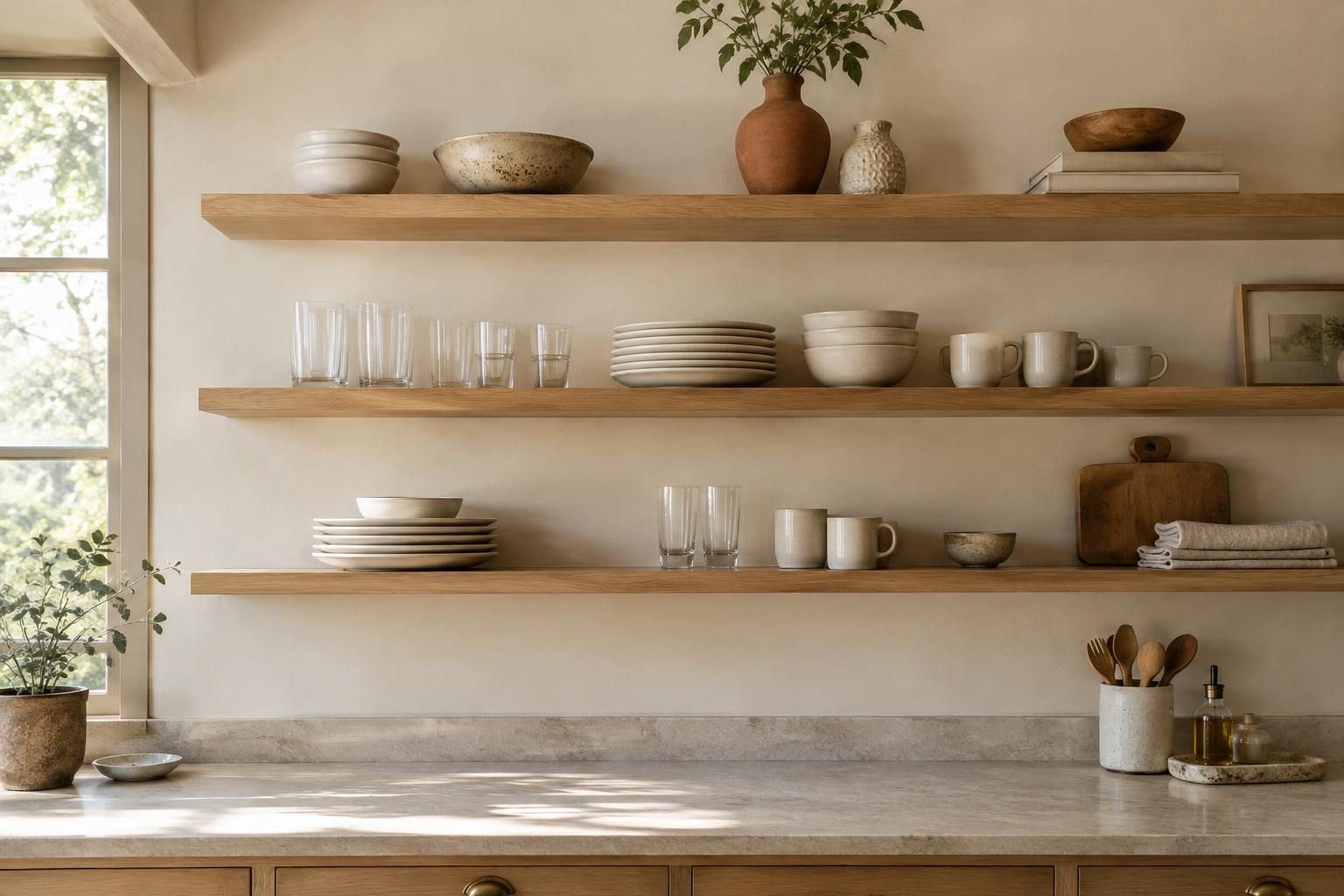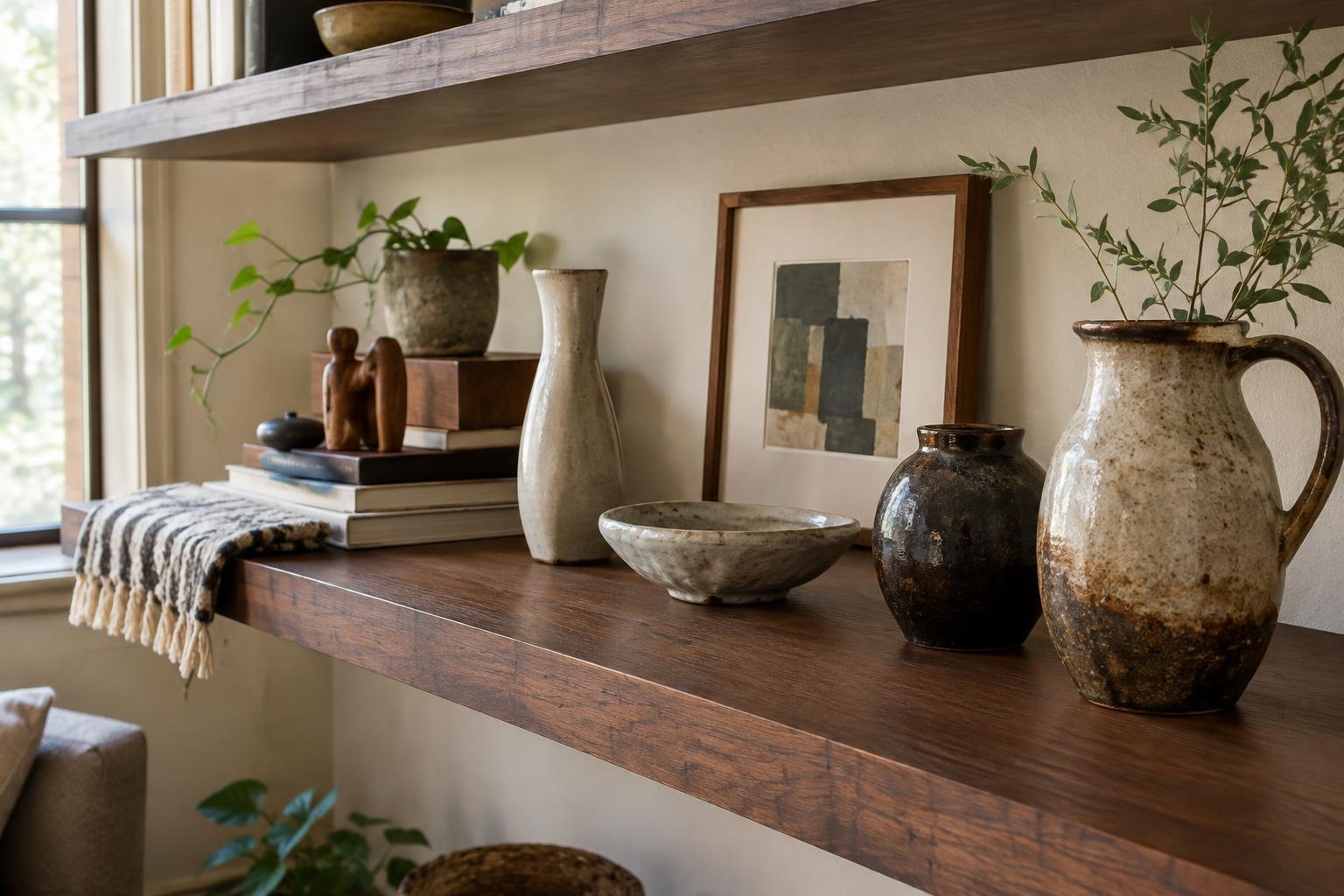
Start with the shelf, not the ornaments
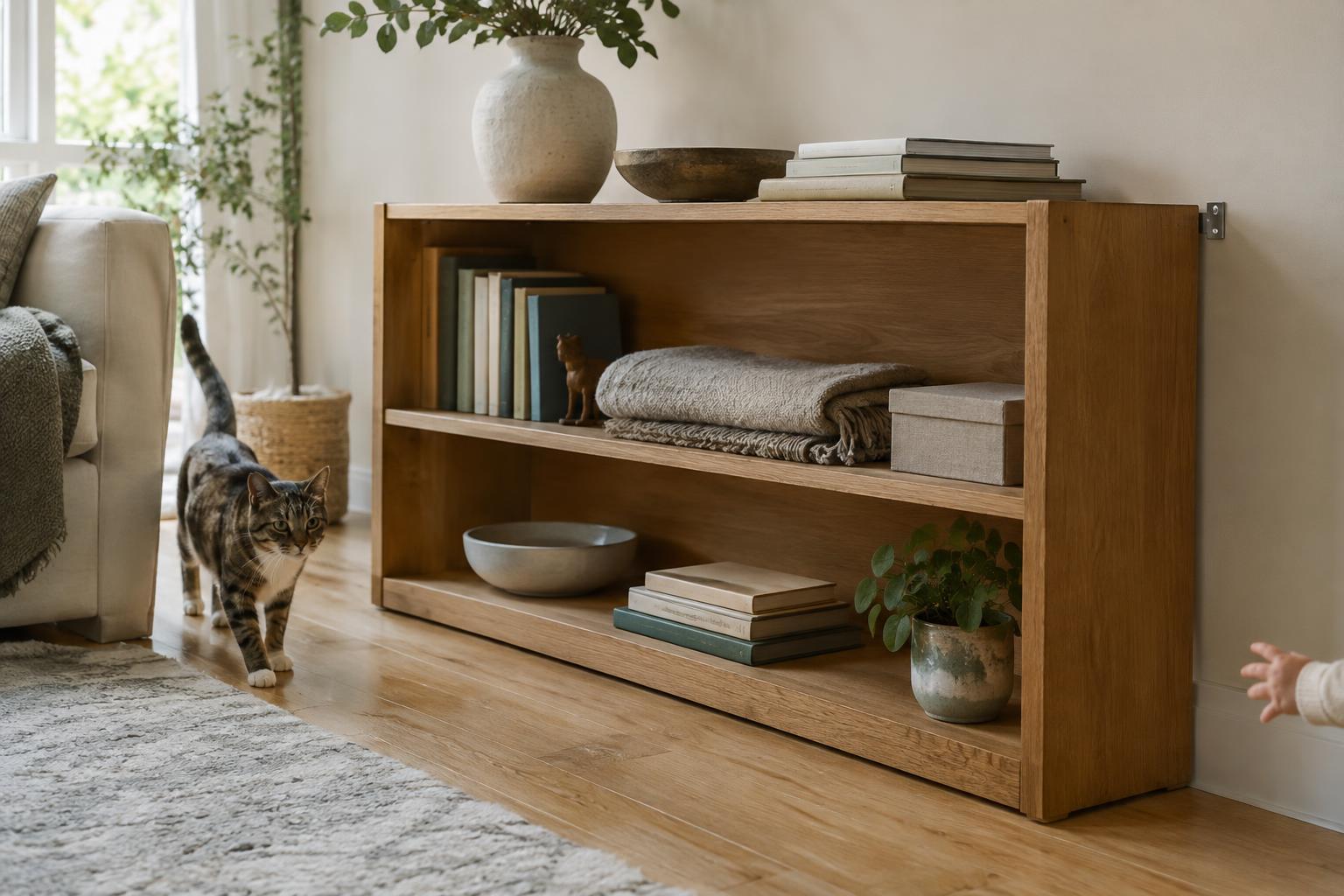
Before arranging a single vase, check the furniture beneath it. A tall or narrow bookcase can tip if a child pulls on a shelf or a pet jumps against it. Follow the furniture maker’s guidance for securing it to the wall, using fixings appropriate to the wall and unit. If you are unsure what the wall will support, ask someone qualified to install it. Adhesive putty under ornaments is not a substitute for securing the furniture itself.
Look for loose brackets, bowed shelves and uneven feet. Keep within the unit’s stated load limits, and place heavier items low so the display is less top-heavy. A shelf that wobbles when lightly handled needs attention before it becomes a styling project. If you rent, check what permission you need before making holes; until the unit can be secured appropriately, a lower, sturdier arrangement may be the better choice.
Plan for how people and pets actually move
Stand back and watch the routes through the room. An end shelf beside a doorway, a coffee table near a sofa, or a ledge next to a cat’s favorite perch may be bumped more often than it first appears. Leave space between objects and the shelf edge, especially at corners. Avoid placing appealing toys, treats or frequently used items above a child’s reach, where they might encourage climbing.
Give pets a clear path to places they are allowed to use rather than expecting a display to act as a barrier. On accessible shelves, keep arrangements sparse so there is room for a paw or hand to land without knocking a row of objects over. A pleasing display does not need to fill every gap: empty space makes individual pieces easier to see and reduces the chance of one falling item taking others with it.
Choose objects for the height and setting
Reserve low, reachable shelves for items that are difficult to break and do not have sharp points, tiny detachable parts or long loops. Baskets with soft contents, sturdy books and lightweight decorative textiles can provide texture without relying on fragile pieces. Check handles, lids and attached decorations: an object that looks substantial may still have a small part that comes away easily.
Put glass, delicate ceramics and heavy stone objects well away from places children or pets can reach or knock into. Height alone may not solve the problem if a nearby chair provides a step or a cat can jump to the shelf. Be particularly careful with items containing small magnets, button batteries, beads or dangling cords. If a piece creates a hazard when it falls or comes apart, consider displaying it in a more secure location or keeping it stored for now.
Build a composition that is less likely to shift
For a stable-looking arrangement, begin with a few broad-based objects and place them on a flat, clean surface. Avoid balancing frames or plates against items that can slide. Frames intended to stand should have sound supports; wall-hung pieces should be fixed as directed by their hardware. Do not let a table runner or cloth hang where it can be pulled, bringing the display with it.
Small amounts of removable display putty or suitable nonslip pads may help some lightweight objects resist minor movement, provided the product is compatible with the object and shelf finish. They are an extra measure, not a guarantee against a determined child or pet. Test them discreetly, since some materials can leave marks. For a layered look, use differences in height among secure pieces rather than stacking unstable objects or hiding heavy items behind a delicate front row.
Make checking part of the routine
A display changes as objects are cleaned, borrowed or replaced. After restyling, check that nothing projects over an edge, rocks on its base or rests on a cord. Look again when a child becomes more mobile or a pet discovers a new route through the room. What worked on a quiet shelf last month may not suit the way the space is used now.
Aim for a display that is easy to reset. A few well-chosen pieces, a little breathing room and a secure foundation are often more inviting than a crowded arrangement that must be guarded. If an object repeatedly ends up out of place, treat that as useful feedback: move it, replace it with something sturdier or leave that spot open.