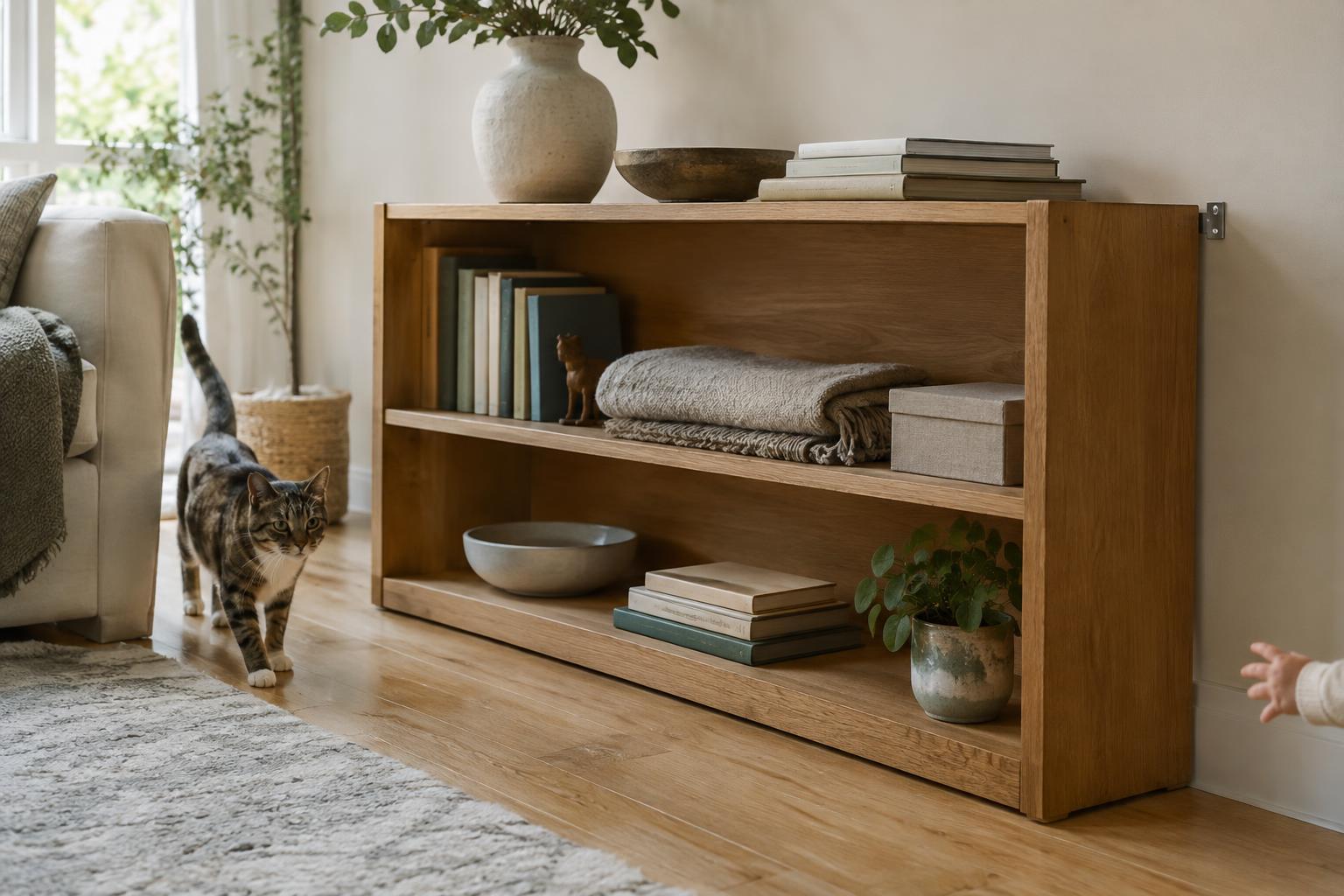
Start with the room, not the shelf
A shelf display does not need to be the brightest spot in a room to feel inviting. If the rest of the space is dark, even a modest shelf light can look glaring by comparison. Turn on the lamps you normally use in the evening before judging the display. A nearby table lamp or a soft overhead light can provide a base level of illumination, leaving the shelf light to draw attention to shapes and textures rather than carry the whole room.
Look at the shelf from the places where people will actually see it: the sofa, a dining chair or the doorway. A light that appears hidden when you stand beside the shelves may be visible from across the room. If you can see the bare bulb or the bright points of an LED strip from a usual viewing position, move the light farther back, place it behind a shelf edge or choose a fixture with a diffuser.
Use direction to reveal shape
Light aimed straight at the front of every object can flatten a display, while a light placed directly above a tall vase may cast a heavy shadow over the pieces below. Try letting light arrive from slightly to one side. A gentle side angle can bring out the curve of a bowl, the weave of a basket or the relief on a ceramic tile. The aim is not to remove every shadow; soft shadows help objects look three-dimensional.
Moveable lamps make this easy to test before you commit to a shelf-mounted light. Set a small lamp beside the unit, then shift it a little at a time while watching the shadows behind your objects. If one piece blocks light from the rest, try moving it toward an end of the shelf, lowering its position or leaving more space around it. Rearranging the display may solve a lighting problem more simply than adding another fixture.
Keep bright points out of view
For built-in or stick-on lighting, the shelf itself can help shield the light source. A strip tucked behind the front lip of an upper shelf can illuminate the objects below without presenting a row of bright points to the viewer. A diffusing cover can make the light appear more even. Before fixing anything in place, hold it at the proposed position and check the effect from both seated and standing eye level.
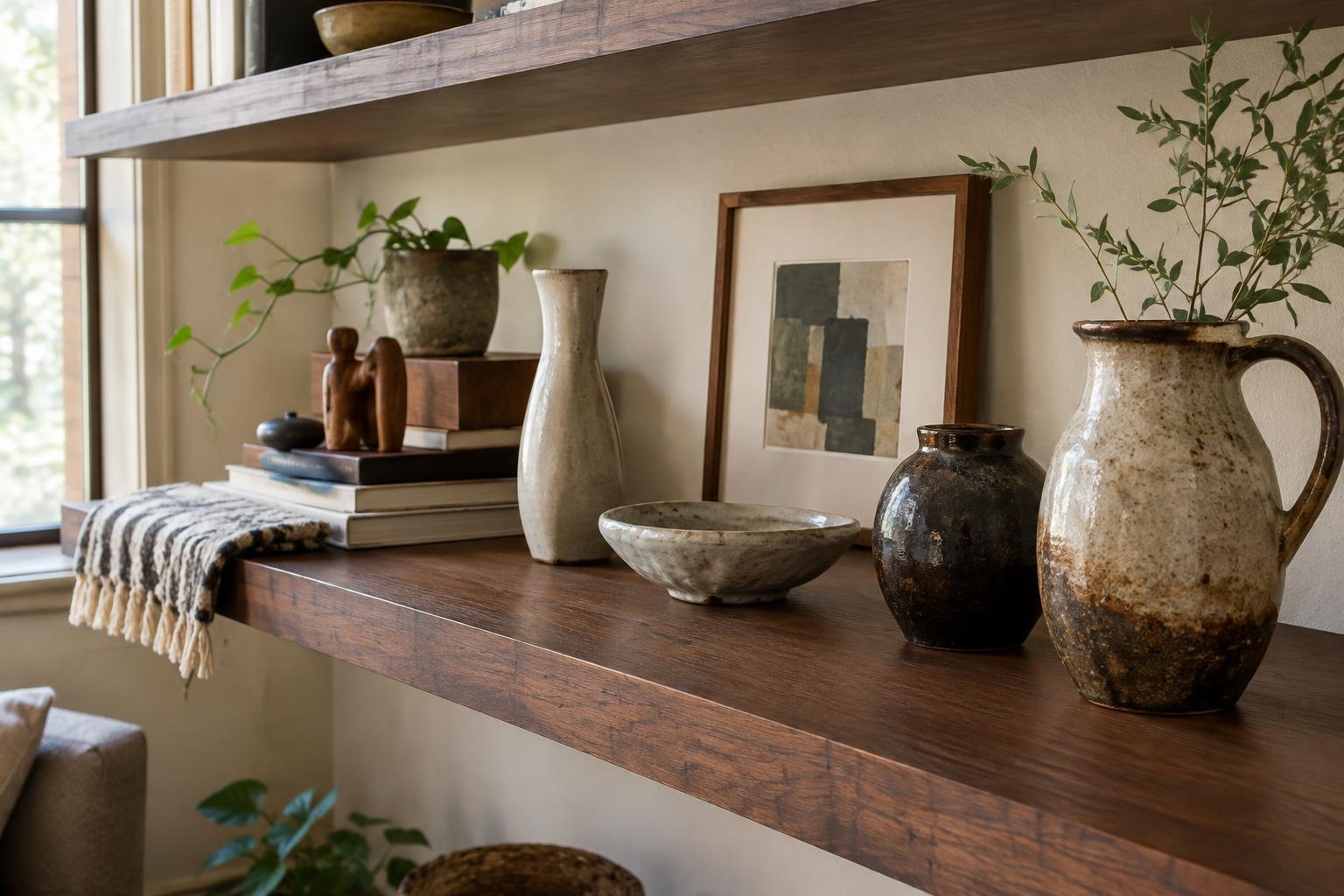
Glossy glazes, glass frames and polished metal can reflect a light source even when the fixture is hidden. Rotate reflective objects until the bright reflection moves away from your usual sightline. You can also shift the light slightly or place a matte object nearby to break up a cluster of shiny surfaces. If a reflection remains distracting, reducing the light's brightness often helps more than changing the entire display.
Choose a soft, consistent look
For a shelf meant to feel calm, choose lighting that sits comfortably alongside the room's other lamps. Mixing a noticeably cool shelf light with warm surrounding light can make objects look disconnected from the space. If you are comparing products, look at how the light treats familiar materials in person when possible: white paper, natural linen and a favorite piece of pottery are useful references. The goal is a pleasing appearance, not a perfect technical match.
A dimmable light gives you room to adjust the shelf after sunset or when the display changes. Check that any bulb, strip, driver and dimmer are compatible before buying them as a set. Avoid placing lights where they press against textiles, paper or other items that could be affected by heat, and follow the product's placement instructions. Keep cords tidy so they do not dangle through the display or get trapped behind heavy objects.
Test the display in everyday use
Style the shelf loosely before making final lighting decisions. Place your tallest objects, then add smaller pieces and leave a few open areas. Empty space gives light somewhere to fall and makes the arrangement easier to read. If the back of the shelf remains very dark, a light-colored backdrop or a little more room between objects may help. Deep shelves may need particular attention because items at the front can shade those behind them.
Finally, look again at the display after dark with your usual room lights on. Notice whether you are drawn to the objects or to the fixtures and their reflections. Adjust one thing at a time: brightness, angle, object spacing or the position of a reflective piece. A shelf can change throughout the year, so treat its lighting as adjustable too. The most successful setup is one that makes the collection comfortable to look at during ordinary evenings, not just when it is first arranged.