Start with what the room needs
Lining sits behind the visible curtain fabric, but it can change how the whole window feels. It may reduce incoming light, give a lightweight fabric more body or help protect its reverse side from sun exposure. Leaving a curtain unlined can be just as deliberate: it keeps the fabric soft, airy and often easier to sew. The best choice depends on what bothers you at the window and what you want to see when the curtains are closed.
Before choosing a lining, notice the direction of the light, whether you need privacy after dark and how often you open the curtains. Also look at the fabric you plan to use. A dense weave may already provide enough coverage, while a loose weave will reveal more of its texture and anything behind it. Hold a sample against the window during the day and in front of a lamp at night; each test shows something different.
Choose blackout for stronger light control
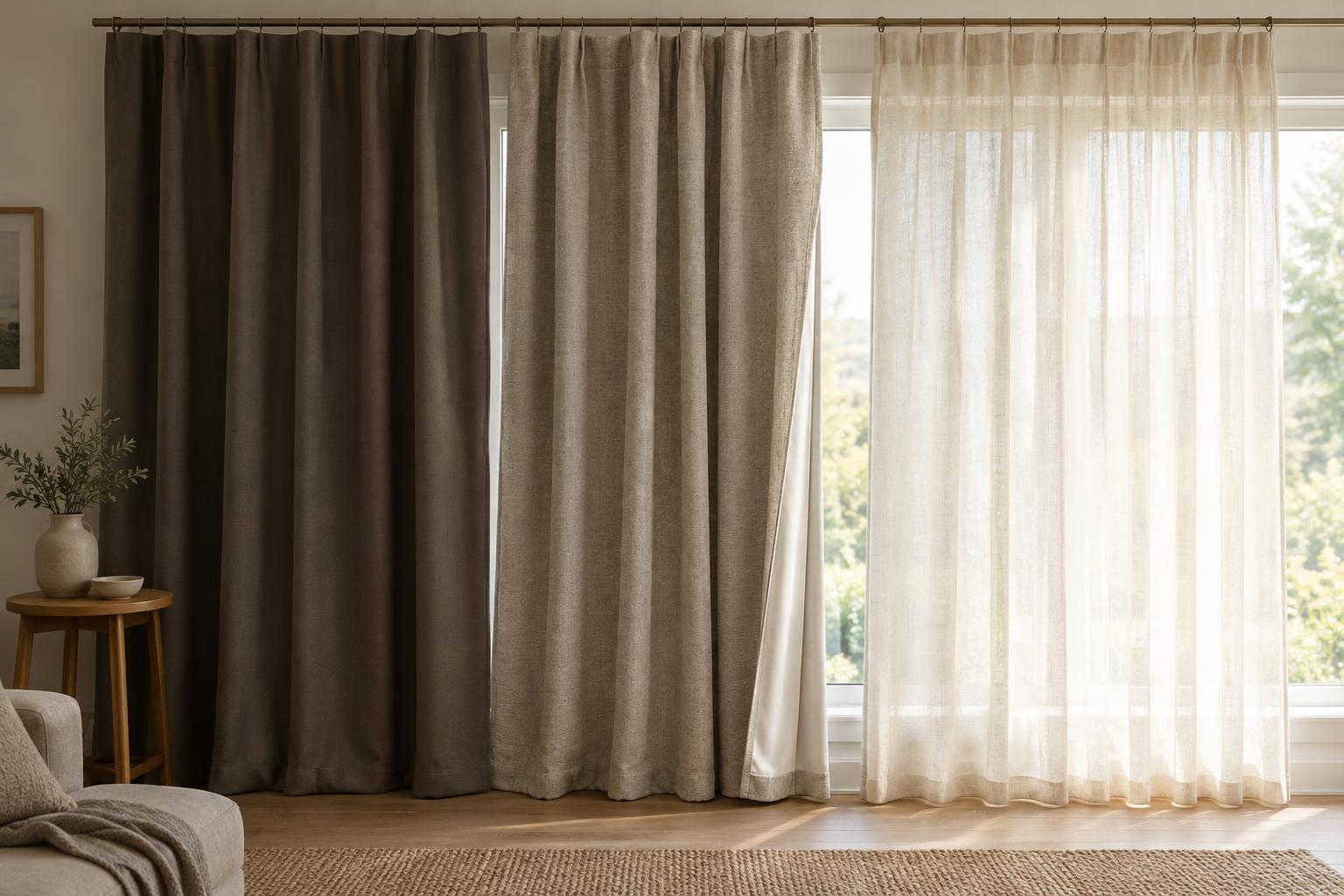
Blackout lining is intended to block light through the curtain panel. It is useful in bedrooms, nurseries or any room where early daylight or street lighting is distracting. It can also make a pale or patterned face fabric appear more opaque when closed. Check a sample before committing, since blackout products vary in thickness, finish and feel; some create a firmer drape than a soft woven lining.
A blackout panel cannot darken a room on its own if light enters around the edges. For better coverage, mount the pole or track beyond the sides of the window, allow the curtains to overlap in the middle and consider how they meet the wall and sill. These details can matter as much as the lining. If you like daylight in the room but need darkness only for sleep, pairing an easily opened blackout curtain with another window covering may give you more flexibility.
Consider thermal lining for comfort
Thermal lining is designed to add a layer between the room and the window. It may help reduce drafts and slow heat movement when curtains are closed, especially if the panels cover the window well. It will not replace fixing gaps around a frame or improving the window itself. The fabric, fullness and fit of the finished curtain all affect how much difference you notice.
If comfort is your priority, check product descriptions rather than assuming that every heavy lining is thermal or that every thermal lining blocks light. Some linings offer both features, but the names are not interchangeable. Think about daily use, too: closing curtains on a chilly evening can be helpful, while opening them when you want daylight or warmth from the sun keeps the room adaptable. Avoid trapping fabric against a heater, and follow the heater maker’s clearance guidance.
Leave fabric unlined when lightness is the point
Unlined curtains suit spaces where filtered daylight, visible texture and a relaxed drape are more important than darkness. Linen-look weaves, cottons and other decorative fabrics can look particularly appealing when sunlight passes through them. An unlined curtain is usually less bulky, which can help at a narrow window or where there is little room for panels to stack when open.
The trade-offs are worth checking with a sample. An unlined fabric may show its seams from the outside, offer limited nighttime privacy or fade unevenly where it receives strong sun. It may also change appearance more noticeably between daylight and lamplight. If you love a sheer look but need privacy after dark, consider a separate blind or a second curtain layer instead of asking one fabric to do both jobs.
Check the finish before you make or buy
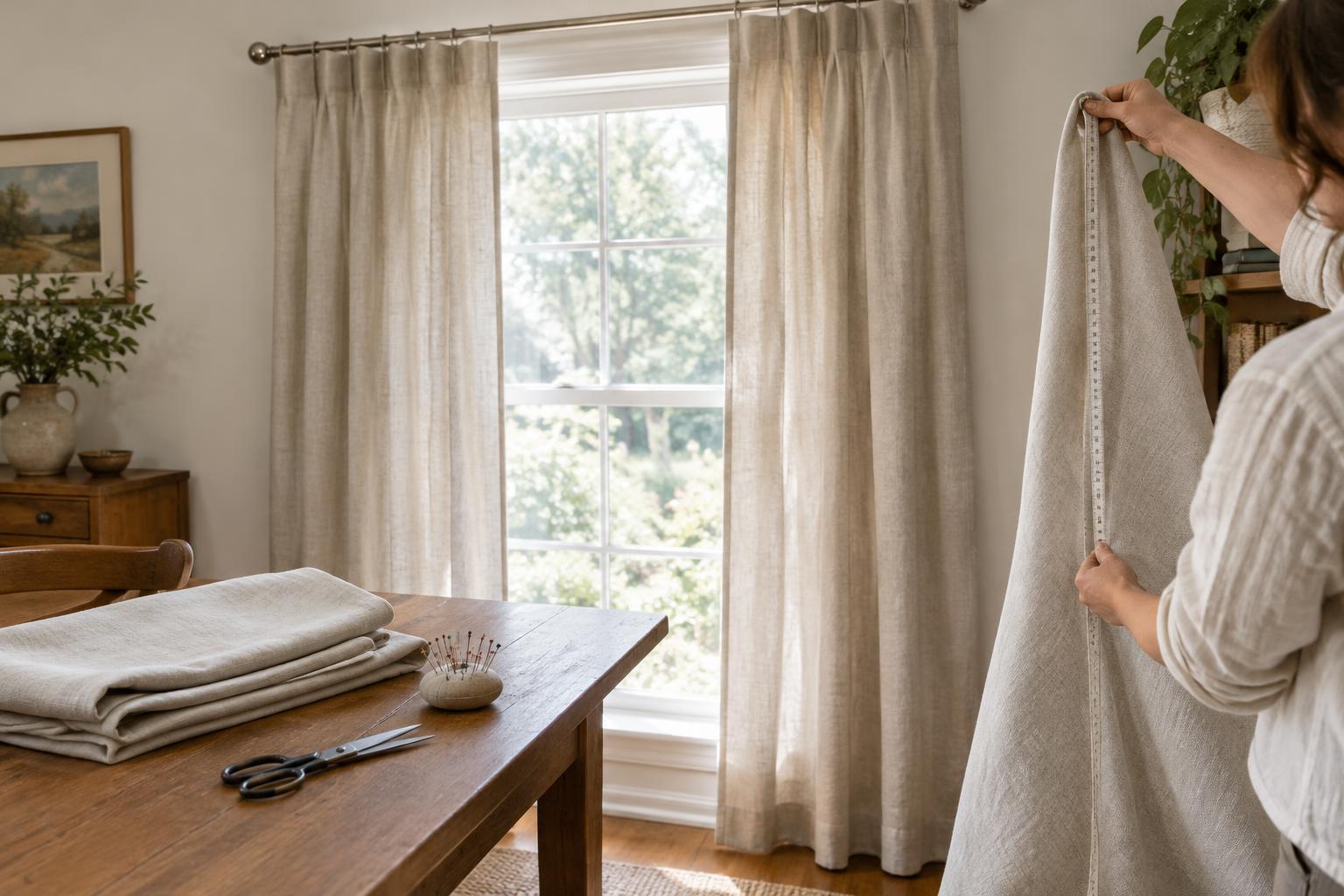
Lining adds weight and bulk, so consider the curtain heading, hardware and how the fabric will hang. A stiff lining behind a very fluid face fabric can change its folds; two fabrics with similar movement often sit more comfortably together. If you are sewing, test the pair in a generous sample, including a hem and side edge. This reveals whether the layers hang neatly before you cut full-length panels.
Finally, read the care instructions for both fabrics. Layers that shrink differently can leave a lining peeking below the hem after washing, so do not assume a finished curtain will be machine washable. Choose blackout when darkness matters most, thermal when you want an added comfort layer, and unlined when softness and daylight lead the brief. If you need more than one benefit, compare samples and plan the installation as carefully as the fabric.