Start with the rod, not the window
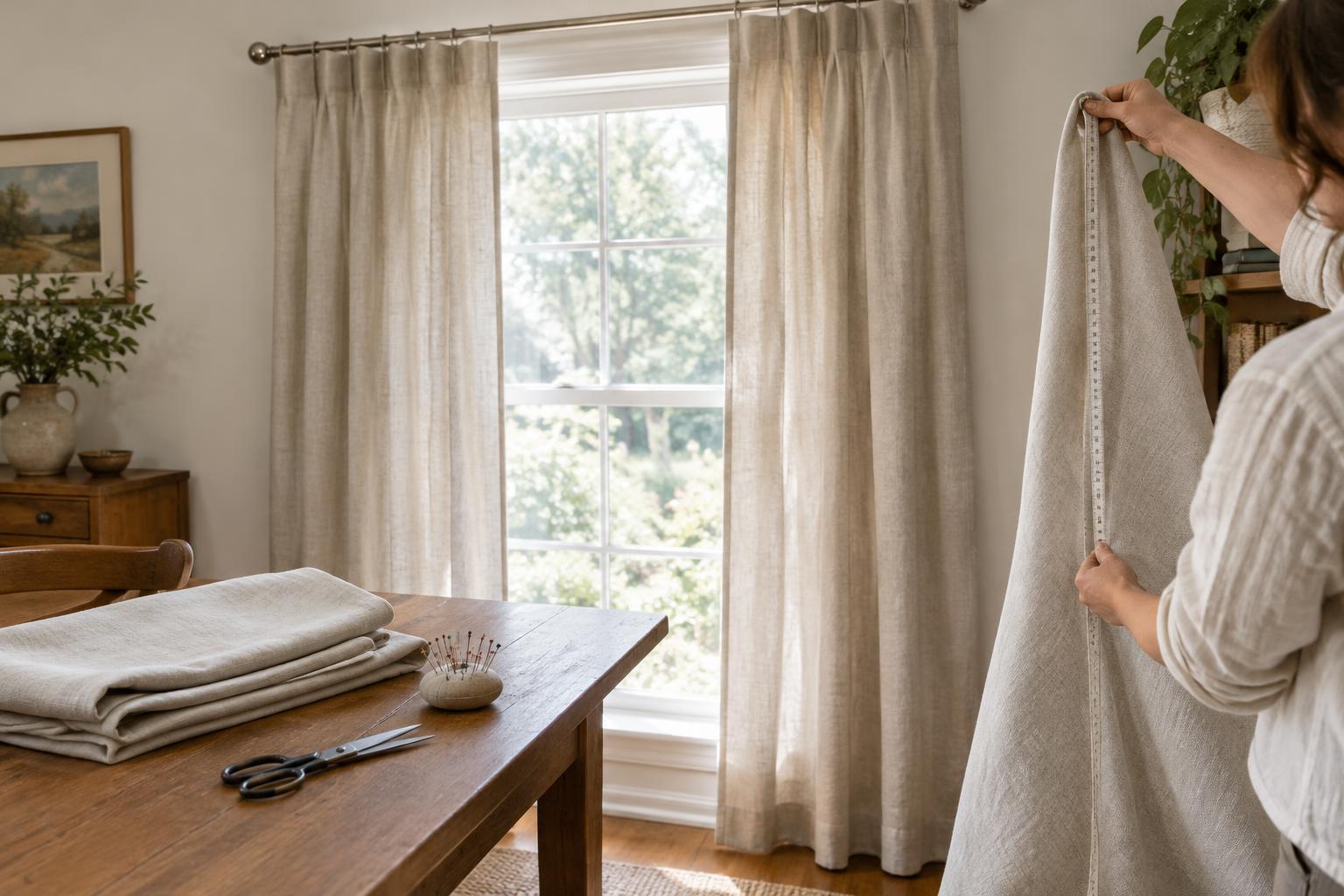
Before measuring fabric, decide where the curtain rod will sit and how the panels will hang from it. A rod mounted beyond the sides of the window needs wider curtains than one fitted inside the frame. Measure the usable span of the rod, excluding decorative finials. Then measure the drop from the point where the fabric will hang to the place you want the bottom edge to finish. That might be just below the sill, near the floor, or at another height that suits the room.
Write down the rod span and finished drop separately. Also note the hanging method: clip rings, a rod pocket, and tabs each affect where the top of the fabric sits. If the rod has not yet been installed, mark its planned position and measure from that point rather than relying on the window height alone.
Choose a finished width with some fullness
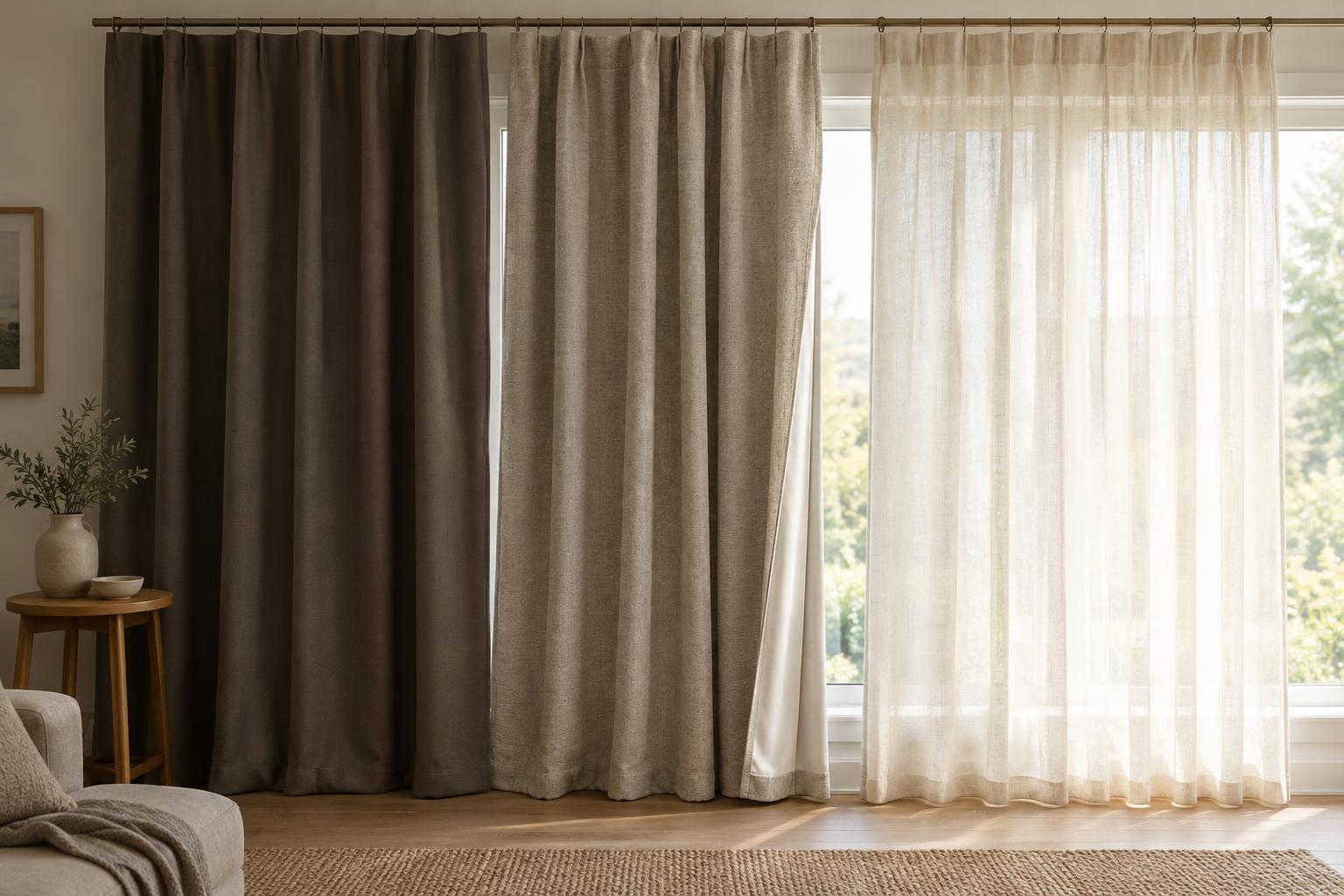
Curtains usually look better when their combined fabric width is greater than the rod span. This extra width, called fullness, lets the panels form folds instead of hanging flat. For a simple, relaxed pair, aim for a combined finished width of about one and a half to two times the rod span. A thicker fabric may need less fullness than a light fabric to achieve the look you want.
Multiply the rod span by your chosen fullness, then divide by the number of panels. For a 60-inch rod and two panels at one-and-a-half-times fullness, the combined finished width is 90 inches, or 45 inches per panel. This is the width after the side hems are sewn. Add fabric for those hems before deciding what width to cut.
Add allowances to the finished length
The finished drop is not the same as the cutting length. Fabric folded into the top and bottom hems will no longer contribute to the visible length. For panels hung from clips at their top edge, one straightforward plan is a double 1-inch fold at the top and a double 2-inch fold at the bottom. That uses 2 inches at the top and 4 inches at the bottom, so you would add 6 inches to the desired finished drop.
For example, an 84-inch drop plus those hems requires a 90-inch cutting length for each panel. This calculation assumes the clips grip the finished top edge at the point from which you measured. If your clips hang the fabric below the rod, measure from the gripping point, not the rod itself. A rod pocket or tabs need their own top allowance; choose their dimensions before calculating the cut.
Check fabric width before calculating yardage
Fabric is sold in different widths, so check the usable width of the fabric you intend to buy. Leave out any selvages you plan to remove. For a simple side hem, a double 1-inch fold on each side uses 4 inches of width per panel. A usable fabric width of 54 inches would therefore produce a finished panel about 50 inches wide. Two such panels would cover the 60-inch rod at roughly one-and-two-thirds-times fullness, close to the example target.
If one fabric width is too narrow for each panel, you may need to join lengths of fabric. Plan where the seams will fall and allow for seam allowances. A bold print or repeating motif may also need extra length so both panels can be cut with the pattern at a similar height. Check the repeat on the actual fabric rather than assuming the panels will match when cut consecutively.
Turn the measurements into a cutting plan
For the 54-inch-wide fabric in the example, each panel can be cut from one fabric width. With a 90-inch cutting length per panel, two panels require 180 inches of fabric length, or 5 yards, before any extra for pattern matching, squaring uneven ends, or shrinkage. Check which direction the print runs: this plan assumes the fabric’s length runs from the top to the bottom of each curtain.
If the fabric is washable, prepare it according to its care instructions before cutting, especially if you expect to wash the finished curtains. Buy a little extra when shrinkage or pattern placement may affect the layout. Once the fabric is ready, mark both panels from the same measured edge and check their lengths against each other before sewing. A short written cutting plan makes it much easier to catch an allowance you may have overlooked.