Start with the cover, not the label
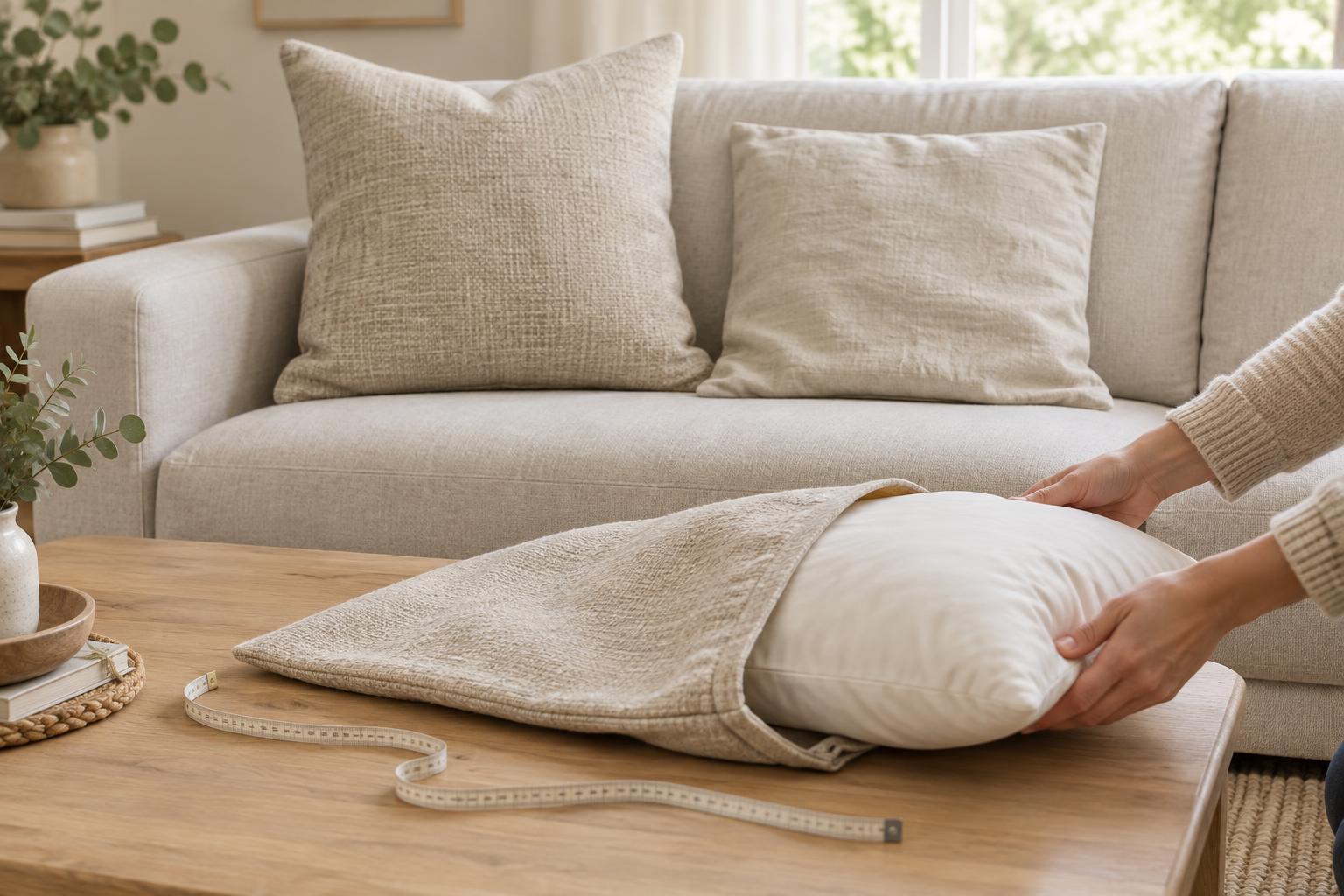
A full-looking cushion begins with an insert that suits the finished cover. If you have already made or bought the cover, lay it flat on a table, smooth it gently without stretching it, and measure from seam to seam across its width and height. Measure the fabric panel rather than including a flange, piping or other decorative edge. These finished dimensions are more useful than the size of the fabric pieces before sewing, because seam allowances reduce the space available to the insert.
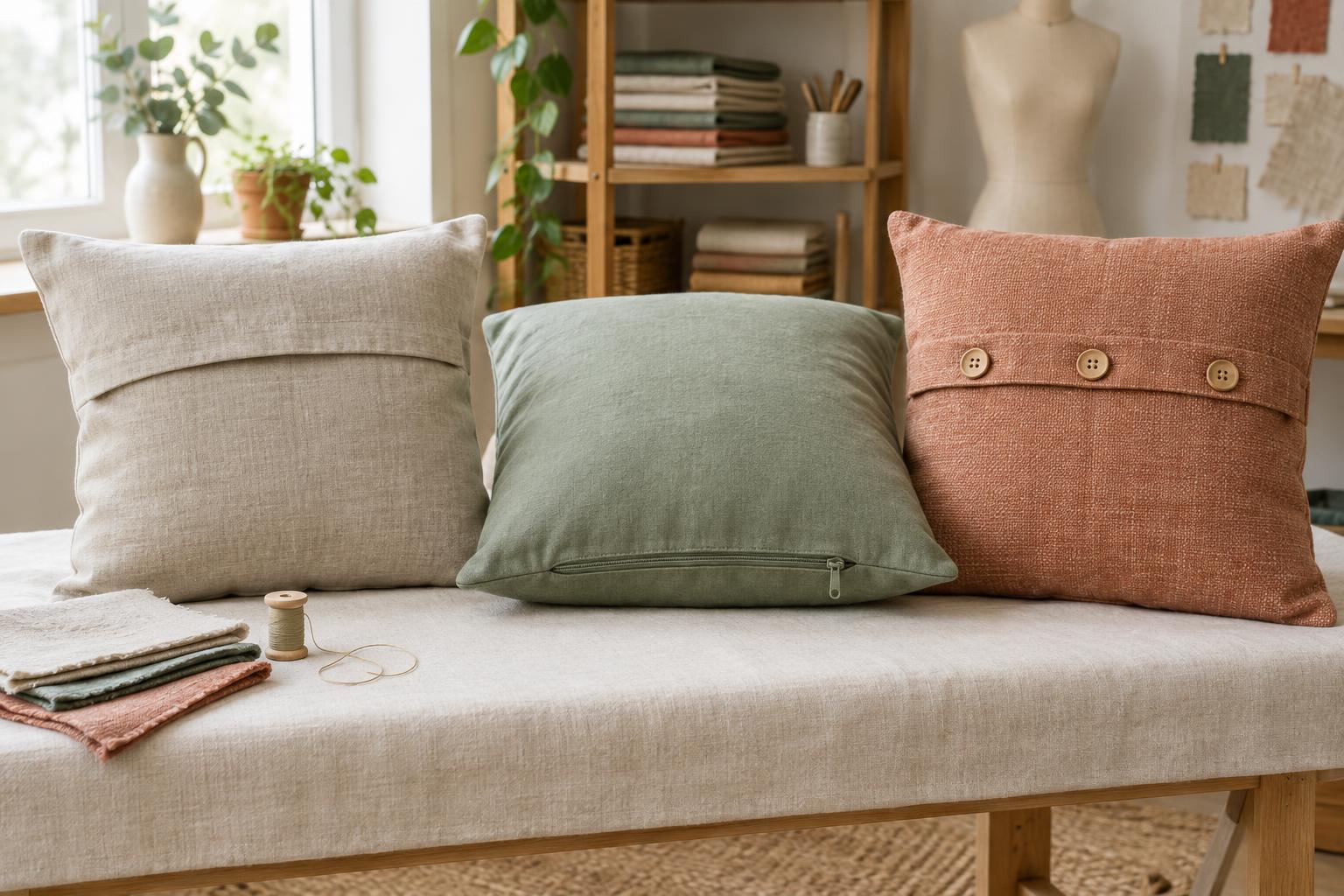
Check the cover’s shape while it is empty. A square cover may be slightly wider than it is tall, and a handmade cover may have corners that are softly rounded rather than sharp. Note the zipper or envelope opening, too. An insert must be able to pass through it without forcing the closure or pulling at the stitches. If the cover is gusseted, with a strip of fabric forming its sides, consider its depth as well as its front-panel measurements: a deep cover needs enough filling to occupy that extra space.
Choose how much extra fullness you want
For a typical square cushion cover made from a sturdy woven fabric, an insert about 1 to 2 inches (roughly 2.5 to 5 cm) larger than the cover in both width and height is a useful starting point. For example, an 18-inch square cover may look comfortably full with a 20-inch square insert. This is a starting point, not a rule: insert dimensions describe its fabric shell, while its loft and firmness determine how much space it fills in practice.
Use less size difference if the cover is small, delicate or made from a fabric that stretches or shows strain easily. A dense, firmly packed insert may fill a cover well even when their stated dimensions match. A soft insert that compresses readily may need a little more size to keep the corners from looking empty. For larger cushions, judge the combination by how it looks and feels rather than increasing the insert size by a fixed amount. The goal is a rounded face and supported corners, not taut seams or a bulging closure.
Account for fabric and filling
Cover fabric changes the result. Firm linen, canvas and upholstery weaves tend to hold a crisp outline, so an overfilled insert can make their seams pull. Knits and loosely woven fabrics may expand around the insert, producing a softer shape, but too much pressure can distort the pattern or stress the fabric over time. Velvet and other pile fabrics can show every lump beneath them. A lining may help a fine or open weave contain loose fibers, though it will not make an oversized insert fit.
Insert filling matters just as much. A resilient polyester-filled insert can create an even, rounded shape, especially after it has been fluffed. Feather or down-filled inserts tend to compress and can give a softer, more relaxed silhouette; check that their ticking keeps the filling contained. Foam is usually less forgiving when compressed into a smaller cover, so select it for the intended fit rather than relying on an oversized piece to create fullness. Whatever the filling, compare inserts by how they behave when pressed, not by the size printed on the package alone.
Test the fit before committing
If you can try an insert in the cover, open the closure fully and fold the insert gently to guide it through. Work its corners into the cover’s corners before settling the center. Close the opening without tugging hard, then shake and pat the cushion so the filling spreads evenly. Set it upright where you intend to use it; a cushion that looks full on a table may slump when leaned against a sofa back.
Look for a few clear signs. Empty tips at the corners and a hollow center suggest that the insert may be too small, too soft or unevenly filled. Seams that curve sharply, piping that twists, a stretched zipper or a cover that feels hard rather than comfortable suggest too much insert. If you are making the cover yourself, testing with an insert before finishing the closure gives you a chance to adjust the dimensions. When buying separately, choose a returnable insert if possible, particularly for an unusually shaped cover.
Keep the finished cushion looking full
A well-sized insert still benefits from occasional reshaping. Lift the cushion, give its sides a few firm pats and redistribute the filling toward the corners. Rotate a cushion that is always leaned on in the same spot, and follow the care instructions for both cover and insert when cleaning. Washing or drying can change the shape of some fillings, so let each component dry thoroughly before putting the cover back on.
For a handmade cover, aim for a fit that leaves the textile looking intentional. The weave should sit smoothly, the corners should feel occupied, and the closure should lie flat. A slightly relaxed cushion can be just as appealing as a plump one; choosing between them is a styling preference. Measuring carefully and checking the filling give you control over that choice without asking the seams to do the work.