Start with how the cushion will be used
A cushion closure does more than keep the insert inside. It changes the look of the back, how easily the cover comes off for washing, and how the cushion feels when someone leans against it. Before choosing a design, consider where the cushion will sit. A decorative cushion on a guest bed may be opened rarely; one on a busy sofa may need frequent washing and a closure that stays put.
Look at the fabric, too. A firm woven cloth can hold a crisp envelope opening, while a slippery or loosely woven fabric may need more overlap to keep the insert hidden. Thick upholstery fabric can make a button placket bulky, and a delicate textile may benefit from a closure that puts less strain on any one point. Whatever you choose, test the opening with the actual insert before sewing the cover shut.
Envelope closures: simple and soft
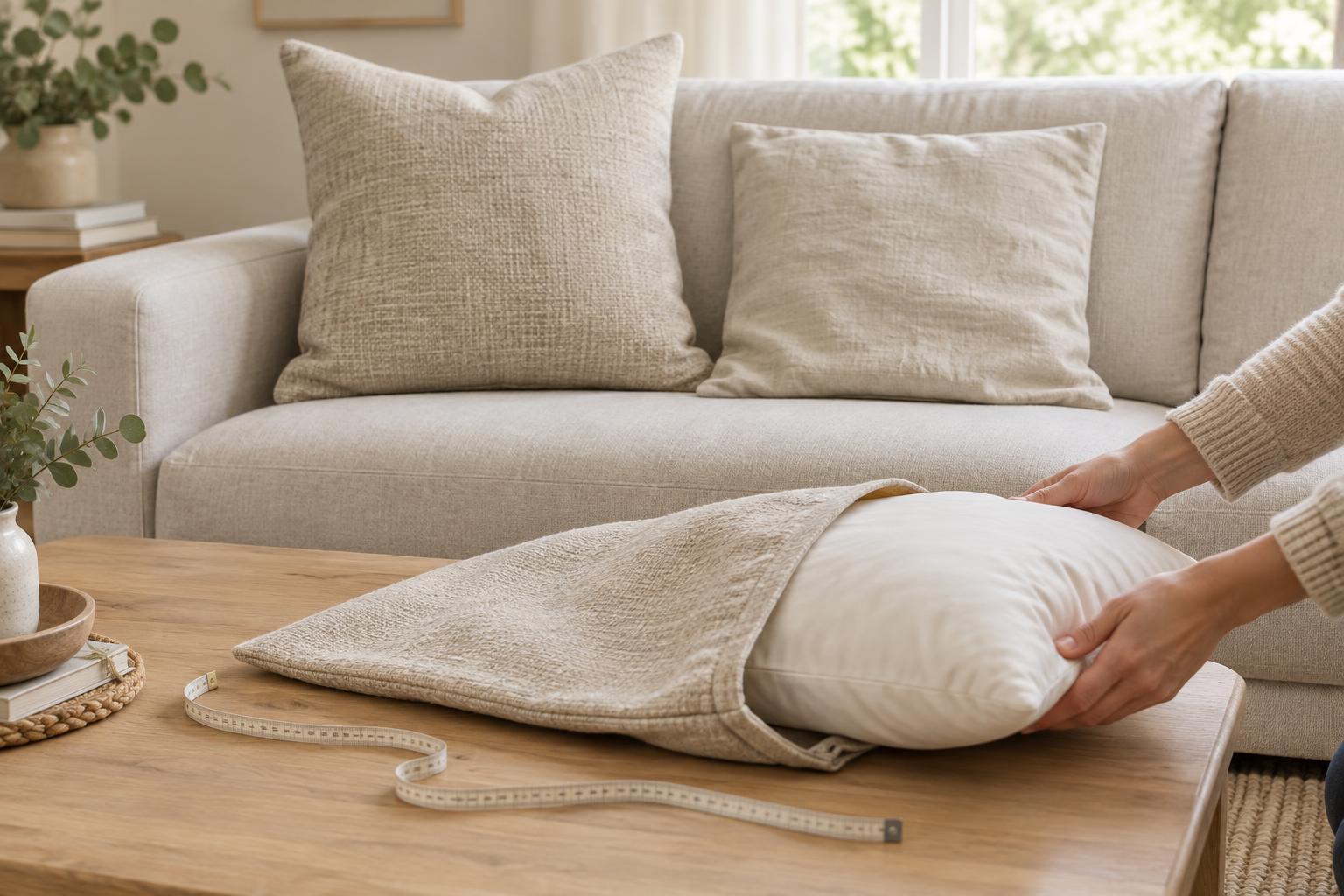
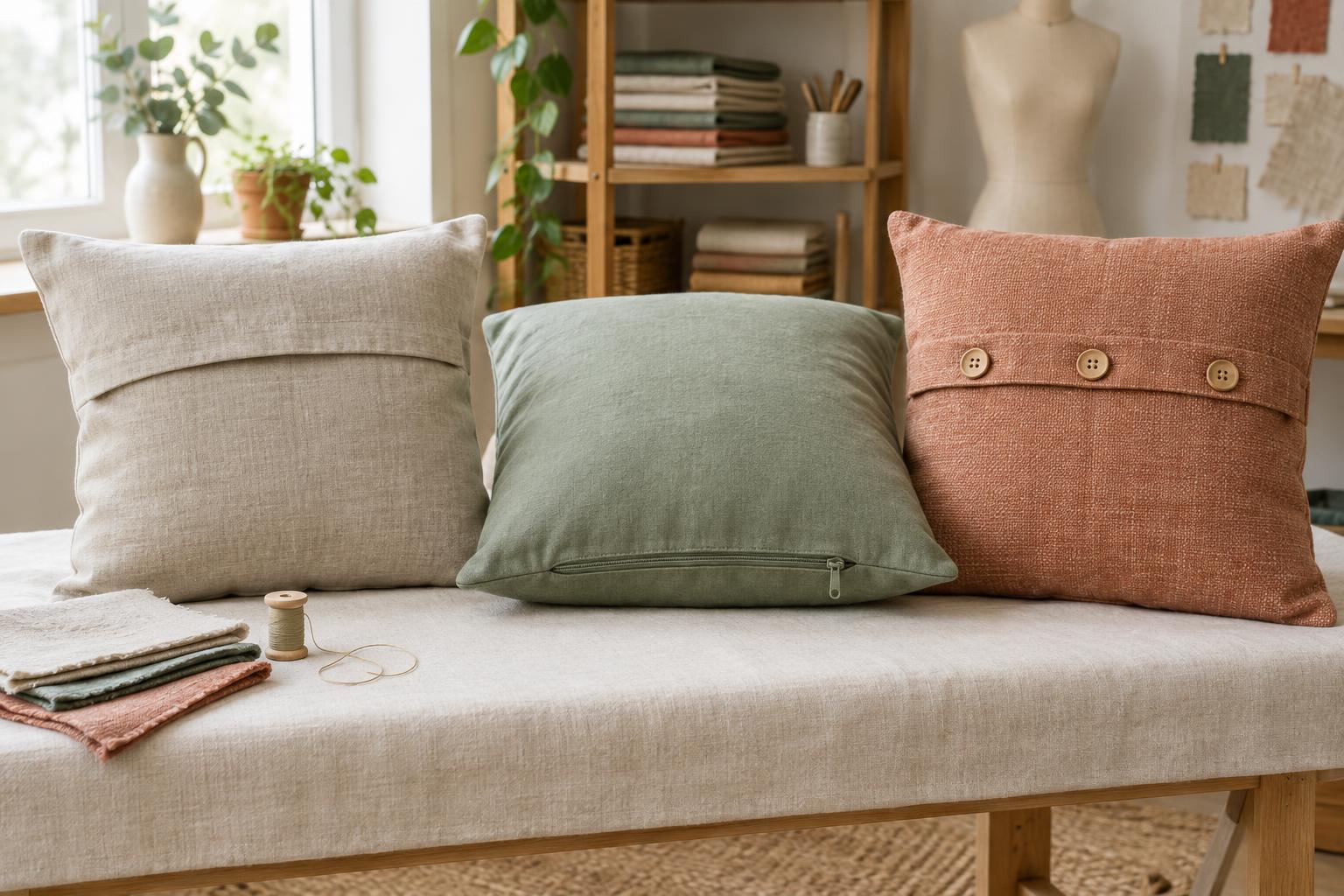
An envelope cover has two back panels that overlap. To remove the insert, you part the panels and pull it through the opening. There is no hardware to buy or feel through the cushion, making this a practical choice for beginners and for covers that should look soft and uncomplicated.
The overlap is the important detail. If it is too shallow, the opening can gape when the cushion is full. If it is too deep, removing the insert becomes awkward. For a medium-sized cushion, an overlap of roughly 10 to 15 centimetres is a useful starting point, but check it against the insert’s thickness and the fabric’s flexibility. Hem the opening edges before assembling the cover, and position the panels so their hemmed edges overlap neatly at the centre back.
An envelope closure may be less suitable when a plump insert pushes firmly against the opening or when you want the back to lie completely smooth. It also uses extra fabric for the overlapping panels, which matters if you are working with a small piece of cloth.
Zippers: a secure, discreet opening
A zipper closes the opening from end to end, helping contain a full insert without a visible gap. Placed along the bottom edge, it can be hard to notice when the cushion is on display. An invisible zipper gives a particularly quiet finish, while a standard zipper may be easier to handle if you are new to installing them.
Choose a zipper opening wide enough to remove the insert without forcing it through. A short opening can strain the stitching or catch on a textured fabric. When sewing, keep the fabric edges even, press them where appropriate, and check that the slider moves freely before closing the remaining seams. If the fabric frays, finish the seam allowances near the zipper so loose threads do not catch in its teeth.
A zipper adds a little expense and requires more careful sewing than an envelope back, but it is often worth considering for covers that will be removed regularly. Keep the zipper pull tucked away from the corner or under a small fabric tab if you do not want it visible or noticeable.
Buttons: a closure that can become a detail
Buttons give the back of a cushion a deliberate, handmade look. They work especially well when the cushion might be seen from both sides or when the buttons echo another material in the room, such as wood or covered fabric. Unlike a zipper, they remain visible, so their spacing and scale become part of the design.
Plan a button placket with enough overlap to cover the insert. Reinforce the buttonholes when the fabric is lightweight or prone to fraying, and place enough buttons along the opening to prevent gaps between them. Make a test buttonhole on a scrap that includes the same layers as the finished placket; thickness can change how the machine feeds the fabric. Sew each button securely, leaving just enough room beneath it for the fabric layers to sit comfortably.
Buttons take longer to open than a zipper and may feel uncomfortable if they sit on the side someone leans against. They can also work loose over time, so check them when laundering the cover. For a cushion used around young children, consider whether detachable buttons are an appropriate choice.
Match the closure to the project
Choose an envelope back when you want a straightforward make, minimal supplies and no hard components. Choose a zipper when a neat, secure opening and easy removal matter most. Choose buttons when the closure itself should add character and you are happy to spend time on the finishing details. None is universally best: the fabric, insert and intended use should lead the decision.
Before cutting, sketch the front and back pieces and mark where the opening will sit. Account for seam allowances, hems, plackets or overlap in addition to the finished cushion dimensions. If your fabric has a directional print, check which way each back panel will face once assembled. A few minutes of planning helps the closure look intentional—and makes it much easier to live with the finished cover.