Three tools, three different jobs
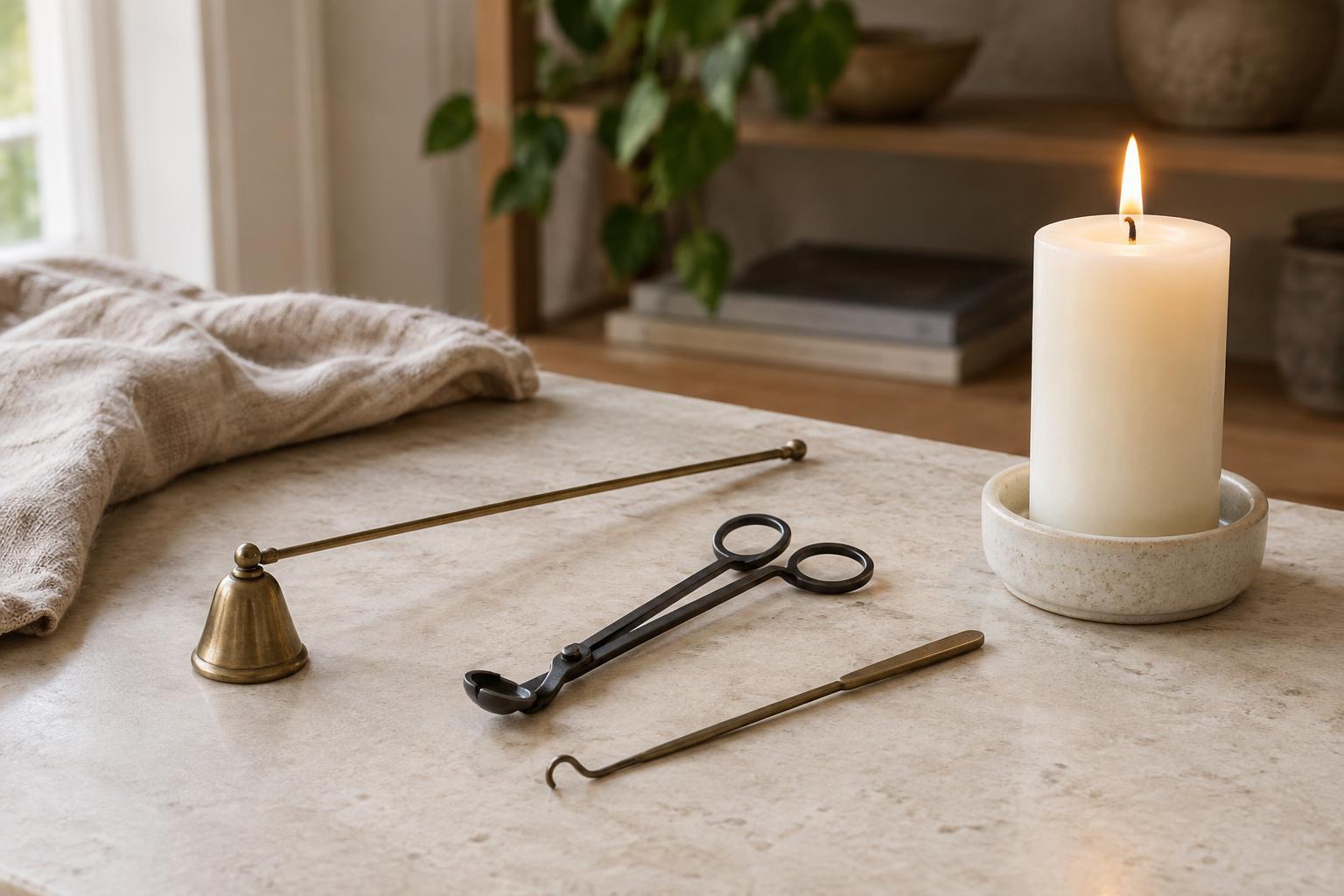
Candle accessories can look like a matched set, but a snuffer, wick trimmer and wick dipper are not interchangeable. A snuffer extinguishes a flame by covering it. A trimmer shortens the wick before lighting the candle again. A dipper puts out a lit wick by briefly pressing it into the candle’s melted wax, then bringing it upright. You can enjoy candles without owning all three; the useful choice depends on the kind of candles you burn and which part of their upkeep you find awkward.
Whatever tool you use, start with the candle maker’s instructions. Keep a burning candle in sight, away from drafts and flammable materials, and on a stable, heat-resistant surface. Metal tools can become hot near a flame, so hold them by their handles and let them cool before putting them away.
The snuffer: a covered way to put out a flame
A traditional candle snuffer has a small bell or cone on the end of a handle. Lower the bell over the flame until it goes out, then lift it away carefully. The cover limits the air reaching the flame, allowing you to extinguish it without blowing across the candle. That can be especially handy for a taper on a dressed table, where a puff of air might disturb nearby decorations.
Snuffers vary in shape and length. A longer handle gives you more reach, while a bell that fits over the flame without knocking the wick or candle edge is easier to control. A snuffer may still leave a brief wisp of smoke; it is a method of extinguishing, not a guarantee of a smoke-free room. Avoid pressing its rim into soft wax or trapping it against a vessel where heat could build up. A candle jar’s lid should not be used as a substitute unless its maker specifically says it is intended for extinguishing the flame.
The wick trimmer: preparation for the next burn
A wick trimmer is a small pair of angled scissors, often with a shallow tray near the blades to catch the cut end. Its job is to remove excess wick before lighting. An overly long wick can produce a taller, less steady flame and more soot. Many candle makers recommend a wick of about 6 mm, or ¼ inch, but follow the guidance supplied with your particular candle.
Trim only when the flame is out and the wax and container have cooled. Position the blades over the wick, make a clean cut, and remove the clipping so it cannot sit in the wax pool and catch fire later. If the wick has a dark, mushroom-shaped tip, trim that away gently rather than pulling at the wick. The angled head is useful for reaching into a deep jar, where ordinary scissors may be difficult to position. A trimmer is not designed to put out a burning candle.
The wick dipper: extinguishing with melted wax
A wick dipper is a slim metal tool with a small hook or bent tip. While a wax pool is still liquid, use the tip to guide the lit wick briefly beneath the wax surface. Once the flame is out, lift the wick back up so it stands ready for the next lighting. This method often leaves less lingering smoke than blowing out a candle because the wax coats the extinguished wick.
A dipper works best when there is enough melted wax to cover the wick without scraping the bottom of the candle. It is less useful for a newly lit candle with no wax pool, or for a wick that is difficult to reach without tipping the container. Move slowly: splashed wax can burn skin and mark surrounding surfaces. Do not leave the wick submerged, since it may be harder to relight once the wax sets. Wipe the tool after it cools so old wax does not build up on the tip.
Choosing and storing a useful set
For tapers, a snuffer may be the most straightforward addition. For jar candles, a wick trimmer can make routine upkeep easier, especially as the wax level drops. A dipper suits people who regularly burn candles long enough to form a liquid wax pool and prefer that method of extinguishing. The three tools can complement one another: trim a cool wick before lighting, then use either a snuffer or a dipper when it is time to put the candle out.
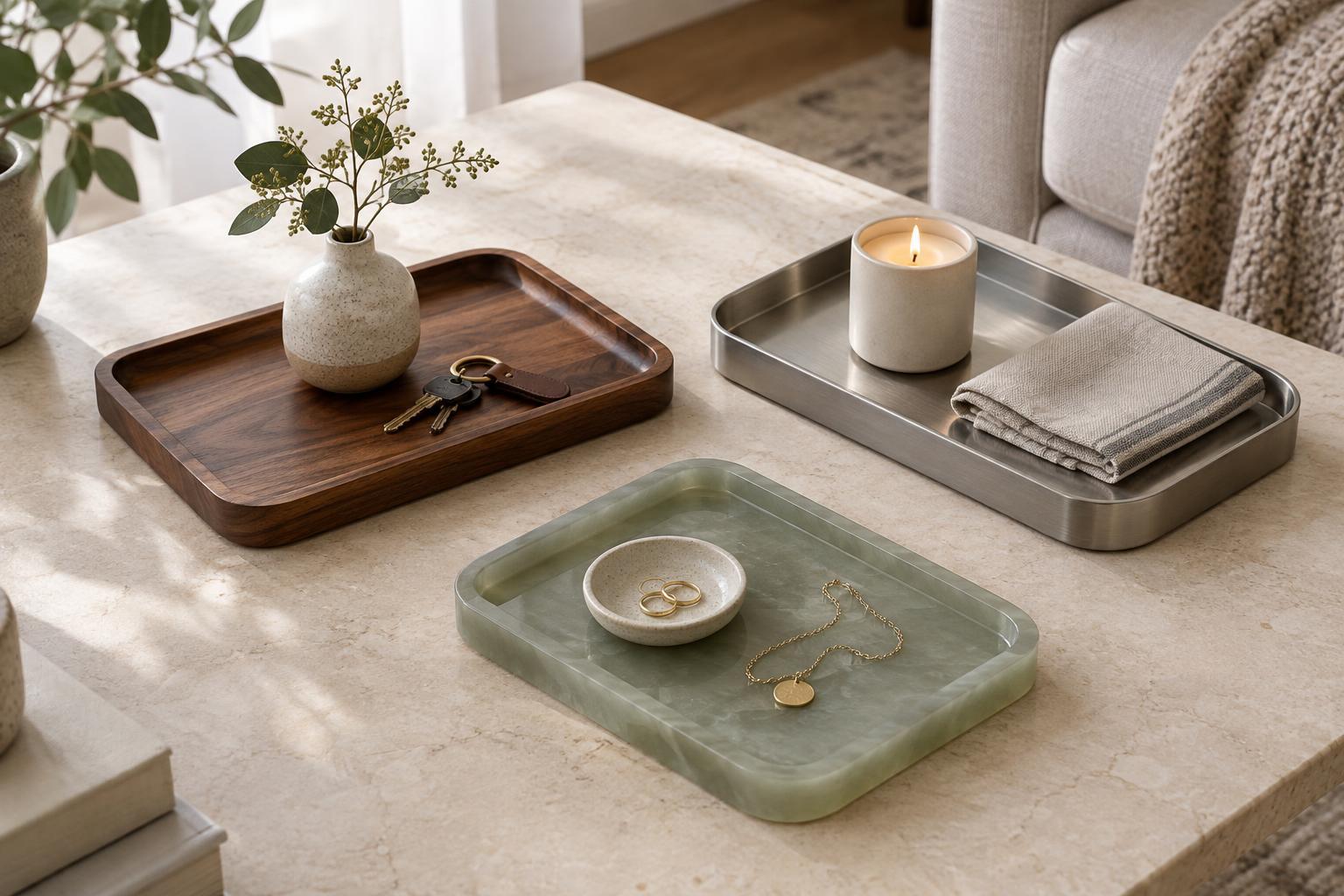
Choose tools that feel balanced in your hand and are long enough to keep your fingers comfortably away from the flame. Smooth edges and simple shapes are easier to wipe clean. For a shelf or tabletop, a small tray can keep the tools together and catch stray wax, but place it away from the burning candle. Store the tools only after they have cooled, and treat their finish as part of their care: a quick wipe is usually more useful than letting soot or wax accumulate.