Start with the tray’s job
A decorative tray can do more than hold objects. It can give loose items a defined place, make a grouping look deliberate and provide a layer between everyday belongings and the furniture beneath them. Before choosing a material, decide where the tray will sit and what it needs to hold. A tray for keys by the door has different demands from one displaying a vase on a shelf.
Think about how often you will move it. If you plan to carry cups or dishes, look for a comfortable grip, a stable base and a raised edge. If it will stay in one place, weight and handle shape may matter less than its proportions. Measure the available surface and leave room around the tray so it does not make a table or shelf feel crowded. Whatever the material, check the maker’s care guidance before using a decorative tray to serve food.
Wood: warm and easy to pair with other materials
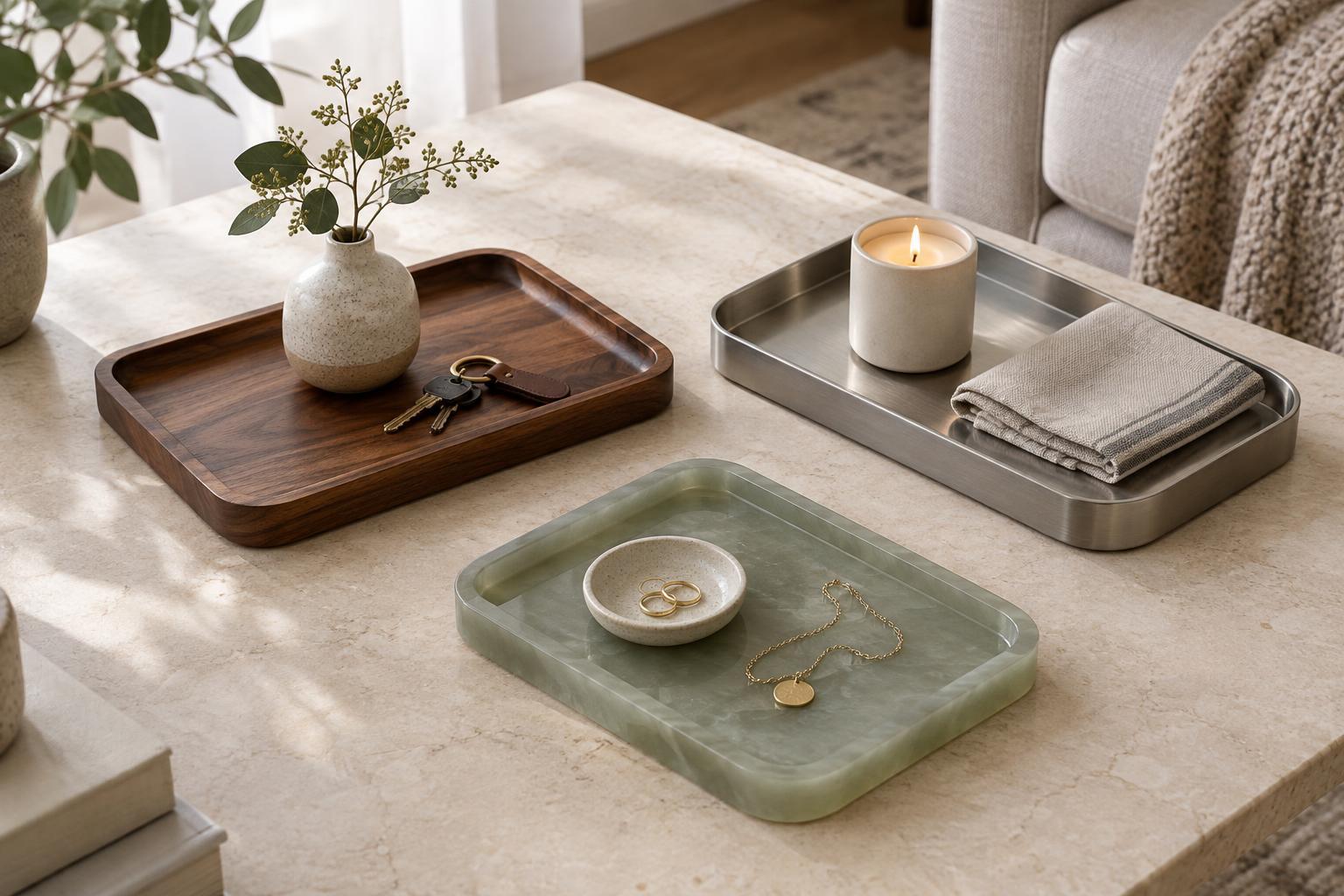
Wood brings visible grain and a softer look to a room. It pairs comfortably with ceramics, glass, linen and woven objects, making it a flexible choice when a tray is mainly used for display. A simple wooden tray can also bring warmth to a stone or metal surface without adding another bright color.
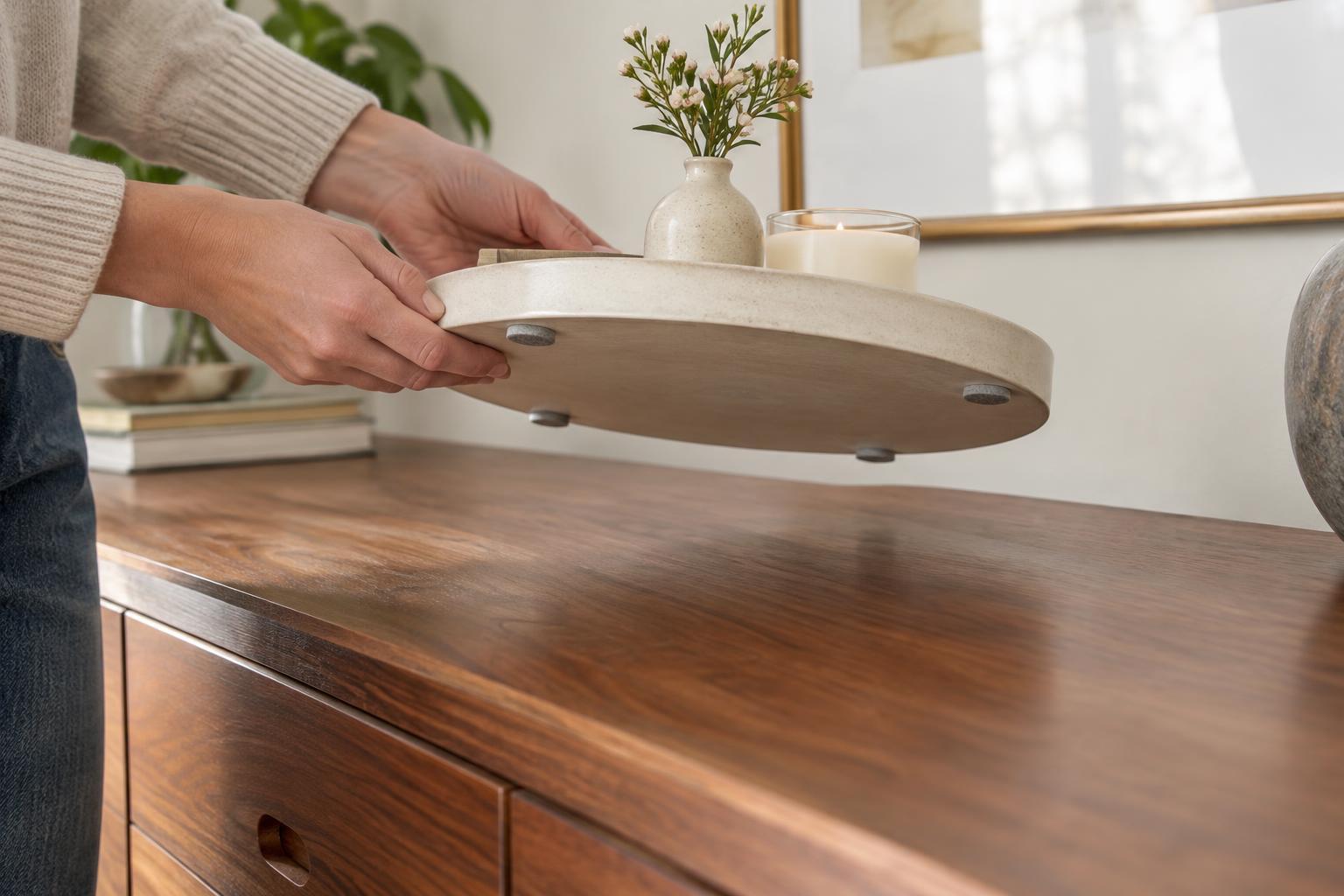
Its finish matters as much as the type of wood. A sealed surface is generally easier to wipe clean than unfinished wood, but standing water can still damage some finishes or leave marks. Wipe spills promptly and avoid leaving damp items in place. For a bathroom or a spot where drinks are often set down, consider whether the particular tray’s finish suits that use rather than assuming all wooden trays will perform alike. Felt pads underneath can help prevent scratches on the furniture it rests on.
Wood is a good fit for a bedside table, a living-room shelf or a dining-table centerpiece that will not need frequent wet cleaning. Look at the corners and joins when choosing one: a tray that rocks on a flat surface will be frustrating to use, however attractive its grain.
Metal: crisp lines and useful contrast
Metal trays often have a slimmer visual profile than thick wooden ones. A painted, brushed or polished surface can lend structure to a casual collection of objects. Metal also creates contrast beside matte ceramics or textured textiles. If you want a tray to stand out, its finish can do much of the work; if you want it to blend in, choose a finish that relates to nearby hardware or lighting.
Different metals and coatings need different care. Some finishes show fingerprints and water spots readily, while scratches may be more noticeable on a smooth, glossy surface. Certain metals can tarnish, and a damaged coating may leave the underlying metal more vulnerable to moisture. For routine cleaning, a soft cloth and a method suited to the tray’s finish are safer starting points than abrasive scrubbers.
Check the underside as well as the top. A hard metal base can mark a delicate tabletop if dragged across it, so lift the tray when moving it or add protective pads where appropriate. Also consider what will sit inside: small hard objects may make more noise against bare metal than they would on wood or resin.
Resin: color and shape, with care for heat
Resin offers a wide range of colors, translucent effects and molded shapes. That variety makes it useful when the tray itself is meant to be a decorative accent rather than a quiet backdrop. A pale resin tray can keep a grouping visually light, while a strong color can tie together accents elsewhere in the room.
Resin trays vary in formulation and finish, so follow the care instructions for the piece you choose. As a general precaution, keep hot cookware, candles with unprotected bases and other heat sources off a resin tray unless it is specifically made for that purpose. Use a soft cloth for cleaning; abrasive tools may dull or scratch a polished surface. If the tray will hold bottles or toiletries, wipe up drips rather than letting products sit on the finish.
For everyday display, resin can be an appealing choice when you want a particular color or an unusual shape. Before buying, feel the edges and check that the base sits flat. A beautiful tray still needs to hold its contents without wobbling.
Choose for the surface and style the contents simply
If you want natural texture and an understated background, start with wood. Choose metal for a crisp outline or a finish that echoes other details in the room. Choose resin when color, translucency or a sculptural shape is the priority. In each case, match the tray’s finish and construction to its location rather than choosing on appearance alone.
To style it, leave some of the tray visible. Try one taller object, such as a small vase, alongside one or two lower items, such as a bowl and a folded napkin. On a busy entry table, give practical items their own space instead of filling every corner. A tray works best when it makes everyday objects easier to find and the surrounding surface easier to use.