Start with what the bowl will hold
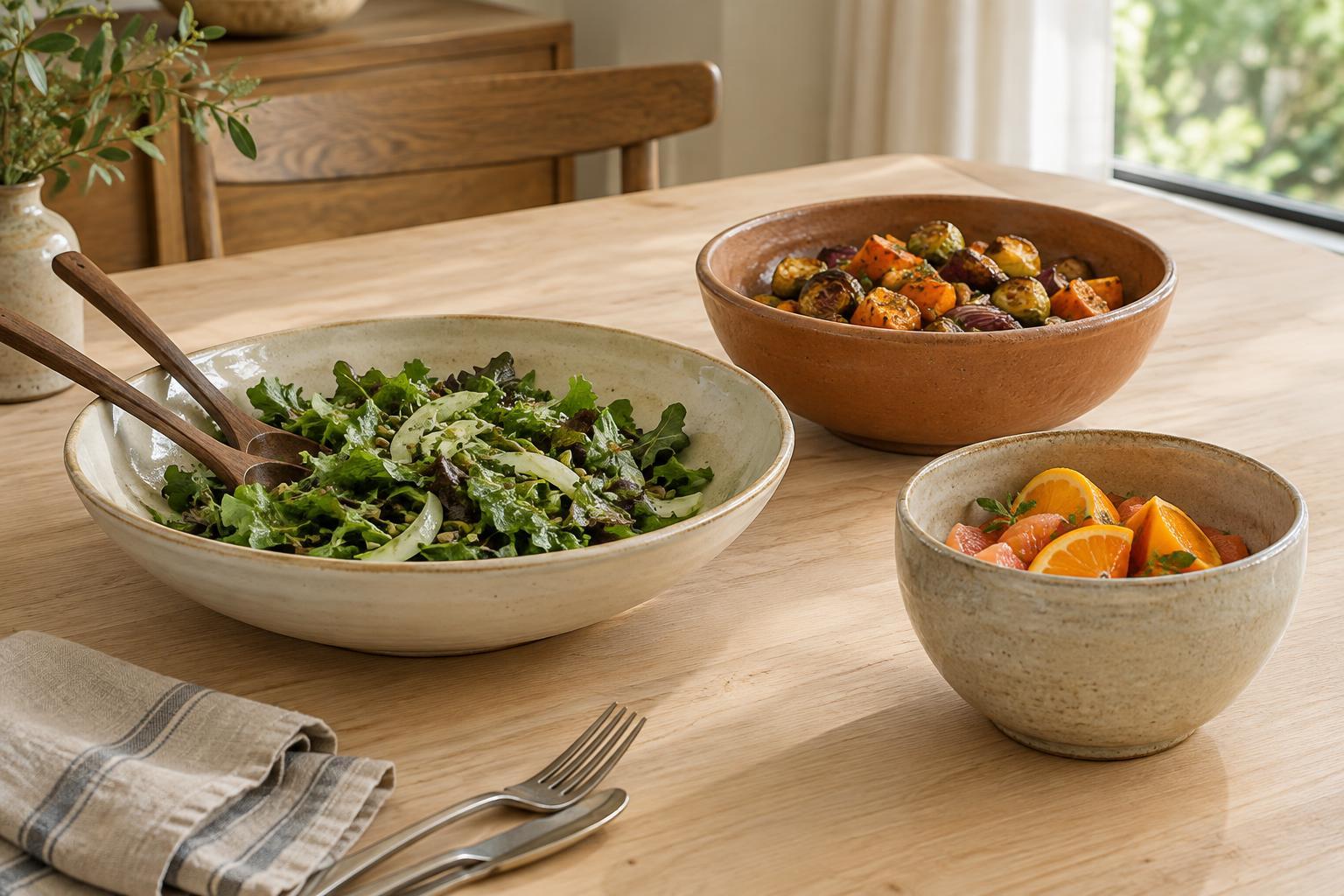
A ceramic serving bowl can look generous on a shelf yet feel awkward once it is filled. Before choosing one, picture the foods you serve most often and how people will take a portion. A bowl for leafy salad needs room for tossing and lifting without spilling over the edge. A bowl for roasted vegetables can be more compact, provided a serving spoon has space to turn. Saucy dishes benefit from sides that keep food contained.
It helps to think about where the bowl will sit, too. On a crowded table, a wide bowl may leave little room for plates and glasses. At a buffet, a deeper bowl can hold more food within a smaller footprint, though guests may need to reach farther down as it empties. Rather than choosing by capacity alone, consider the whole task: filling, carrying, serving, clearing and putting away.
Match depth to the serving motion
Shallow bowls make their contents easy to see and reach. They work well for fruit, bread, salads with delicate toppings and dishes arranged for presentation. Their broad exposed surface also makes it easier to spread ingredients out. The trade-off is that food can escape when you toss a salad or carry the bowl across the room. A shallow bowl is most useful when its sides still rise enough to catch a serving utensil.
Deeper bowls contain loose ingredients and give you room to mix before serving. They are useful for pasta, grain salads and vegetables that are tossed with dressing or sauce. Check the shape of the lower curve, however: a narrow bottom can cause food to pile up, while a steep wall may make the last portions difficult to scoop. If you can handle the bowl in person, try moving a serving spoon around its interior. The utensil should reach the bottom without scraping against an abrupt corner.
Consider usable width, not just overall diameter
The measurement across a bowl’s rim does not tell the whole story. A broad, sloping rim may be attractive and comfortable to grip, but it reduces the space available for food. Compare the inner opening and the flatter area near the bottom as well as the outside diameter. For foods you want to display in a loose layer, such as sliced tomatoes or pastries, a broad interior is often more useful than extra depth.
Width also affects how a bowl works with serving tools. Two utensils need more room than one spoon, particularly if guests will serve themselves. At the same time, a very wide bowl can be difficult to hold securely with both hands. Check it against your usual table setting or serving tray, and think about the shelf or cupboard where it will live. If you plan to stack bowls, gently test whether their shapes nest without putting pressure on thin rims.
Judge weight when the bowl is full
Weight can make a serving bowl feel steady, but the empty bowl is only part of what you will carry. Food adds weight, and a broad bowl may require you to hold your arms farther apart. Lift the empty bowl with two hands and notice where your fingers naturally rest. A pronounced foot or a rim with a comfortable underside may make it easier to handle; a smooth, rounded exterior can feel less secure, especially during cleanup.
A lighter bowl is often easier to pass around and put on a high shelf. A heavier one may feel reassuring when guests are scooping from it, provided its base sits flat. Neither quality is automatically better. Choose for the bowl’s likely role: a large salad bowl that travels from kitchen to table should be manageable when filled, while a smaller bowl that stays in place can tolerate more heft. Set the bowl on a level surface and give it a gentle touch to check for wobble.
Check the details that support everyday use
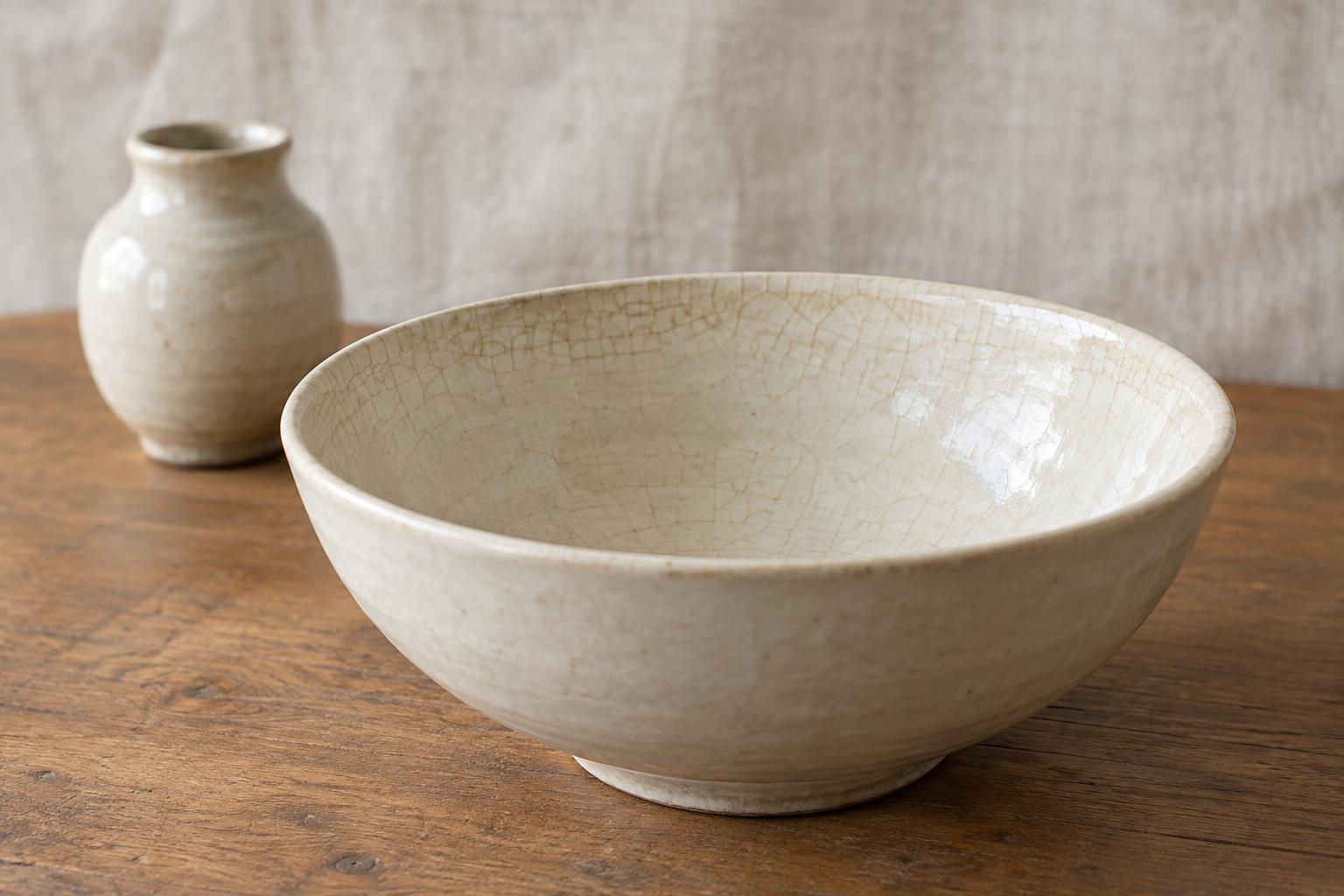
Look closely at the rim, base and glazed surface. A smoothly finished rim feels better in the hand and is less likely to catch on a cloth during washing. A stable foot should support the bowl without scratching the table; a mat or trivet can help protect delicate surfaces. If the bowl will hold food, confirm that it is intended for food use, particularly when buying handmade or decorative pieces. Follow the maker’s guidance for dishwasher, microwave and oven use rather than assuming all ceramics can be treated alike.
Finally, imagine the bowl among the dishes you already own. A quiet glaze can let colorful food stand out, while a patterned interior may bring interest to a simple serving. The best choice need not be the biggest or most striking bowl. It is the one whose shape gives food enough room, whose weight you can handle comfortably, and whose size earns its place in your cupboard.