What crazing looks like
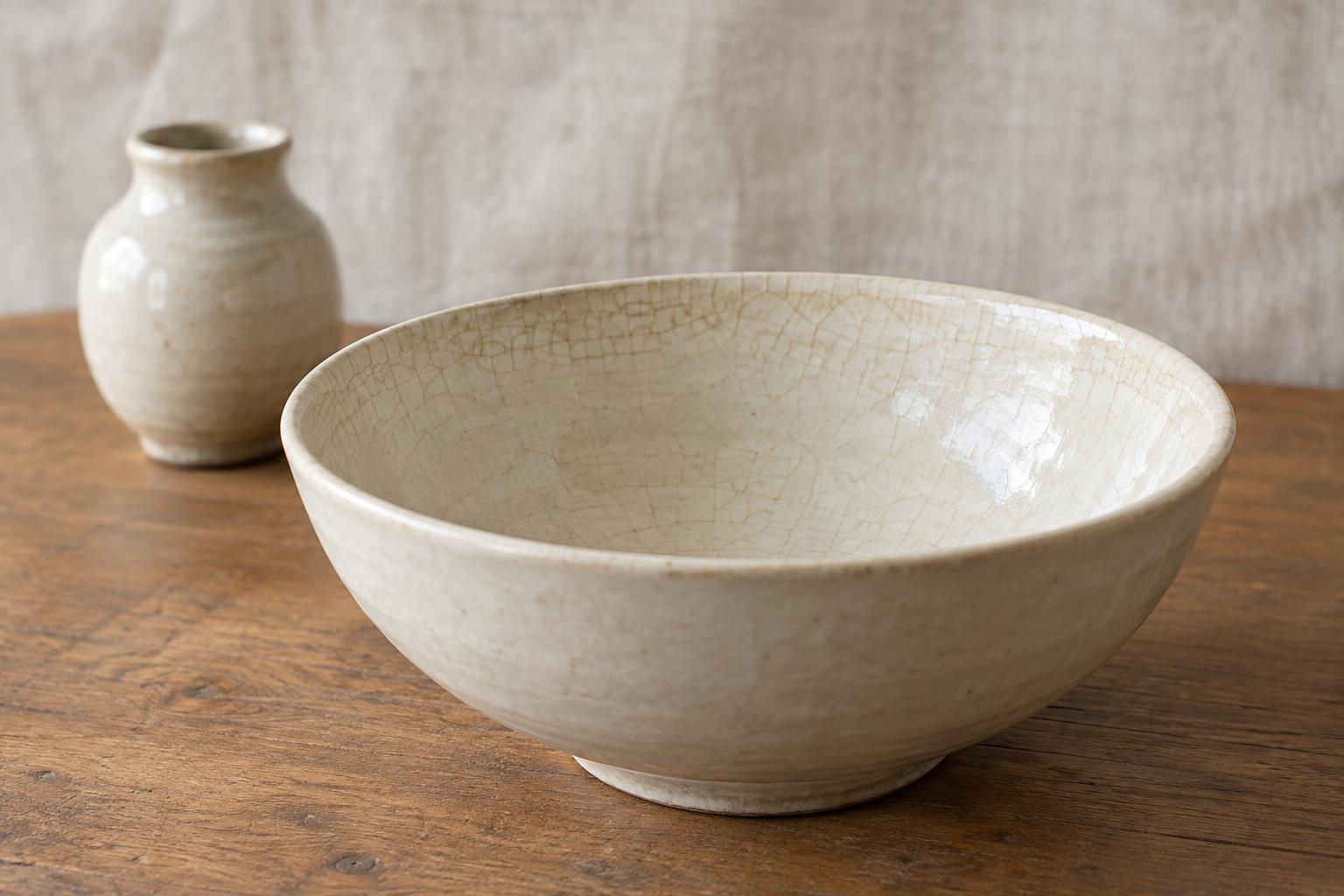
Crazing is a network of fine cracks in a ceramic object’s glaze. The lines may form small, irregular shapes across a whole surface or appear only in one area. They are often easiest to see when you tilt the piece under a lamp so light skims across it. On a pale glaze, the lines may look gray or brown if they have collected stains; on a dark glaze, they may be visible mainly as a change in sheen.
The key distinction is where the lines appear. Crazing affects the glaze, the glassy coating on a ceramic body. It does not necessarily mean that the clay beneath is broken. A single line running from a chipped rim down the side, however, deserves a closer look: it may be a crack through the body rather than a network confined to the surface. You cannot always tell the difference by sight alone, especially on a heavily decorated piece.
Why the lines develop
Glaze and clay expand and contract as temperatures change. If they do not move together comfortably, tension can develop in the glaze and leave it with fine fractures. Crazing can show up soon after a piece is made or become more apparent later. Repeated changes in temperature may make an existing pattern easier to notice.
Not every web of fine lines is an accidental flaw. Some ceramic finishes are deliberately made to have a crackle effect, valued for its texture and appearance. If you do not know how a piece was made, focus first on its present condition and intended use rather than trying to decide whether the pattern was planned.
A simple inspection at home
Start with a clean, dry object and good light. Turn it slowly, checking the rim, base, handle joins, and areas where the glaze is thin or worn. Look for a repeating web of short lines, then compare it with any longer, isolated lines. If a line crosses an unglazed foot, continues into a chip, or seems visible on both the inside and outside in the same place, treat it as a possible structural crack.
Run a fingertip gently over any suspect area without pressing hard. An obvious ridge, gap, loose fragment, or movement is more concerning than a fine line you can only see. Set the object down and check whether it sits steadily. Do not fill it with water or tap it to test its sound if you suspect it is fragile. For a valued or sentimental piece, a ceramic conservator can offer a closer assessment.
When crazing matters for use
For a dry display object, crazing may be chiefly a matter of appearance. It can give an older vase, tile, or bowl visual character, though stained lines may be difficult to lighten without affecting the finish. Use a stable shelf position and avoid placing a questionable object where it is likely to be knocked over.
For objects that touch food or hold liquid, be more cautious. Fine glaze cracks can trap residue and make thorough cleaning harder, particularly if the surface has become stained or rough. If a piece is of uncertain origin, has extensive crazing, or shows any sign of a deeper crack, reserve it for decorative use rather than serving food or drink. A vase with uncertain condition can also be displayed without water, using dried stems or simply letting its shape stand alone.
Care that avoids making things worse
Handle a crazed piece gently and follow any care guidance from its maker if you have it. For an object kept on display, dusting with a soft, dry cloth is a sensible first step. If cleaning is needed, avoid prolonged soaking and sudden shifts between hot and cold water, particularly for an older piece whose construction you do not know. Dry it promptly and thoroughly.
Avoid trying to disguise stained crazing with household dyes, oils, or sealants. Such treatments may change the surface without resolving the underlying condition. Instead, decide what role the object can comfortably play: a sound piece with subtle crazing might remain a decorative favorite, while one with a spreading crack, loose handle, or unstable base is better left unused until it has been assessed. The pattern itself is only part of the story; condition and purpose are what make it matter.