Start with how you will use it
The best teapot for you depends partly on what you brew and how you serve it. Before judging the decoration, decide whether the pot needs to make one cup or several, and whether you plan to pour at the table. A large teapot can be lovely, but it becomes heavy when full; a very small one may need frequent refilling. If possible, hold the pot with its lid in place and imagine carrying it filled with hot tea.
Check whether it comes with an infuser, has a built-in strainer at the base of the spout, or leaves room for a separate basket infuser. Loose leaves need space to open, and a basket that sits too high above the water may not work well for smaller batches. None of these designs is universally better: choose the one that suits your brewing routine and is easy for you to empty and clean.
Look closely at the spout and lid
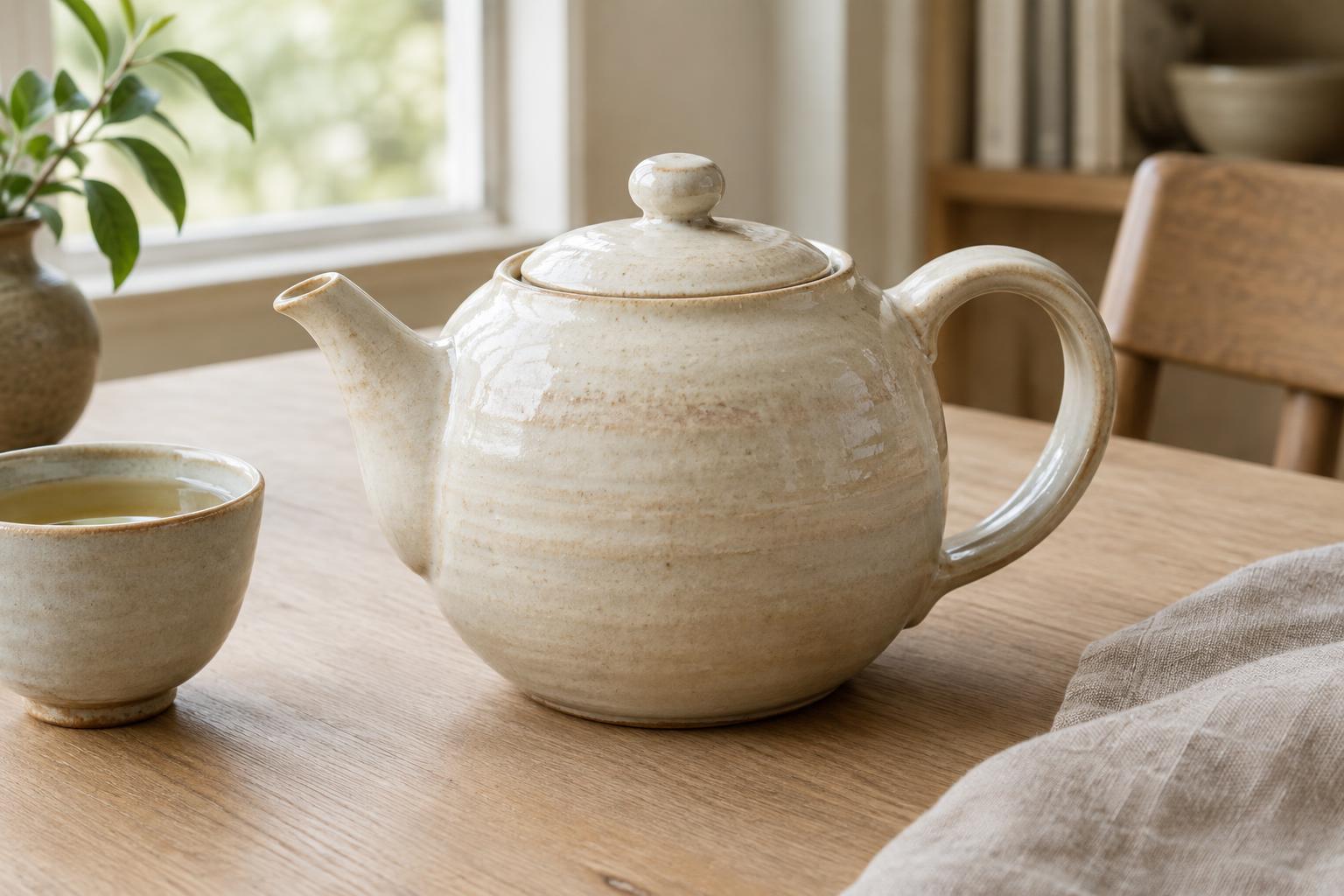
A good spout should direct tea into a cup without making you tilt the pot awkwardly. Look for a smooth opening and a clear path from the body of the teapot to the tip. An uneven tip or a glaze buildup inside the opening may interrupt the stream. A water test, if a shop permits one, is more useful than appearance alone: pour slowly, then stop, and see whether the stream breaks cleanly or runs down the outside of the pot.
The lid should sit securely without being difficult to lift. A small inner lip often helps keep it in place, though it is still wise to steady the lid when pouring. Gently check for excessive wobble and make sure the knob is comfortable to grip. Many lids have a small vent hole that helps air enter as tea pours; check that it is open rather than blocked by glaze. The lid and opening should also give you enough access to wash the inside of the pot.
Test the handle and balance
A teapot can have an elegant silhouette and still feel uncertain in the hand. Slip your fingers around the handle and check that there is room to hold it without pressing against the body. Look at the points where the handle joins the pot: they should appear securely formed, without visible cracks. A handle that feels comfortable on an empty pot may feel quite different when the pot is full, so consider its capacity as well as its shape.
Rest the teapot on a flat surface and check that it sits steadily. Then lift it and make a gentle pouring motion. The weight should feel manageable, with enough control to aim at a cup. If you are buying in person, ask whether you can test the pour with cool water. This can reveal an awkward balance or a handle that twists in your grip before hot tea is involved.
Inspect the surface without expecting perfection
Examine the body inside and out in good light. The glaze on surfaces that will touch tea should be smooth and easy to clean, without rough patches or obvious cracks. Small variations in color, shape or glaze flow can be part of the appeal of handmade ceramics; they are not automatically faults. A sharp chip on the rim, a crack through the body, or a rough interior that traps residue is a more practical concern.
If you intend to brew tea in the pot, confirm that it is made for food and drink use rather than sold only as a decorative object. Ask the maker or seller about any care instructions, especially for an unglazed interior or a piece with metallic-looking decoration. A statement that a pot is dishwasher-safe or microwave-safe should come from its maker; do not assume either from its appearance.
Choose a pot you can care for
Think about where the teapot will live between uses. A lid that sits safely in place, a base that will not wobble on a shelf, and a finish that you can comfortably wash all make the object easier to enjoy. After brewing, empty the leaves and let the pot dry thoroughly before storing it. A narrow opening or a built-in strainer may need extra attention when rinsing.
Finally, separate visual appeal from everyday performance without dismissing either. Color, texture and shape matter in a home object you will see often. The strongest choice is one whose details suit your table and whose spout, lid and handle make each pour feel straightforward. Taking a few minutes to check those working parts can help you find a ceramic teapot that is satisfying to use as well as to display.