Start with the door, not the decoration
A doorstop is a small object with a specific job: keeping a door where you want it without damaging the door or floor. Before choosing a color or shape, watch how the door moves. Does it swing closed on its own, catch a draft, or only need to stay open while you carry things through? A door that moves gently may need a different stop from one that tends to swing with force.
Check the gap beneath the door where you plan to use the stop. A wedge needs to fit into that gap and make contact with both the floor and the door. A stop that is too thick will not slide into place; one that is too thin may slip underneath without holding. Also note whether a rug, threshold or change in floor level affects the spot where the stop will sit. Test the door in its usual position rather than assuming the same stop will work anywhere along its swing.
Choose a form that suits how you use the space
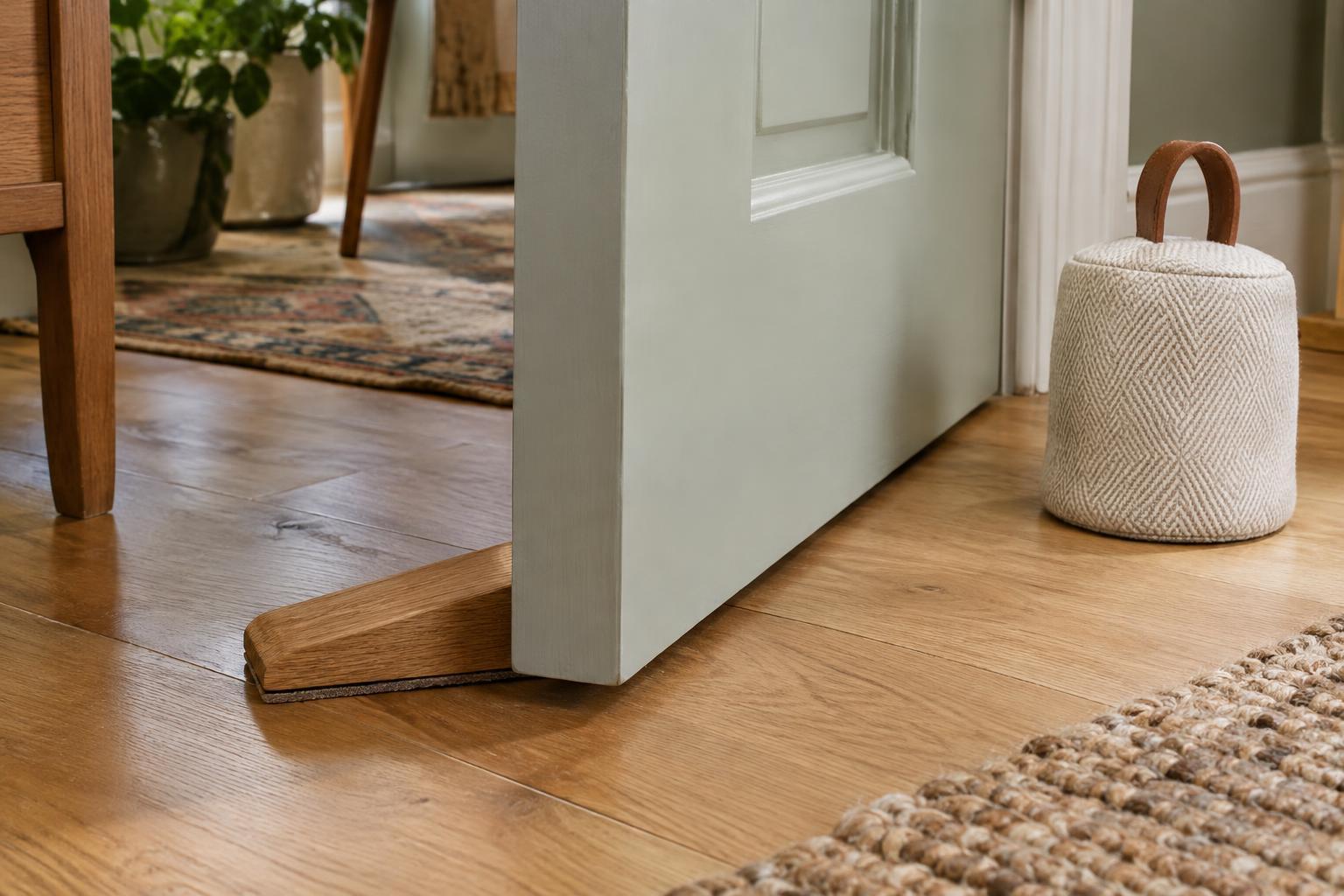
A wedge is a discreet choice for a door you open and close often. You push it under the bottom edge when needed and pick it up when the door is shut. Its holding power depends largely on its fit and the friction between its surfaces and the door and floor. Rubber or another grippy material is often useful here, whether it forms the whole wedge or covers its contact points.
A freestanding doorstop sits against the face of an open door. This style offers more room for decorative materials, such as a fabric cover, a carved shape or a simple metal form. It is convenient when you want an object you can move without reaching under the door. Its base needs to resist sliding, though, and its shape should meet the door at a useful height. A beautiful object that the door can simply push across the floor will not serve as a reliable stop.
Balance weight with grip
Weight helps a freestanding stop resist movement, but heavier is not automatically better. A smooth, heavy object may still slide on a slick floor. Conversely, a moderately weighted stop with a broad, grippy base may hold well for a gently moving door. If possible, try a candidate on the actual floor with the door opened to its intended position. Press the door lightly toward the stop and see whether the stop shifts, tips or stays put.
Think about handling as well as holding. A stop that you move every day should be comfortable to lift and easy to grasp; a handle or soft loop can be useful. A fabric-covered stop should have enough structure to keep its shape when the door touches it. For a wedge, focus less on heft and more on whether it seats securely without needing to be forced. If a door swings hard or catches strong drafts, a portable decorative stop may not be the right solution on its own.
Protect the floor and the door
Inspect every surface that might make contact. Rough ceramic edges, exposed metal corners and gritty bases can mark a finish when a stop is dragged or knocked. A felt or rubber layer under a freestanding stop can provide a gentler contact point, provided it stays attached and does not make the stop too slippery. Soft padding where the stop meets the door can also help prevent scuffs or dents.
Floor type changes what to watch for. On wood or other easily marked finishes, keep the base clean so trapped grit cannot scratch the surface. On tile, a smooth base may need more traction. On carpet, a narrow wedge may sink into the pile instead of gripping evenly. Check any added pads periodically: worn, loose or dusty material may no longer protect or grip as intended. Lift a doorstop to move it rather than dragging it across the floor.
Make the decorative choice practical
Once the stop works, choose a finish that belongs in the room. A quiet fabric form can echo upholstery or a nearby rug; a simple ceramic or wood shape can sit comfortably among other crafted objects. Consider where the stop will rest when it is not in use. A compact wedge might live on a shelf or in a small basket, while a freestanding piece can remain beside the doorway as part of the arrangement.
Keep the walking route clear. Avoid placing a stop where people are likely to catch a foot on it, and make sure it does not obstruct the door when the door needs to close. The most successful decorative doorstop earns its place twice: it complements the room when you notice it and holds the door without demanding attention when you do not.