Know what you are cleaning
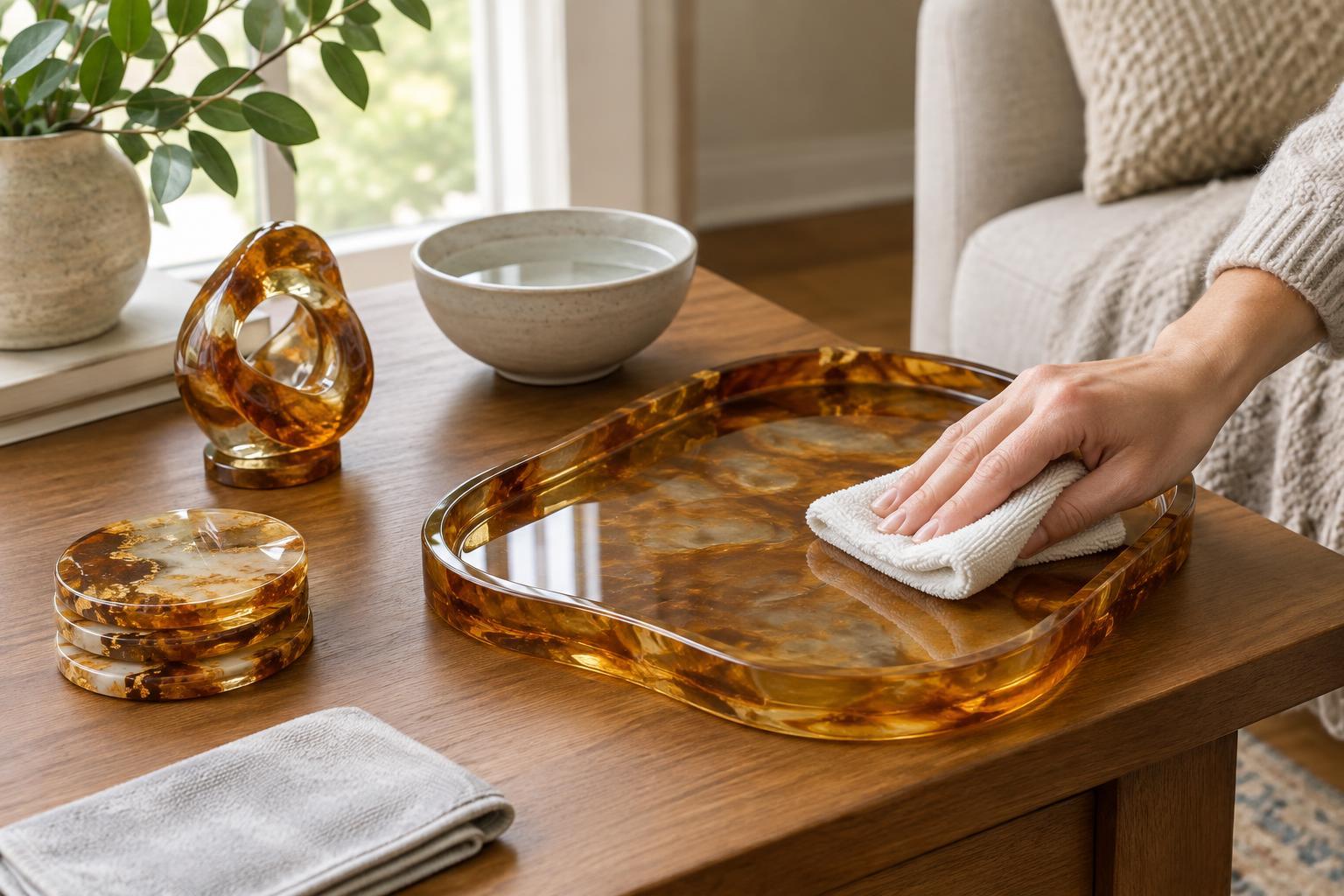
Resin decorative accessories come in many forms: glossy trinket trays, matte ornaments, coasters with embedded flowers, and objects finished with paint or metallic details. Their care needs can differ. A hard, fully cured resin surface may tolerate a gentle wipe, while a painted edge, glued-on element or delicate inlay may need a lighter touch. If the maker has supplied care instructions, use those first.
Before cleaning an unfamiliar piece, look at its construction. Check for cracks, loose parts, exposed paper or fabric, and any areas where water could collect. Test your cleaning method on a small, inconspicuous spot, especially if the surface is colored, coated or unusually soft. Treat decorative resin as a display material unless the maker specifically identifies the item as suitable for food contact, hot drinks or repeated washing.
Use a gentle routine for dust and marks
For everyday dust, start with a clean, soft microfiber cloth. Lift the object rather than pushing it across a shelf, then wipe with light pressure. A soft brush can reach lettering, molded grooves or textured edges. Keeping dust under control helps reduce the temptation to scrub later, when grit caught beneath a cloth could leave fine scratches.
For fingerprints or ordinary smudges, slightly dampen a soft cloth with water and wipe the surface. If that is not enough, use a small amount of mild dish soap diluted in water. Follow with a second cloth dampened with plain water, then dry the piece thoroughly with a clean, soft cloth. Do not soak accessories or leave water around seams, embedded materials, fittings or adhesive joins. Avoid abrasive pads, scouring powders, strong solvents and concentrated household cleaners; they may dull a finish or damage added details.
Prevent heat, sunlight and scratches
Placement matters as much as cleaning. Prolonged direct sunlight can change the appearance of some resins over time, even when an item was made with materials intended to resist yellowing. A shaded shelf or a table away from strong window light is a sensible choice for a piece whose color or clarity you want to preserve. Displaying it away from radiators and other heat sources may also help protect its shape and finish.
Do not assume a resin tray or coaster can handle a hot pan, candle flame or freshly heated mug. Heat tolerance varies by product, and some surfaces may soften, mark or discolor. Use a heat-safe barrier where appropriate, and never leave a burning candle directly on or inside a resin accessory unless the piece is expressly designed for that purpose. To limit scratches, place felt pads beneath objects with rough bases, avoid dragging keys or ceramics across trays, and separate resin pieces when storing them.
Handle dullness and stubborn problems carefully
If a glossy object looks cloudy, first make sure the haze is not a removable film of soap, grease or dust. Clean a small area gently and dry it completely before deciding whether the finish itself has changed. Polishing can alter a surface, especially one with a matte coating, printed design or thin protective layer. Rather than trying a general-purpose polish, check the maker’s guidance or seek advice from someone experienced with that type of finish.
A piece that feels sticky after an ordinary cleaning deserves extra caution. Stickiness can have several causes, including residue from a product used on the surface or a problem with the resin or its coating. Do not try to fix it with aggressive solvents or heat. Set the item aside so it does not transfer material to surrounding objects, and contact the maker if possible. Cracks, lifting coatings and loose embedded decorations are also reasons to stop routine cleaning and avoid further handling.
Build care into the way you display pieces
A little planning makes maintenance easier. Leave enough space around small sculptures and ornaments to lift them without knocking neighboring objects. Put a soft liner beneath a frequently used tray, and reserve heavily textured or delicate pieces for display rather than daily catchall duty. When rearranging a shelf, carry each accessory individually instead of stacking pieces in your hands.
For storage, clean and dry each piece before wrapping it loosely in a soft, nonabrasive cloth or placing it in its own compartment. Keep heavy objects from pressing against raised details, and choose a location away from excessive heat and strong light. These simple habits help resin accessories remain pleasant to handle and display without requiring a complicated cleaning routine.