Start with the plate, not the wall
Before choosing a hanger, look closely at the plate. Note its weight, diameter and shape, then check for chips, hairline cracks, repairs or a loose decorative coating. A hanger that works well on sturdy glazed stoneware may put too much pressure on a thin porcelain rim. If the plate is valuable, fragile or already damaged, a shelf or display stand may be safer than hanging it.
Turn the plate over and look for a purpose-made hanging hole or an attached hanging loop. Check that the loop is firmly fixed and appears able to support the plate’s weight; do not rely on a loose or corroded fitting. Also consider the finish. Metal clips, adhesive pads and even soft bumpers can leave marks on some surfaces, particularly unglazed clay, gilding or delicate decoration. Test any material that will touch the plate in a small, inconspicuous area when possible.
Choose a hanger that supports without squeezing
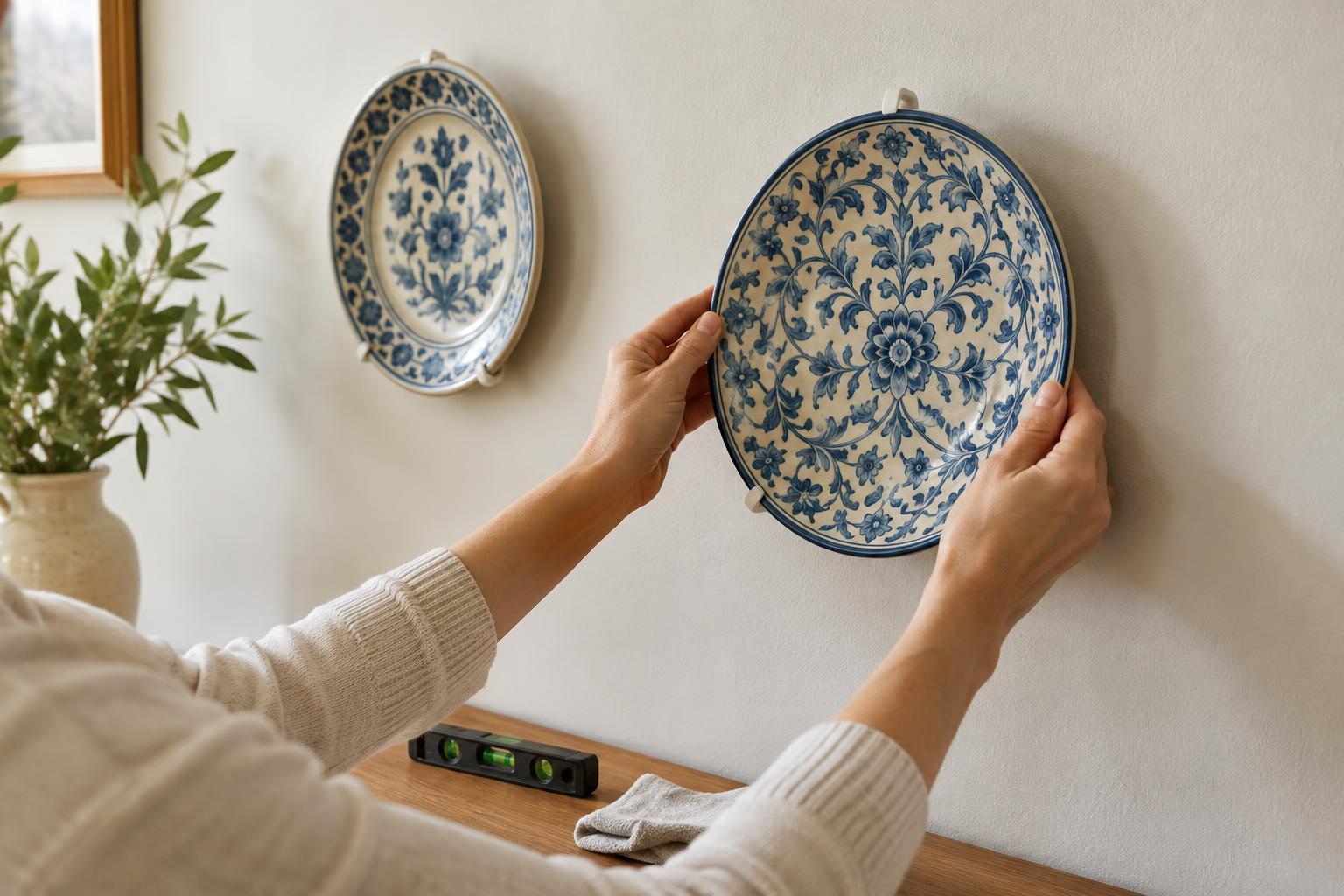
For a plate without a built-in loop, an adjustable wire plate hanger is a common option. Select one sized for the plate’s diameter and weight, and check that its hooks sit securely over the rim. The plate should be held firmly without requiring you to bend the clips tightly against it. If the hanger has bare metal contact points, look for protective sleeves or add a suitable soft barrier that will not slip or stain. Inspect the fit from the front so the clips do not distract from the design.
Some hangers use adhesive discs on the back of the plate. These keep hardware out of view, but adhesive may not bond reliably to every surface and can be difficult to remove without affecting a finish. Follow the manufacturer’s preparation, weight and curing instructions, and avoid this approach for porous, textured, repaired or especially precious pieces. Do not improvise with household tape or glue: the plate’s weight may pull it free over time.
Prepare a secure place on the wall
Choose a location where the plate is unlikely to be knocked by a door, chair or passing shoulder. Keep it away from places with frequent moisture or temperature changes, which may affect both the plate and its hanger. If you are arranging several plates, trace them on paper and move the cutouts around on the wall first. This helps you settle the spacing before making any holes.
The wall fixing matters as much as the plate hanger. Use a hook or screw suited to the combined weight of the plate and hanger and to the wall material. A fixing into a sound wall stud can offer a sturdy attachment point; where that is not possible, choose an anchor intended for the particular wall. Plasterboard, masonry and older plaster call for different fixings. If you cannot identify the wall or are unsure it will hold the display, pause and get help rather than relying on a convenient-looking nail.
Hang it slowly and check the fit
Fit the hanger to the plate on a padded table before lifting it to the wall. Make sure each contact point is seated as intended and that no hook rests on a chipped section of rim. Hold the plate close to the wall while placing the hanger on its fixing; avoid letting it swing into position. Once hung, check that the hanger is fully engaged, the plate sits level and nothing moves when you apply a very gentle touch. Do not tug on the plate to test the mount.
Small, soft wall bumpers on the back can help keep a plate from rocking or rubbing against the wall, provided they are suitable for its surface. If a plate tilts forward, slips within the hanger or needs excessive tension to stay put, take it down and try a different hanger. A secure display should not depend on repeatedly adjusting stressed clips.
Keep the display safe over time
Check hanging plates occasionally, especially after cleaning or rearranging nearby objects. Look for a shifting hanger, stretched spring, loose wall fixing or new mark where a clip touches the rim. Support the plate with one hand when dusting so it does not twist on its hook. If you remove it, set it down on a padded surface rather than leaning it against furniture where it could slide.
For a group of plates, give each one its own appropriately chosen hanger and wall fixing. Avoid placing a particularly fragile piece above a bed, seating area or other spot where a fall would pose an added risk. When a plate cannot be hung without pressure on a weak rim or uncertainty about the fixing, displaying it on a stable shelf is still a thoughtful way to enjoy it.