Start with the reflection
A mirror can have a beautiful frame and still disappoint if the reflection looks uneven. When viewing one in person, stand a few steps back and look at the reflection of a straight line, such as a doorframe. Move slightly from side to side. Noticeable bending or waviness can be distracting, particularly in a large mirror or one placed where you will see it every day. Small variations may be less apparent in a piece used mainly as a decorative accent.
Inspect the glass near its edges as well as at the center. Chips, scratches and dark patches can be easy to miss when a frame draws the eye. Check that the glass sits securely within the frame and that its edges are appropriately covered or finished. For a bathroom or another damp location, look for a mirror described as suitable for that setting: moisture can affect backing and frame materials over time. If the mirror might be bumped regularly, consider whether a safety-backed option is available.
Let the frame set the mood, but check its construction
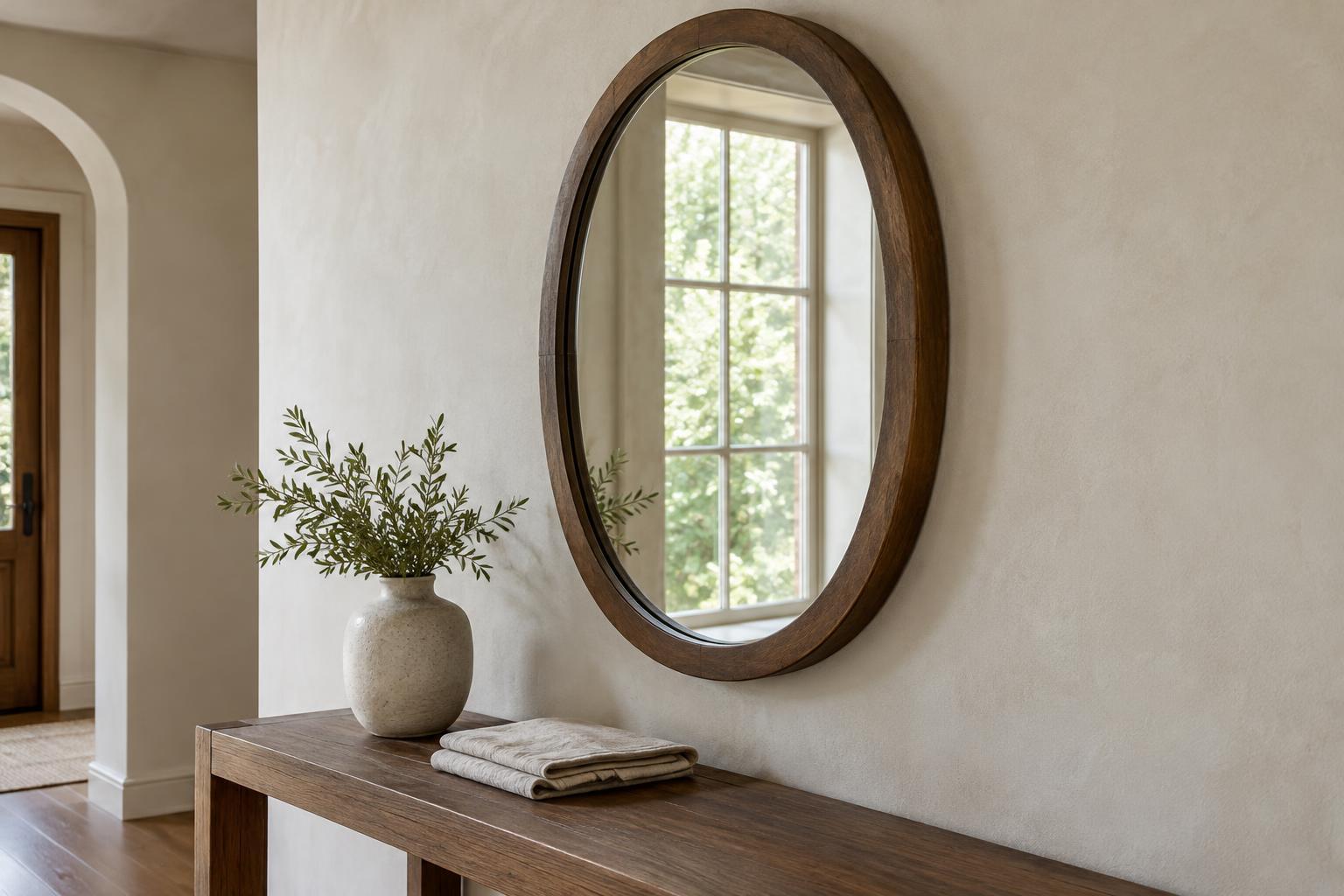
The frame shapes how a mirror relates to the rest of the room. A narrow metal edge can feel quiet and crisp, while carved wood or a broad painted surround becomes an object in its own right. Repeat a material already present in the space for a calm look, or use a contrasting finish to give a plain wall a focal point. Before buying, compare the frame’s depth with nearby furniture and trim; a deep frame casts shadows and projects farther from the wall than a flat one.
Weight matters as much as appearance. Solid wood, metal and substantial composite frames can make a mirror heavier than its dimensions suggest. Check the stated total weight rather than judging by size alone, and examine the back for firm joints and properly attached hanging hardware. A lightweight frame is not automatically a better choice, but it may give you more flexibility when selecting a location. Be cautious with an older or secondhand mirror if its frame or fittings feel loose.
Match the mounting method to the mirror and wall
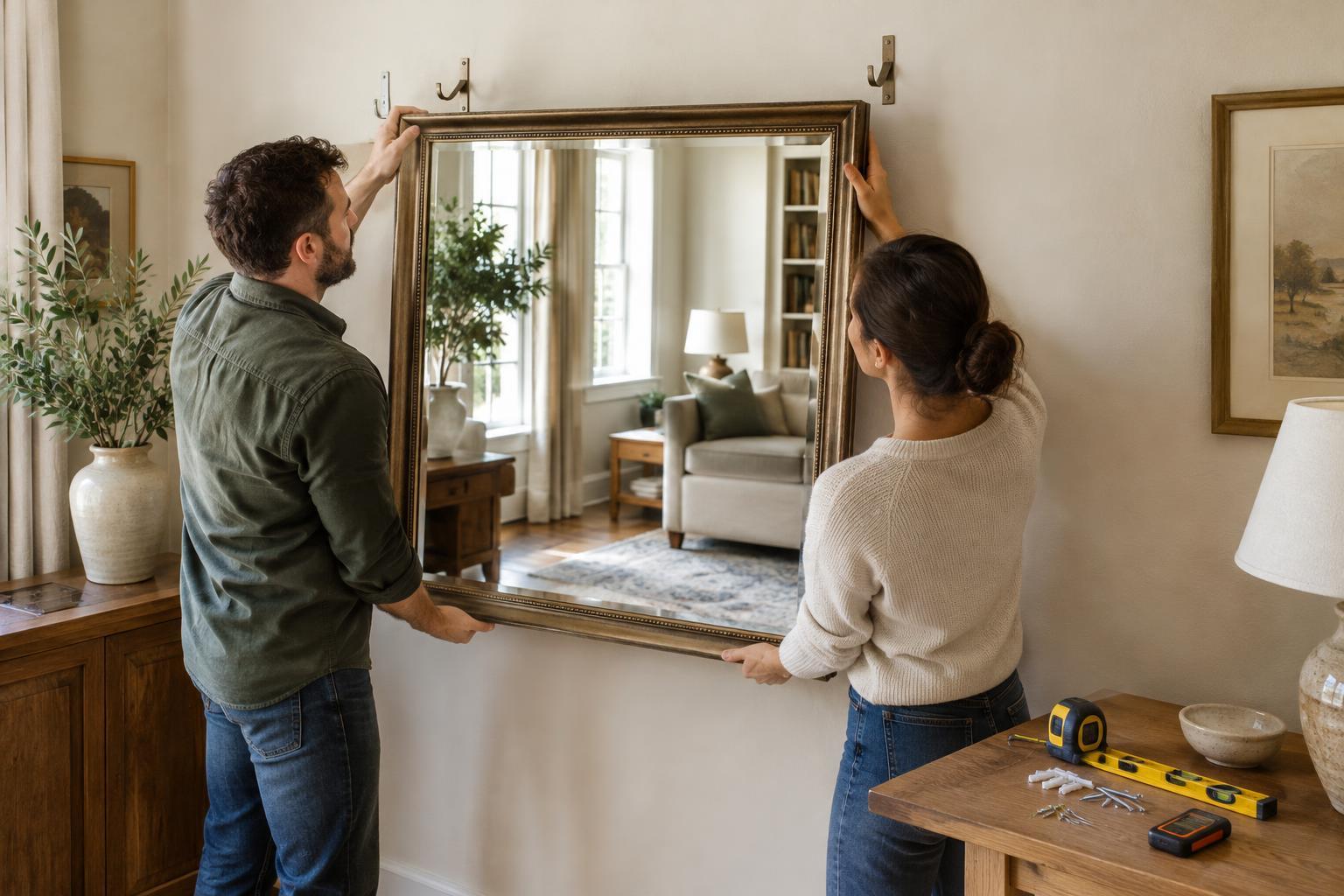
Before choosing a spot, identify what the wall is made of and what sits behind its surface. Plasterboard, masonry and plaster over lath do not all take the same fixings. Use hardware rated for at least the mirror’s weight and appropriate for the wall, following the mirror and fixing manufacturers’ instructions. Where possible, fix into sound structural support. Do not assume that a small picture hook, an adhesive strip or a fastening left by a previous owner is suitable for a heavier mirror.
Look at how the mirror is designed to hang. Some have two mounting points that need to be level and correctly spaced; others are intended for a particular bracket or orientation. Use the supplied fittings as directed, and do not hang a mirror from a decorative part of its frame unless it is explicitly made for that purpose. If the wall’s condition, the mirror’s weight or the fixing method is uncertain, ask a qualified installer for help. A securely mounted mirror should not rock or shift during ordinary use.
Choose a position for what it reflects
A mirror displays a view of the room, not just its own shape. Hold a paper template at the proposed location or ask someone to support the mirror while you check the view from your usual seats and walking paths. A reflection of a window, lamp or favorite object may add interest; a reflection of storage clutter may make a room feel busier. Check for glare at the times you normally use the space, especially if the mirror faces a strong light source.
Consider height in relation to the furniture below. Above a console or mantel, leave enough space for objects without making the mirror feel disconnected. A small mirror can work well among framed art or on a narrow wall, while a larger one often needs visual breathing room. If children or pets use the space, avoid positions where a mirror could be easily knocked, and pay particular attention to secure mounting.
Keep the finish looking its best
Routine care helps preserve both glass and frame. Dust the frame with a soft cloth suited to its finish. For the glass, apply a suitable cleaner to a cloth rather than spraying heavily toward the edges, where liquid may reach the backing or frame. Wipe it dry and check the lower edge for trapped moisture. With wood, painted or delicate decorative finishes, test any cleaning method in an inconspicuous place first.
Revisit the mounting from time to time, particularly after moving furniture or cleaning around the mirror. If a fitting loosens, the frame separates or the glass begins to shift, take the mirror down rather than waiting for the problem to worsen. Choosing well-made glass, a sound frame and suitable fixings at the outset makes a decorative mirror easier to enjoy as a lasting part of the room.