What an abrasion rating measures
An upholstery fabric may be described as suitable for a sofa, an occasional chair or a cushion, often alongside a number called an abrasion rating. The number comes from a laboratory test that repeatedly rubs a fabric sample until it reaches a defined point of wear or change. It gives you one way to judge how the surface may stand up to friction from sitting, shifting and getting up.
Two common test methods are Martindale, usually reported in cycles, and Wyzenbeek, usually reported in double rubs. They use different rubbing motions and procedures, so their numbers are not interchangeable. A fabric with a higher Martindale result than another fabric’s Wyzenbeek result has not necessarily performed better. Compare results measured by the same method, and ask the seller which test was used if a listing gives only a number.
Why a higher number is not the whole answer
Within the same test method, a higher abrasion result can be helpful when you expect frequent contact. It does not guarantee a longer-lived sofa, however. Laboratory rubbing is controlled and repetitive; life at home adds spills, sunlight, pets, snagging, cleaning and pressure on seams. The finished piece also depends on its construction and how the fabric is fitted.
Abrasion resistance is not the same as appearance retention. A cloth might resist wearing through yet develop pills, a flattened pile or a change in sheen. Another may have a modest abrasion result but remain perfectly suitable for a decorative bench that is rarely used. Treat a rating as a screening tool, not a single score for overall quality.
Usage labels such as “domestic” or “commercial” may help narrow your choices, but check what the supplier means by them. Test methods, pass criteria and recommended uses can vary between sellers. A clear specification is more useful than an impressive number without context.
Match the fabric to the way the piece is used
Start with the furniture, not the swatch. A dining chair gets repeated short periods of use, and its front edge may receive considerable rubbing. A family sofa sees broader daily use, including contact from clothing and cushions. An occasional chair in a quiet corner has a different job. If a seat will see heavy use, look for fabric that the supplier recommends for that purpose as well as an appropriate abrasion result.
Think about the people and objects that will touch it. Pet claws may catch an open weave; a textured surface might show pulls more readily than a compact one. A pale fabric can show marks even when its fibers remain sound. If cushions can be turned or covers removed, you may have more options for managing wear and cleaning. If they cannot, ease of care becomes more important.
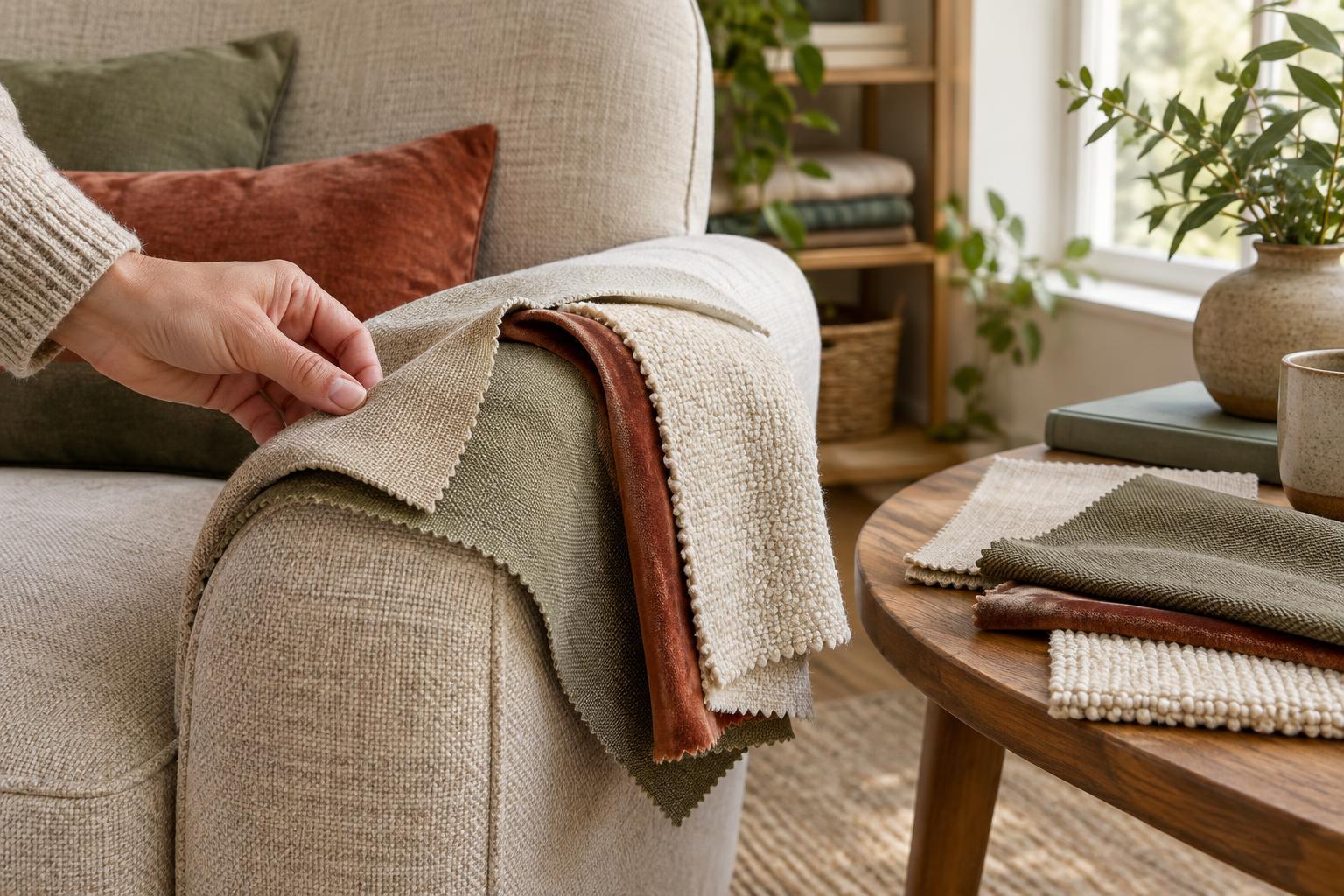
For a small upholstery project, request a generous sample when possible. Fold it around an edge, handle it in different directions and look at it in both daylight and lamplight. A fabric that feels pleasant as a flat square may look or behave differently when stretched across a rounded arm or tucked into a corner.
Check the qualities abrasion tests leave out
Ask about pilling, colorfastness to light and rubbing, and the recommended cleaning method. These address separate questions: whether loose fibers form small balls, whether color may fade or transfer, and how the fabric should be cared for. No single abrasion number answers them. If you are choosing patterned cloth, consider how its repeat will sit across cushions and how easily the pattern can be aligned at seams.
Texture and weave matter visually as well as practically. Tight, smooth fabrics often create crisp outlines, while looser or raised textures can soften a piece. A pile fabric may change shade as its fibers lie in different directions; that effect can be part of its appeal, but it is worth seeing on a larger sample. Check the reverse and ask whether the fabric needs backing or has any upholstery requirements your maker should know about.
When comparing samples, keep a short list of what matters most: intended use, test method and result, cleaning instructions, color behavior, texture and appearance. That makes it easier to choose between two fabrics that each do some things well, rather than chasing the largest number on a label.
Use the rating to ask a better question
An abrasion rating is most useful as the beginning of a conversation: Has this fabric been tested for upholstery, by which method, and is it recommended for this particular seat? Follow that with questions about care and the changes you would be comfortable seeing over time. Fabric on a well-used chair may soften or develop a lived-in look even when it is still serviceable.
The best choice is not automatically the toughest-looking swatch. It is a fabric whose measured performance, maintenance needs and appearance make sense for the object you are covering. Read the rating, then make the final decision with the whole room—and the way you actually use it—in mind.