Why grain matters
Fabric grain is the direction of the threads that make up a woven cloth. Lengthwise threads run parallel to the selvedges, the finished edges of the fabric. Crosswise threads run from selvedge to selvedge. When you cut a rectangle with its sides aligned to these threads, it is more likely to hang evenly and keep its intended shape during sewing and use.
A diagonal cut follows the bias. Bias edges stretch and drape more readily than straight-grain edges, which can be useful for curved binding but troublesome on a table runner or cushion panel. An off-grain rectangle may look square on the cutting table yet develop a slight twist when it is lifted, pressed, or sewn to another piece. Taking a few minutes to check the grain is especially worthwhile for long, simple shapes, where a wandering edge is easy to notice.
Prepare the fabric before measuring
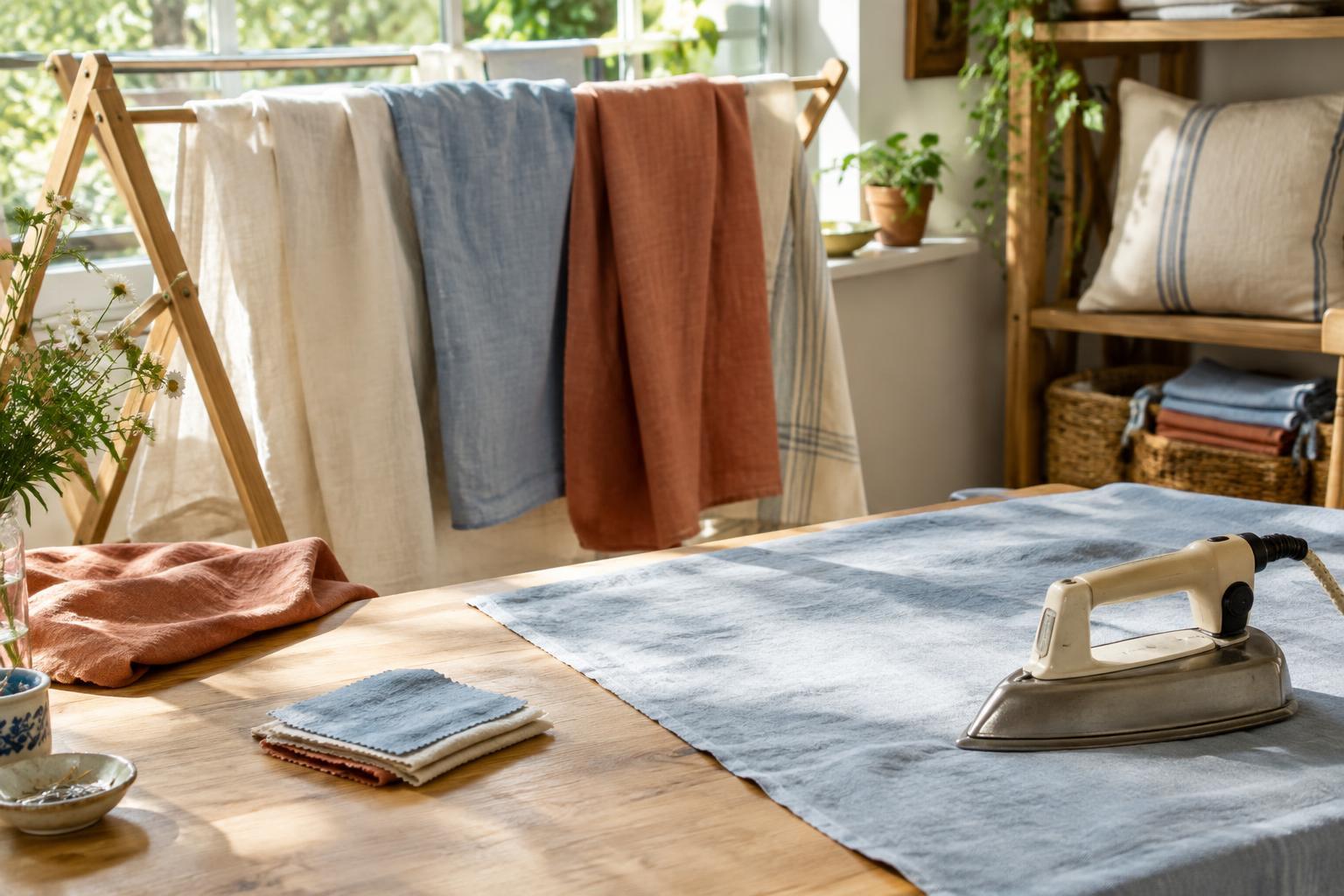
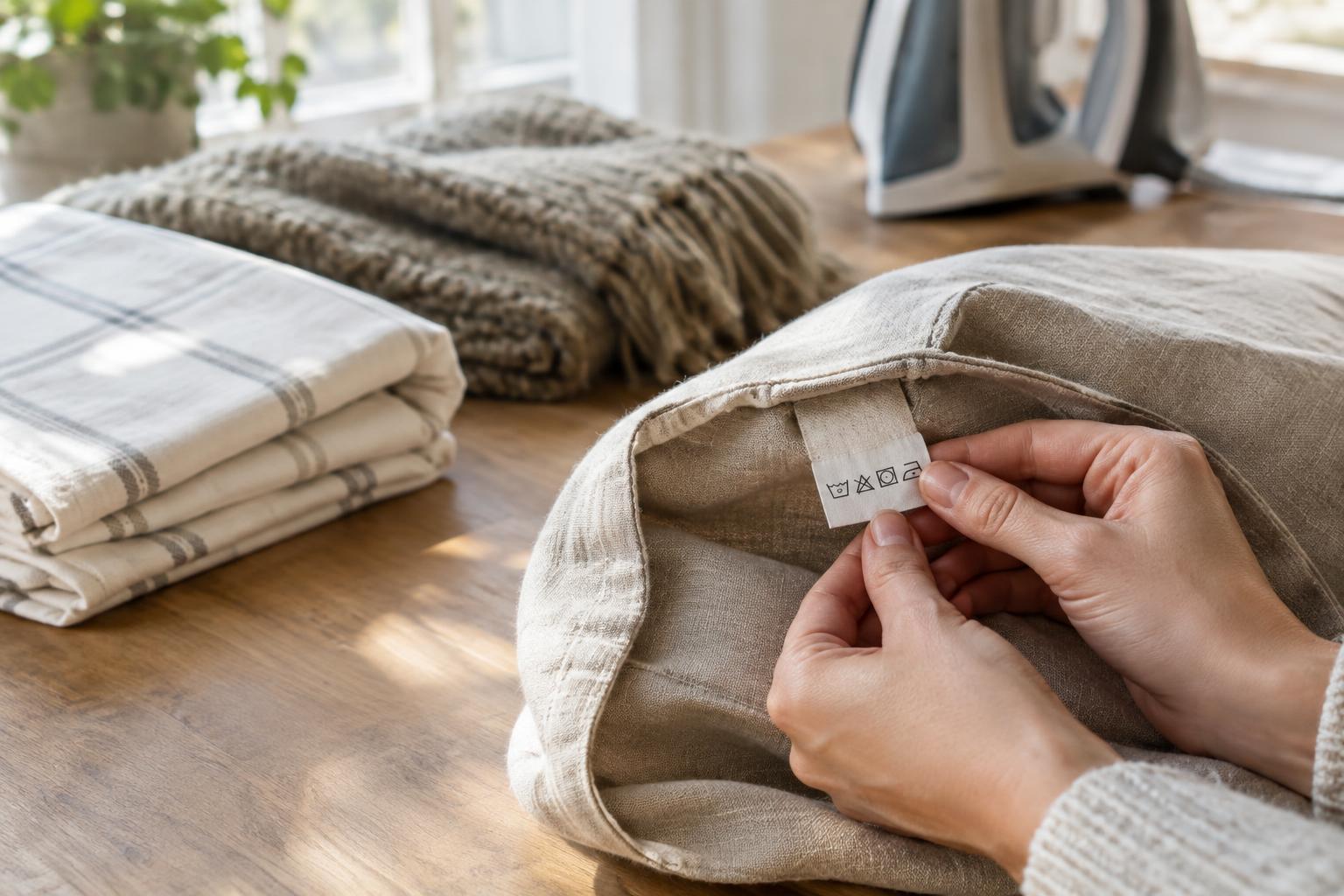
Start with fabric suited to the project and check how you intend to care for the finished item. If the runner, napkins, or cover will be washed, prepare the cloth in a similar way before cutting. This helps account for changes in size or texture that might otherwise happen after sewing. Once it is dry, press out creases without pulling the fabric sideways. Wrinkles and stretched edges make accurate marking harder.
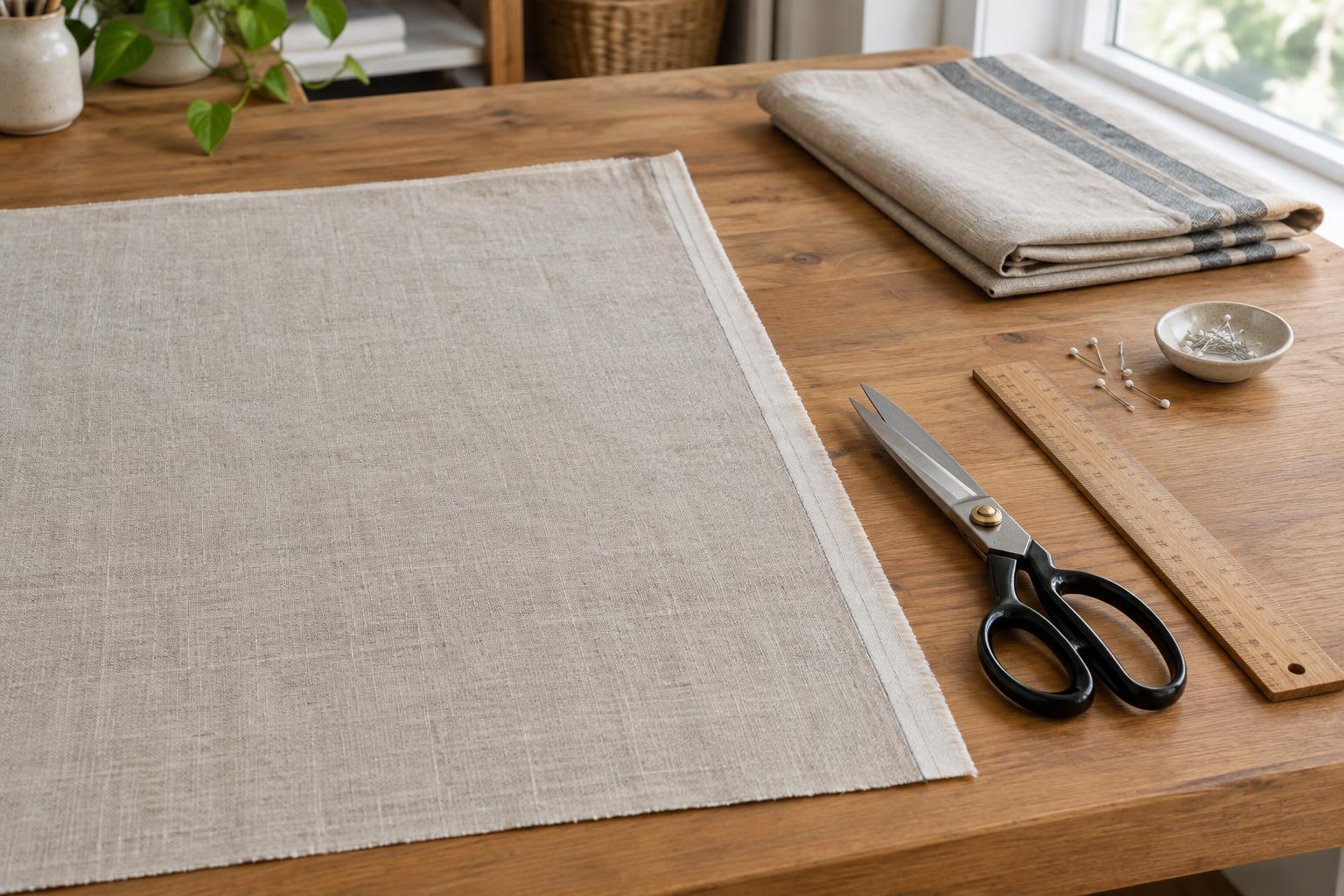
Spread the fabric on a flat surface large enough to support it. Avoid letting a heavy length hang off the table, as its weight can tug the cloth out of position. Look at the selvedges, then gently smooth the fabric from the middle outward. Do not force a crooked piece into a perfect-looking rectangle with pins or tension. It should lie relaxed before you decide where to cut.
Find a reliable straight line
For most woven fabrics, the selvedge is a useful guide to the lengthwise grain, but it is not always a suitable cutting edge. It may be tighter than the main cloth or have a different texture, so plan to trim it from visible project pieces unless your design calls for it. A printed stripe is not necessarily aligned with the weave, either. If the print and the threads disagree, decide whether visual alignment or a stable shape matters more for that particular object.
To find the crosswise grain on a loosely woven cloth, make a small snip near a raw cut edge and try pulling one crosswise thread free. The fine gap it leaves can guide a straight cut. If the thread breaks, draw out another nearby. On a dense fabric where that is impractical, inspect the threads closely and use a clear ruler to mark a line perpendicular to the lengthwise grain. A small test cut near the edge is better than committing your full project length to a line you cannot see clearly.
Square up, then lay out your pieces
Trim one end along the crosswise grain to establish a reference edge. Check it against the lengthwise direction with a quilting ruler or square. If the fabric has shifted in storage, the threads may not sit at perfect right angles. Gentle smoothing and pressing may help, but do not pull hard to make them meet. For a simple home project, working from a relaxed, reasonably square area is usually more useful than stretching the whole length to match an ideal grid.
Mark the dimensions of each piece from your reference edge, including seam allowances and any planned hem. Keep the long sides of a runner parallel to the selvedges; for napkins or cushion panels, keep adjacent sides aligned with the lengthwise and crosswise threads. Place matching pieces in the same direction when the fabric has a visible pile, sheen, or one-way motif. Before cutting, measure opposite sides and both diagonals of a rectangular piece. Matching diagonals are a helpful check that the corners are square.
Cut without undoing your careful layout
Use sharp fabric shears or a rotary cutter with a suitable mat and ruler. Keep the cloth flat as you work, and move your tools around it rather than repeatedly lifting and turning a large piece. If you cut with shears, take controlled strokes without raising the fabric far from the table. With a rotary cutter, hold the ruler firmly and keep your fingers clear of its edge. Weights or pins can stop a slippery fabric from moving, provided they do not distort it.
Handle freshly cut edges gently, particularly if the weave is loose. Stack cut pieces flat until you are ready to sew, and check their orientation before joining them. These grain-finding steps are intended for woven cloth; knit fabrics have different stretch behavior and need a layout that accounts for it. For woven home textiles, a relaxed layout, a trustworthy reference edge, and careful cutting give the simplest shapes their best chance of looking clean and staying true.