Why wash fabric before cutting?
A cushion cover can look perfectly square when you sew it and still become tight around its insert after the first wash. Fabric may shrink or change texture when it gets wet, is agitated or goes through a dryer. Prewashing gives those changes a chance to happen before you measure and cut. It is especially useful for napkins, table runners, washable cushion covers and other pieces you expect to launder at home.
Washing can also remove some loose dye or surface finish. That does not guarantee the fabric will never bleed onto another textile, but it gives you an opportunity to spot a problem before a finished project is involved. Some cloth also softens or develops more texture after washing. Seeing that result early helps you decide whether it suits the crisp or relaxed look you have in mind.
Decide what treatment the finished item will need
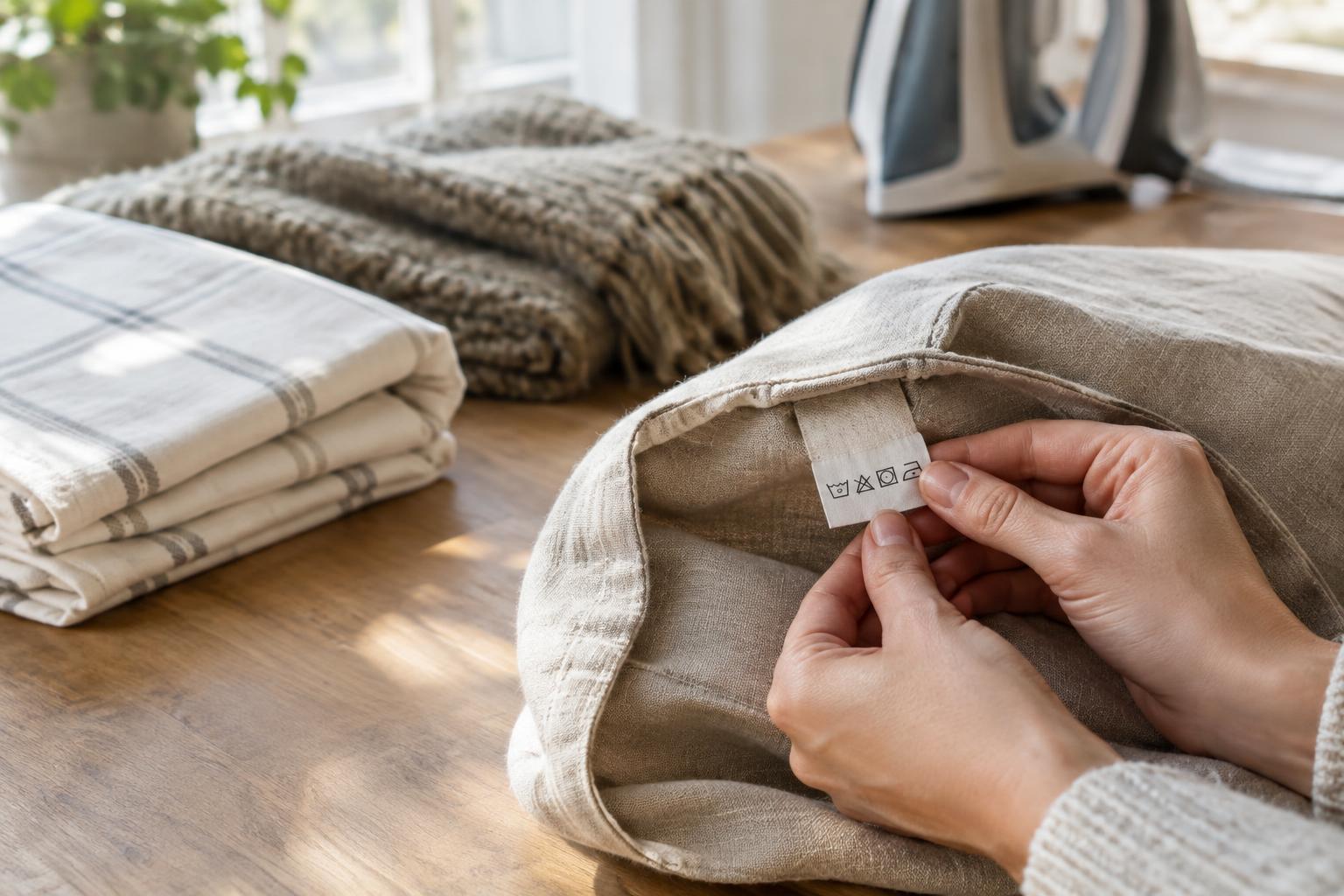
The simplest rule is to prepare fabric in a way that resembles how you will care for the completed accessory. If you plan to machine-wash and tumble-dry everyday napkins, consider doing both before cutting. If you intend to wash a cushion cover gently and air-dry it, use that approach instead. Read any care information supplied with the fabric, and avoid a harsher test just because your machine has the setting.
Not every fabric belongs in a home washing machine. Some upholstery cloth, velvet, heavily embellished fabric and pieces with special coatings may change in ways you do not want. Fabric intended only for dry cleaning calls for a different care plan, including whether it is practical for the item you want to make. If you are unsure, test a small sample or ask the fabric seller about appropriate care before treating the whole length.
Consider the other materials in the project as well. A washable outer fabric does not make an unwashable trim or lining washable. Where several fabrics will be joined, prepare each one for the same care routine and check that their textures still work together afterward. Fusible interfacing is generally applied according to its own instructions rather than put through the wash as loose yardage.
Test first, especially with color or texture
Before washing the full piece, cut a small swatch if you can spare one. Measure it, note which direction runs along the length of the fabric, and wash and dry it as planned. Measure again once it is fully dry. A swatch cannot predict every change in a large piece, but it can show obvious shrinkage, puckering, loss of finish or a texture you would rather not use.
For a dark, bright or strongly patterned fabric, check for color transfer during the test. Wash it separately and look for dye in the water or on a light-colored scrap washed alongside it. If color continues to transfer, keep it away from pale fabrics and reconsider it for an accessory likely to be washed often. Test trims separately too: a ribbon or binding can behave differently from the cloth it decorates.
Wash, dry and press the yardage
Start by checking the cut ends. Some woven fabrics fray noticeably in the wash; a quick zigzag stitch or serged edge can help keep the ends tidy. If the piece is large, make sure it can move freely in the machine rather than packing it tightly. Wash similar colors together, following the care information and your planned routine for the finished item. A gentle detergent is usually sufficient; avoid adding treatments that you will not use when laundering the accessory later.
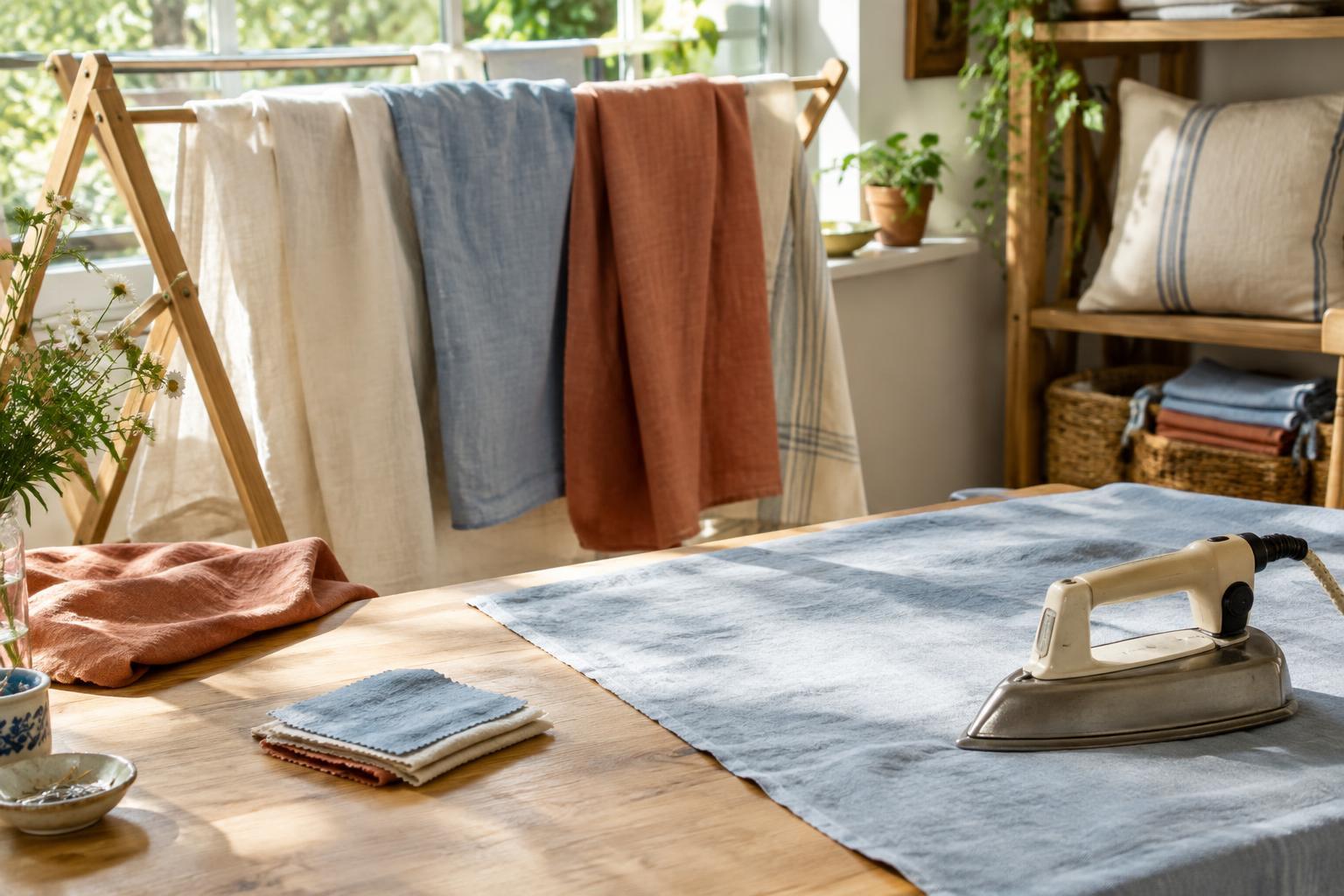
Dry the fabric in the way you expect to dry the finished piece. If you air-dry it, spread or hang it without stretching it out of shape. If you use a dryer, take the fabric out when the cycle ends so deep creases are less likely to set. Once fully dry, press it using a suitable heat setting and a press cloth when needed. Pressing makes the yardage easier to lay flat and measure accurately.
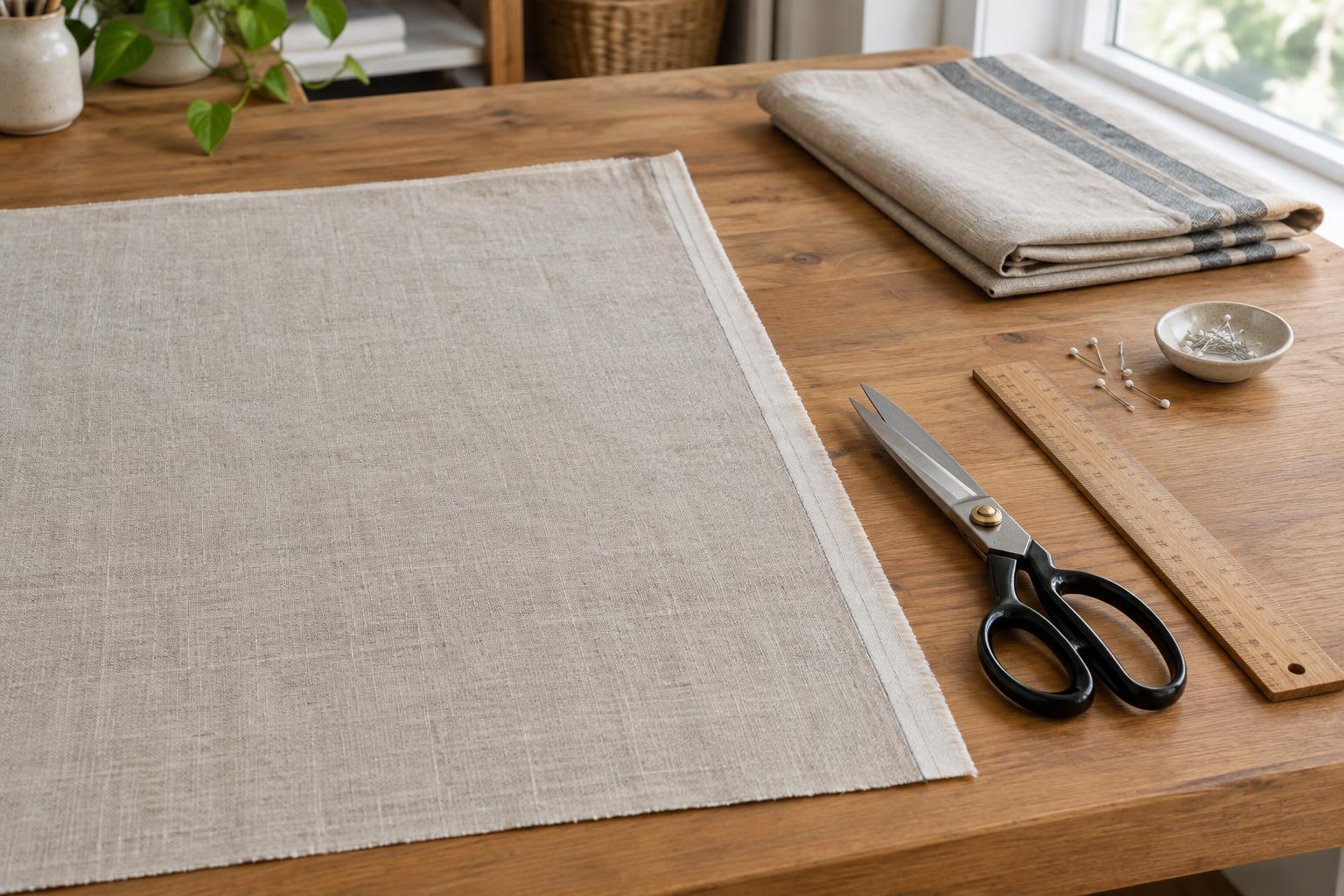
Before cutting, look over the entire piece for flaws, uneven dye or areas that distorted in the wash. Straighten and fold it without pulling the edges to force them into alignment. Then check your pattern placement and measurements against the fabric you have now, not the amount you bought before washing.
Build the washing step into the project plan
Prewashing takes time, particularly if a fabric must air-dry, but it is easier to allow for that time before sewing than to correct a misshapen finished cover. When buying fabric, consider that washing may reduce the usable length or width. If yardage is limited, test first and confirm that the remaining cloth will still fit your pattern pieces.
The goal is not to wash every textile by the same rule. It is to learn how a particular fabric behaves and make its first significant change before the seams and details are in place. With the cloth clean, dry and pressed, you can cut a home accessory that better matches the way it will actually be used.