Choosing by appearance without checking candle fit
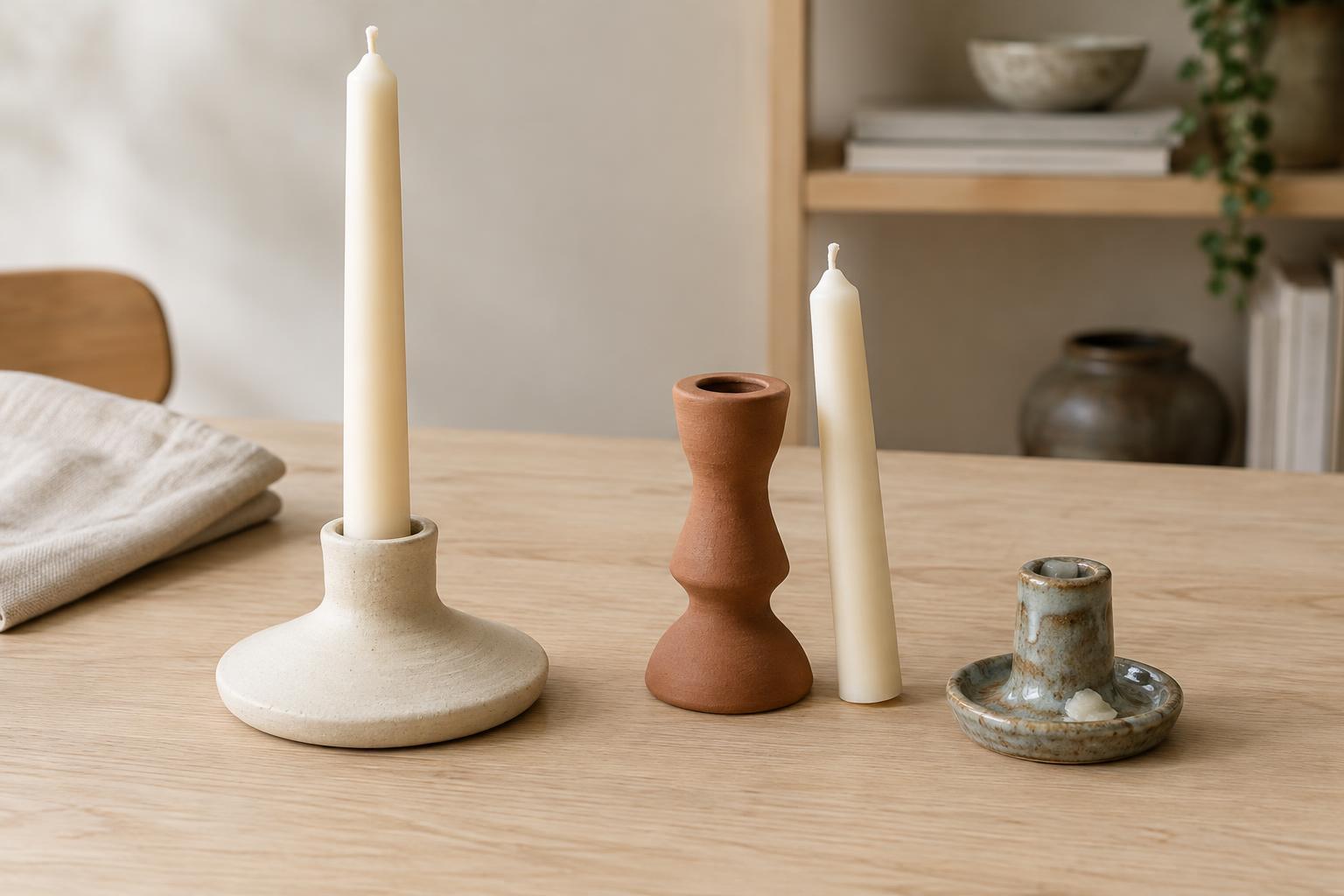
A ceramic candle holder may be described as a taper holder, tealight cup or pillar plate, but those labels do not guarantee that every candle of that type will fit. One common mistake is buying the holder first and assuming a favorite candle will sit securely in it. Before purchasing, check the opening’s dimensions and shape against the candles you intend to use. If you are shopping in person, look at whether the opening is even and whether the candle would sit upright rather than lean against one side.
A tight opening can make a candle difficult to insert or remove; a loose one can let it wobble. Avoid relying on bits of paper, fabric or other combustible material to close a gap. For enclosed designs, also check the maker’s guidance on candle type and size. A holder intended for a tealight, for example, should not be treated as a general-purpose vessel for any candle that happens to fit inside.
Overlooking balance and the surface beneath it
A striking silhouette is not always a stable one. Tall, narrow ceramic holders can be easier to knock over, particularly when paired with long candles. Look for a base that sits flat without rocking, and consider the weight of the holder relative to the candle it will support. Small irregularities are part of many handmade pieces, but the base should still feel dependable on the surface where you plan to place it.
Think about that surface before buying, too. A holder that works on a broad dining table may be impractical on a shallow shelf or a busy mantel. Leave enough room around it that people will not brush past the flame or reach over it. Ceramic can also have a rough, unglazed foot that may mark delicate furniture, while hot wax can spill beyond a narrow base. A suitable heat-resistant surface or tray can help protect the furniture, provided the whole arrangement remains level and stable.
Assuming every ceramic piece is suitable for a flame
Ceramic is a broad description, not a promise that an object is designed to hold a burning candle. A small vase, decorative cup or handmade dish may resemble a candle holder without having been made for that use. Check the product description or ask the maker whether the piece is intended for the candle you want to burn. Pay particular attention to designs with close-fitting walls, added decorative materials or finishes whose suitability is unclear.
Inspect the piece for visible cracks, chips or repairs, especially near the candle opening. Damage can make a holder harder to clean and may affect how securely a candle sits. Glaze is worth checking as well: an uneven surface is not necessarily a problem, but sharp edges, loose decoration or areas that appear to be flaking are reasons to look more closely. If you cannot establish that a decorative object is suitable for a lit candle, enjoy it without a flame instead.
Forgetting about wax and everyday care
Smooth product photographs rarely show what happens after several evenings of use. Tapers may drip, and a holder with deep grooves or a narrow cup can be difficult to clear of wax. Before choosing an intricate shape, picture how you would reach its corners for cleaning. A broad dish can catch drips more readily, while a simple, accessible opening may be easier to maintain than a sculptural one.
Check the maker’s care guidance rather than assuming a ceramic holder can go in the dishwasher or tolerate aggressive scraping. Let the holder and any remaining wax cool before handling them. Gentle methods are less likely to damage a finish than forcing wax out with a sharp tool. If low-effort upkeep matters to you, favor a design whose surfaces you can see and reach.
Buying for one spot without considering how it will be used
A holder should work with its surroundings, not just match their colors. On a shelf, consider the space above the flame; on a table, consider nearby napkins, flowers and the paths people take when serving food. Keep lit candles away from anything that could catch fire, and follow the candle and holder makers’ instructions. Never leave a burning candle unattended.
Finally, decide whether the piece is mainly decorative or something you expect to light often. An ornate holder can be a lovely object even when empty, while a frequently used one benefits from a secure fit, steady base and easy-to-clean shape. Choosing with both purposes in mind helps you find a ceramic piece that looks at home and is practical when you want to use it.