Why wick choice matters
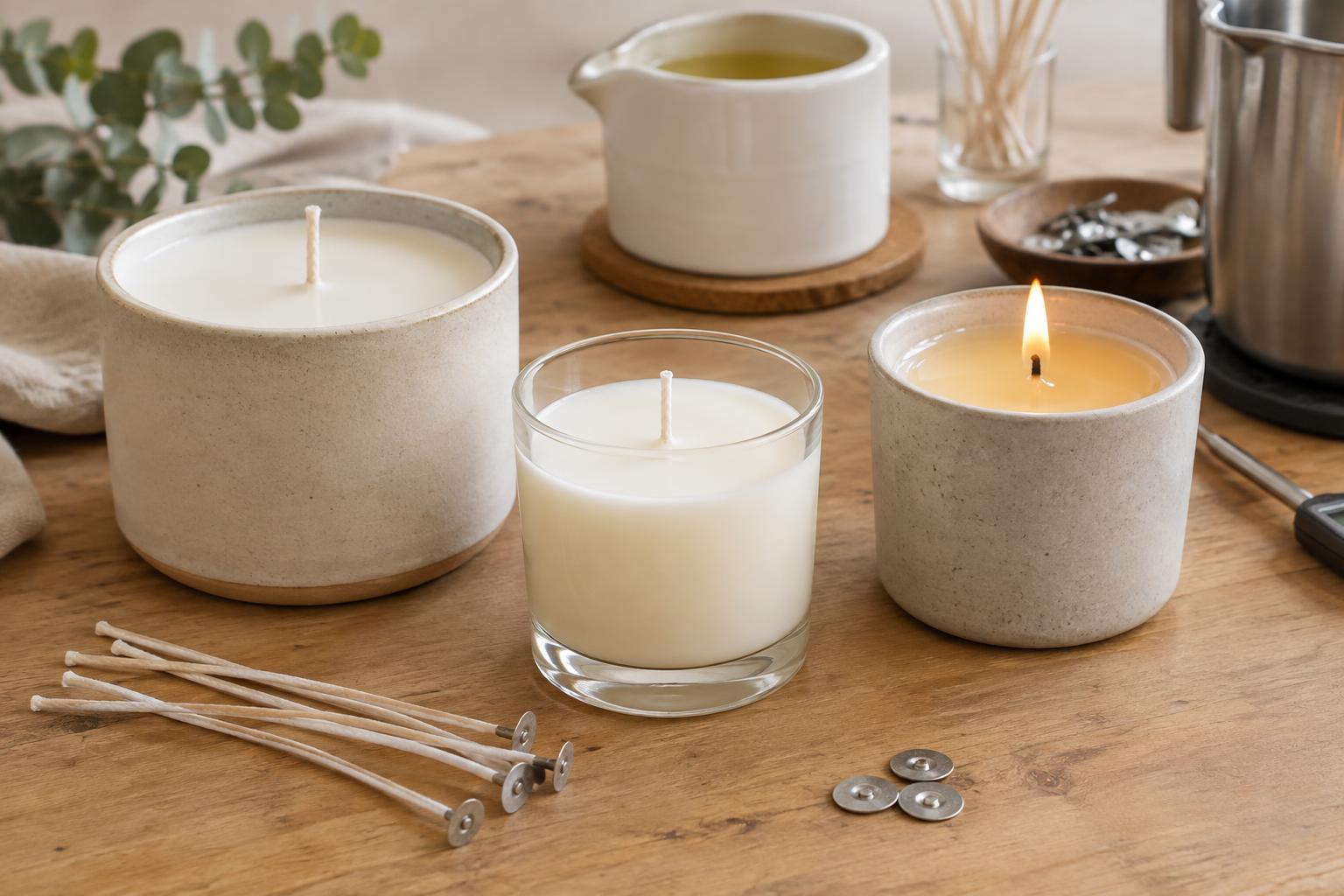
A wick does more than hold a flame. It draws melted wax upward, where the wax feeds the flame. If the wick supplies too little fuel for the container, the candle may burn down a narrow channel and leave wax along the sides. If it supplies too much, the flame may become tall, produce soot or make the vessel excessively hot. The aim is a steady burn that uses the wax without overheating the container.
There is no universal wick size for a given candle diameter. Wick construction, wax blend, fragrance, dye and vessel shape can all change the result. Treat a supplier’s wick chart as a starting point for a specific wax and wick series, not as a promise that the finished candle will burn correctly. Testing the complete candle is the most useful way to make a final choice.
Start with the wax and the vessel
Begin by noting the vessel’s inside diameter where the candle will burn. A wide container generally needs more heat across its surface than a narrow one, but diameter alone does not describe the whole vessel. Walls that slope inward or outward change the space around the flame as the candle burns. Material and wall thickness also affect how heat is retained. Use containers intended for candle making; a decorative cup or jar is not automatically suitable for a flame.
Next, identify the wax blend you will actually pour. Different waxes melt and travel through a wick differently, so a size that works in one blend may behave poorly in another. Fragrance and color can change the burn as well. If your planned candle includes them, include them in your tests at the intended amounts rather than testing plain wax and assuming the result will carry over.
Choose a wick series recommended by its maker for your wax type, then consult that series’ sizing guide for your vessel diameter. Wick labels and numbers are not interchangeable across series: a larger number in one family does not necessarily behave like the same number in another. Select the suggested size and, if possible, one neighboring size on either side.
Make a fair comparison
Pour small test batches with the same wax, vessel, fill level, fragrance and dye. Change only the wick size between samples. Secure each wick at the center and keep it upright while the wax sets. Follow the wax and fragrance suppliers’ handling instructions, including their guidance on pour temperatures and time before testing. Label each candle so you can tell the samples apart after several burns.
Set the candles on a stable, heat-resistant surface away from drafts and flammable objects. Trim the wicks to the length recommended by the wick maker before each test. Burn only while you can watch them, and follow the vessel or candle-supply maker’s limits for burn time and remaining wax. Never leave a burning candle unattended or continue testing one with a cracked vessel, an unstable flame or excessive heat.
Observe more than the first lighting. A container candle can behave differently as the wax level drops and the vessel warms. Let each sample cool between test burns, then compare them over multiple sessions. Keep simple notes on flame behavior, soot, wax left at the sides and how the container feels. You are looking for a consistent pattern, not a perfect-looking melt surface at one moment.
Read the signs, then adjust one variable
A persistent tunnel of unmelted wax may suggest that the wick is too small, but avoid judging it after a single short burn. A large, wavering flame, visible soot, rapid wax consumption or a vessel that becomes concerningly hot can point toward a wick that is too large or another problem with the formulation. Stop a test that appears unsafe rather than waiting to see whether it improves.
Compare your notes before changing anything. If the smaller wick leaves substantial wax and the larger one burns too aggressively, a different wick construction may work better than forcing a choice between the two. Re-test whenever you change the wax, fragrance amount, dye or vessel. Each of those changes creates a new candle, even if it looks similar on the shelf.
Keep the finished candle practical
A well-matched wick supports both the appearance and everyday use of a container candle. Centering it neatly helps the candle look considered on a table or shelf, but safe burn behavior matters more than a flawless top. Before sharing or gifting a candle, test the finished combination of materials and provide clear basic use instructions, including trimming the wick, keeping the flame away from flammable items and extinguishing the candle when the recommended amount of wax remains.