Start with the feel you want
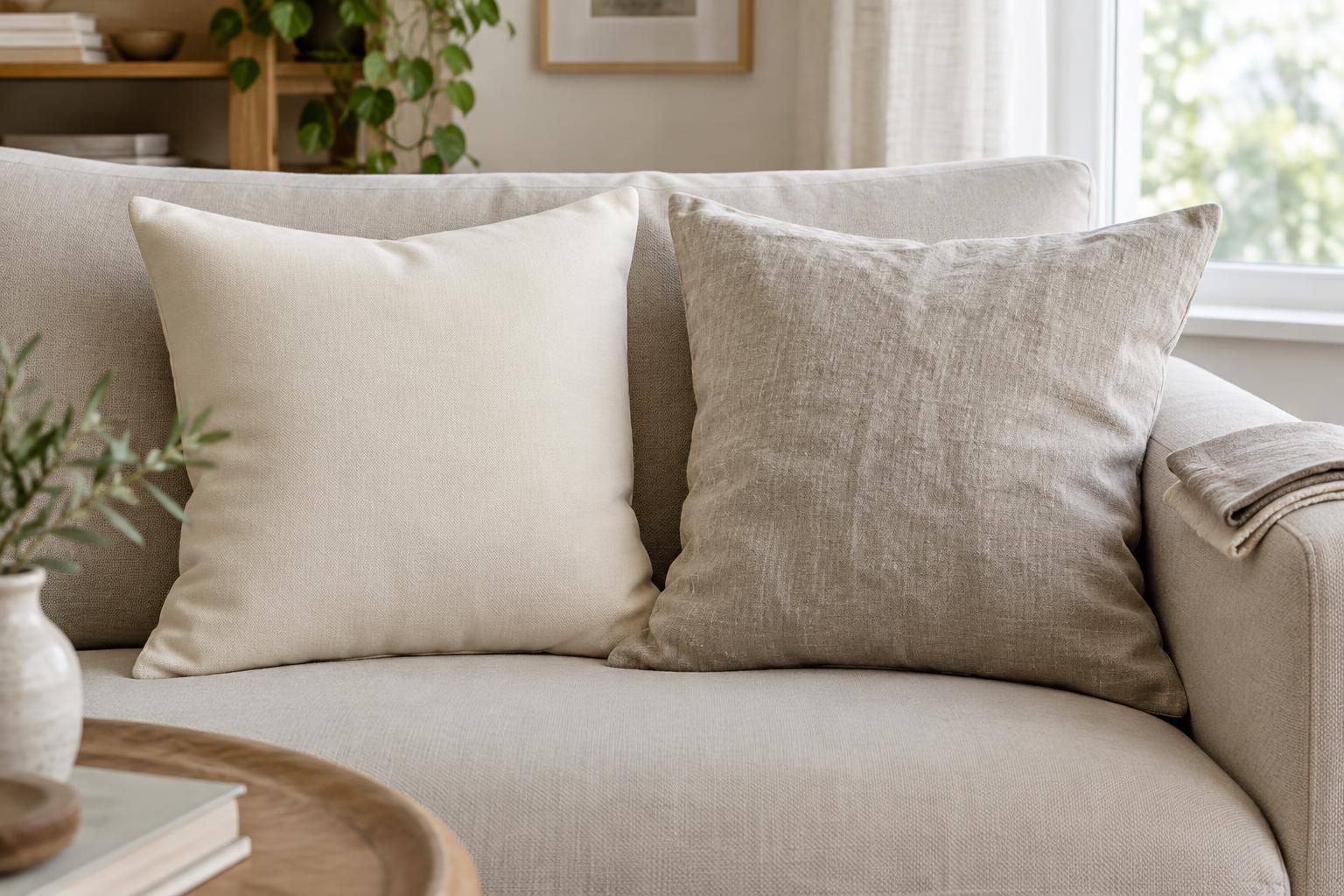
Cotton is often the easier choice when you want a soft, familiar cushion cover. It can feel smooth and crisp, like a firm woven fabric, or relaxed and slightly fuzzy, depending on its weave and finish. Linen usually has a drier hand and more visible variation in its threads. That subtle irregularity gives a plain cover texture without requiring a bold pattern.
Neither fiber has one fixed look. A tightly woven cotton canvas feels different from cotton velvet, just as a lightweight linen feels different from a heavy upholstery linen. When possible, handle a fabric sample and bend it around the corner of a cushion insert. A fabric that looks appealing laid flat may feel too stiff or too thin once it is made into a cover.
Think about wrinkles as part of the design
Linen creases readily, especially where someone leans against it or grips the cushion. Those folds can suit a loose, lived-in arrangement of layered textiles. If you prefer sharply defined corners and a consistently smooth surface, the same creasing may become a nuisance. A fuller insert can help the front look neater, but it will not prevent wrinkles in the fabric.
Cotton also wrinkles, though the effect varies considerably by weave, weight and finish. A sturdy cotton canvas may hold a tidy shape, while a soft cotton cover can rumple after use or washing. Before buying fabric or a finished cover, look at it under ordinary room light. Texture and creases tend to stand out differently on a pale solid color than on a small print or a textured weave.
A cotton-linen blend may offer a middle ground, but its behavior depends on the particular cloth. Rather than assuming a blend will be wrinkle-free, treat it as its own fabric and check its care instructions.
Match the cover to how the cushion is used
For a sofa cushion that gets moved, hugged and leaned on every day, prioritize a substantial fabric and a removable cover. Cotton is available in many durable-feeling weaves and may be a straightforward option when frequent washing matters. Linen can also work well for everyday cushions, particularly if you enjoy its softened, creased appearance. Fiber alone does not tell you how long a cover will hold up; construction, fabric weight, seams and the way it is cleaned all matter.
For a decorative cushion on a bed or occasional chair, you may have more freedom to choose by appearance. Linen's visible slubs can add interest beside smooth bedding or a polished chair. Cotton can provide a calmer surface when other textiles already carry plenty of texture. In either case, consider the insert: a loosely filled cushion may make a thin cover look baggy, while an overly full one can strain the zipper and seams.
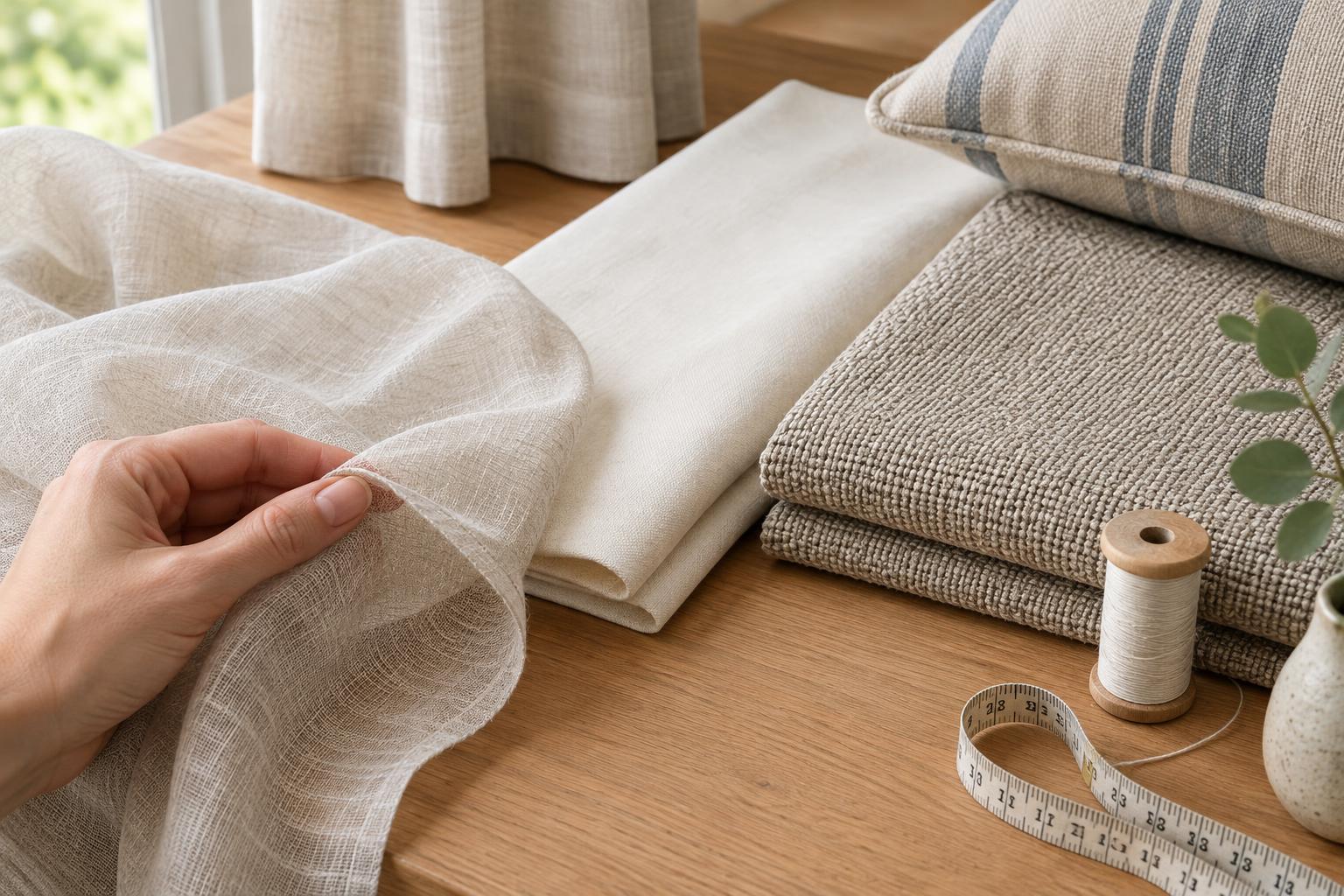
If you are sewing covers, check whether the fabric is intended for the amount of handling it will receive. Hold a swatch up to the light to assess its density, and rub it gently between your fingers to get a sense of its surface. Leave enough room in your plan for the seams and closure rather than choosing fabric solely for its color.
Plan for washing before you choose
Always start with the care label on a finished cover or the supplier's instructions for fabric. A removable cover is convenient, but that does not automatically mean it can go in the washing machine. Dye, trim, backing, lining and closure details may limit how it should be cleaned.
When machine washing is permitted, a gentle cycle and mild detergent are sensible starting points for both cotton and linen. Turn the cover inside out and close its zipper to reduce snagging. Avoid overloading the machine, which can leave fabric tightly twisted. Air-drying can help you check the fit before heat from a dryer introduces any unwanted shrinkage; follow the specific label if it calls for a different method.
If you are making a cover from washable fabric, wash and dry a test piece as you expect to clean the finished cushion. That reveals changes in size, color and feel before you cut the panels. Pressing can give either fiber a neater finish, but linen need not be ironed flat if its relaxed texture is the reason you chose it.
Make the choice that suits your routine
Choose cotton if you want a wide range of surface finishes and a potentially tidier everyday look. Choose linen if you want visible texture and are comfortable with creases that shift as the cushion is used. These are useful starting points, not rules: the fabric's weave and finish can matter as much as its fiber content.
A small sample is often more helpful than a product description. Place it beside your sofa or bedding, scrunch it in your hand, and consider whether you would still like it after a wash and an afternoon of use. The best cushion cover is one whose appearance you enjoy both freshly arranged and slightly rumpled.