The difference you can feel
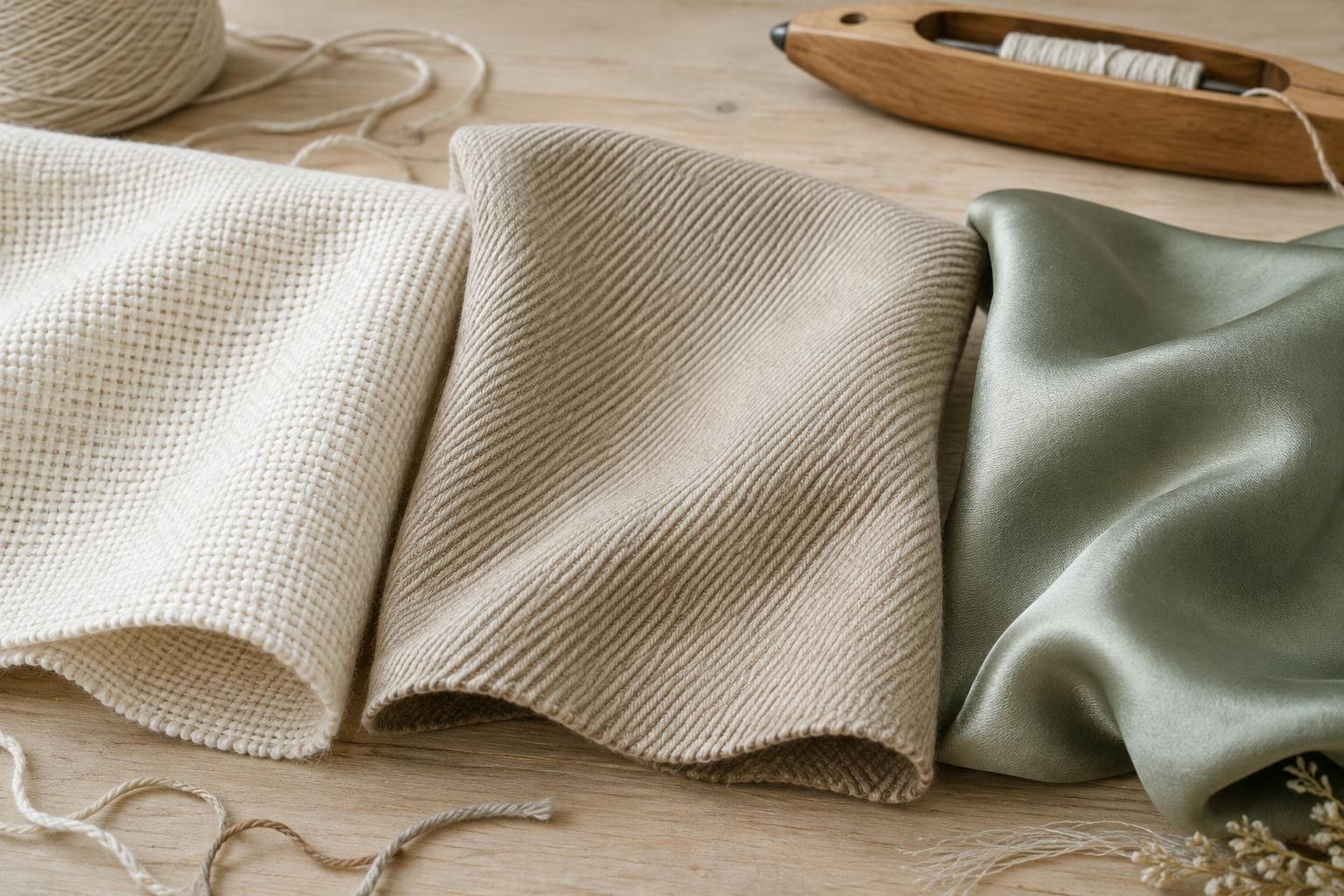
Woven fabric is made from two sets of yarns crossing over and under each other. Most woven fabrics hold a fairly stable shape along their length and width, though they may stretch a little on the diagonal. Knitted fabric is made from interlocking loops. Those loops allow it to stretch and recover, giving many knits a soft, flexible feel. Neither construction is automatically better for the home; the right choice depends on whether an accessory needs to keep its shape or move and drape.
Construction is only part of the story. A dense knit may feel firmer than a loosely woven cloth, and a heavy woven fabric can hang in generous folds. Fiber, yarn thickness and fabric finish also affect texture and durability. When comparing samples, handle them rather than relying on their names: bend an edge, pull gently across the width and see how the fabric falls over your hand.
Where woven fabrics shine
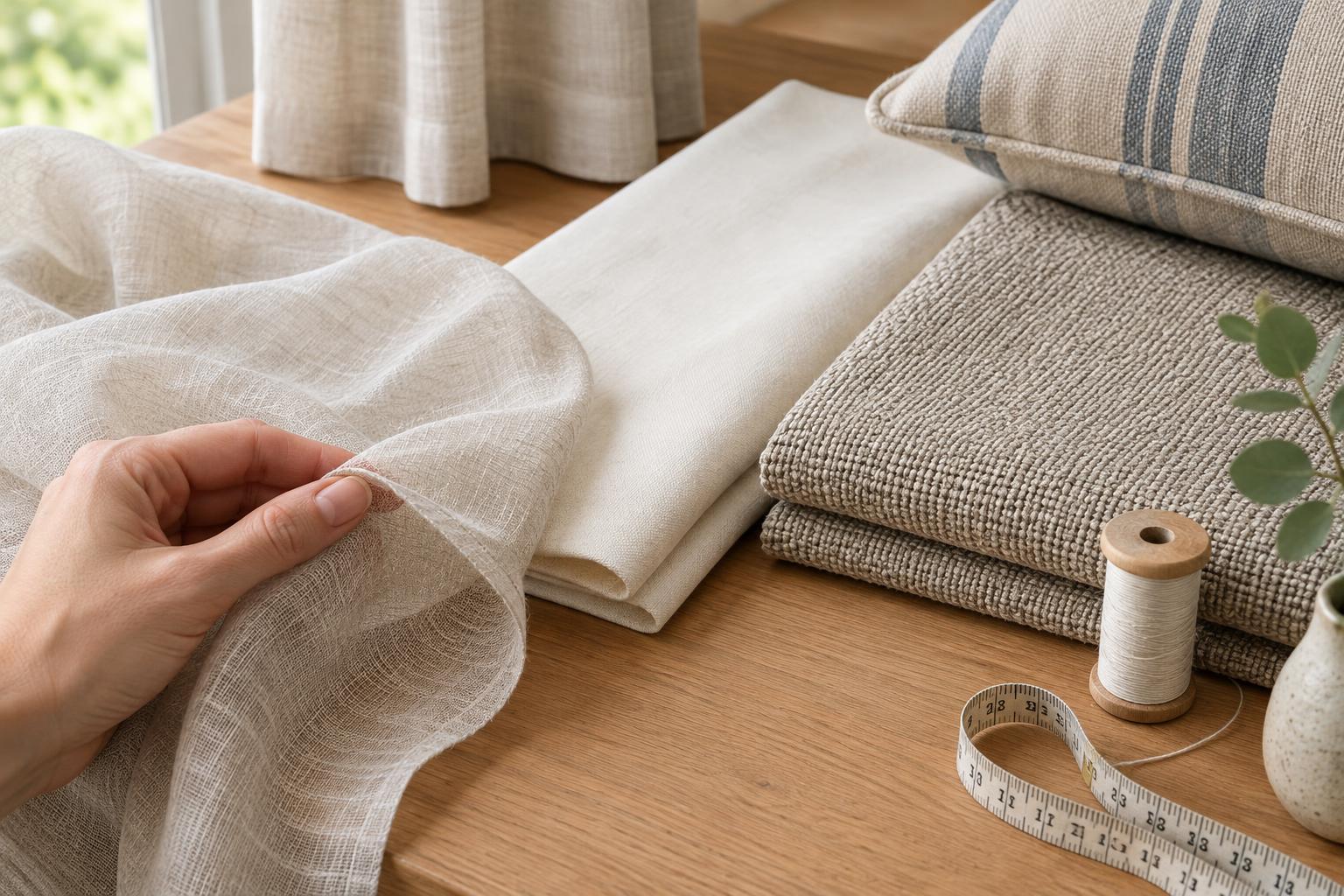
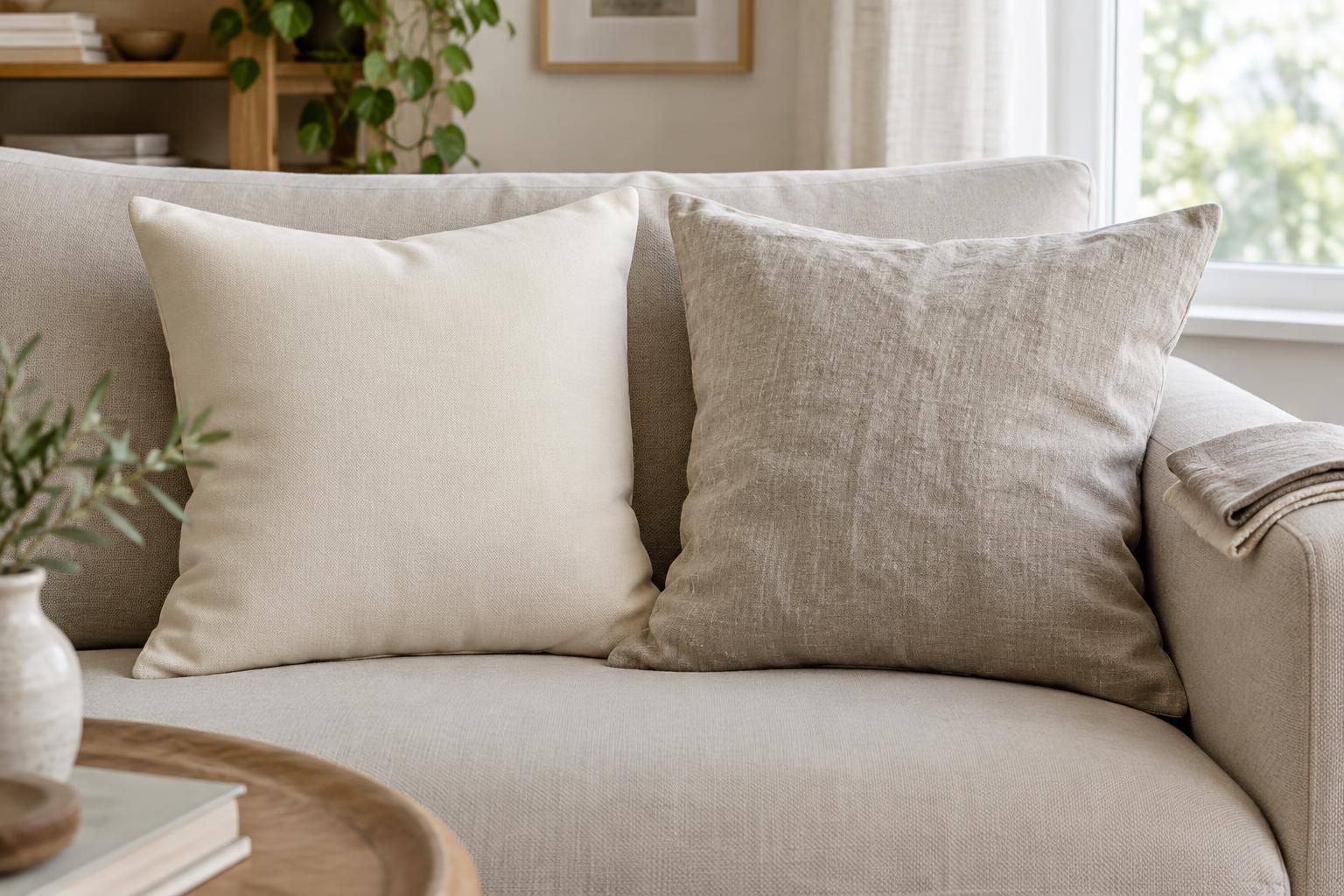
Wovens are a useful starting point for accessories with corners, flat panels or tailored details. Cushion covers, table runners, placemats and fabric storage bins benefit from cloth that stays relatively steady while it is cut and sewn. A firm weave helps a cushion cover keep a square outline and makes it easier to align a printed pattern across seams. For a runner or placemat, a stable fabric also helps the finished piece lie flat.
Pay attention to the weave as well as the look. Loosely woven cloth can fray at cut edges and may distort under the weight of embellishment. It can still make a beautiful decorative cover, but it needs generous seam allowances and a suitable edge finish. For items that will be handled or washed often, a tighter weave is usually easier to work with. If you want the texture of an open weave on a frequently used cushion, consider using it on the front with a sturdier backing.
Where knits feel at home
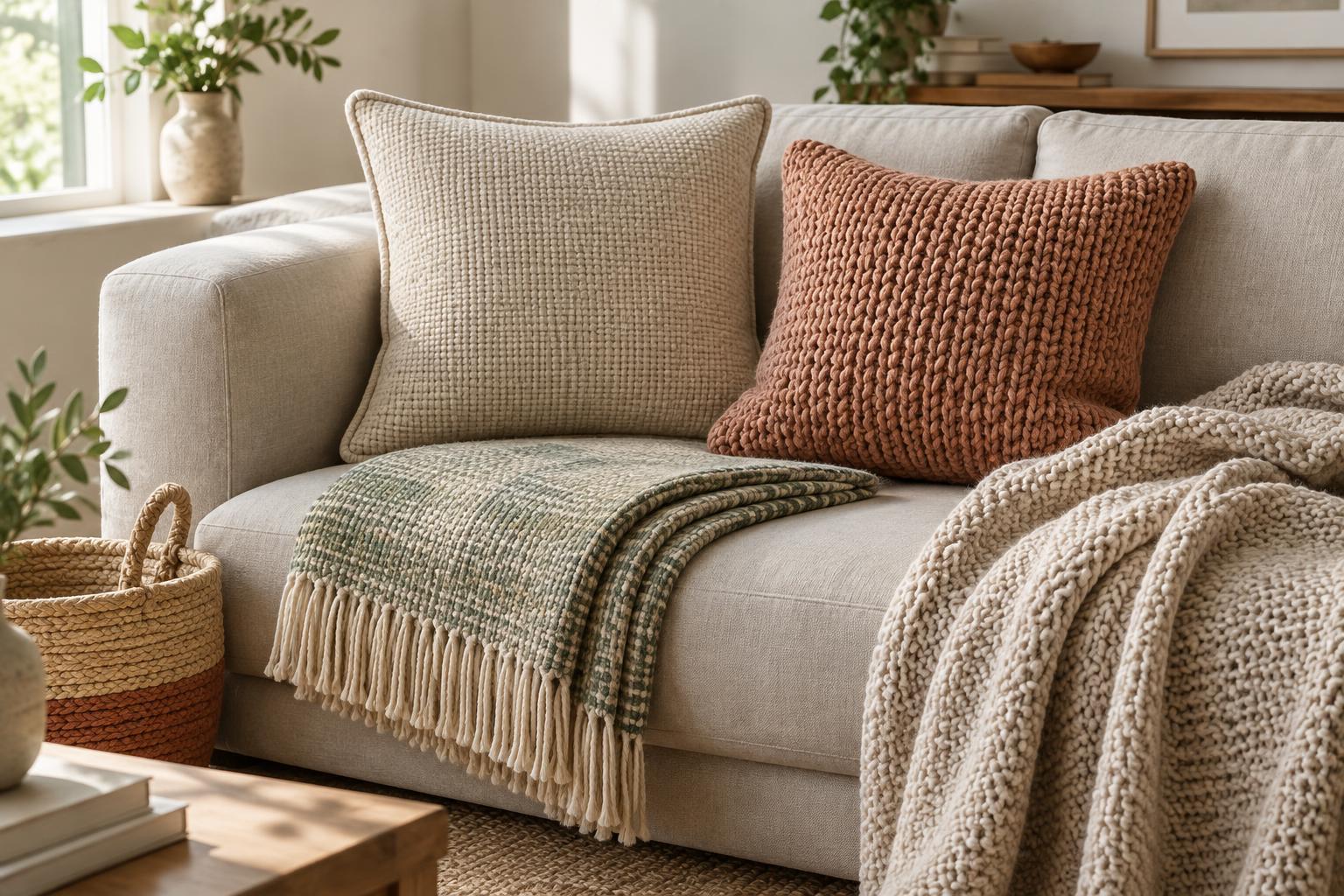
Knits bring a relaxed quality to throws, soft cushion covers and small accents such as removable covers for decorative objects. Their stretch can help a cover fit over a rounded form, while their drape makes a throw look inviting when folded over a chair. Chunky knitted textures can add visual warmth to a room without requiring a busy print.
That flexibility calls for a different approach when making. A knit cushion cover may grow or sag if the fabric is heavy, loosely made or pulled too tightly around its insert. Let a sample hang for a while before cutting if you are unsure how it will behave. When sewing, avoid stretching the fabric as it passes through the machine, and use a seam method that allows the knit to move without popping stitches. A stable woven lining or backing can help a decorative knit front retain its shape, though it will reduce stretch.
Match the fabric to the job
Start with how the accessory will be used. For a crisp cushion arranged on a bench, a woven fabric is often the simpler choice. For a soft throw meant to be gathered and tucked around the sofa, a knit may give the effect you want. A table textile that sits beneath dishes needs a surface that lies flat and is easy to care for; an open, stretchy knit is less suited to that role. Decorative pieces that are rarely touched leave more room to experiment with delicate textures.
Consider the finish before buying or cutting. Can the fabric be cleaned in a way that suits the object’s location? Will crumbs catch in its texture? Does it snag easily on jewelry, pet claws or rough wood? Check care information when it is available, and test washing a small piece if you plan to launder the finished accessory. Fabric can change size or feel after cleaning, so prepare washable yardage before cutting pieces that must fit precisely.
Try both textures in one room
You do not have to choose one construction for every accessory. Pairing a structured woven cushion with a knitted throw creates contrast without adding another color or pattern. On a shelf, a small textile-lined tray can provide a neat woven surface beside a softer knitted accent. Repeating a color across both pieces helps them feel connected while their different textures add depth.
If you are new to sewing home accessories, begin with a simple woven cushion cover or runner to practice measuring and straight seams. For a knit project, try a small cover with minimal shaping so you can learn how the fabric moves. The best fabric is the one whose behavior supports the object you want to make: steady where you need clean lines, flexible where you want softness.