Start with the threads, not the fiber label
Two fabrics made from the same fiber can look and feel surprisingly different. One cotton may be crisp and matte, while another is soft with a gentle sheen. Fiber matters, but so do the yarn, the fabric’s weight, its finish and the way its threads are woven together. Understanding weave structure gives you another useful clue when choosing fabric for a cushion, table runner or other decorative object.
In a woven fabric, lengthwise threads called warp cross widthwise threads called weft. The pattern of their crossings affects how much of each thread shows on the surface. Plain weave, twill and satin are three common ways to organize those crossings. Their names describe structures, not fibers: each can be made with different materials and produced in different weights.
Plain weave: an even, straightforward surface
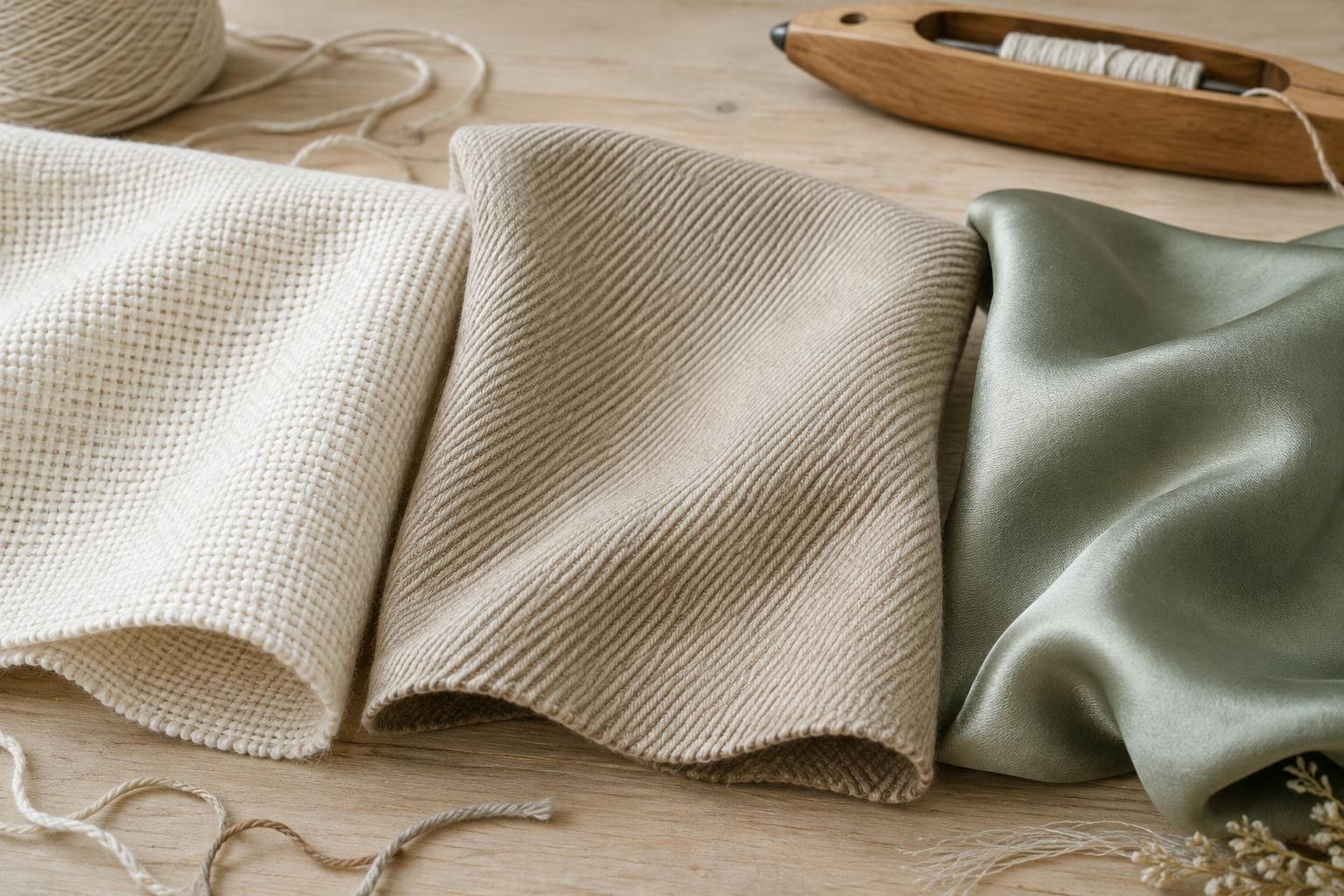
Plain weave uses a simple over-one, under-one pattern. Each weft thread alternates over and under neighboring warp threads, creating frequent crossings and a balanced-looking surface. The resulting fabric often appears relatively flat and matte, without a strong directional pattern. Depending on the yarn and finish, it might feel airy and crisp or firm and substantial.
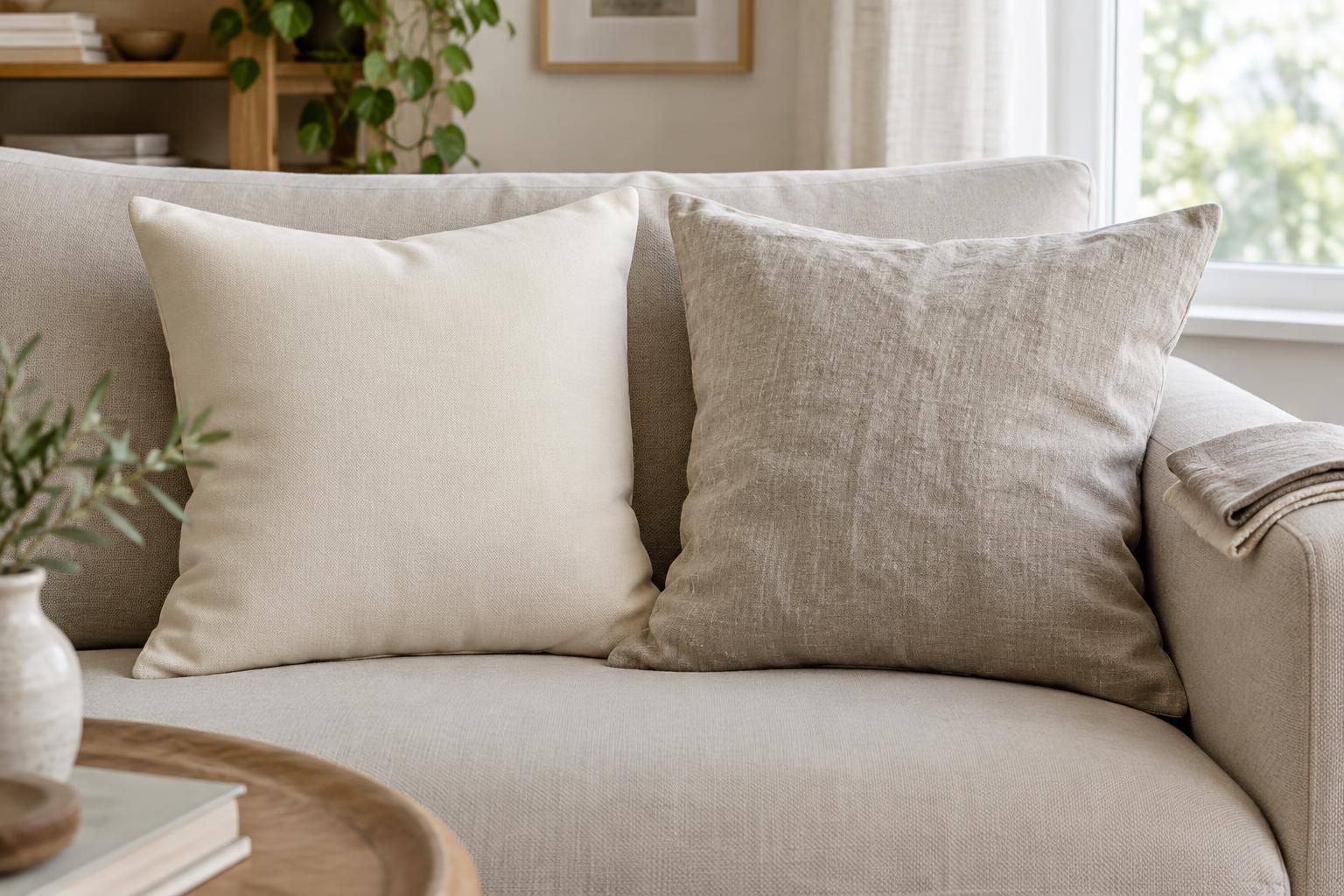
That unobtrusive texture makes plain weave useful when you want a printed motif, embroidered detail or contrasting color to take the lead. It can work well for napkins, lightweight curtains and cushion covers, provided the specific fabric has enough body for the project. Frequent thread crossings can help the weave hold its shape, but they do not make every plain-weave fabric equally strong. A loosely woven cloth may shift or fray more readily than a closely woven one.
Twill: a diagonal with movement
Twill changes the order of crossings from row to row, forming diagonal lines called wales. You can often spot those diagonals by tilting the cloth toward a light or looking closely at its surface. Denim is a familiar example of a twill, though twills also come in much lighter and softer forms.
Because its threads do not interlace at every opportunity, twill often bends and drapes differently from a comparable plain weave. Its diagonal texture can lend a solid-colored fabric visual depth without an added print. For home projects, that makes it worth considering for cushions, upholstered accents or a relaxed table covering. Check the actual cloth rather than relying on the weave name alone: a heavy, stiff twill and a light, fluid twill will behave quite differently. If you plan to join panels, decide whether their diagonal lines should run in the same direction before cutting.
Satin: a smoother face with longer floats
In a satin weave, threads pass over several opposing threads before interlacing. These exposed lengths, called floats, give the fabric a smoother face and can produce a noticeable sheen, especially when the yarn itself reflects light. Satin is a weave, not a synonym for silk; it may be made from various fibers. The reverse side can look quite different from the face.
Satin can bring a quiet highlight to a decorative pillow or a small table accent, particularly beside rougher materials such as linen, wool or unglazed ceramic. Its longer floats also deserve consideration. Depending on the yarn and construction, they may catch on a rough surface or show pulls more readily than a fabric with shorter exposed threads. For items that will be handled often, test a sample against nearby hardware, furniture edges or textured objects before committing.
Choose by handling the fabric
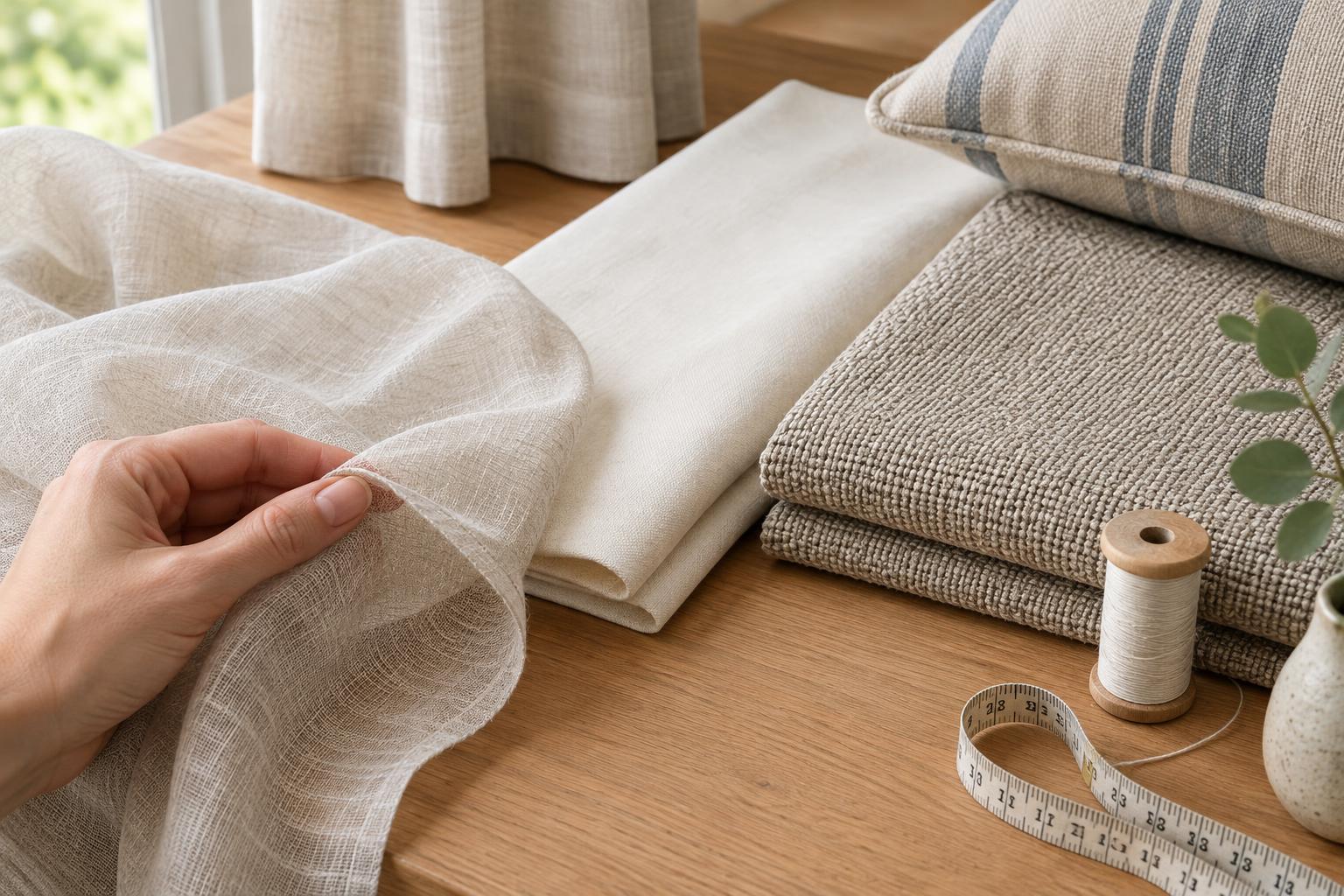
Weave structure is a helpful starting point, not a complete prediction. Hold a fabric up to the light to check its openness, then drape it over your hand or the edge of a table to see how it falls. Rub the surface gently to notice texture, and view it from different angles to judge whether a sheen or diagonal line suits the room. If the fabric is for a washable item, follow its care instructions and, where possible, wash a sample before measuring and cutting.
Think about the job as well as the appearance. A plain weave may provide a calm backdrop for a patterned shelf display; a twill may add subtle texture to a solid cushion; a satin may create a deliberate glint among matte objects. Fiber, yarn, weight and finishing still shape the final result. Knowing how the threads cross simply helps you ask better questions of the cloth in your hands.