What fabric weight tells you
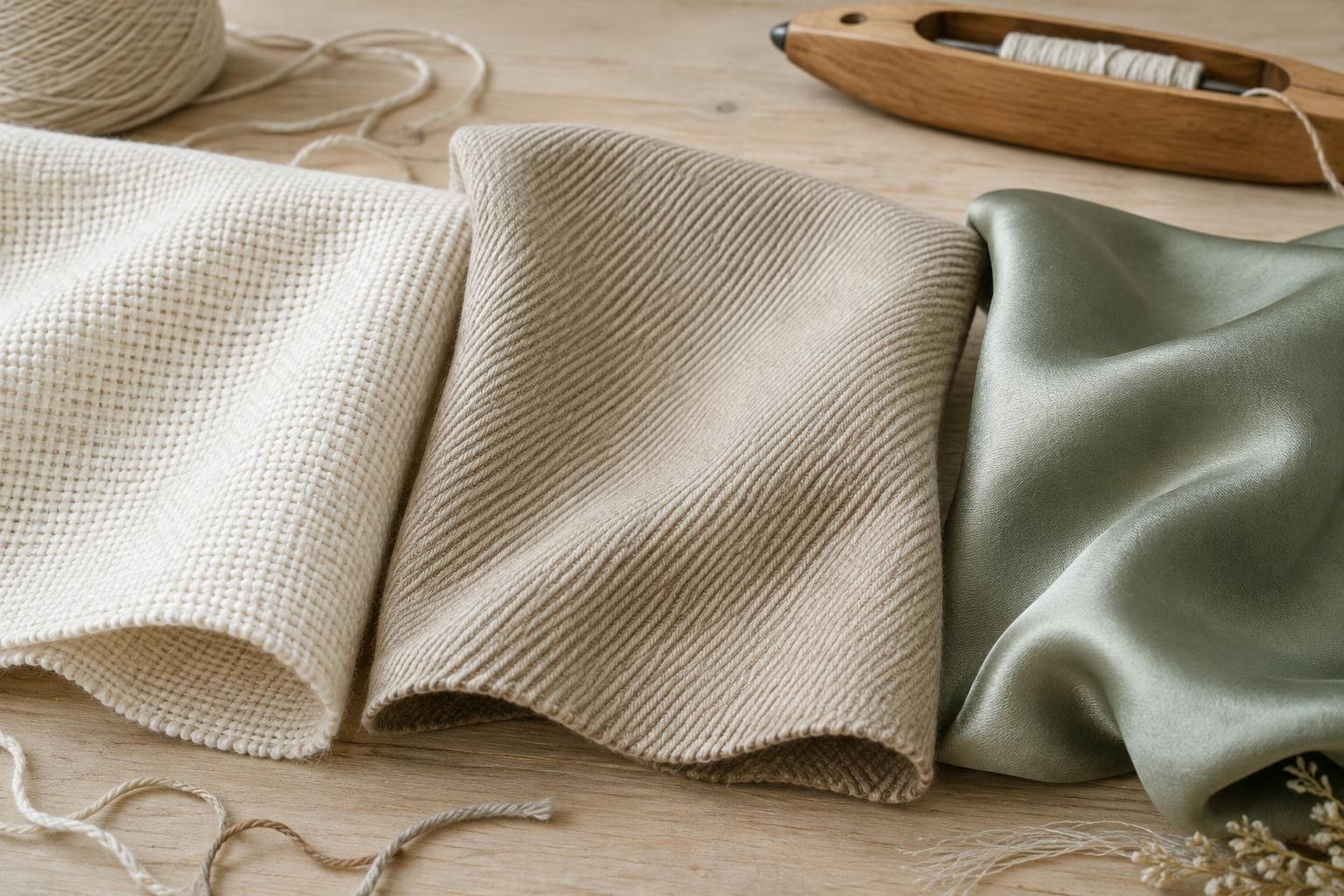
Fabric weight describes how much a given area of cloth weighs. Suppliers may list it in grams per square metre (GSM) or ounces per square yard. A higher number means more mass in that area, but it does not automatically mean the fabric is thicker, stiffer or stronger. A densely woven fine cloth and a loosely woven bulky cloth can feel quite different even if their listed weights are similar.
Weight is most useful as a starting point for comparison. If two fabrics have the same fiber content and a similar construction, their weights may help you predict which will feel more substantial. Across different weaves and fibers, handle matters just as much. Before ordering enough cloth for a project, ask what the finished object needs to do: hang softly, hold a crisp edge, withstand rubbing or wash easily.
Match the cloth to the job
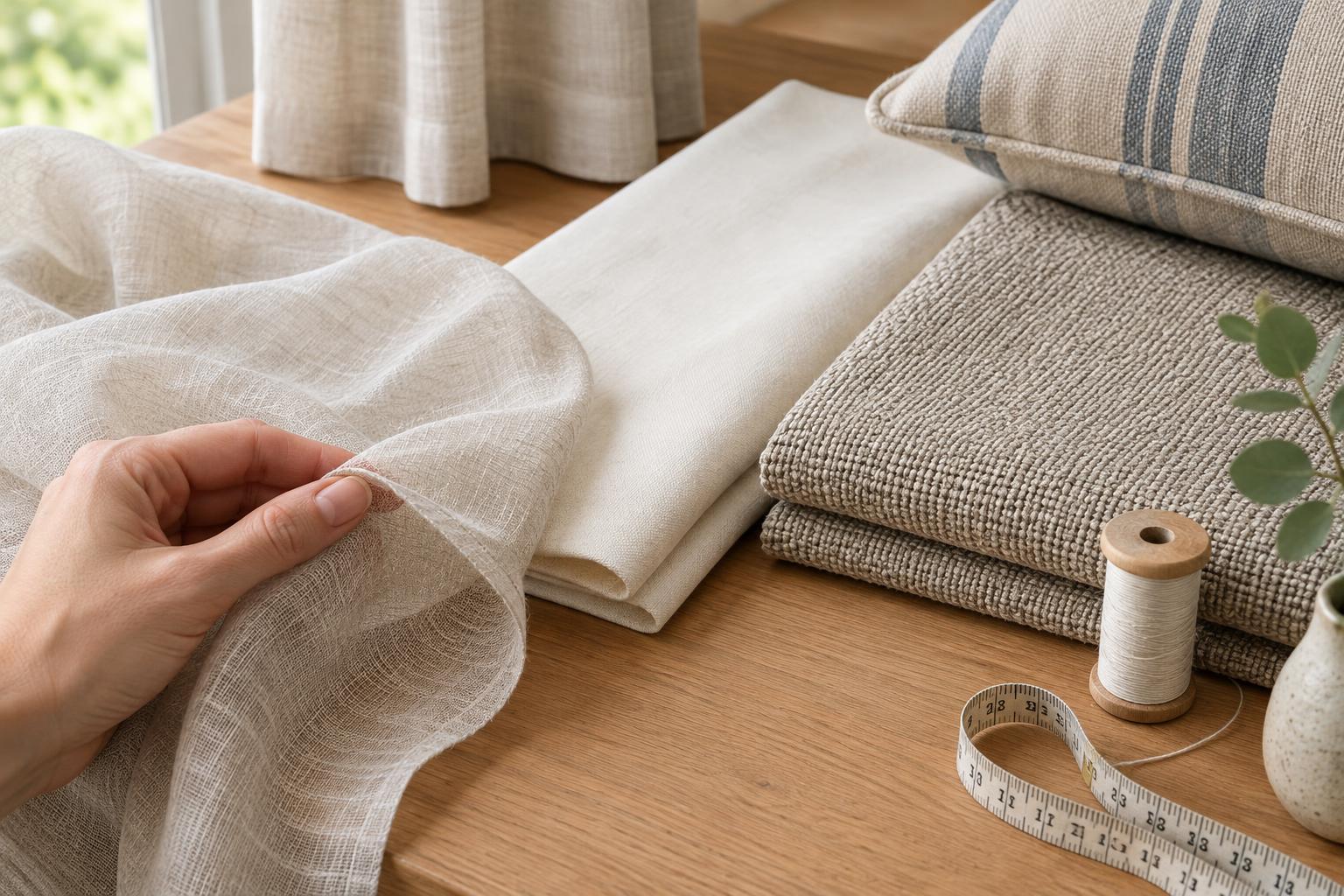
For curtains, consider how you want the fabric to fall. A light cloth can make a relaxed panel and let more daylight through; a heavier one may form fuller folds and provide more visual coverage. Weight alone cannot tell you how much light will pass through, so hold a sample against a window. A lining can also change the look and feel of a curtain without requiring you to choose a much heavier face fabric.
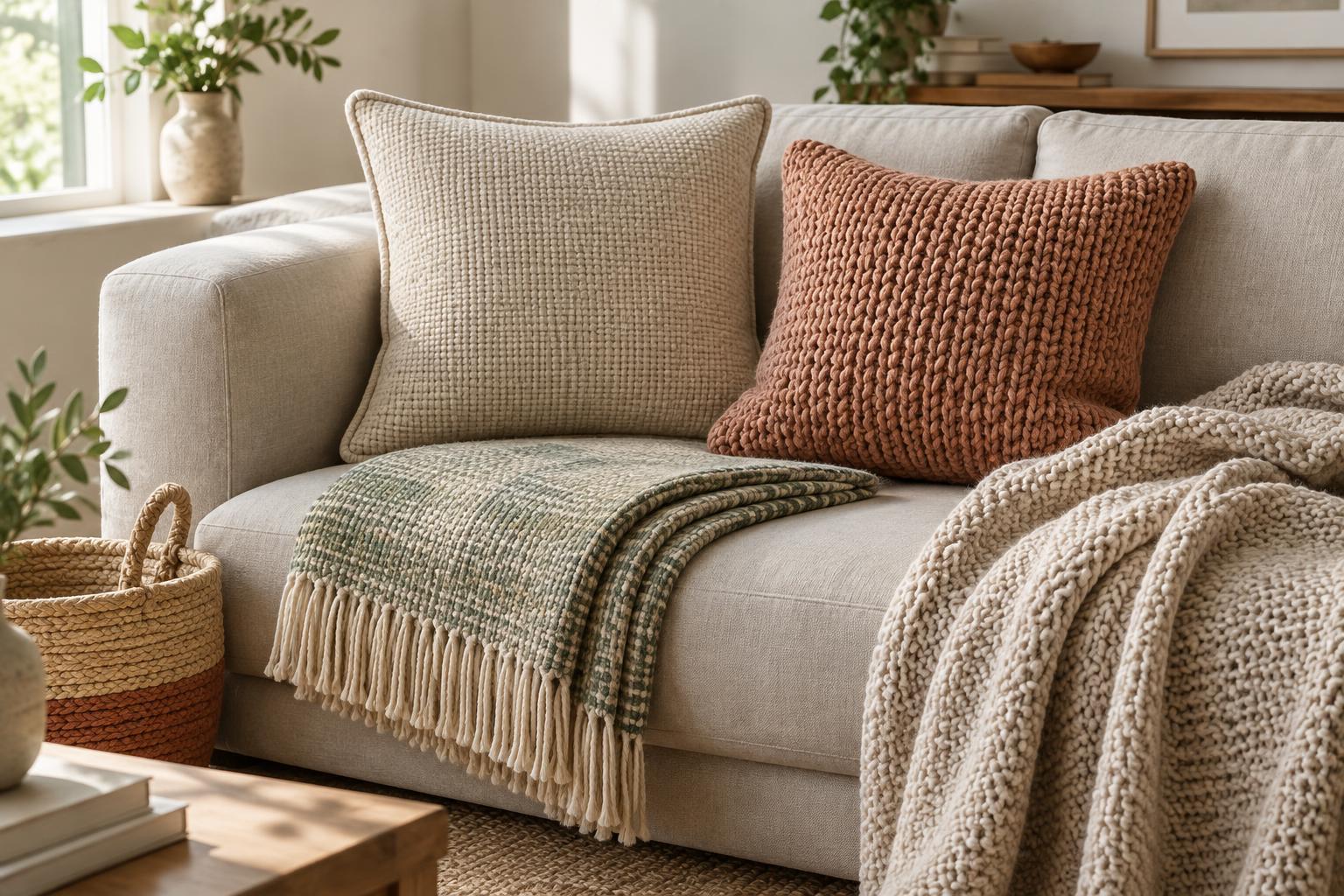
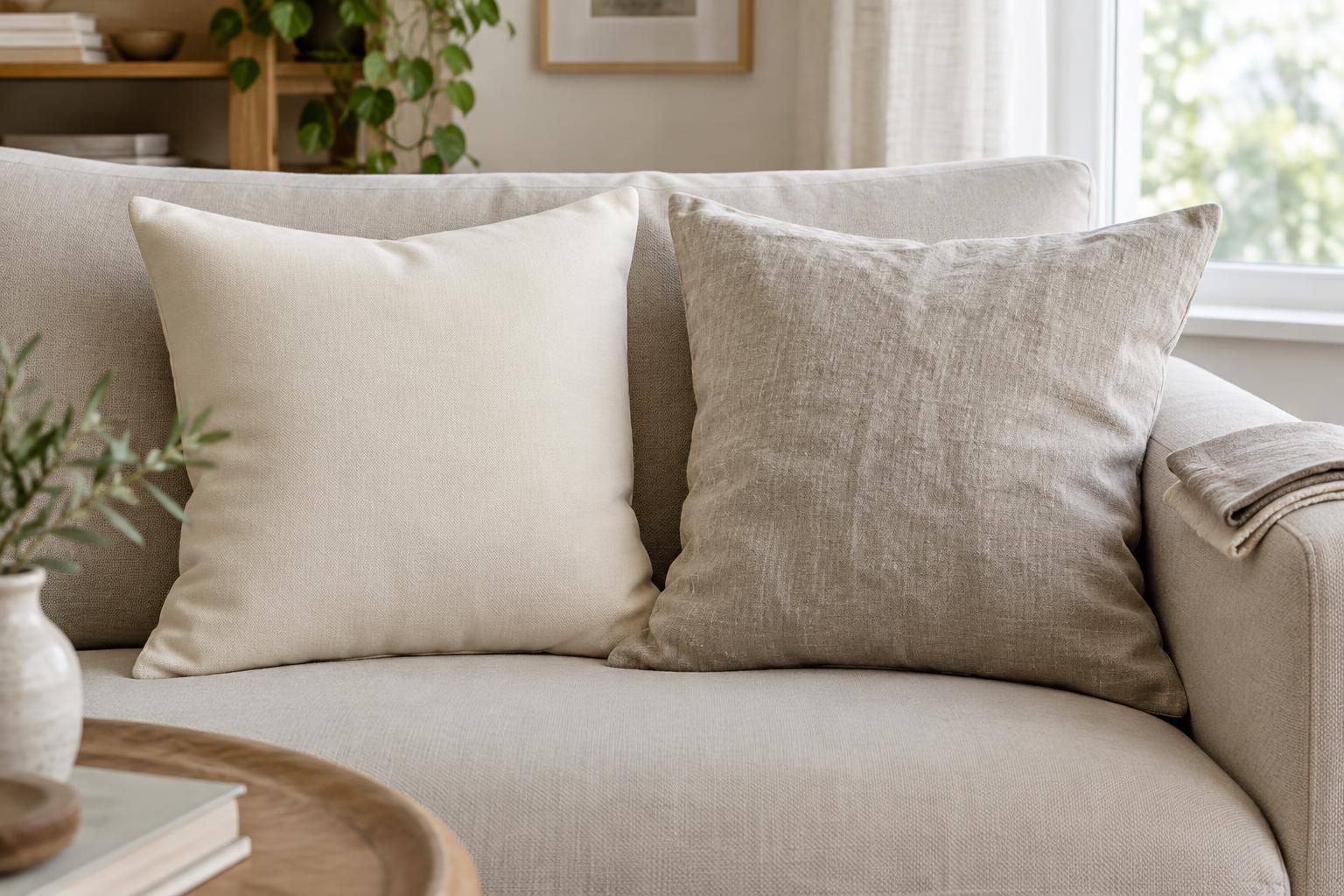
Cushion covers and seat pads have different demands. A decorative cushion used occasionally offers more freedom than a cover that will be sat on daily. For frequent use, examine the weave for stability and check the supplier’s intended-use guidance, not just the weight. On a dining table, a lighter cloth might suit a soft, gathered runner, while a more substantial fabric may lie flatter as a placemat. Test whether it takes a crease well and whether spills can be cleaned in a way that suits your household.
Look beyond the number
Weave, yarn and finish all affect how fabric behaves. A firm plain weave may hold a squared-off shape; a looser weave may shift while you sew. Some fabrics have a brushed surface that feels plush without being especially heavy. Others are finished to feel crisp at first but soften after washing. Stretch or an open weave can also make a cloth less suitable for a sharply tailored project, regardless of its weight.
Drape is easiest to judge in person. Let a sample hang over your hand or the edge of a table, then notice whether it bends in small, soft folds or stands away from the surface. If you are making a gathered valance, imagine how those folds will look across a wider piece. If you are making a box cushion, ask whether the same fabric will keep the corners defined. A small sample cannot show everything, but it can reveal more than a product number alone.
Plan for layers, seams and care
The finished project includes more than its main fabric. Interfacing, backing, lining, batting and seam allowances can add bulk. A heavy fabric that looks appealing on a flat table may be difficult to fold neatly at a hem or turn through a small opening. For a project with piping or several layers meeting at a corner, make a quick test seam and check whether your machine can feed the stack evenly.
Read the care information before committing. If an item will need regular washing, choose a cloth whose care requirements you can realistically follow. Washable fabrics may change in size or texture during their first wash, so prepare a test piece as you intend to clean the finished item before cutting your project. For mixed-material pieces, such as a cushion with trim, make sure the components can be cared for together.
Choose with a small trial
When you are uncertain between two weights, buy samples and run a simple project-specific test. Fold and press a hem, stitch a short seam, or pin the cloth where the finished piece will sit. View it in daylight and lamplight. For a table project, place a cup or book on the sample to see how readily it bunches; for a curtain, hang it vertically rather than judging it only while flat.
Then make the choice based on the result you want, not on a rule that heavier is always better. Fabric weight helps narrow your options, while construction, finish and care determine whether a particular cloth works in your home. A brief trial before cutting can save effort and give you a clearer picture of the object you are about to make.