Start with the pot’s job
A ceramic planter can be the container that holds a plant’s growing mix, or it can be a decorative cover around a separate pot. That distinction matters more than the color or finish. A pot with a drainage hole lets excess water leave the growing mix. A pot without one holds any water that passes through, whether you can see it or not.
Before choosing a shape, decide whether you want to plant directly into the ceramic or keep the plant in a removable nursery pot. Direct planting creates a simple, finished look but calls for a reliable way to catch runoff. A removable inner pot makes it easier to water, inspect roots and swap plants without disturbing the decorative vessel. Neither arrangement removes the need to pay attention to how damp the growing mix stays.
What a drainage hole does—and what it cannot do
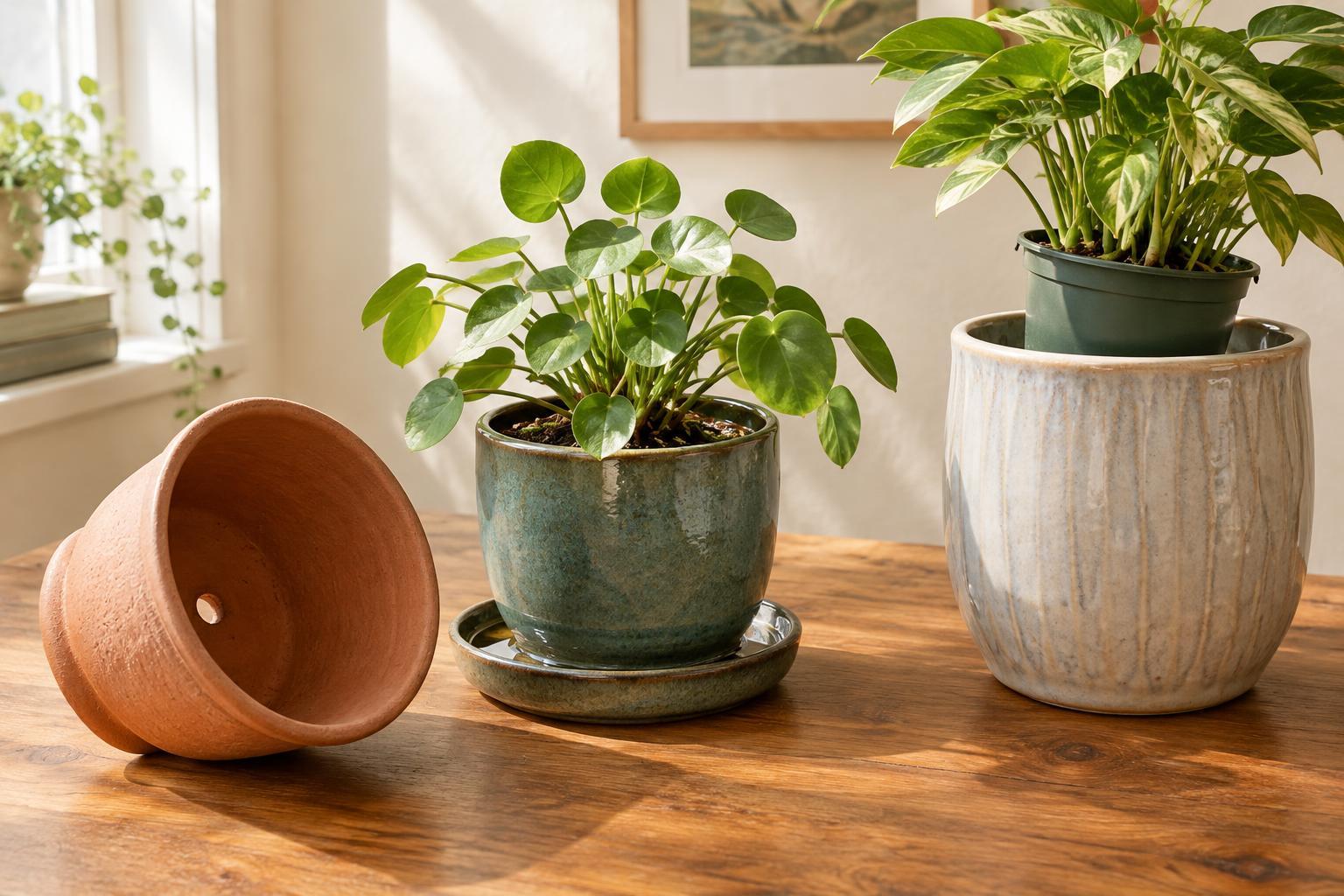
For direct planting, look for at least one open hole at the base. After watering, it provides an exit for water the growing mix cannot hold. It also gives you a clearer sign that water has moved through the pot. Check that a label, plug or thick patch of glaze is not blocking the opening.
A hole does not make overwatering impossible. If the pot stands in collected runoff, the growing mix can take that water back up. Empty the saucer after water has finished draining, and adjust watering to the plant, the mix and the conditions in your home. Adding a layer of stones beneath the mix is not a substitute for an outlet: water can still collect in a pot with no hole.
A larger hole need not mean losing growing mix across the table. A small piece of mesh placed over the opening can help keep mix in while allowing water through. Avoid sealing the hole so tightly that it no longer drains.
Choose a saucer for the surface beneath
A saucer catches runoff from a pot with a drainage hole and helps protect a shelf, tabletop or windowsill. Choose one wide enough to catch drips around the pot’s base, with enough depth for the amount of runoff you normally see. A shallow saucer may look discreet but can overflow if you water generously.
Check the underside of both pieces before placing them on furniture. Unglazed ceramic can absorb moisture, and even a glazed saucer may have an unglazed foot ring. If a surface is sensitive to water marks, use a suitable protective barrier and check underneath regularly rather than assuming the saucer is watertight. Felt pads can help prevent scratches, but they are not a waterproof barrier.
A matching saucer is convenient, not essential. A contrasting plate or tray can make the arrangement feel deliberate, provided it is stable, catches runoff and can be cleaned easily. Leave room to lift the pot so that emptying the saucer is a quick task rather than an awkward one.
Use a cachepot as a removable cover
A cachepot is a decorative outer vessel, usually without a drainage hole. The plant stays in a smaller pot inside it. For watering, you can lift out the inner pot, let it drain elsewhere and return it once excess water has stopped dripping. This is often a useful arrangement for shelves or tables where a visible saucer would interrupt the look.
Fit matters. The inner pot should slip in and out without scraping or getting stuck, and its rim should sit at a height you like. A little space around it gives you room to grip it. If the cachepot is deep, use a stable, water-resistant riser beneath the inner pot rather than burying its base where collected water will be hard to spot.
Check the bottom of the cachepot after watering. It is easy for a small amount of runoff to remain hidden inside, especially when the inner pot fits closely. Pour it away so the plant is not left standing in water. A cachepot is a cover, not a drainage system.
Make the final choice by handling the pot
Ceramic planters vary in weight, shape and finish. A broad, steady base is useful for a tall plant, while a heavy planter may be inconvenient if you expect to move it for watering. Measure the opening as well as the outside diameter: a thick rim can leave less room for a nursery pot than the planter’s silhouette suggests. Leave appropriate space for the plant’s roots without moving a small plant into a much larger volume of mix simply to fill a favorite vessel.
Run a hand around the rim and base to check for rough areas that could catch on leaves or scratch a surface. Notice where the glaze ends, whether the pot sits level and how easily you can reach any saucer or inner pot. These small practical details determine whether a planter remains pleasant to use after the first styling session. Choose the drainage setup you can manage consistently, then choose the ceramic finish that makes you want to keep it on display.