Understand the material before you clean it
Unglazed terracotta is fired clay with an open, absorbent surface. Water can move through its walls and evaporate, which is one reason it works well as a plant pot. That same porosity lets it take up dissolved minerals, soil particles and moisture. A pot that darkens when watered, then gradually lightens as it dries, is usually behaving as expected.
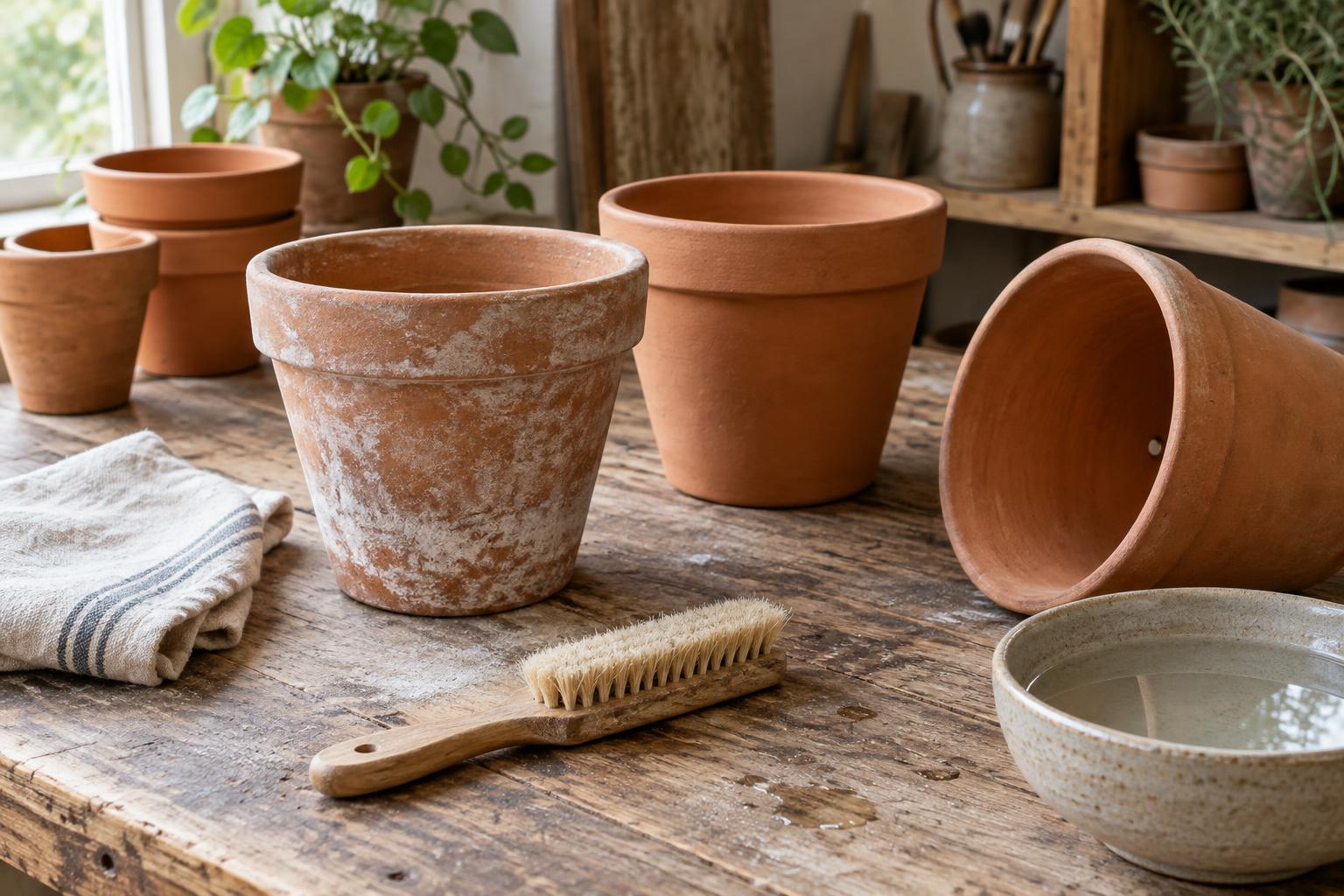
The pale, chalky coating that appears on some pots is often mineral residue left behind as water evaporates. It can be part of terracotta’s appeal, especially on a garden pot with a weathered look. If you prefer a cleaner finish, remove the residue gently rather than scrubbing until the clay looks new. Terracotta can be scratched or chipped, and an older pot may be more fragile than it first appears.
Make routine care simple
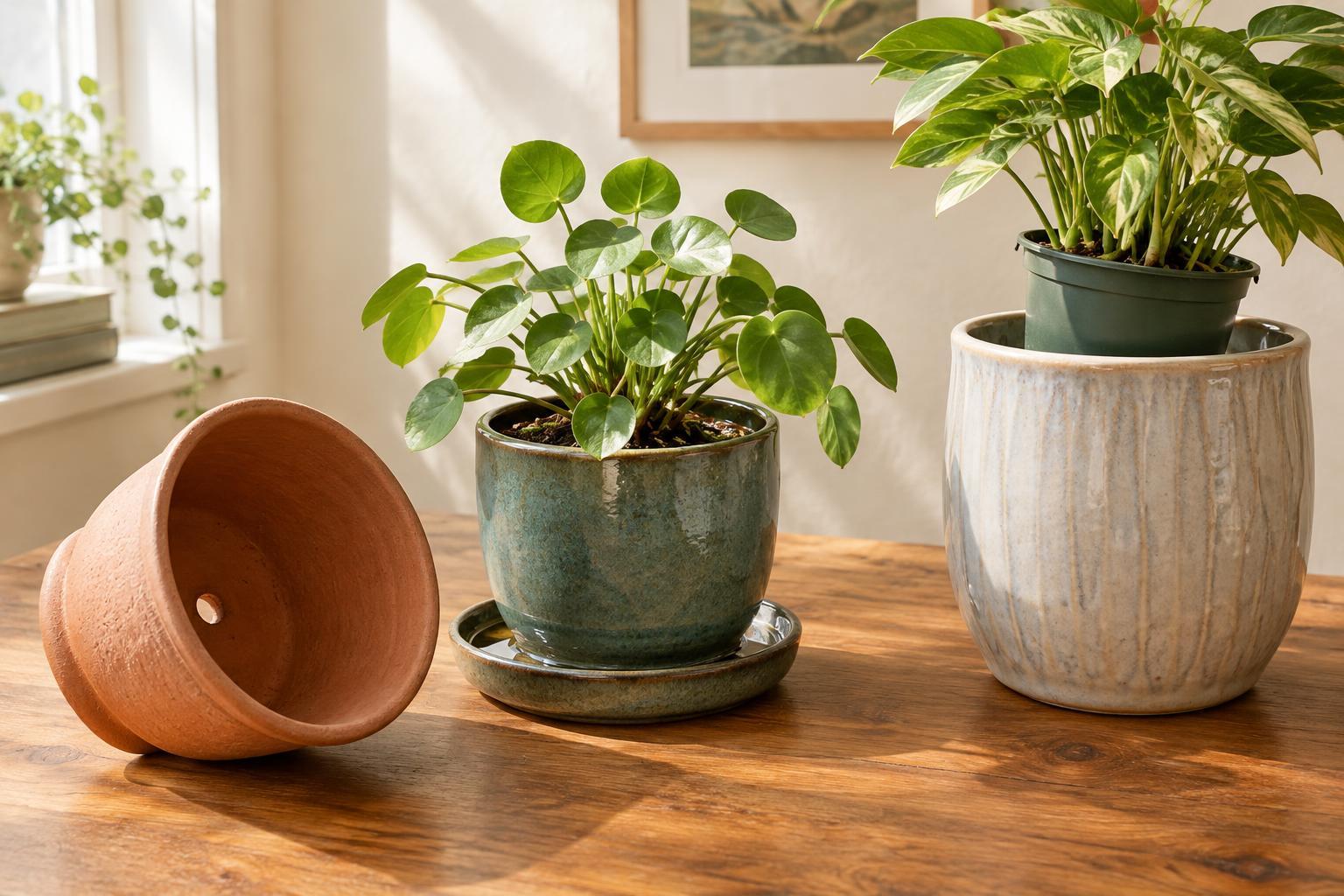
For a pot in use, start with the conditions around it. Use a pot with a drainage hole for a plant that needs drainage, and empty any saucer after excess water has had time to run through. Keep the pot and saucer on a surface that tolerates occasional dampness, or add a protective tray beneath them. A terracotta pot can leave a moisture ring on a wooden shelf even when its outside does not feel especially wet.
Wipe loose soil from the rim and exterior with a soft, dry cloth or brush. If a mark needs more attention, use a damp cloth and allow the pot to dry before putting it back on a shelf. Avoid keeping an unglazed pot permanently inside a tight-fitting decorative cover where moisture can collect unnoticed. Checking beneath displayed pots from time to time protects both the furniture and the objects.
Clean an empty pot without damaging it
When changing plants or putting a pot away, first tip out the old soil and brush away what remains. Rinse the empty pot with water, then use a soft brush to loosen soil caught around the rim or drainage hole. For ordinary dirt, warm water and a small amount of mild dish soap are usually enough. Rinse thoroughly so no soap is left in the porous clay.
For stubborn mineral marks, try a small amount of diluted white vinegar on an inconspicuous area before treating the whole pot. Let it sit briefly, brush lightly and rinse well. Acidic cleaners may change the appearance of the clay, particularly on a pot with an unusual finish, so stop if the test area looks uneven. Skip wire brushes and harsh scouring pads: they can leave scratches that hold dirt and alter the pot’s surface.
If a plant in the pot was visibly diseased, do not rely on a quick wipe to prepare the container for a new plant. Remove all soil and clean the pot carefully; if you choose to disinfect it, follow the product label for a method suitable for porous pots, including its rinsing and drying instructions. Never combine cleaning products.
Give the clay time to dry
After washing, leave the pot in a well-ventilated place until it feels dry throughout. Turn it occasionally or set it on its side so air can reach the base. Drying can take longer for thick pots, cool rooms or humid conditions. Stacking damp pots or putting one straight onto a delicate surface can trap moisture where it is difficult to see.
For storage, brush off dry dirt and keep empty pots somewhere sheltered from persistent rain. In places where temperatures fall below freezing, storing them dry and protected is especially helpful: water held in porous clay can expand as it freezes and may contribute to cracking. Place a little paper or cloth between nested pots so their rims do not grind against one another.
Decide how much patina to keep
A terracotta pot does not have to look uniform to be well cared for. Soft color variation and a few mineral marks can make a group of pots feel settled and distinctive. If you are arranging them on a shelf or table, let the clay’s warm color do the work: a simple tray can gather the pots visually while also catching stray water and soil.
Sealing an unglazed pot may make it less absorbent and change its appearance, so it is not a routine care step if you value the material’s natural character. If you want to use a pot mainly as a decorative container, a removable inner vessel can help keep water away from the clay. Whether you favor a fresh-looking surface or a weathered one, gentle cleaning, thorough drying and sensible placement will help the pot remain useful.