Start with the maker’s guidance
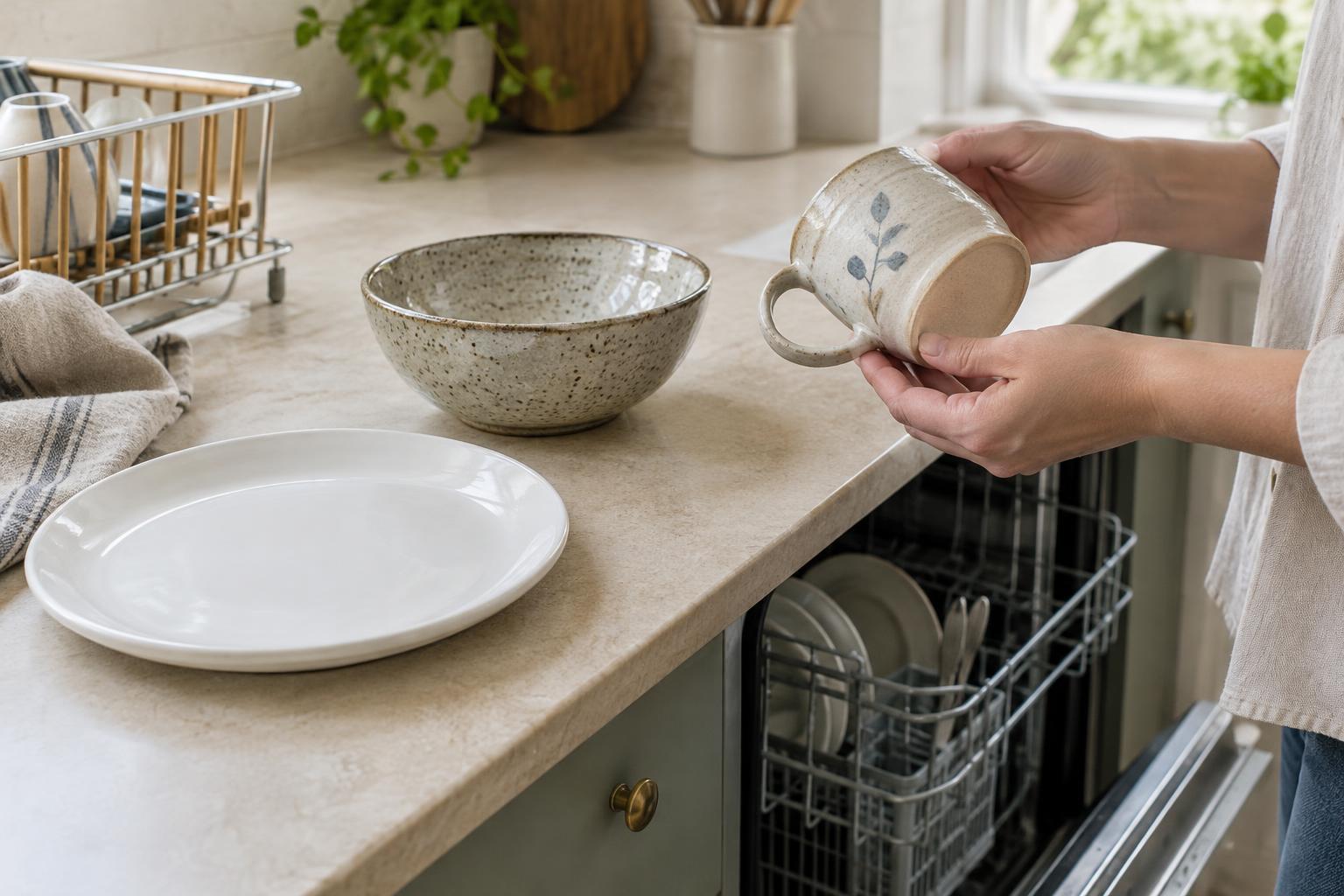
The most reliable answer is the care guidance for the particular piece. Check the base, packaging or maker’s product information for a dishwasher-safe statement. A ceramic item’s appearance alone cannot confirm how its clay body, glaze and decoration will respond to repeated wash cycles. If the maker recommends handwashing, follow that advice even if a similar-looking plate goes through your dishwasher without trouble.
Dishwasher-safe also describes a tolerance for ordinary machine washing, not a guarantee against every form of wear. Crowded racks, contact with other dishes and repeated exposure to detergent can still leave marks or dull a finish over time. For a favorite or difficult-to-replace piece, handwashing may be the more appealing choice even when machine washing is permitted.
How ceramic type affects the decision
Porcelain is often a good candidate for the dishwasher when it is modern tableware with a durable glaze and no delicate decoration. Many everyday stoneware mugs, bowls and plates are made for regular machine washing too. In either case, check the individual product rather than treating the material name as a promise: firing, glaze and added finishes vary.
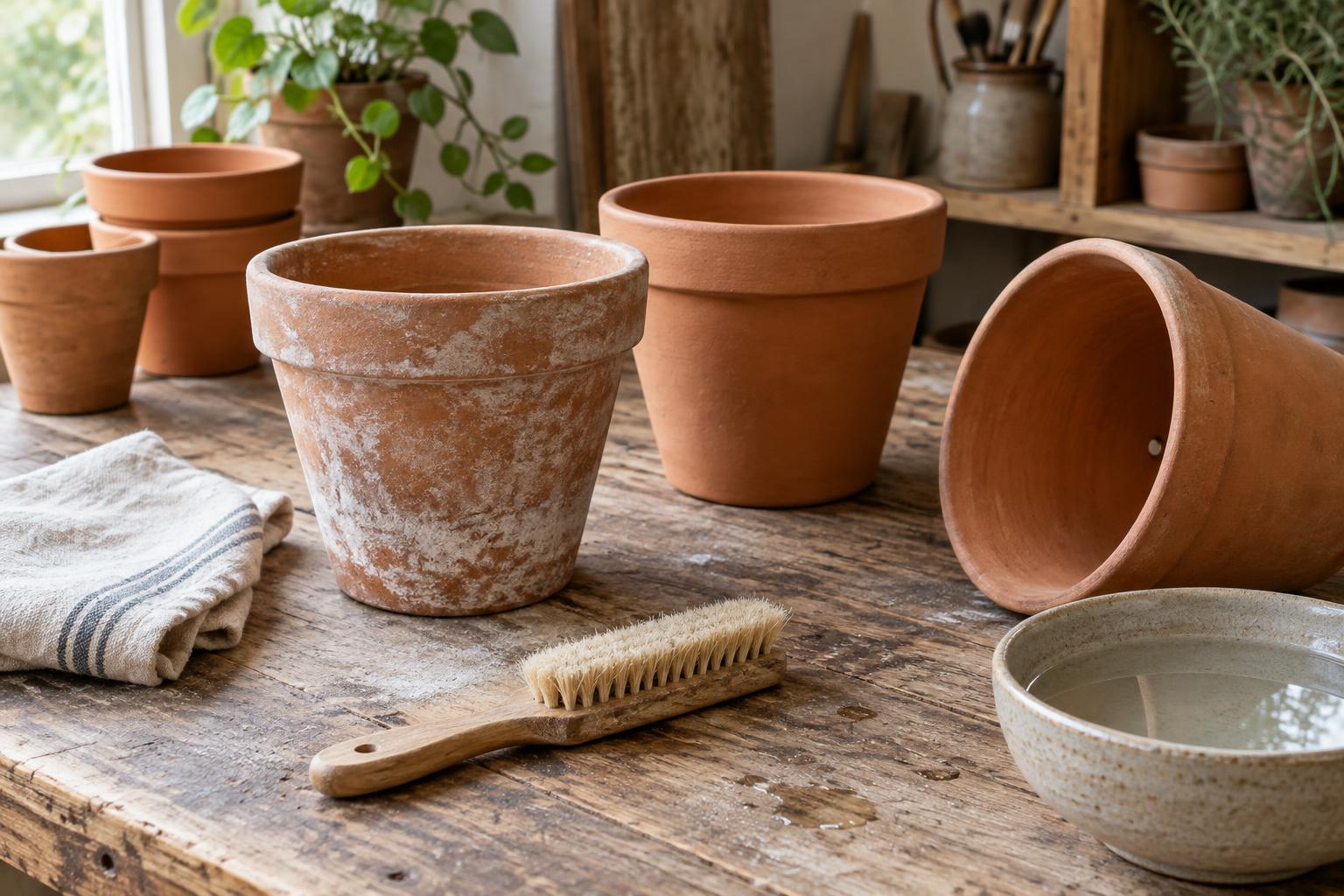
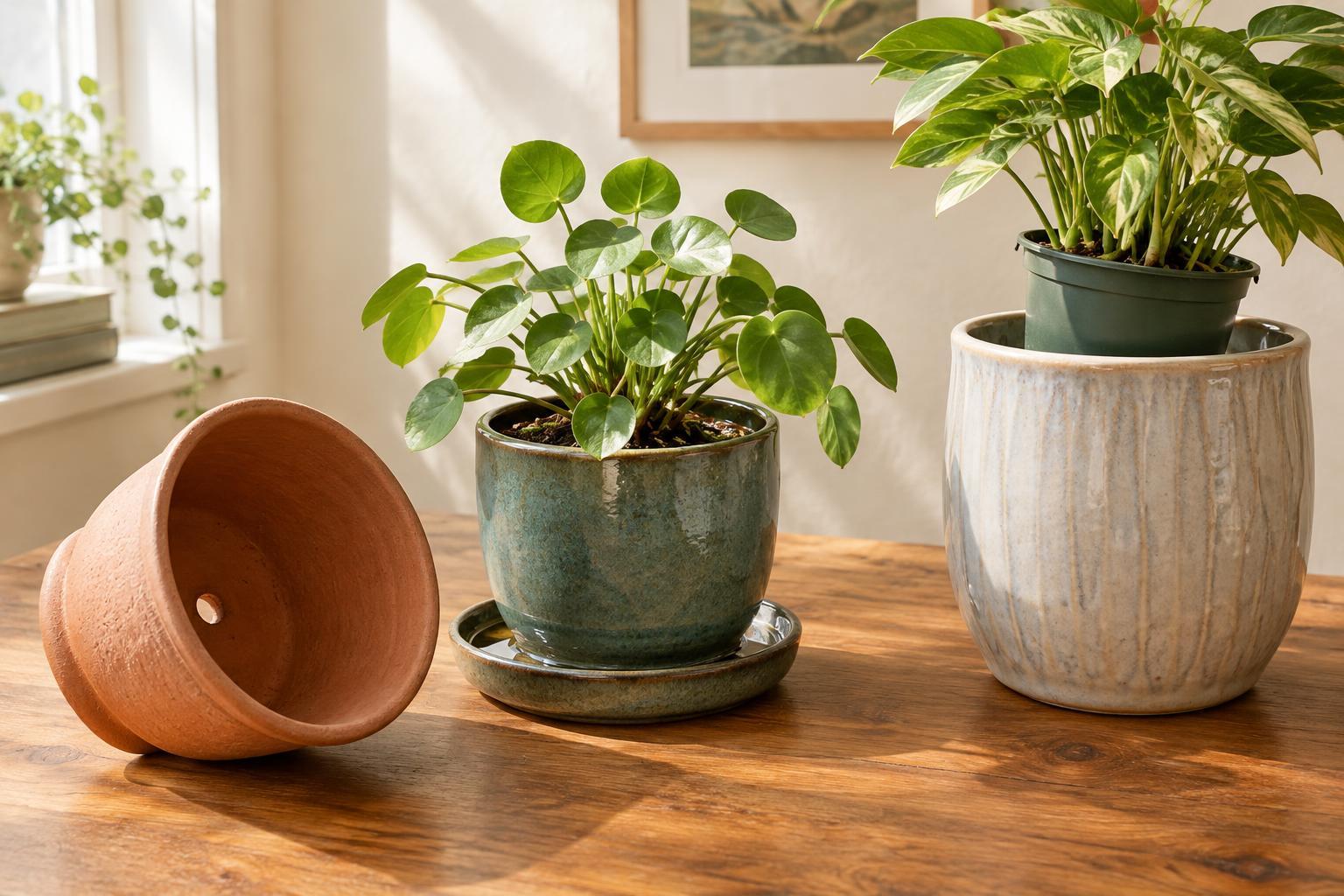
Earthenware calls for more caution. Its clay body is generally more porous than porcelain or many stonewares, so exposed areas may take up water. A fully glazed, maker-approved earthenware dish may be suitable for the dishwasher, while a handmade or older piece with an unglazed foot may be better washed by hand. Terracotta planters, decorative vessels and other unglazed objects should not be treated like dishwasher-safe dinnerware merely because they are ceramic.
Look closely at the surface and decoration
The finish often matters as much as the clay. Metallic rims, gold or silver details, raised embellishments and painted or printed decoration on top of the glaze can be vulnerable to abrasion or fading. Unless the maker specifically approves machine washing, wash these pieces by hand. The same cautious approach makes sense for antique ceramics, one-off studio pieces and objects with attached parts, such as a separately fitted handle.
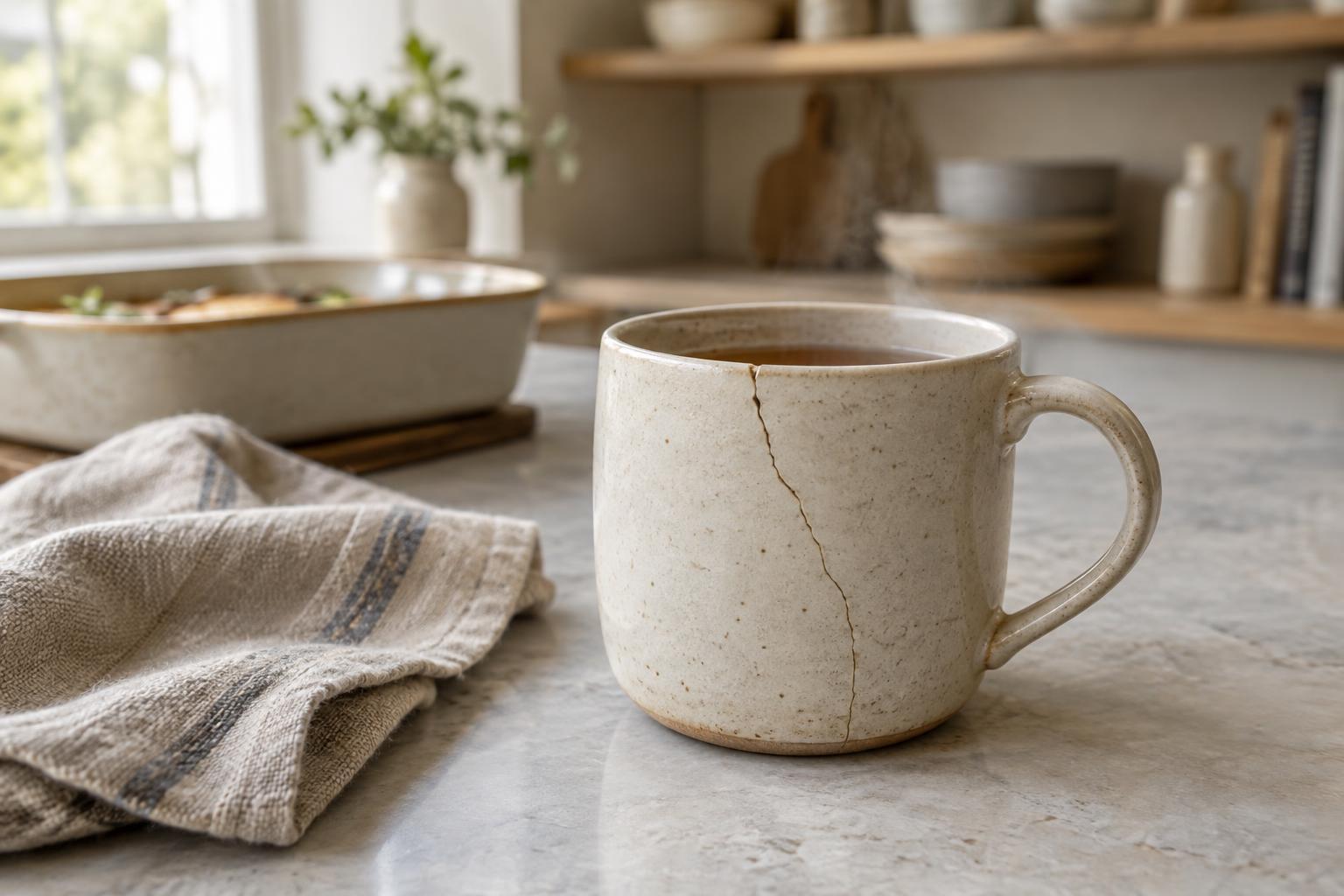
Crazing—fine lines in the glaze—is another reason to pause. It may be an intentional visual effect or a sign that the glaze has developed cracks; either way, the lines can make cleaning less straightforward. Chips and larger cracks can worsen when a piece is knocked against its neighbors in a rack. Set damaged items aside for a closer look, particularly before using them to serve food. Dishwasher suitability and food safety are separate questions, and a dishwasher cycle cannot make an unsuitable or damaged serving piece food-safe.
Load approved pieces with care
For ceramics labeled dishwasher-safe, leave enough space that items cannot rattle against one another. Keep mugs and bowls angled so water can drain, and make sure tall pieces do not obstruct the spray arms. A gentler cycle may help limit mechanical wear, while following the dishwasher and detergent instructions helps avoid using more detergent than needed.
Avoid moving a hot ceramic piece straight from the machine onto a cold or wet surface. Letting dishes cool in the rack before unloading is an easy precaution, especially for thick handmade pieces. If a piece gradually loses its sheen or its decoration begins to change, switch to handwashing even if it was originally sold as dishwasher-safe.
When in doubt, wash by hand
For an unlabeled find or a handmade object with uncertain care instructions, handwashing is the simplest conservative choice. Use warm water, a little mild dish soap and a soft cloth or sponge. Do not soak pieces with exposed clay, cracks or glued repairs. Rinse promptly and dry thoroughly, including the unglazed foot ring where moisture can linger.
This approach is useful for decorative ceramics as well as tableware. A vase or sculptural object may need only a damp cloth to remove dust; putting it through a dishwasher adds wear without much benefit. The practical rule is to reserve machine washing for pieces whose maker permits it and whose surfaces remain sound, then give uncertain or especially treasured ceramics the gentler treatment.