What to expect from onion-skin dye
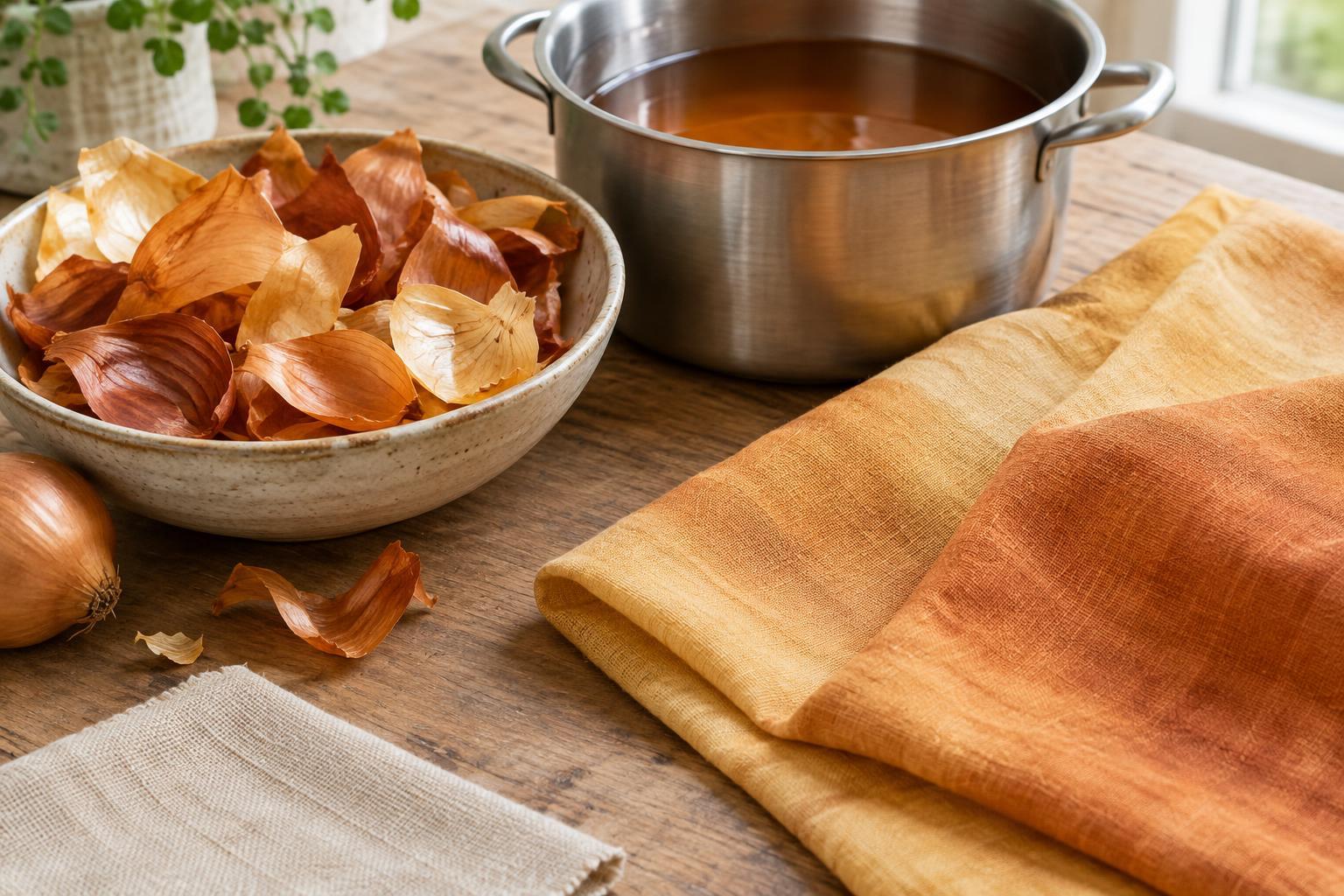
The dry outer skins of onions are an accessible source of warm color for small fabric projects. Yellow onion skins often produce gold, tan or orange tones; red onion skins can yield a range of muted shades that may look quite different from the skins themselves. The result depends on the fiber, the amount of skins, the water and the time in the bath. Treat a test swatch as your color guide rather than expecting an exact shade.
Natural fibers are the best place to start. Wool and silk generally take plant dyes more readily than cotton or linen, while synthetic fabric may take little color. For a first project, try a small piece of plain, undyed cotton or wool: a napkin, scrap of cloth or length of yarn. Leave enough room in the pot for it to move freely, which helps prevent unintended pale folds.
Gather skins and prepare a safe workspace
Save only the dry, papery outer skins, keeping food scraps and damp layers out of the collection. You will need enough skins to make a richly colored bath; a generous quantity gives you more flexibility than a few scattered pieces. Put them in a pot with enough water to cover both the skins and, later, the fabric. Use a pot and utensils reserved for craft work rather than returning them to food preparation.
Dye can stain counters, clothing and porous tools. Cover the work surface, wear gloves, and keep children and pets away from hot liquid. If you use a powdered mordant, follow its package directions and avoid breathing the dust. These precautions make the process easier to enjoy without treating a kitchen experiment as a guaranteed mess-free project.
Clean the fabric and decide on a mordant
Before dyeing, wash the fabric to remove finishes, oils and detergent residue. An unwashed cloth can absorb color unevenly. Rinse it well, then leave it damp while you prepare the dye bath. If you are using a finished item, check that its stitching and trim are also suitable for warm water; contrasting fibers may take the dye differently.
A mordant helps dye attach to fiber, but it does not make a plant-dyed textile permanently fade-proof. Alum is a common choice for home dyeing and is usually applied to the clean fabric before it enters the onion-skin bath. Use a method and quantity specified for your particular fiber and alum product rather than guessing. Cotton and linen can benefit from additional preparation, often involving tannin before alum, while wool needs gentler handling to avoid felting. If you skip mordanting, make a swatch first and expect the color to change more readily with washing or light.
Salt and vinegar are sometimes suggested as universal ways to “set” dye. They are not reliable substitutes for a suitable mordant and careful aftercare with onion-skin dye. If you want a predictable project, focus on clean cloth, an appropriate fiber and a small trial before dyeing anything you would be disappointed to lose.
Make the dye bath and color the cloth
Cover the onion skins with water and heat gently until the liquid is visibly colored. A low simmer for roughly 30 to 60 minutes is a useful starting point; longer extraction may deepen the bath, but the final fabric shade will not necessarily match the liquid. Let it cool enough to handle safely, then strain out the skins so they do not leave marks on the cloth.
Wet the prepared fabric evenly and lower it into the dye bath. Warm it gently, moving it occasionally with a dedicated spoon or tongs so the dye reaches folds and edges. For wool or silk, avoid vigorous stirring and sudden temperature changes. Check the color after about 30 minutes; leave the fabric longer if you want a stronger shade. Remember that wet cloth often appears darker than it will when dry.
For softer variation, you can let the cloth cool in the bath before removing it. For a more even result, keep it submerged and rearrange any folds from time to time. Record what you used for your test swatch—fiber, skins, preparation and approximate time—so you can repeat a pleasing result or adjust your next attempt.
Rinse, dry and care for the finished fabric
Lift out the fabric and let it cool before rinsing in water of a similar temperature, especially if it is wool. Rinse gently until the water is mostly clear; avoid hard wringing, which can distort delicate cloth. Dry it away from strong direct sunlight. The shade may soften as it dries, so wait until then to judge the result.
Plant-dyed fabrics can change with repeated washing and prolonged light exposure. Wash the finished piece separately at first, using a gentle detergent and cool water, and dry it out of direct sun. A decorative table runner or shelf textile that needs only occasional laundering may be a satisfying first use. Keep a small dyed offcut alongside the finished piece: it offers a simple reference for noticing how the color ages over time.