Start with the clay body, not the finish
Earthenware, stoneware and porcelain are names for ceramic bodies: the clay mixtures that form an object beneath its glaze. Firing changes each body, giving it a characteristic degree of hardness and porosity. Glaze can conceal those differences. A glossy white mug might be stoneware, while a brightly colored plate might be porcelain under its decoration.
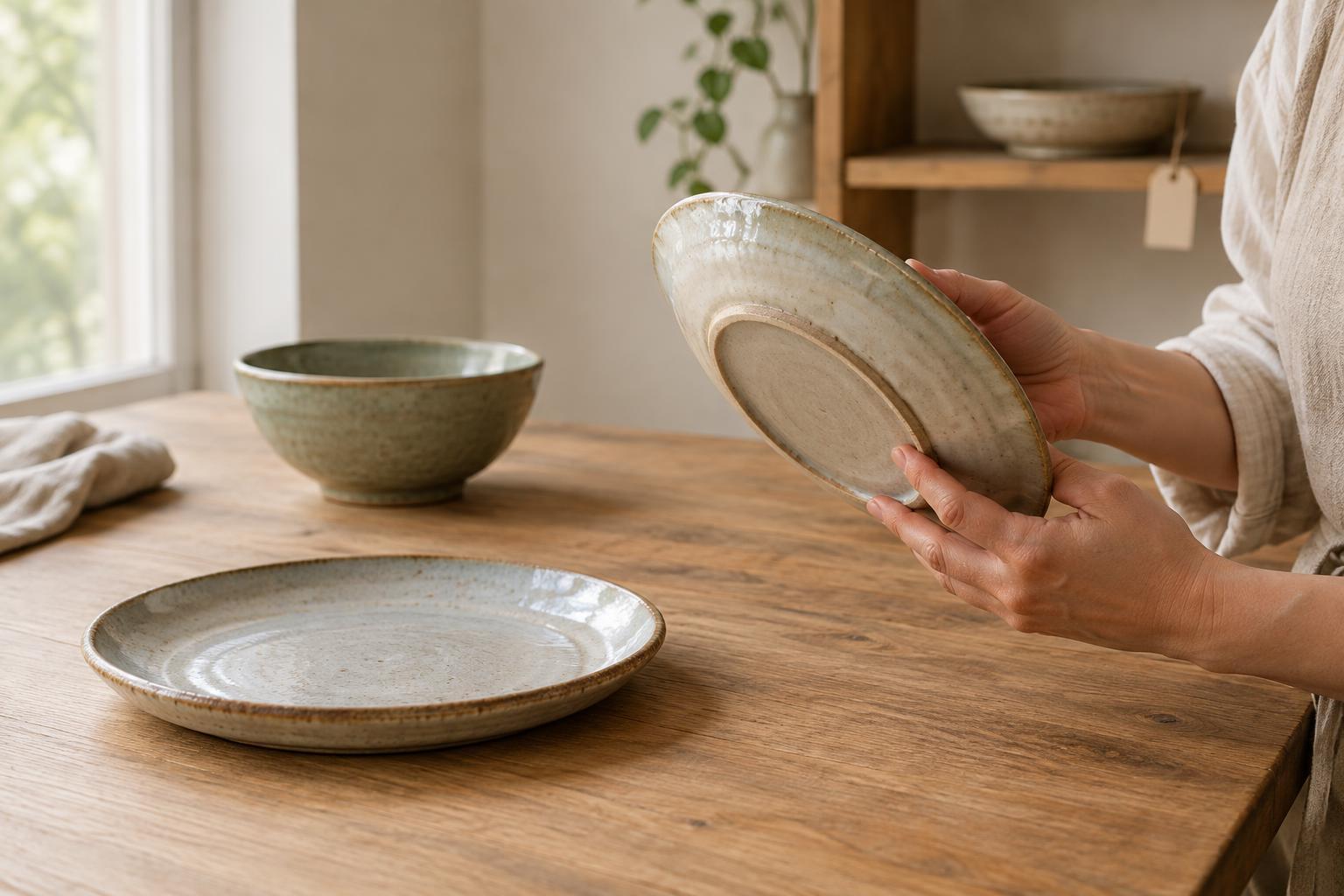
The most useful place to begin is the unglazed base, often called the foot. Turn a piece over and look for a narrow ring where the clay body is exposed. Its color and texture can offer better clues than the decorated surface. Handle unfamiliar or fragile pieces gently, and remember that a fully glazed base may leave little to inspect.
Earthenware: often warm-colored and more porous
Earthenware is fired at a relatively low temperature compared with stoneware and porcelain. Its body commonly remains porous, so tableware generally needs a suitable glaze to hold liquids and resist stains. An exposed foot may look buff, tan or reddish, although earthenware can have other colors. It may feel slightly rough or chalky rather than glass-smooth.
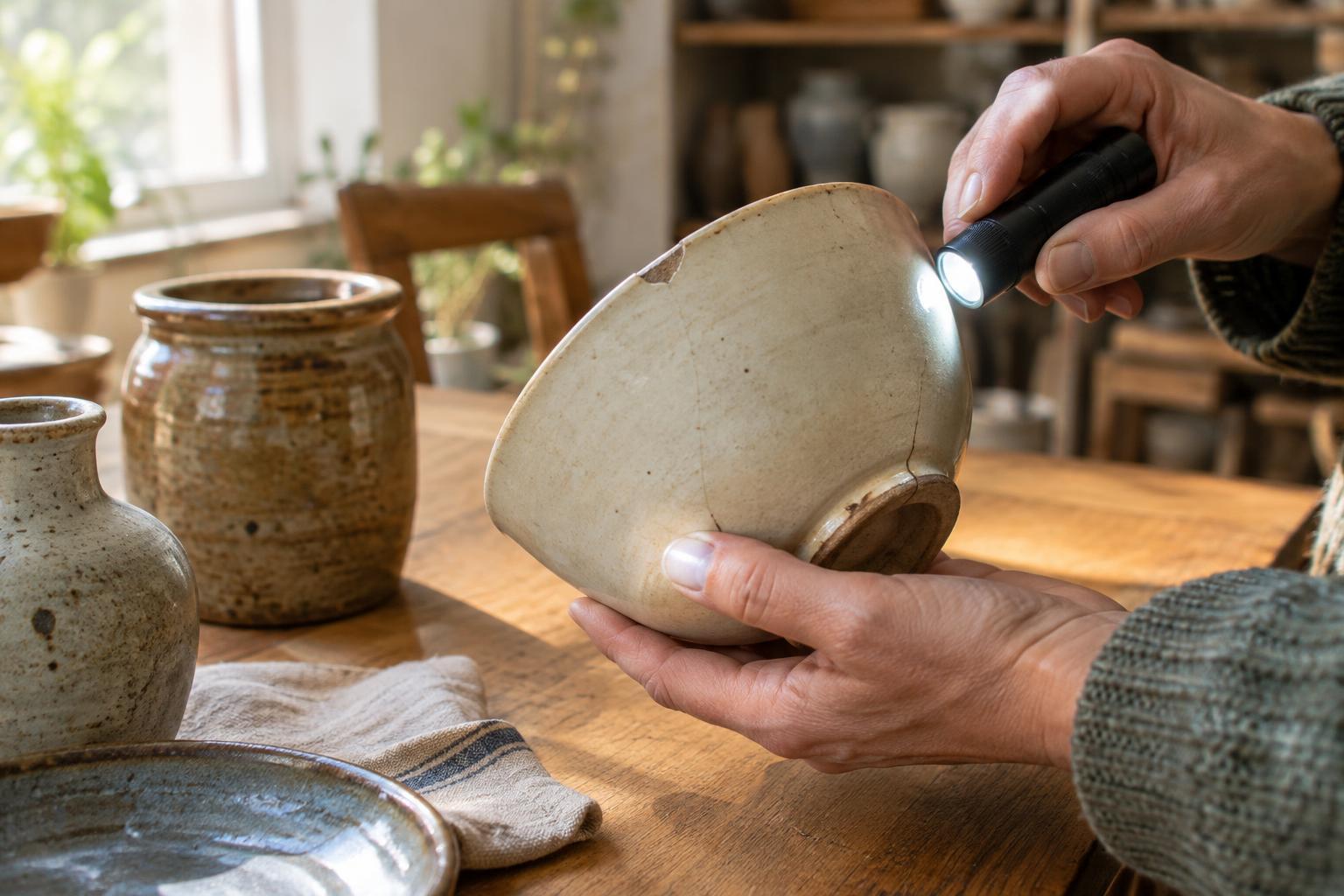
The category includes many decorative pots, tiles and dishes. A substantial coat of glaze can give earthenware a polished appearance, and a thick rim can make it feel sturdy. Neither feature changes the body underneath. If an older or damaged earthenware piece has a cracked glaze, moisture and stains may reach the porous clay; reserve a questionable piece for display rather than assuming it is suitable for serving food.
Stoneware: dense, but varied in appearance
Stoneware is typically fired hotter than earthenware until the body becomes dense and much less absorbent. It is common in everyday mugs, bowls and vases because it can be made in robust forms. The exposed foot often feels hard and compact, though it may still have a grainy surface. Its color can range from pale gray or cream to brown, depending on the clay and firing.
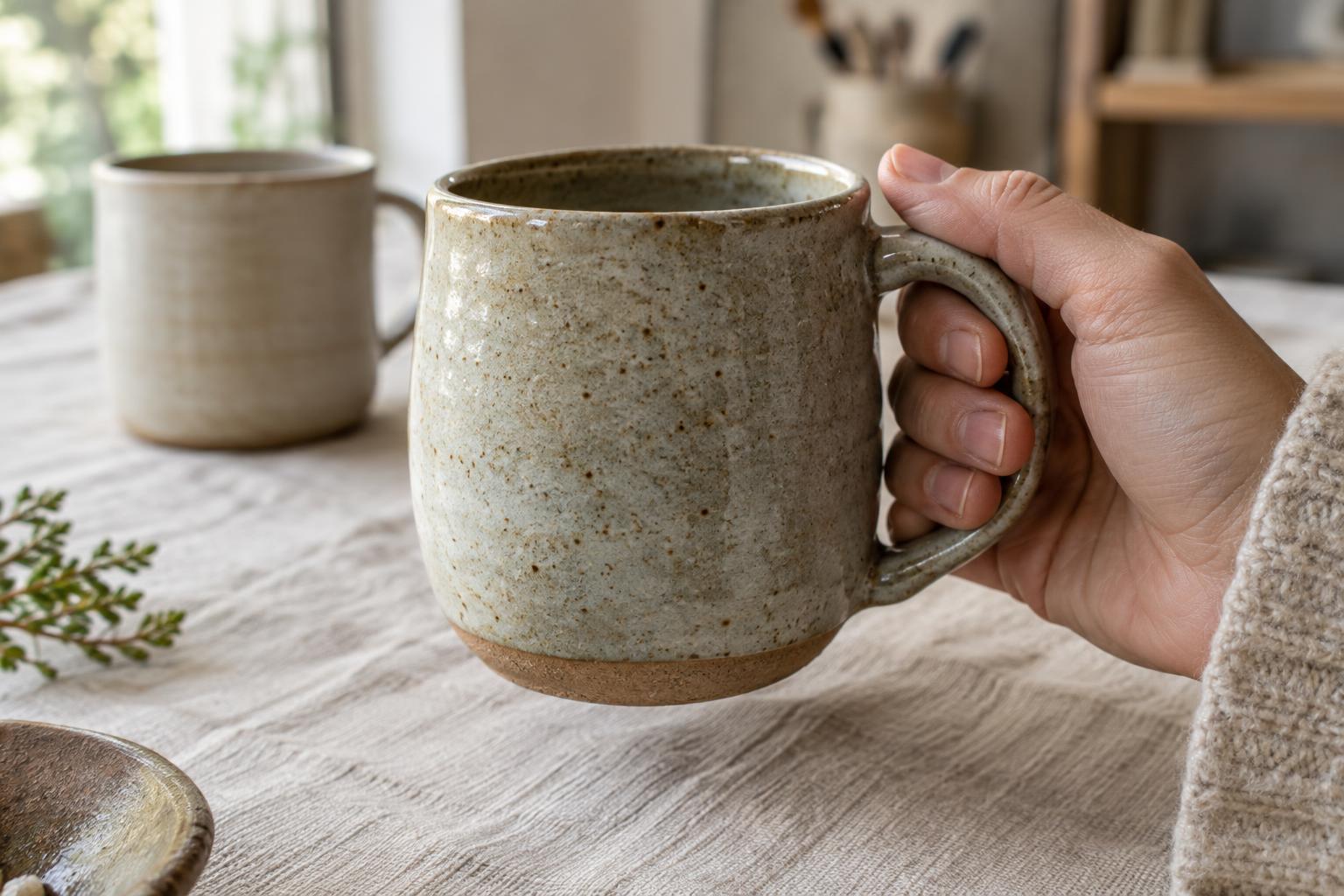
Stoneware is not a single visual style. It can be thin and refined or thick and rustic; glazes can be matte, glossy, speckled or smooth. A speckled beige mug may suggest stoneware, but that look alone is not proof. Likewise, a heavy piece is not necessarily stoneware: size, wall thickness and added decoration all affect weight.
Porcelain: fine texture and possible translucency
Porcelain is made from a refined clay body and fired to become dense and vitrified. It is often white or nearly white, with a smooth, fine-grained exposed foot. When a piece is thin enough, light may pass through it. To check, hold a rim near a lamp and look for a faint glow through the clay. This can be a helpful clue, but thick porcelain may not appear translucent.
Porcelain is sometimes associated with delicate teacups, yet it can also be used for substantial objects. A thin porcelain cup may be strong in ordinary use while still being vulnerable to a hard knock at its edge. White color is not conclusive, either: stoneware and earthenware can be made with pale bodies or covered in opaque white glaze.
Put the clues together—and know their limits
For an unfamiliar piece, examine the unglazed foot first. Note the body color and whether the surface looks open and earthy, compact and granular, or especially fine and smooth. Then consider the shape: a thin rim that transmits light points toward porcelain; a dense-looking body with varied color may point toward stoneware; a more open-textured body may point toward earthenware. Treat these as clues rather than a guaranteed identification.
Avoid relying on a tap test. The sound a piece makes depends on its shape, thickness and condition as well as its clay body, and tapping delicate ceramics risks damage. Maker information, when available, may be more useful than a visual guess. For daily use, follow any care instructions supplied with the object: the ceramic category alone does not tell you whether its glaze, decoration or construction is suitable for a dishwasher, microwave or food contact.
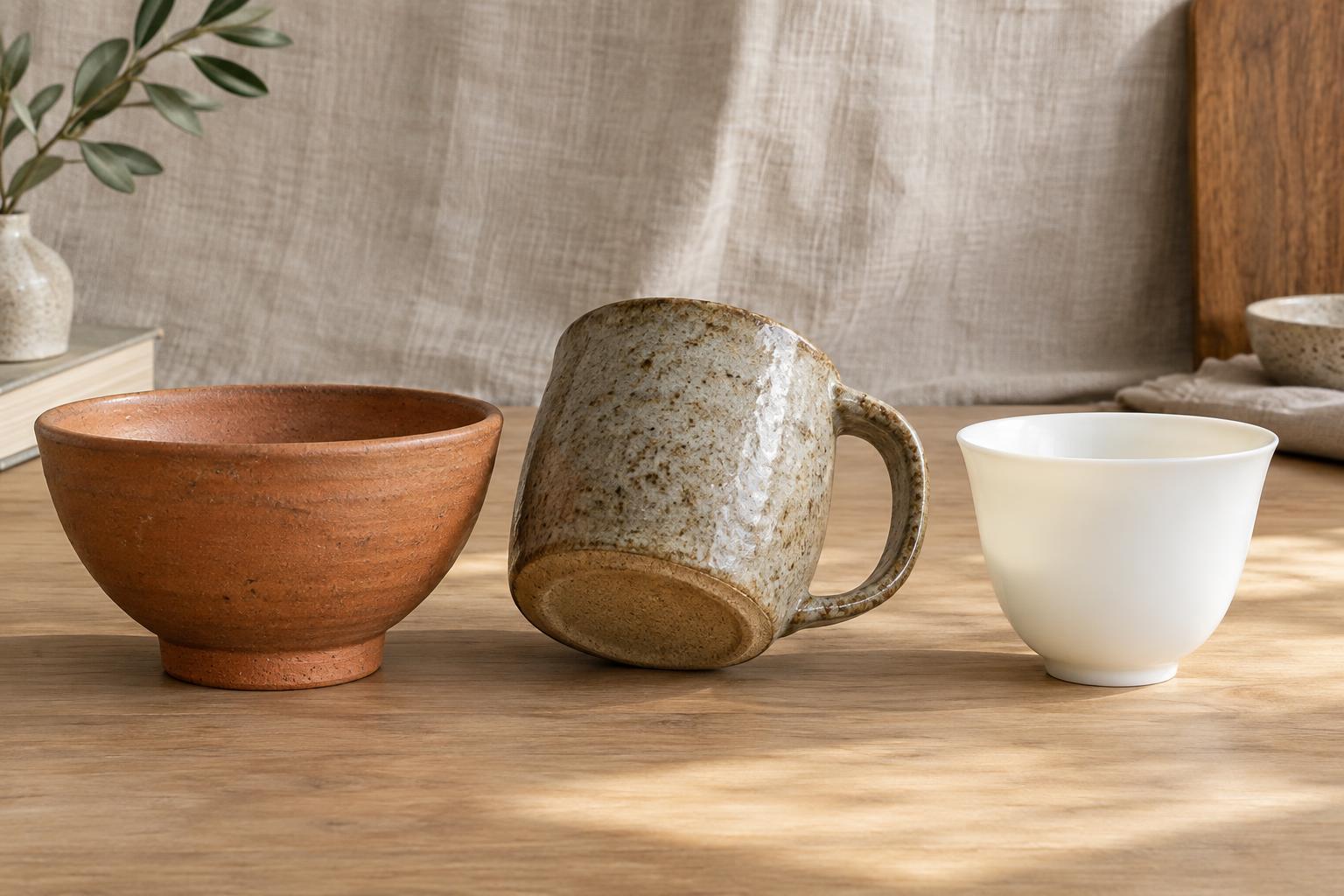
Once you know what to look for, differences between ceramic bodies become easier to notice on a shelf or table. The warm exposed clay of an earthenware pot, the varied surface of a stoneware bowl and the fine rim of a porcelain cup can each bring a distinct texture to a setting—even when their exact identities remain uncertain.