Start with how the rug is made
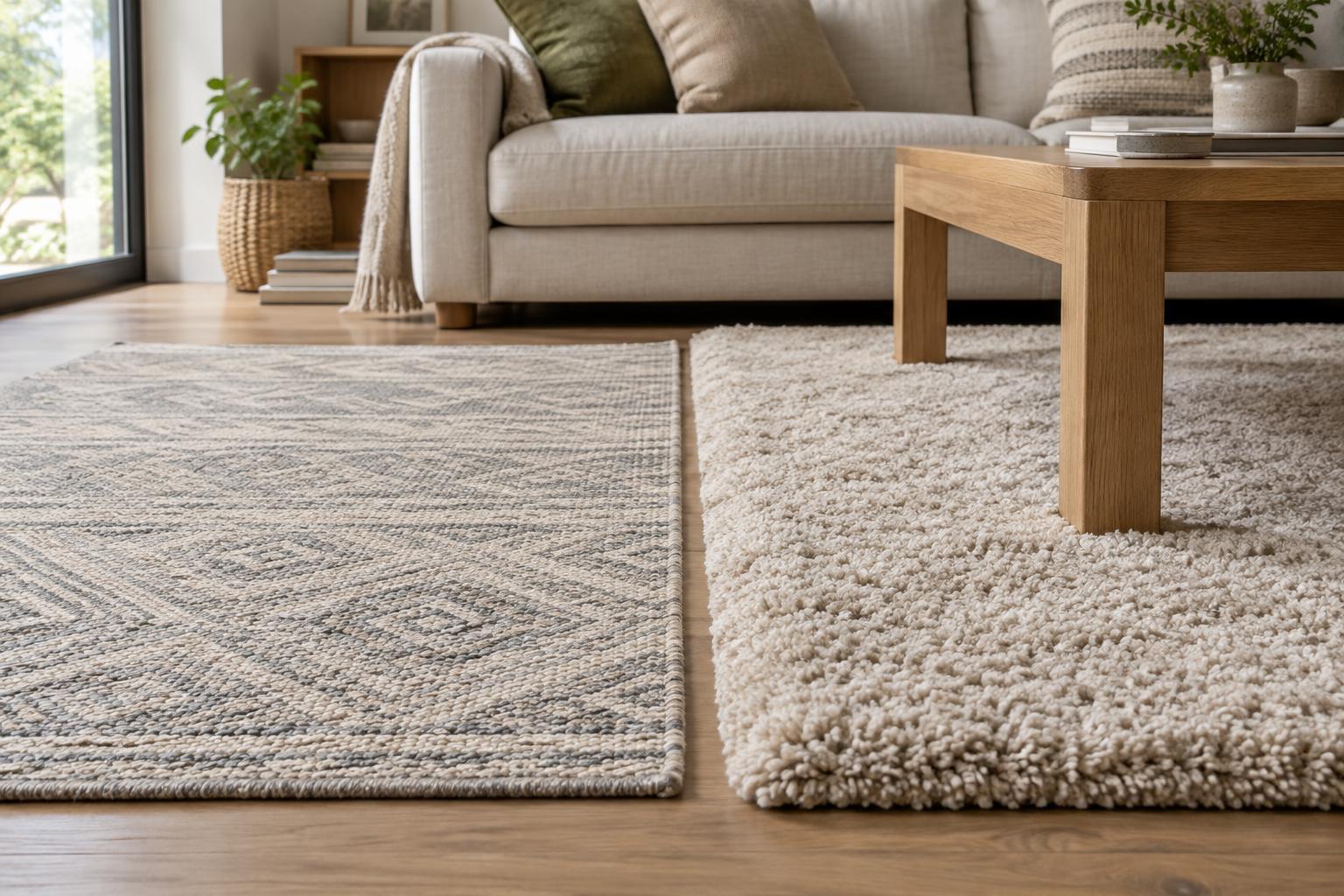
The main difference is the surface. In a flatweave rug, yarns are woven together to form a relatively thin fabric, without a raised layer of cut or looped yarn. A pile rug has yarn that stands above its foundation, creating a softer, thicker surface. Pile may be short and close to the base or long and loose, so two pile rugs can feel as different from each other as either does from a flatweave.
Construction is only part of the story. Fiber, weave density, backing and finishing also affect how a rug feels and performs. A tightly woven wool flatweave will not behave exactly like a loose cotton one, just as a dense low-pile rug differs from a shaggy rug. When comparing options, look closely at the actual surface and edge rather than relying on a style name alone.
Texture changes the feel of a room
Flatweaves tend to sit close to the floor. Their patterns often look crisp, and their slim profile can be useful where a door needs to swing over the rug or furniture must move across it. They offer less cushioning underfoot, though a suitable rug pad can add some give. Some flatweaves are reversible, but check the construction first: a backing, fringe detail or different finish on one side may make turning the rug impractical.
Pile rugs add visible depth and a softer landing beside a bed or sofa. Short pile can give a room warmth without strongly interrupting furniture movement; longer pile creates a more pronounced, relaxed texture. Pile also changes appearance as it is brushed in different directions or pressed by footsteps. That shading is often a feature of the surface, not a sign that the rug is dirty.
What cleaning involves
A flat surface is often easier to vacuum because there is less depth for crumbs to settle into. Thin flatweaves may also be easier to lift for cleaning beneath them. That does not mean every flatweave can go in a washing machine: size, fiber, dyes and backing all matter. Follow the rug’s care label, and check whether a pad needs separate cleaning.
Pile needs attention below its visible surface. Vacuum it regularly with a setting suited to the pile height, and avoid an aggressive brush if it catches or pulls the yarn. For either construction, blot spills promptly with a clean cloth rather than rubbing them into the fibers. Test any cleaner in an inconspicuous place and follow the maker’s directions; some dyes or fibers react poorly to moisture or cleaning products. Allow a damp rug to dry thoroughly before replacing furniture or a pad.
How each surface shows wear
Neither construction is automatically more durable. A well-made flatweave can cope with frequent foot traffic, but a loose weave may snag, and a thin rug can shift or bunch if it is not held in place. Because it has no raised pile to compress, a flatweave will not develop flattened walking paths in the same way a pile rug can. Its edges and exposed yarns still need care, especially near chair legs or pets’ claws.
Pile offers cushioning, but repeated pressure can flatten it under furniture or along a busy route. Dense, shorter pile generally holds its shape better than a long, loose surface, though fiber and construction remain important. Rotating a rug from time to time can help distribute traffic and light exposure. Use a compatible pad where needed to reduce slipping and help the rug lie evenly; a pad cannot, however, correct a rug that is unsuitable for the room.
Choose for the room, not just the photograph
For a dining area, consider how easily chairs will slide and whether crumbs can be removed without fuss. A low-profile flatweave or a firm, low-pile rug may be more convenient than deep pile. In a bedroom, softness under bare feet may matter more, making pile appealing. A hallway calls for close attention to door clearance, traction and how securely the rug stays in place.
If possible, handle a sample before deciding. Bend an edge to assess its thickness, run a hand across the surface, and consider how the color and pattern might look after everyday use. The best choice is the one whose texture you enjoy and whose cleaning needs fit the way you live.