Why fabrics fade unevenly
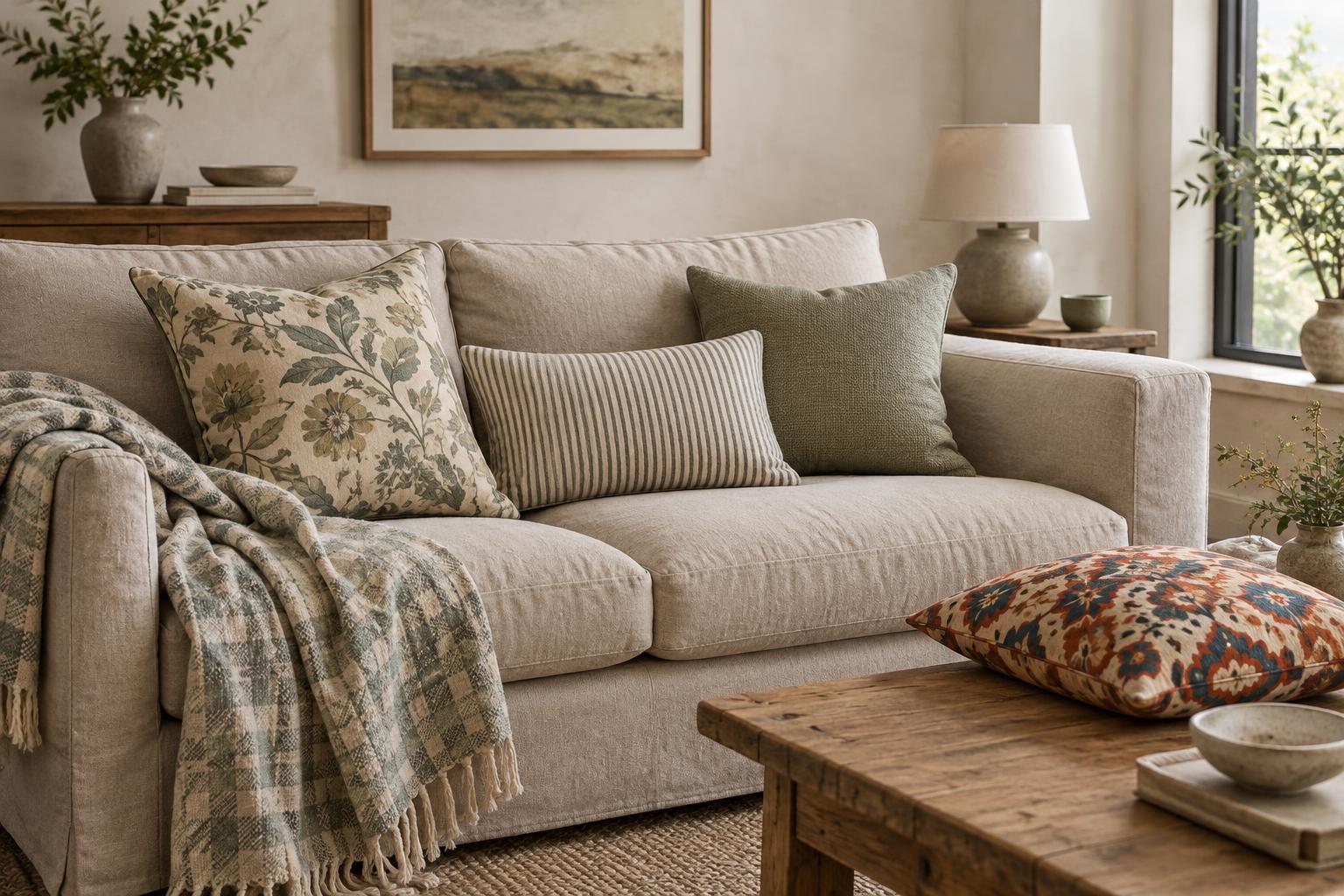
A curtain panel that faces a window all day may become noticeably lighter than the folds behind it. On a sofa, the top of a back cushion may fade while the fabric beneath it keeps its original color. Sunlight is a major reason: light can gradually change dyes and fibers, and warmth at a sunny window may add to the wear. Fading is usually permanent, so the most useful approach is to reduce exposure before a contrast becomes obvious.
The pattern of fading depends on the room as well as the textile. A window may receive strong light for only part of the day, but that light can fall on the same strip of fabric repeatedly. Dark, saturated colors can make a change easier to see, while patterns and textured weaves may conceal it. No fabric should be assumed fade-proof simply because it feels thick or is described as durable.
Start with the path of the light
Watch where direct sun falls across the room during the hours you normally use it. Check the window-facing edges of curtains, the tops and arms of upholstered pieces, and any cushions left in one position. Comparing an exposed area with fabric hidden under a cushion or inside a curtain fold can help you see whether fading has begun. Take note of the particular window and time of day rather than treating every textile in the room the same way.
Small layout changes can make a difference. Moving an upholstered chair away from a bright window, angling a sofa so its back is less exposed, or shifting a side table to shade one vulnerable arm can reduce direct light without rearranging the entire room. If a piece must stay in a sunny spot, plan for a protective layer or a window covering you will actually use.
Use window coverings as a daily filter
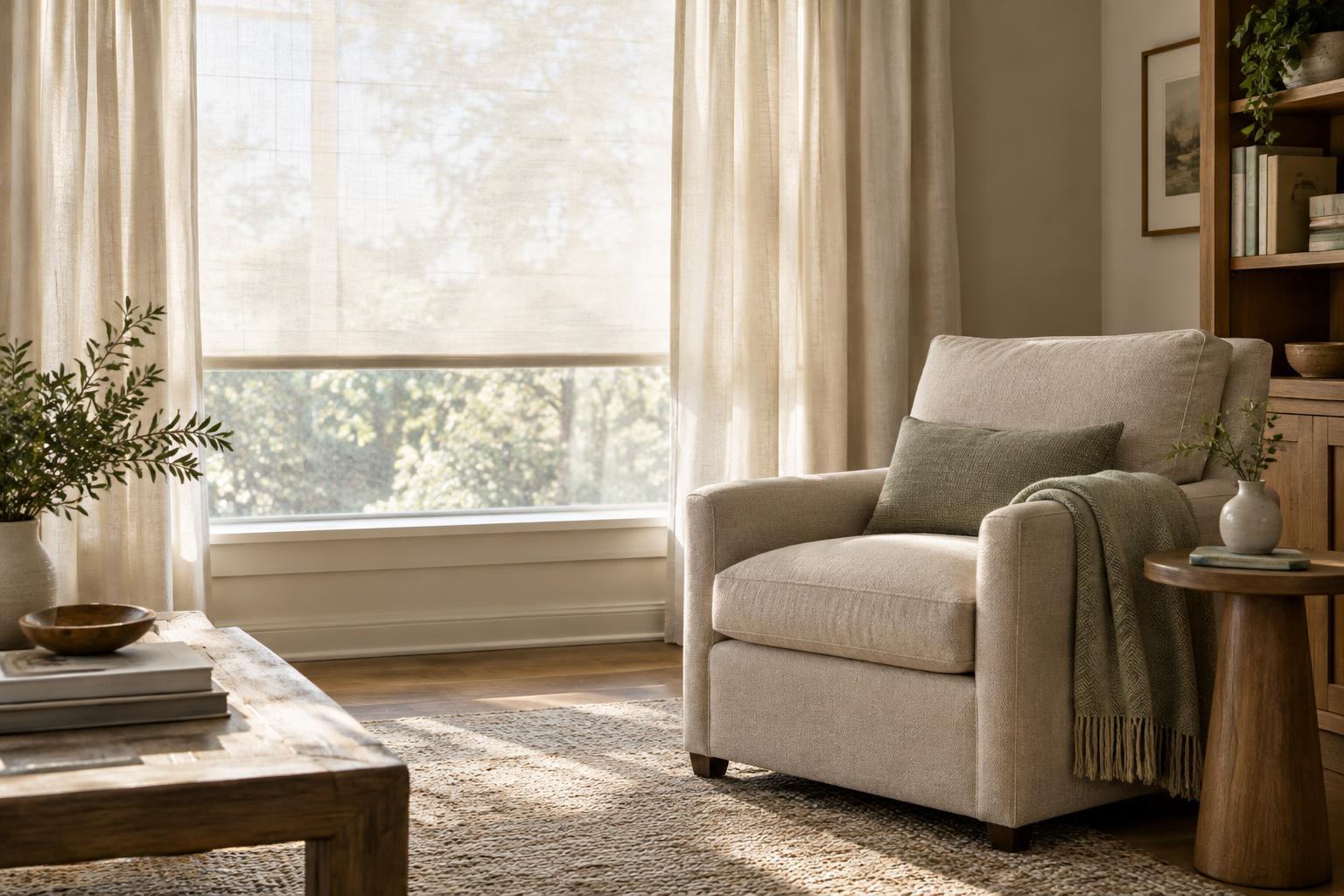
Blinds, shades and curtains give you control over when light reaches fabric. Closing a shade during the brightest part of the day is often more practical than keeping a room dark from morning to evening. A light-filtering covering can soften incoming light while retaining some brightness; a more opaque covering may suit a window where direct sun repeatedly strikes a favorite chair. The degree of protection depends on the material and how completely it covers the window.
For curtains that are themselves fading, a lining or a separate shade between the glass and decorative fabric can take much of the exposure. A lining may also help the face fabric hang neatly, but it is not an invisible fix: it changes the weight and sometimes the appearance of a curtain. Check whether the rod and fixtures can support the extra material, and avoid letting fabric press against damp window surfaces. If considering window film, check that it is suitable for the glazing and follow its installation guidance; different products filter light differently.
Choose and position textiles with exposure in mind
When buying curtains or upholstery for a sunny room, ask for care information and any available guidance on light resistance. Fiber type alone does not tell the whole story: the dye, weave, finish and amount of exposure all matter. If you are choosing between samples, view them in the room at different times of day so you can judge the color in the light they will receive. A softly varied pattern or a middle-toned fabric may make gradual changes less conspicuous than a solid, deep color.
Removable layers offer flexibility. A slipcover, throw or loose cushion cover can shield the parts of a sofa that receive direct sun and can be replaced without reupholstering the whole piece. For curtains, consider whether a separate shade would let you keep a decorative outer fabric you love. These choices do not stop fading entirely; they make exposure easier to manage and future changes easier to address.
Keep wear even with simple habits
Where the design allows, swap curtain panels from side to side and rotate reversible cushions periodically. This spreads exposure across more of the fabric instead of leaving one edge or face in constant sun. Follow the maker’s care instructions when turning or cleaning cushions, since some are shaped or finished to sit only one way. Vacuuming with an appropriate upholstery attachment can remove dust that dulls the surface, though cleaning will not restore color lost to light.
Be cautious with sprays or home treatments marketed as an easy answer to fading. They may change a fabric’s feel or appearance, and their suitability depends on the material. For most rooms, the dependable routine is straightforward: notice the sunny spots, shade them when practical, and move or cover vulnerable textiles before uneven fading becomes the room’s most visible detail.