Start with the vase, not the arrangement
A vase’s height alone does not tell you whether it will stand securely. Its base, weight and shape matter too. Set the empty vase on a clean, level surface and give it a gentle touch near the rim. If it rocks, check whether the problem is an uneven foot, a rough spot underneath or the surface it is standing on. Do not try to correct a pronounced wobble by loading the vase with heavy contents.
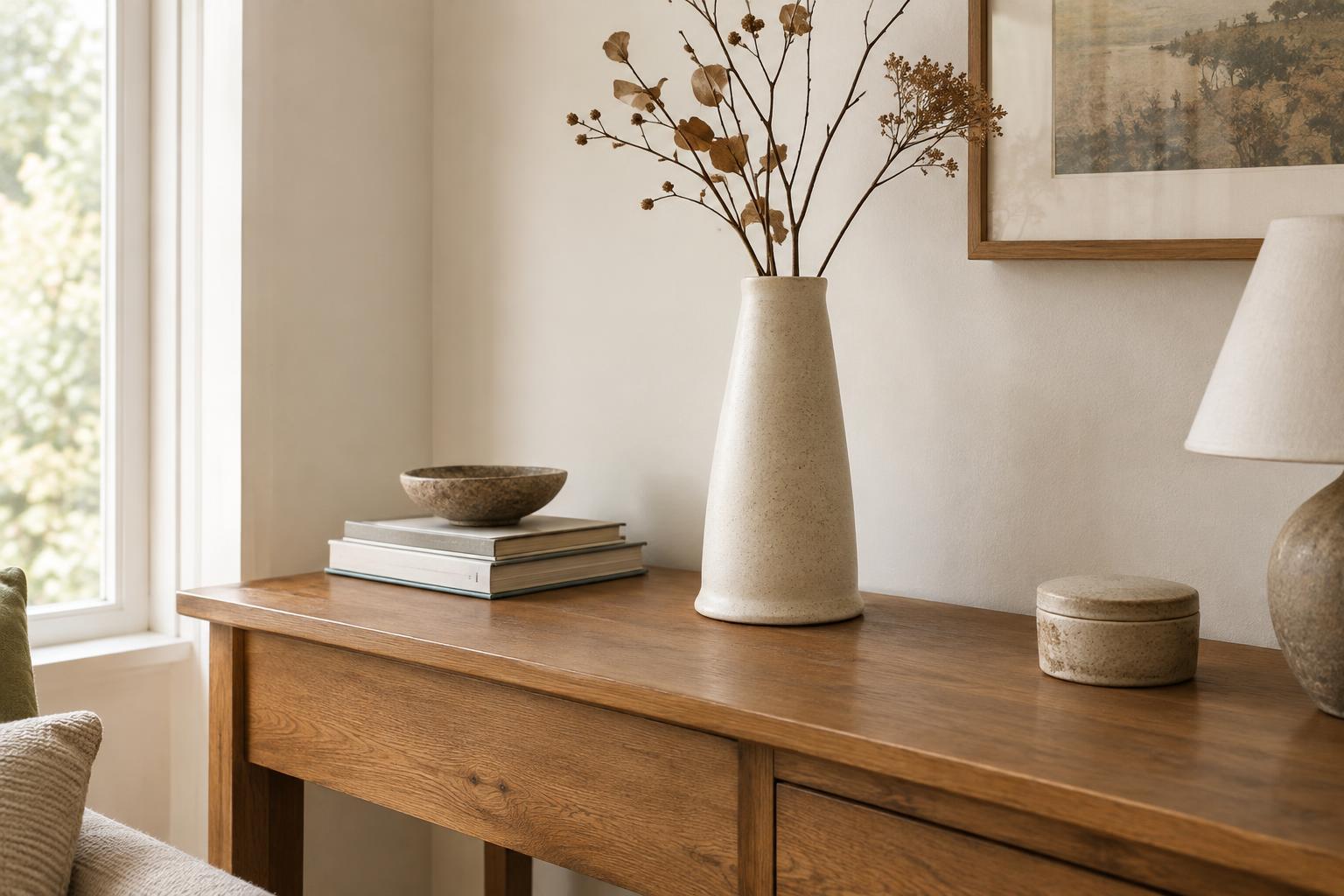
Look at the footprint from above. A narrow base beneath a broad upper body gives the vase less room to lean before it tips. A vase that feels heavy in the hand may still be easy to overturn if much of that weight sits high up. When choosing a place for an unfamiliar piece, begin on a low, sturdy surface where you can observe how it behaves during ordinary use.
Choose a position with room for real life
Keep tall vases back from shelf and table edges, especially where people reach for books, open drawers or pass carrying bags. Leave space around the rim so sleeves and nearby objects cannot catch it. On an open shelf, check that the shelf itself is firmly attached and does not flex noticeably under the vase’s weight. An unstable shelf cannot be made safe by stabilizing the vase alone.
A large dining table may seem like an obvious display spot, but a vase can be knocked while the table is set or cleared. A sideboard away from a walkway may be a calmer choice. If a display spot is regularly bumped by children, pets or everyday activity, moving the vase is usually more reliable than depending on an adhesive to hold it in place.
Keep flowers and branches in proportion
Arrangements can change a vase’s balance considerably. Long branches and stems that spread far beyond the rim may act like levers when touched. Start with a modest arrangement, then step back and check whether its visual width and weight suit the base. Trim stems where appropriate, and avoid forcing a dense bundle into a narrow neck. For especially tall branches, choose a broader, heavier vessel rather than asking a slender vase to support them.
Water adds weight low in the vase, but it is not a dependable fix for an unsuitable shape or location. Use water only if the vessel is intended to hold it, and remember that an arrangement may become less stable as stems are moved or water is emptied. For dry stems, a small internal support can help keep them centered, provided it does not scrape the interior or put pressure on a fragile neck.
Use supports carefully and check them over time
A thin, non-slip mat beneath the base may help on a smooth surface. Cut it smaller than the vase’s footprint so it stays out of sight, and test it first in an inconspicuous place. Some pads can leave marks on furniture finishes or react poorly with delicate surfaces. Soft felt can protect against scratches, but it may slide more easily than a grippy material; choose according to the surface and the problem you are solving.
Removable display putty may be useful for some objects, but it is not suitable for every ceramic or piece of furniture. It can cling to porous, unglazed surfaces or leave residue on certain finishes. If you use it, follow the product directions, test it discreetly and avoid applying it over cracks, repairs or loose glaze. No small pad or putty attachment should be treated as a guarantee against a hard knock.
Finally, reassess the display whenever you change the stems, move the furniture or notice the vase beginning to lean. Stability is not a one-time property of the object: it depends on the vase, its contents, the surface beneath it and what happens around it. A simpler arrangement or a quieter location can often do more than an invisible fix.