Two Ways to Give Clay Its Shape
Handbuilding means shaping clay without relying on a spinning wheel to form the main body. A maker might pinch a small vessel from one lump, build its walls with coils, or join flat slabs to create a box-like form. Wheel throwing begins with clay rotating on a wheel while the maker centers and raises it into a hollow shape. Both approaches still involve handwork, and both can include trimming, attached details and surface decoration.
The method influences what shapes come naturally. Throwing lends itself to round forms such as cups, bowls and cylindrical vases. Handbuilding allows broad flat sides, angular corners, irregular curves and added elements that would be difficult to raise from a spinning mound of clay. Neither approach guarantees a rustic or refined result: careful finishing can make a handbuilt piece look crisp, while a thrown piece can retain lively marks.
Clues in the Silhouette and Surface
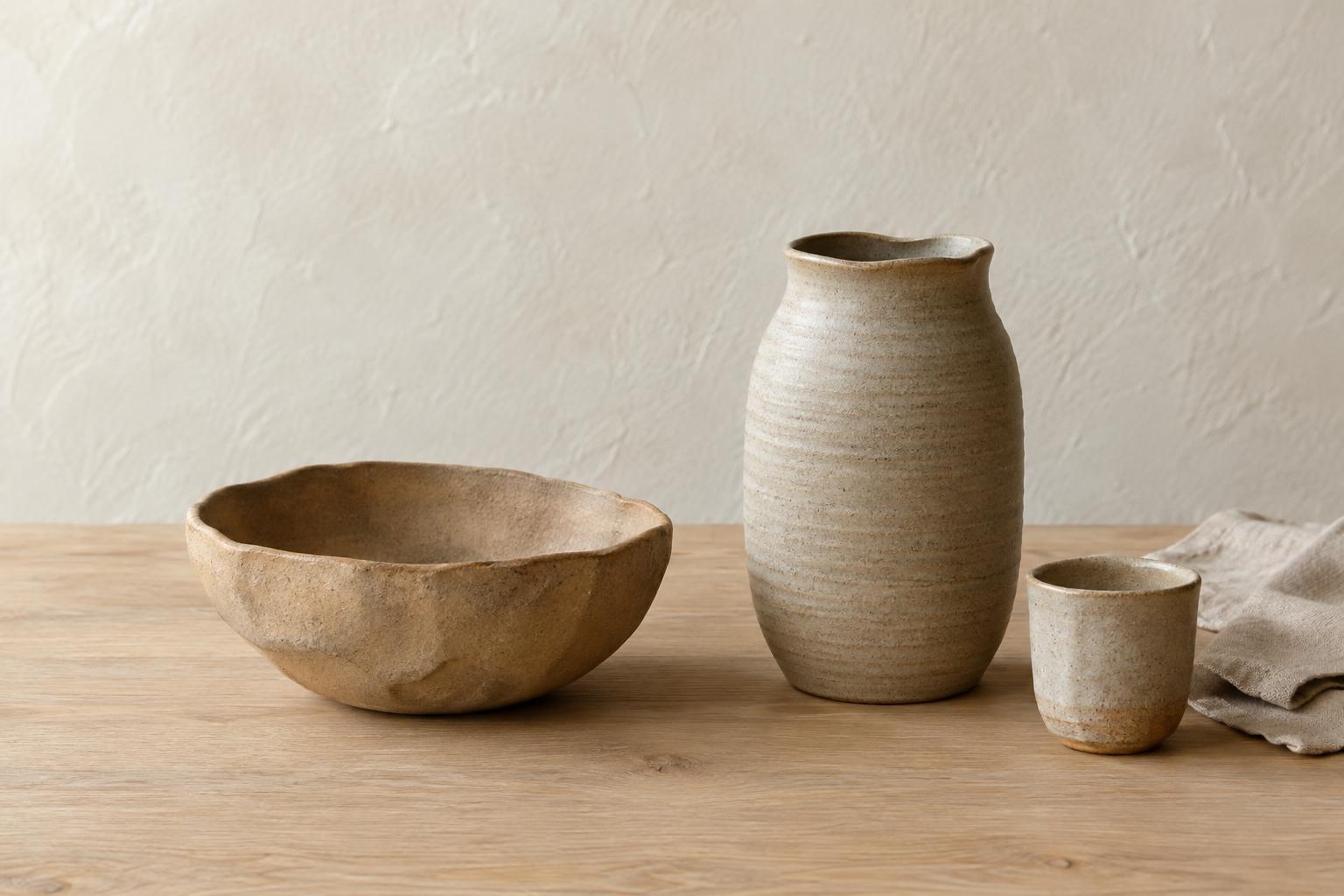
Start with the outline. A consistently circular opening, an even curve around the body and a centered foot may suggest wheel throwing. Subtle horizontal lines inside or outside a vessel can also come from fingers or tools moving against rotating clay. These clues are strongest when several appear together, not when one line or curve catches your eye.
Handbuilt objects may show slightly varied wall contours, a rim that rises and dips, or planes that meet at visible angles. On a slab-built piece, a corner or seam can reveal where sections were joined. Coil-built work may retain rounded bands, although a maker can smooth them away. Pinched forms sometimes show small changes in thickness or gentle finger-shaped depressions. Glaze, carving and polishing can obscure any of these traces, so appearance alone cannot always identify a method.
What to Check Before Choosing a Functional Piece
For an everyday bowl or cup, focus first on how it feels and sits. Place it on a level surface and check whether the base rests securely. Look at the lip: is it comfortable to pour from or drink from, and is it free of sharp spots? A thick wall can feel reassuring but may also make a large piece heavy. A thin wall may feel light yet require more care in handling. Either construction method can produce a practical vessel when the design suits its purpose.
Do not treat a smooth glaze or a familiar shape as proof that an object is suitable for food, water, a dishwasher or a microwave. If its intended use is unclear, ask the maker or seller for care guidance. Check the interior for cracks or rough areas that might make cleaning awkward. For a vase intended to hold fresh stems, confirm that it is meant to contain water; a decorative vessel may be designed for dry branches instead.
Where Each Approach Shines in a Room
A set of wheel-thrown vessels can bring a repeated rhythm to open shelving. Related curves and proportions look cohesive even when glazes vary. A low thrown bowl also makes a useful anchor on a dining table: its circular shape is easy to approach from every side and can hold a small collection of objects without demanding a fixed viewing angle.
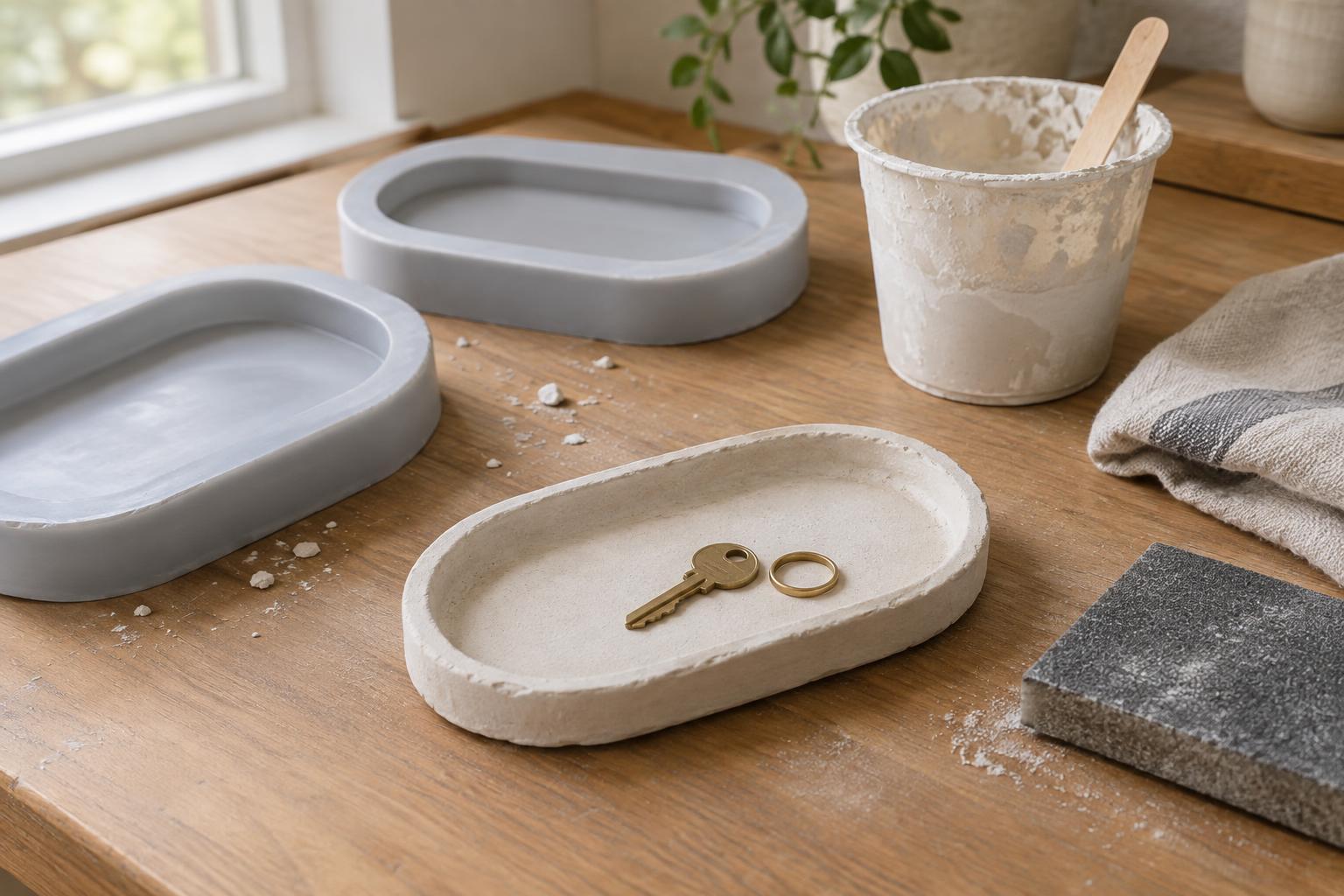
Handbuilt ceramics often reward closer inspection. A slab-built tray can organize keys or small accessories, while a pinched cup can add a compact, tactile accent beside books. An angular handbuilt vase may offer a strong outline against a plain wall. When arranging either type, leave enough space to see its profile and surface. One distinctive piece can have more presence than several crowded together.
Look Beyond the Label
Some ceramics combine methods: a thrown body might receive a handbuilt handle, or a handbuilt form might be refined with tools that leave regular-looking marks. Even the base may tell only part of the story, since feet can be trimmed or added later. Rather than trying to classify every object at a glance, use construction clues as a way to notice the maker’s decisions.
When choosing between two pieces, consider the job, the space and the details you enjoy seeing each day. Check balance, scale, finish and care requirements before deciding. Then let the form speak: a measured, circular vessel and an irregular, assembled one can be equally useful and equally expressive.