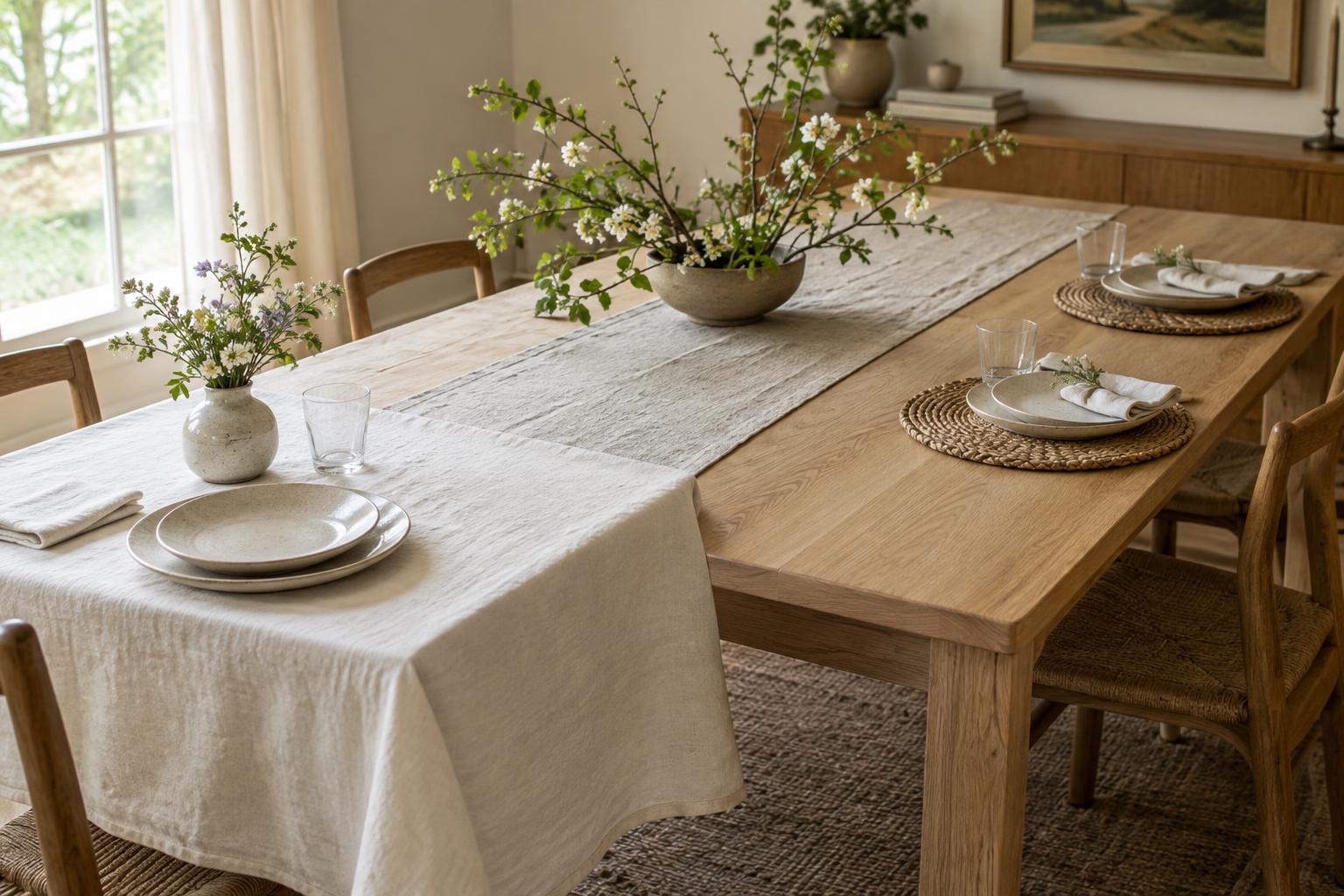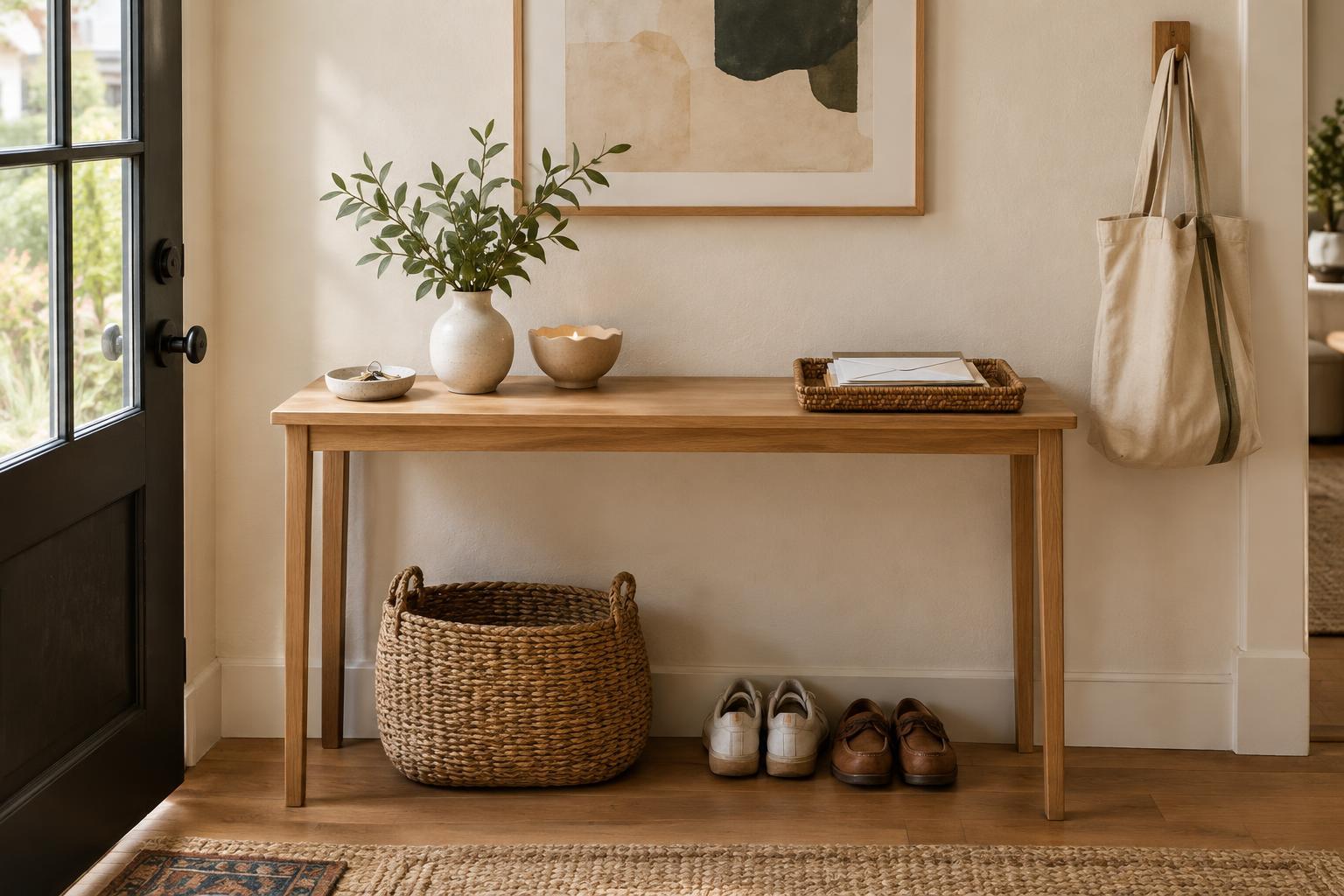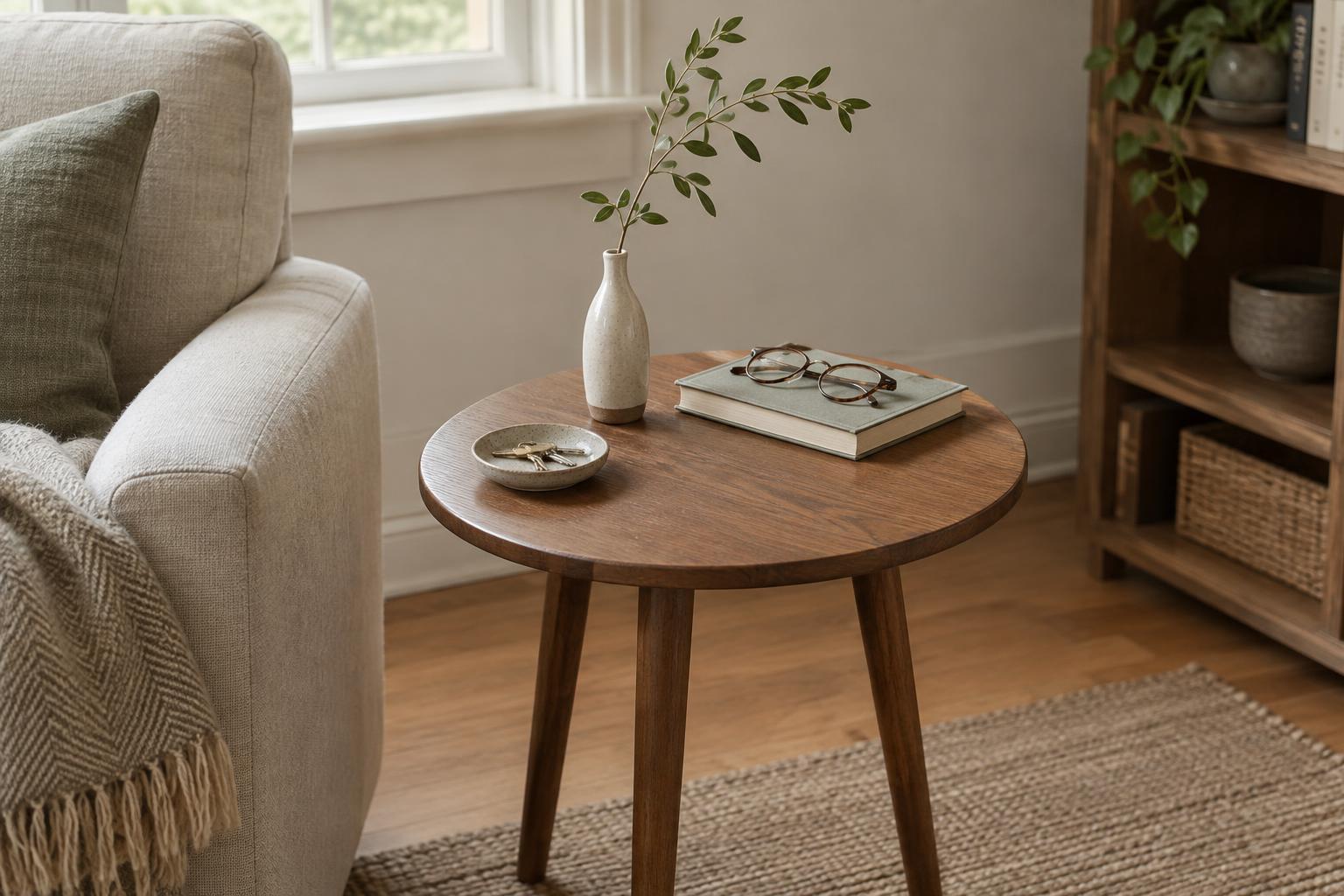
Decide What the Table Needs to Do
Before choosing decorative objects, think about how you use the seat beside the table. You may need a place for a drink, a lamp, a book or a pair of glasses. Those everyday uses should determine the arrangement. A table that looks appealing but has nowhere to set down a mug is likely to become cluttered as soon as someone sits beside it.
Clear the surface and put back only the essentials. If you regularly reach for several small items, consider a shallow dish or tray rather than leaving them loose. It gives keys, a remote or reading glasses a defined place without making each object part of the display. Keep at least one clear area large enough for the item you most often set down.
Choose Objects That Fit the Scale
A small tabletop rarely needs more than two or three visible elements. One may be functional, such as a lamp or coaster, while another adds character through its shape, color or material. A handmade ceramic bowl, a small framed photograph or a compact vase can provide interest without demanding much room. You do not need all three.
Check each object’s footprint, not just its height. A wide vase can occupy more useful space than a taller, narrower one, and an oversized tray may leave no room around its edges. If the table is especially narrow, try a single decorative object beside the essentials. Leaving part of the surface bare makes the arrangement easier to use and lets the chosen piece stand out.
Build a Simple Arrangement with Height and Space
Objects of different heights tend to be easier to distinguish than several items lined up at the same level. A lamp, a low dish and a small book stack, for example, each have a different silhouette. Keep the tallest item toward the back or the side nearest the wall so it does not block the view across the seat. If the table can be seen from all sides, walk around it and check that the arrangement works from more than one angle.
Rather than centering every piece, group related items and leave a patch of open tabletop. A coaster beside a reading lamp feels purposeful; a bowl placed close to a vase can read as one small grouping. Give each object enough space to be picked up without knocking into its neighbor. This matters more than achieving perfect symmetry.
Add Texture Without Adding Clutter
Materials can give a restrained arrangement depth. A matte ceramic piece, a wooden tabletop and a linen-covered book offer contrast even if their colors are quiet. Repeating one color from the nearby chair, cushion or rug can also help the table feel connected to the room. Choose a small number of finishes so the surface does not feel busy.
Use textiles sparingly on a tiny table. A fabric mat can soften a hard surface, but it may bunch up or take more room than expected. A coaster is often the more practical choice for drinks. If you use a tray, make sure it sits steadily and leaves a usable area outside it; the tray should organize the table, not cover it.
Adjust the Display to Daily Life
Sit in the chair or on the sofa and test the setup. Can you reach the lamp switch, set down a cup and retrieve your book comfortably? If a vase gets in the way, move it toward the back or replace it with something smaller. Keep fragile objects away from the edge, and avoid crowding a lamp or its cord with loose items.
A side table does not have to stay styled the same way all year. You might swap a vase for a small bowl, change a book or remove a decorative piece when you need more working space. A successful arrangement is not a fixed display: it is a simple setup that looks welcoming while making the table easy to use.