Start with the trip through the door
Before arranging anything, notice what you carry in and out: keys, letters, a wallet, sunglasses, a transit card or a reusable bag. The most useful console layout follows those habits. Put the items you reach for on the side nearest the door, and leave a clear patch of surface where you can set something down while taking off a coat.
Measure the available surface and check nearby doors, drawers and walkways. A shallow console needs smaller containers than a deep table, and a narrow passage benefits from objects that sit securely against the wall. If several people use the entryway, give shared essentials a central spot and keep individual items in separate trays or compartments.
Give keys and mail distinct landing zones
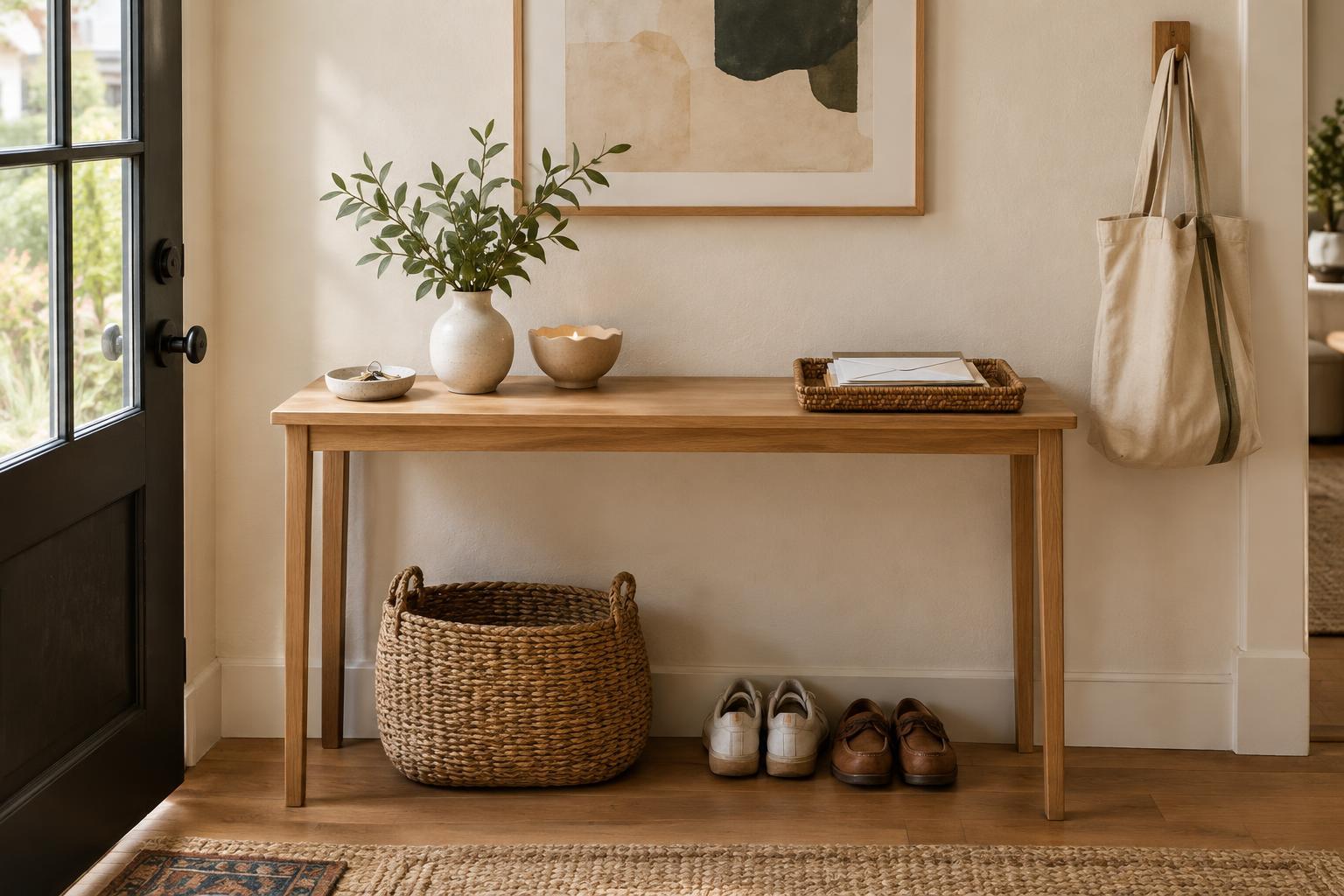
Keys are easiest to find when they have one obvious destination. A low ceramic dish, sturdy tray or small set of wall hooks can work; choose the version you are most likely to use when your hands are full. A dish with a raised edge keeps loose items together, while hooks free up console space. Keep either option away from a crowded cluster of ornaments so it remains easy to reach.
Mail needs a different kind of container because it accumulates. A letter holder or two shallow baskets can separate papers that need attention from those ready to file or recycle. Avoid using a decorative stack as a permanent sorting system: it can hide a document you meant to deal with. A brief, regular clear-out will do more for the look of the console than adding another container.
Build a display around the working space
Once the daily essentials have places, add a small number of pieces that make the console feel like part of the home. An artwork or mirror above it can provide a visual anchor. On the surface, try one taller piece, such as a lamp or vase, alongside a lower group of objects. The change in height creates interest without requiring every inch to be filled.
Let materials connect the display. A ceramic key dish might sit beside a wooden box or a woven basket, with one color repeated in the artwork above. The pieces do not need to match, but a limited mix helps practical storage look intentional. If you use flowers or branches, place them where they will not catch on sleeves or obscure the mail holder. Keep fragile or easily tipped objects clear of the busiest landing zone.
Use the space above and below carefully
The wall can take some pressure off a small console. Hooks for bags or a slim wall pocket for outgoing letters may be more useful than another object on the tabletop. Hang items where they are comfortable to reach without interfering with the door. If you add a mirror, check what it reflects from the entrance; a view of another cluttered area may make the space feel busier.
Below the console, a basket can hold items that do not need to be visible, such as a folded shopping bag or spare accessories. Leave enough room to reach into it without pulling everything out. A stool or footwear storage can also fit beneath some tables, but only if the arrangement leaves a clear walking path. The goal is to use the full area, not to pack it tightly.
Keep the arrangement easy to reset
A console that looks good only when empty will be hard to live with. Test your arrangement for a few days: can you drop your keys in their dish without moving a vase, and can you identify incoming mail at a glance? If not, simplify the display or shift containers closer to where items naturally land. A little unused surface is part of a functional design.
Finish with a quick reset routine suited to your household. Return stray objects to their proper rooms, empty the key dish of things that do not belong there, and sort the papers in the mail holder. These small actions allow the decorative pieces to stay visible. The best-styled entryway console is not a fixed scene; it is one that still works at the end of an ordinary day.