Start with what the table needs to do
Before choosing a textile, look at the table itself. Is its surface something you want to show, or would you rather soften its color and texture? Does it hold meals every day, or is it usually a place for a vase, candles and a few objects? The best foundation makes those uses easier while giving the display a clear shape.
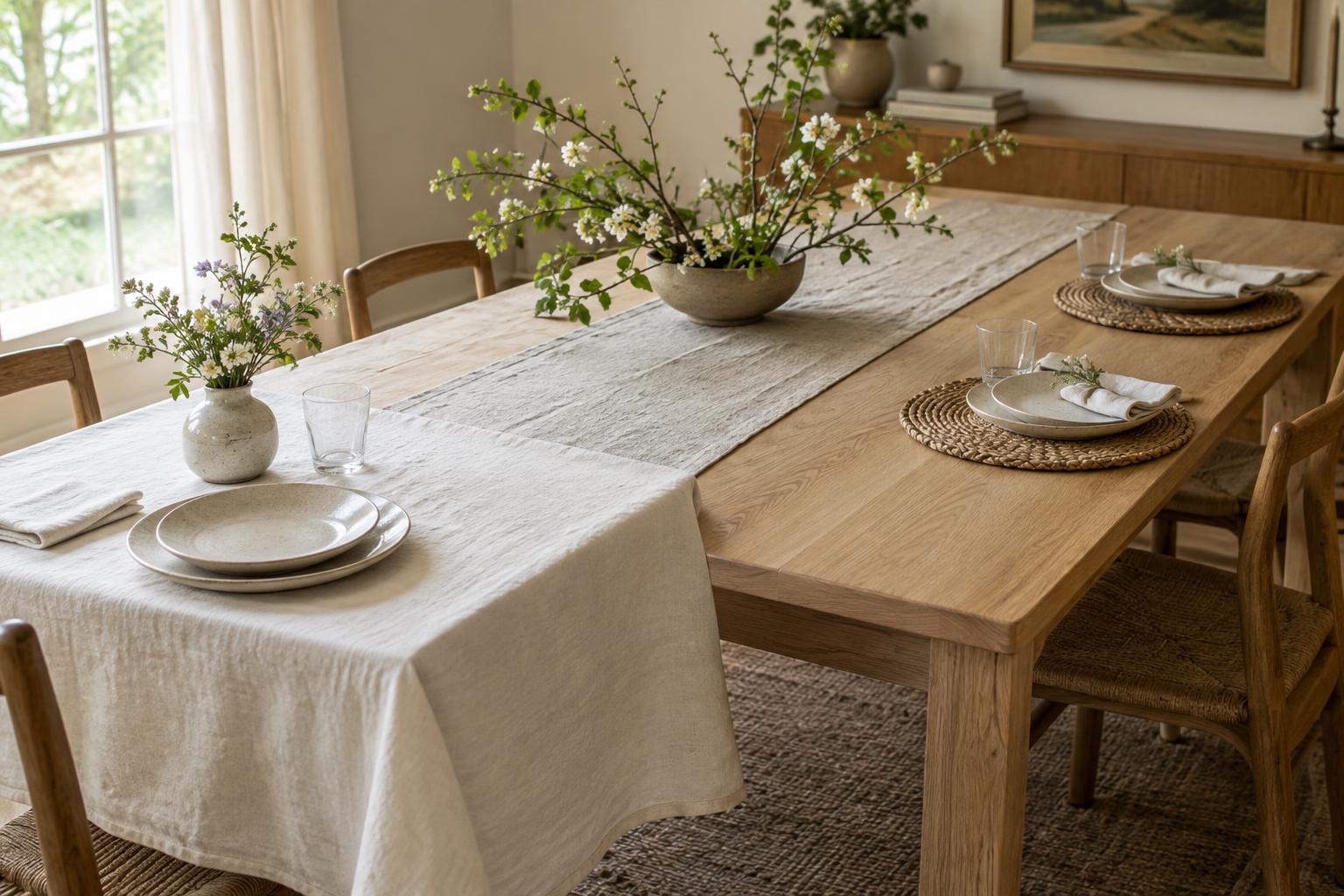
A tablecloth covers the whole surface and can make separate pieces feel like one arrangement. A runner creates a narrow path for objects while leaving much of the tabletop visible. Placemats mark individual places and keep the center open. None is automatically more formal: fabric, color and the way you arrange objects matter just as much as the format.
Choose a tablecloth for a unified backdrop
A tablecloth is useful when you want to change the table’s appearance in one move. It can quiet a busy wood grain, add warmth to a hard surface or introduce a color that ties together mismatched dishes. Because it fills a large area, start with a fabric you will enjoy seeing even when the table is mostly empty. A subtle weave or small pattern often leaves room for decorative objects to stand out.
Measure the tabletop before buying or making one, then decide how far you want the fabric to hang over each edge. A shorter drop can feel relaxed and stays farther from chair seats; a longer drop creates a softer outline but may be less convenient for daily use. Check the corners as well as the sides, especially on a rectangular table. Lay a few plates in place to see whether the cloth stays comfortably clear of diners’ laps and chairs.
Tablecloths also ask for a little planning around care. Crumbs, spills and wax are more noticeable when one textile covers the entire setting. If the table sees frequent meals or craft projects, choose a washable fabric you are willing to clean regularly. A cloth that wrinkles easily can still be appealing if you like an informal look; if you prefer a crisp surface, consider how much pressing you want to do.
Use a runner to give the display direction
A runner draws the eye along the length of a table and provides a natural home for a centerpiece. It works particularly well when you like the tabletop and want its material to remain part of the composition. On a long table, a runner can connect several small objects, such as a low bowl, a bud vase and a pair of candlesticks, without requiring one large centerpiece.
Leave enough uncovered space at the sides for plates and glasses if the runner will stay in place during meals. A very wide runner can compete with place settings; a very narrow one may disappear beneath a large bowl. Try laying a folded length of fabric on the table before committing to a size. You can also place a runner across a table to connect two facing seats, provided its ends do not get in the way of anyone sitting down.
Keep the objects on a runner varied in height but modest in footprint. This helps the fabric remain visible and makes it easier for people to talk across the table. If you use flowers or candles, check sightlines from a seated position rather than judging the arrangement only while standing.
Let placemats define individual settings
Placemats are a flexible choice for a table that shifts between meals and other activities. You can set out only the number you need, clear them away quickly and leave a favorite tabletop exposed. Their repeated shapes also bring order to a collection of different plates or napkins. For a cohesive look, the mats need not match exactly, but a shared color, material or shape helps them read as a set.
Give each place setting enough room for the plate, cutlery and glassware you expect to use. Before choosing a mat, set those pieces on a sheet of paper cut to the same dimensions. This simple test is more reliable than judging a mat on its own. On a small round table, compact round or softly shaped mats may fit more comfortably than wide rectangles.
Placemats leave the table’s center available for a separate arrangement. A shallow tray or bowl can keep that area intentional when the mats are put away. If you choose textured mats, consider how easily you can remove crumbs or wipe up spills; some woven surfaces are better suited to occasional settings than everyday dining.
Build a layered look without crowding the table
You can combine these foundations, but each layer should have a purpose. A quiet tablecloth with contrasting placemats clearly defines seats. A runner over a cloth gives a centerpiece its own zone. If the colors and textures are already lively, one layer may be enough. Lay everything out before adding objects and remove anything that makes the table feel cramped.
For a starting point, pick one feature to lead: the tabletop, the textile or the objects on display. Let the remaining elements support it through simpler colors or smaller patterns. Then sit at the table and imagine using it. A successful foundation should look considered from across the room and still leave space for the ordinary movements of a meal.