Begin with the people, not the objects
A centerpiece has two jobs: give the table a sense of occasion and let everyone enjoy the meal. Before gathering flowers, candles, or decorative objects, sit at the table and look across it. Notice the sightlines between places where people will sit. An arrangement that looks modest from above may feel like a screen at eye level, especially when stems or branches spread outward.
Think about how the table will be used, too. If serving dishes will sit in the middle, the centerpiece may need to move aside or occupy only part of that space. On a narrower table, a small cluster can be more useful than a long display. On a broad table, several low elements may give the center presence without filling it.
Choose a shape that keeps sightlines clear
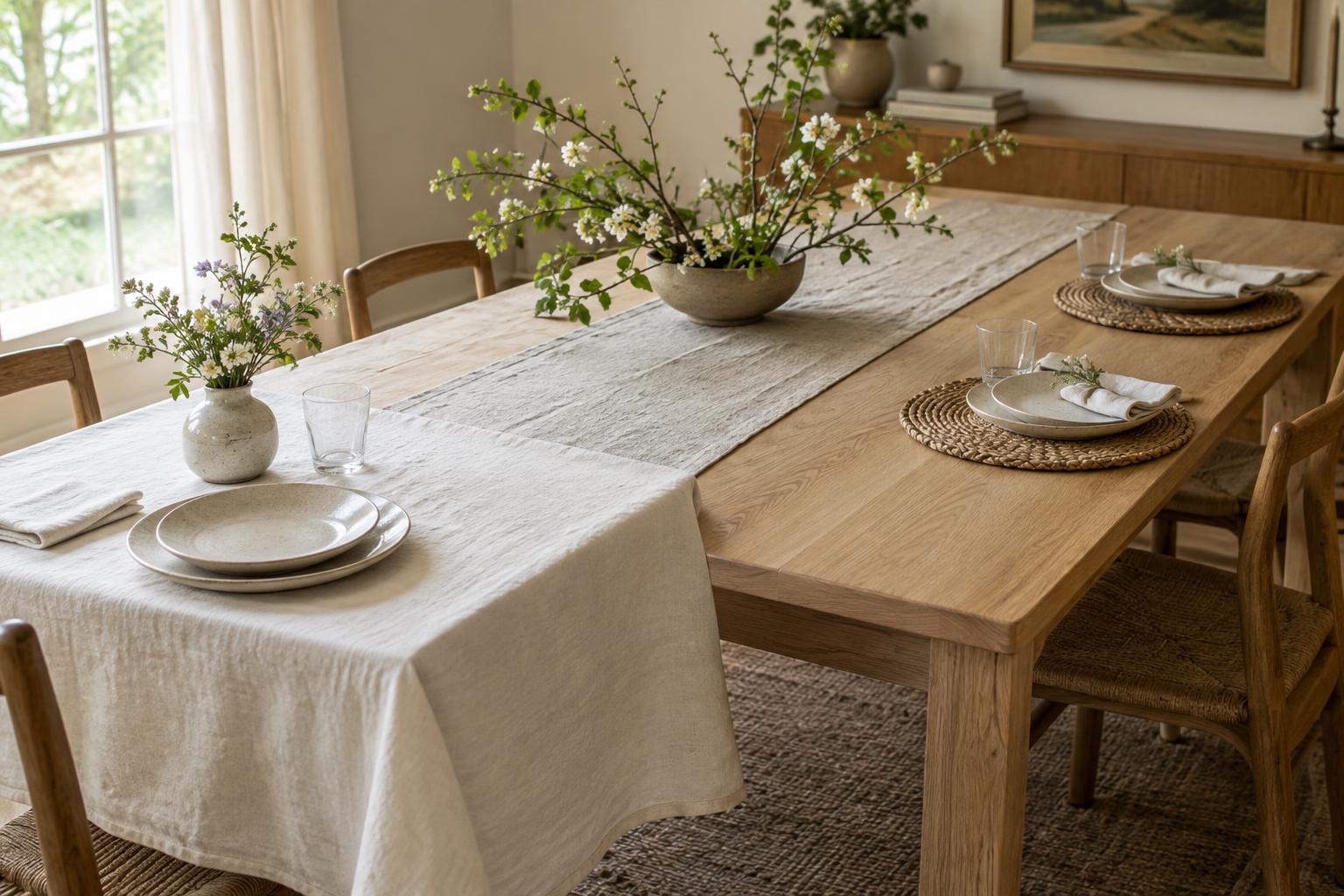
The simplest approach is to keep the main arrangement below seated eye level. A shallow bowl of fruit, a low ceramic vessel with clipped greenery, or a group of small bud vases can create interest while leaving faces visible. If you prefer something tall, choose a form with an open base and most of its visual weight above the line of sight, then test it from every seat before guests arrive.
Pay attention to width as well as height. Wide sprays of foliage can crowd place settings and make it awkward to pass food. Trim stems so they stay within the footprint of their container, and avoid placing fragile pieces where sleeves or serving spoons might catch them. Leave an easy route down the table for hands, plates, and shared dishes.
Build interest with texture and repetition
A low centerpiece need not look flat. Try combining a matte ceramic bowl, a few smooth stones, and greenery with varied leaf shapes. Or place three small vessels in a loose line, each holding a single stem. Repeating a material or color connects the pieces, while slight differences in form keep the arrangement from feeling rigid. A tray can make several objects read as one composition and helps you clear the table quickly.
The table itself can supply part of the design. A linen runner adds texture without taking up the working surface; a woven mat can define a compact center on a round table. If the dishes are patterned, keep the centerpiece relatively quiet. If the tableware is simple, a colorful bowl or a group of glazed objects can provide the accent.
Make room for dining comfortably
Set out the plates, glasses, and any planned serving pieces before deciding that a centerpiece is finished. This quick rehearsal reveals whether the arrangement competes with water jugs, bread baskets, or shared platters. Keep anything that needs frequent attention, such as a salt dish, easy to reach rather than burying it among decorative objects.
Consider scent and stability as well. Strongly fragrant flowers may compete with the food, so lightly scented or unscented materials are often easier at a dining table. Choose containers with steady bases, and add water to cut flowers without filling vessels so high that they spill when moved. If you use candles, place them in secure holders away from foliage and sleeves; if space is tight, leave them out.
Test, adjust, and enjoy the table
A useful final check takes only a moment: sit in two opposite seats and look toward the other side. Can you see a face clearly? Could you pass a dish across the center without lifting it over the arrangement? If not, remove a stem, separate a cluster, or move the centerpiece to a sideboard until after the meal. The best adjustment is often subtraction.
A centerpiece does not have to remain unchanged throughout dinner. A bowl of fruit can be part of the meal, and a tray of small objects can shift aside when serving begins. Treat the arrangement as a flexible part of the table rather than a display that must be protected. When guests have room to settle in, reach for food, and talk easily, even a few thoughtfully placed objects can make the setting feel complete.