Start with the space the shelf gives you
Before placing anything, look at the shelf as a series of open spaces rather than a row to fill. Note its length, depth and the clearance above it. A tall vase that fits physically may still feel cramped if its top nearly touches the shelf above. Set aside any piece that needs to be squeezed in; it will be easier to find a home for it elsewhere than to make the whole arrangement work around it.
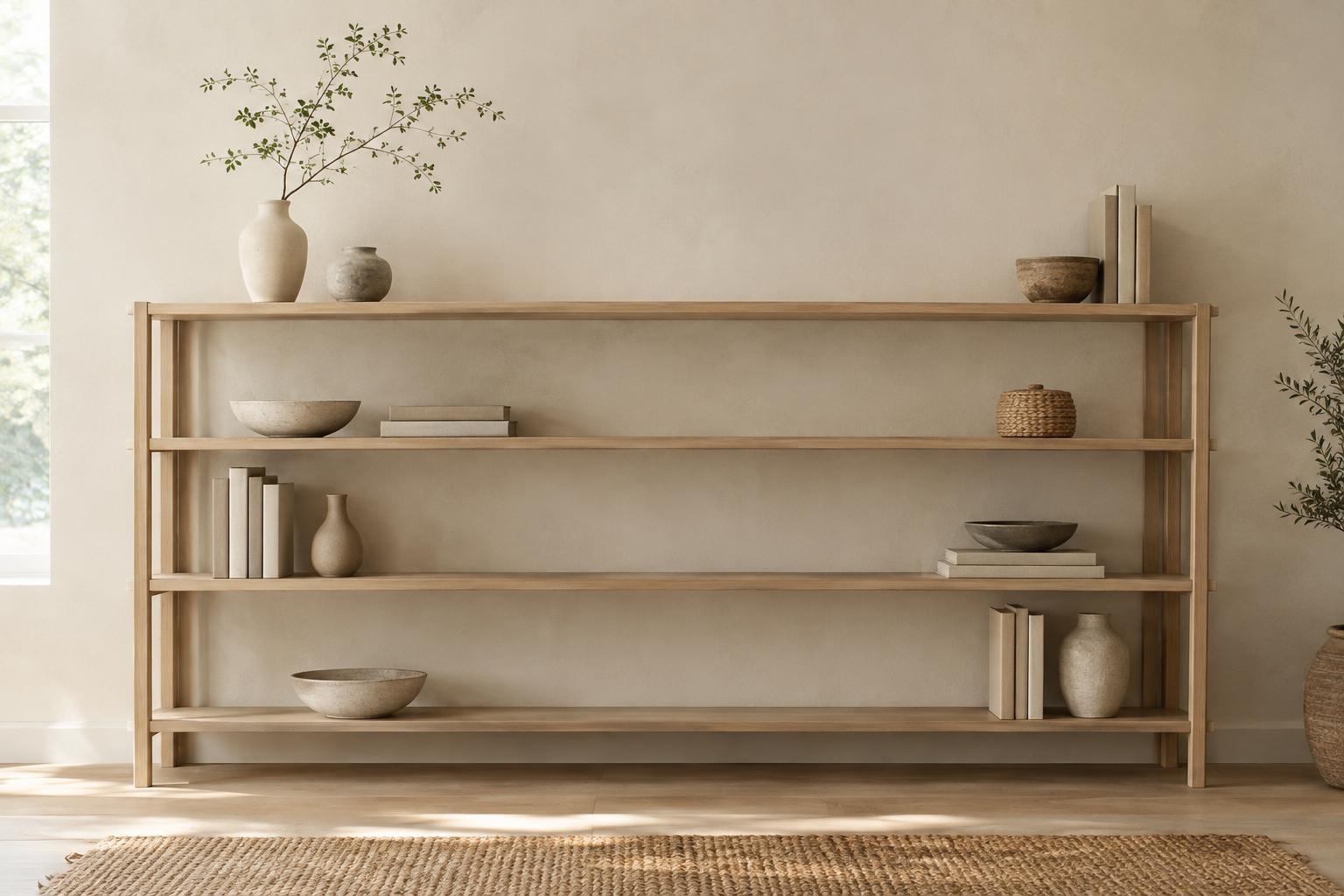
Choose fewer objects than you think you need for the first pass. A mix of a few useful or meaningful pieces—perhaps books, a ceramic vessel, a small box and a framed image—gives you more room to adjust their positions. Leaving part of the shelf visible is not unfinished styling. The open areas help each object register and make the shelf easier to use and clean.
Give each height a job
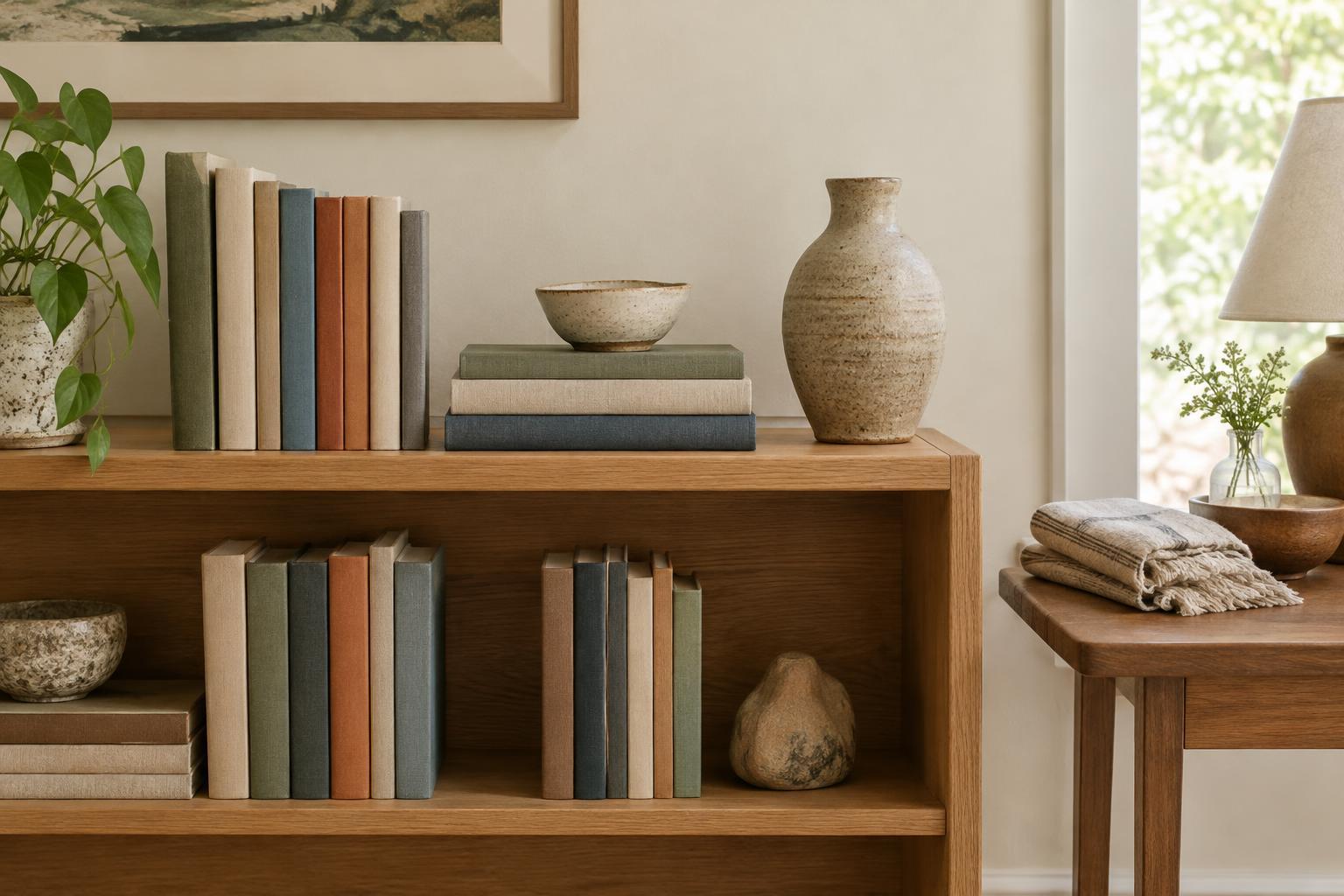
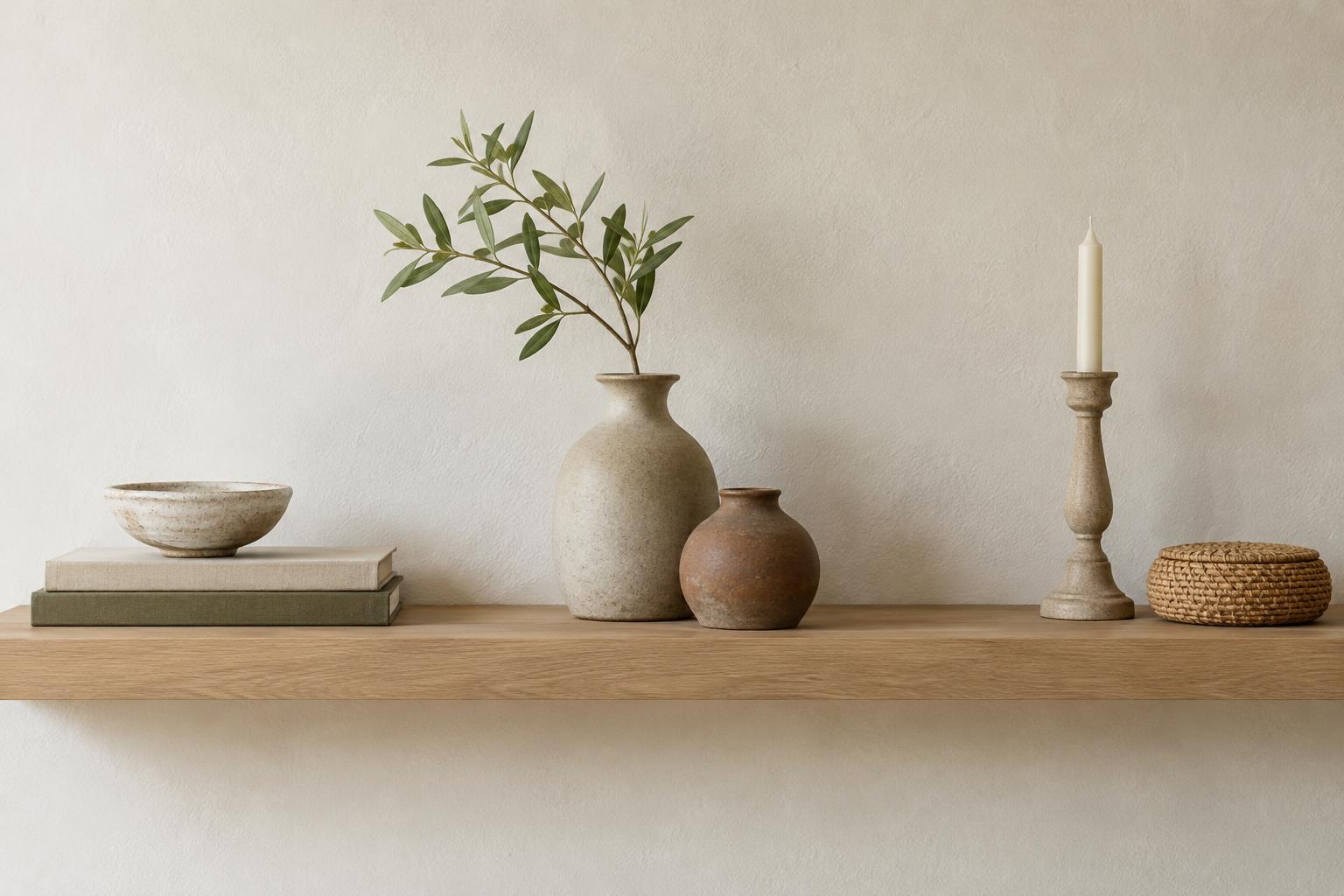
Select one or two tall pieces to act as anchors, then add medium and low pieces around them. An anchor might be a frame, a vase or a short stack of upright books. Avoid lining up every tall item at equal intervals, which can make the shelf feel rigid. Instead, try placing one tall piece toward an end and letting a lower group balance it across the shelf.
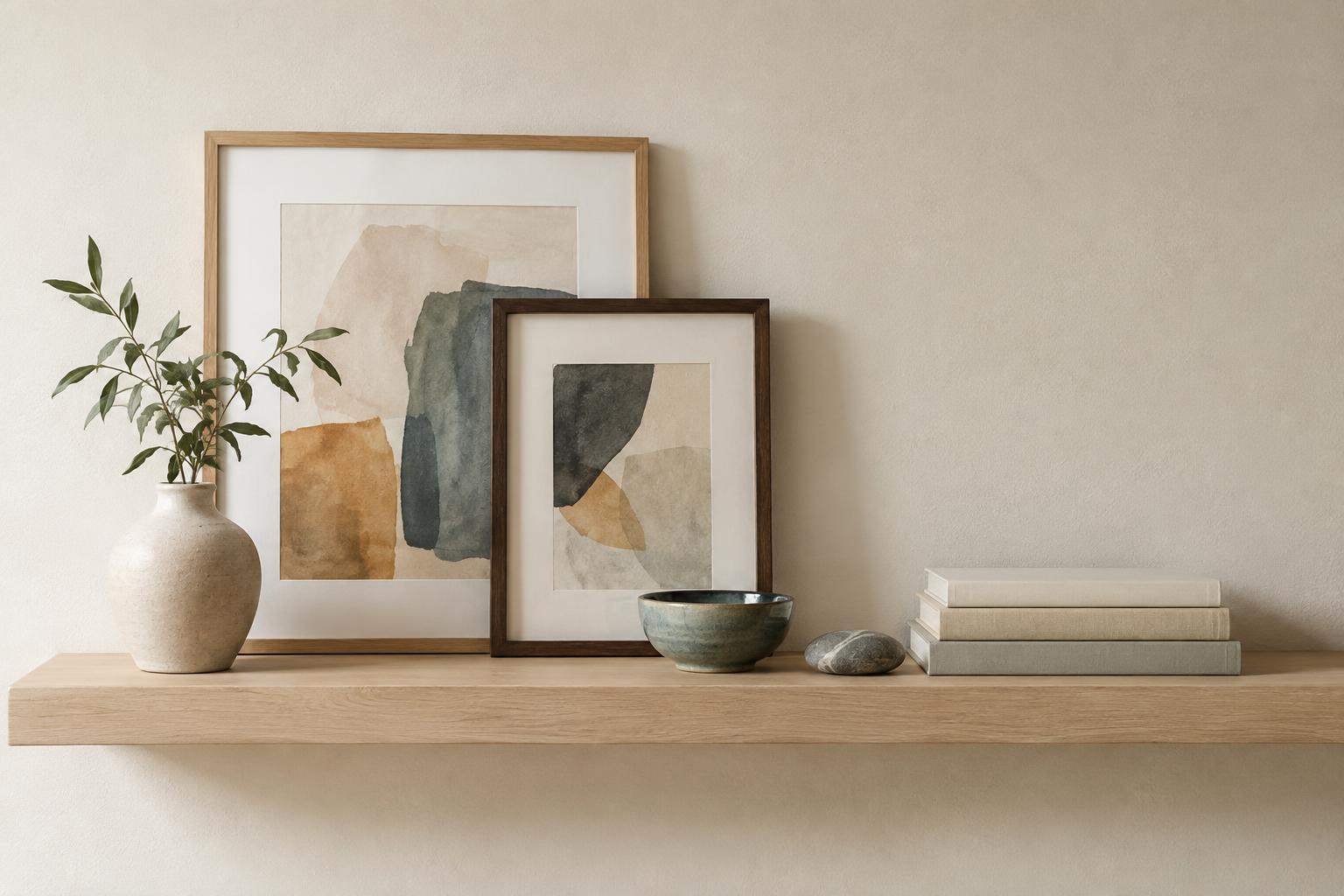
Height does not have to come from buying taller accessories. A small object can sit on a stable stack of books or a low, sturdy box. Raise it only enough to make its shape visible, and check that it does not wobble or block something you reach for often. On a shallow shelf, keep heavier or breakable objects well supported and away from the front edge.
Make small groups instead of one long line
Objects at several heights are easier to read when they form a few distinct groups. Try pairing a tall vessel with a shorter bowl, or setting a framed piece behind a low object if the shelf is deep enough. Allow the outlines to overlap slightly without hiding the details that make each piece appealing. Each group should feel connected, but it need not be symmetrical.
Then leave a visible gap before the next group. The gap can be narrower between related pieces and wider between groups. This simple change keeps varied heights from becoming a continuous, crowded silhouette. If the shelf still feels busy, remove one object from each group before rearranging everything. Editing is often more effective than finding a new position for every piece.
Use depth, shape and color to calm the arrangement
On a deep shelf, move some pieces back and bring others forward to create gentle layers. Keep enough of each item visible that the layers look deliberate rather than like storage. On a shallow shelf, rely more on side-to-side spacing; forcing objects into a front and back row can make them look precarious. Stand back occasionally, because an arrangement that looks spacious up close may read as a dense block from across the room.
Height is only one kind of variation. If every object has a complicated outline or a strong color, even a well-spaced shelf can feel crowded. Let a plain stack of books or a simple bowl sit beside more detailed ceramics. Repeating a material, shape or color in two or three places can also give the eye a path through the display without requiring the objects to match.
Check the result from everyday viewpoints
When the arrangement seems finished, view it from the doorway or from where you usually sit. Notice whether one end feels much heavier, whether a tall piece blocks the view of something behind it, and whether the empty spaces are easy to see. Make one adjustment at a time: shift a group, lower an elevated object or take a piece away. Small changes are easier to judge than a complete reset.
Finally, consider how the shelf is used. Leave reachable space around books, frequently used dishes or anything you move often. A decorative arrangement should tolerate ordinary handling without needing to be rebuilt each time. By giving tall pieces room, grouping smaller objects and protecting a few clear gaps, you can make different heights feel lively rather than crowded.