Start with the books you want to live with
A good book display begins with selection, not arrangement. Gather the books you want close at hand and notice their sizes, colors and condition. Frequently used books belong where their spines are easy to see and reach; a tabletop stack is better suited to volumes you browse occasionally. You do not need to coordinate every cover. A mix of colors can feel settled when the books share something else, such as similar height, subject or binding texture.
Before placing anything, decide what the surface must still do. A shelf may have room for a vase beside a row of books, while a small side table may need clear space for a drink or lamp. Leave that working space first. It is easier to make a pleasing arrangement within a limit than to keep adding objects and wonder why the surface feels crowded.
Use upright books for rhythm and easy access
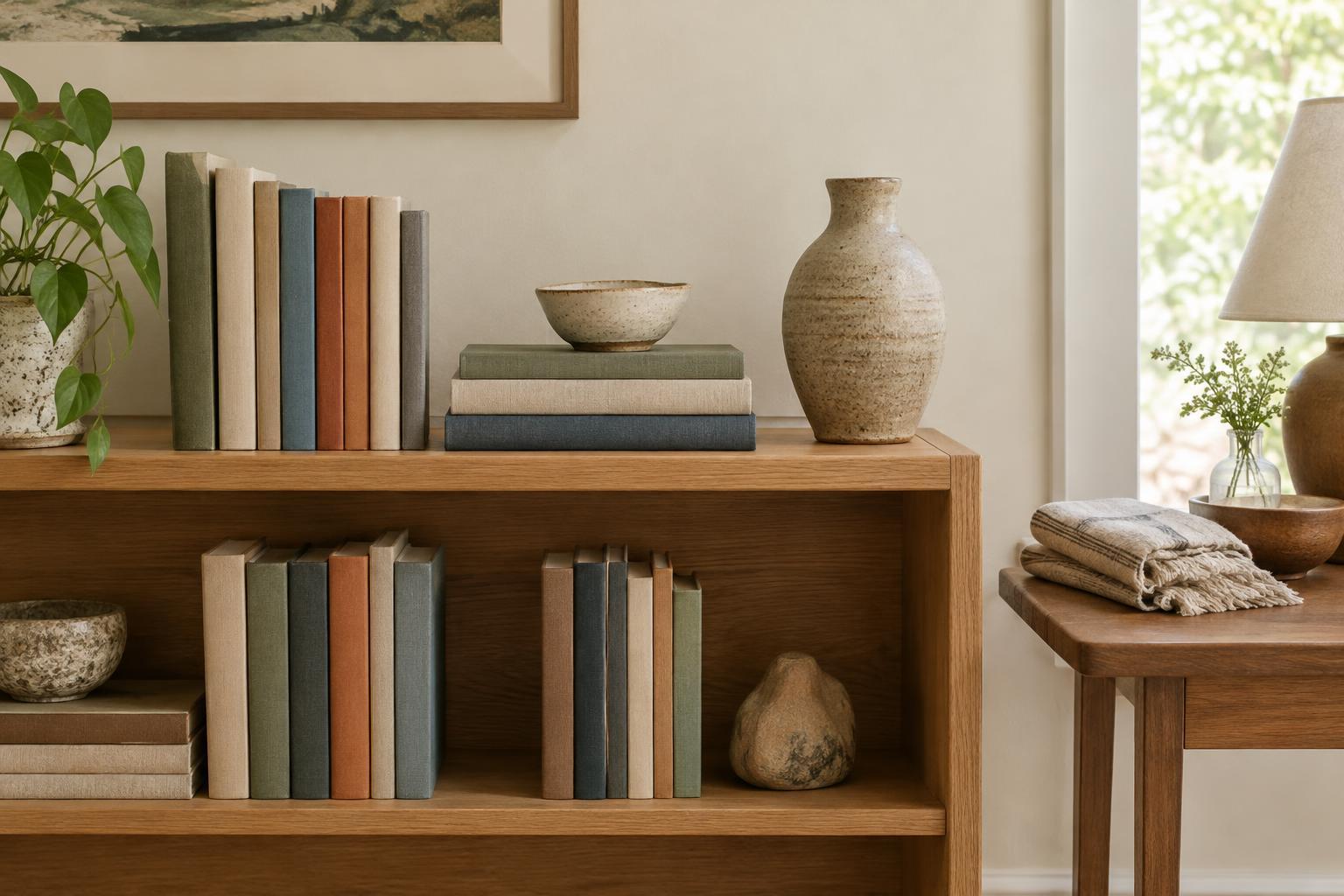
Upright books create a clear line that is useful on shelves. Stand a group together with spines facing outward, then vary the height gently rather than forcing a perfect staircase. Books of similar height can form one calm block; a few taller volumes can mark the end of another. If the group is large, divide it into shorter runs with an object or a little open space between them.
Keep upright books supported so they do not lean heavily on their neighbors. A sturdy bookend works well, and a substantial decorative object can serve the same purpose if it has a broad, stable base and cannot be pushed over easily. Avoid using a fragile vase as the only support for heavy books. Leave enough room to pull out a volume without dragging the whole row forward.
Build stacks with a purpose
Horizontal stacks change the pace of a shelf and make larger books easier to display. Place the broadest, sturdiest volume at the bottom and keep the stack low enough that it remains stable and comfortable to lift from. Aligning the spines gives a tidy look; offsetting the edges slightly can feel more relaxed. Neither approach matters as much as making sure the books sit flat and do not overhang the furniture.
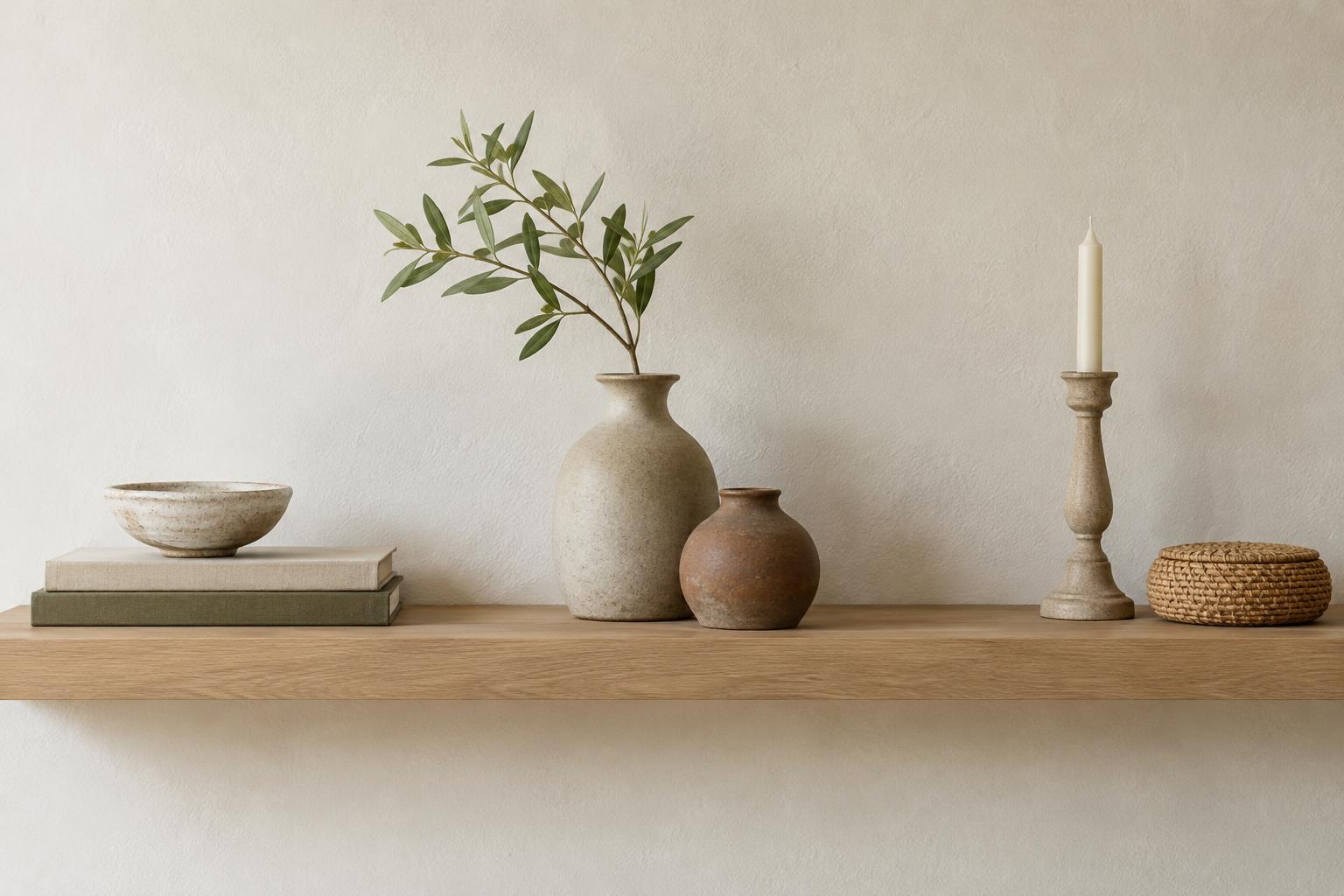
A stack can also raise a small object so it is visible among taller pieces. Choose an object with a smooth, dry base, such as a small ceramic bowl, and set it on a book you do not need to open often. Skip items that hold water, shed material or might scratch a cover. If a book is valuable or delicate, let it stand or lie on its own rather than treating it as a plinth.
Mix objects without filling every gap
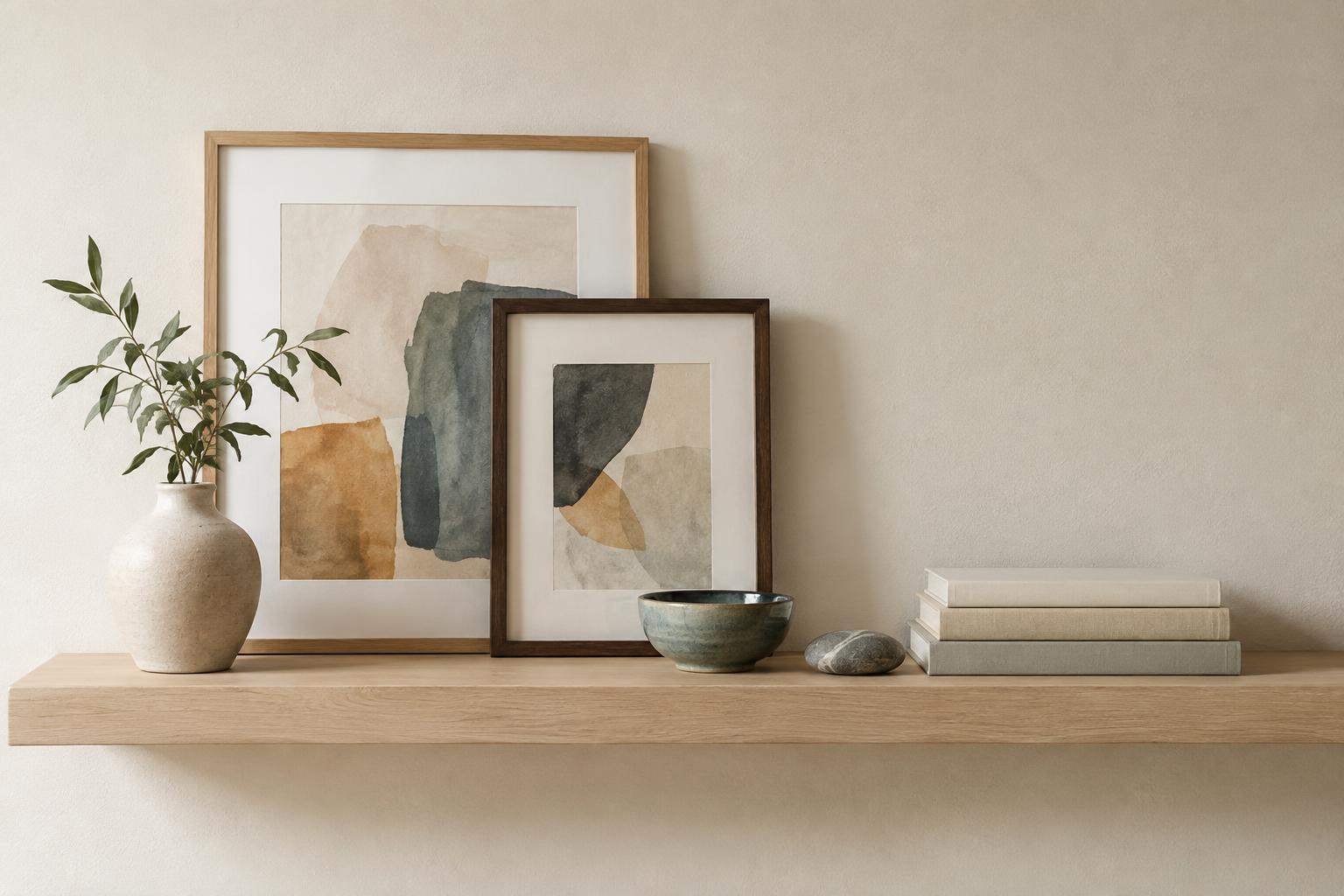
Decorative objects work best when they provide a contrast to the books. Rounded pottery softens a row of straight spines; a small framed image introduces a different plane; a folded textile adds a quiet, tactile note. Try pairing one or two objects with each book group instead of placing something in every opening. An empty patch of shelf allows the shapes you have chosen to register.
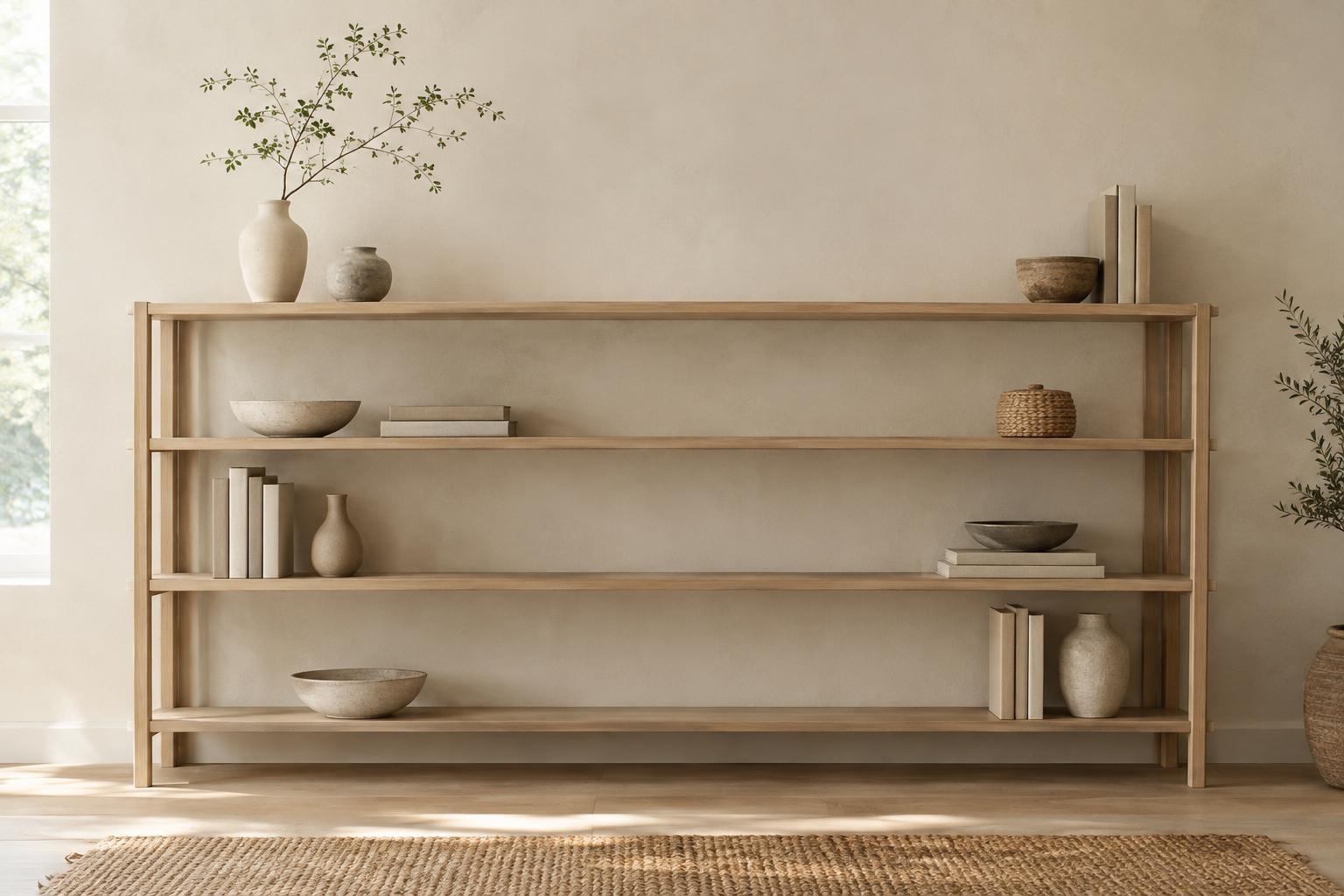
Pay attention to scale and depth as well as color. A tiny object can disappear beside tall books, while an oversized piece may make a narrow shelf feel top-heavy. Set some items slightly forward and others farther back, but keep the front edge clear enough that nothing feels ready to fall. Repeating a material or color once or twice across a bookcase can connect separate shelves without making them identical.
Adjust the display for everyday use
Step back after arranging the books and look for a balance of upright lines, low stacks and open space. You might move one stack to the opposite end of a shelf, remove an object, or turn a book group so the spines are easier to read. A display does not need symmetry to feel balanced; it needs a distribution of visual weight that suits the furniture and the room.
Finally, check the practical details. Keep heavy books on sturdy, lower shelves where possible, and make sure the furniture can bear what you place on it. Protect books from spills, damp areas and prolonged direct sunlight, which can affect paper and covers. Leave frequently read titles accessible. The most inviting arrangement is one you can use and put back together without treating it as a fixed exhibit.