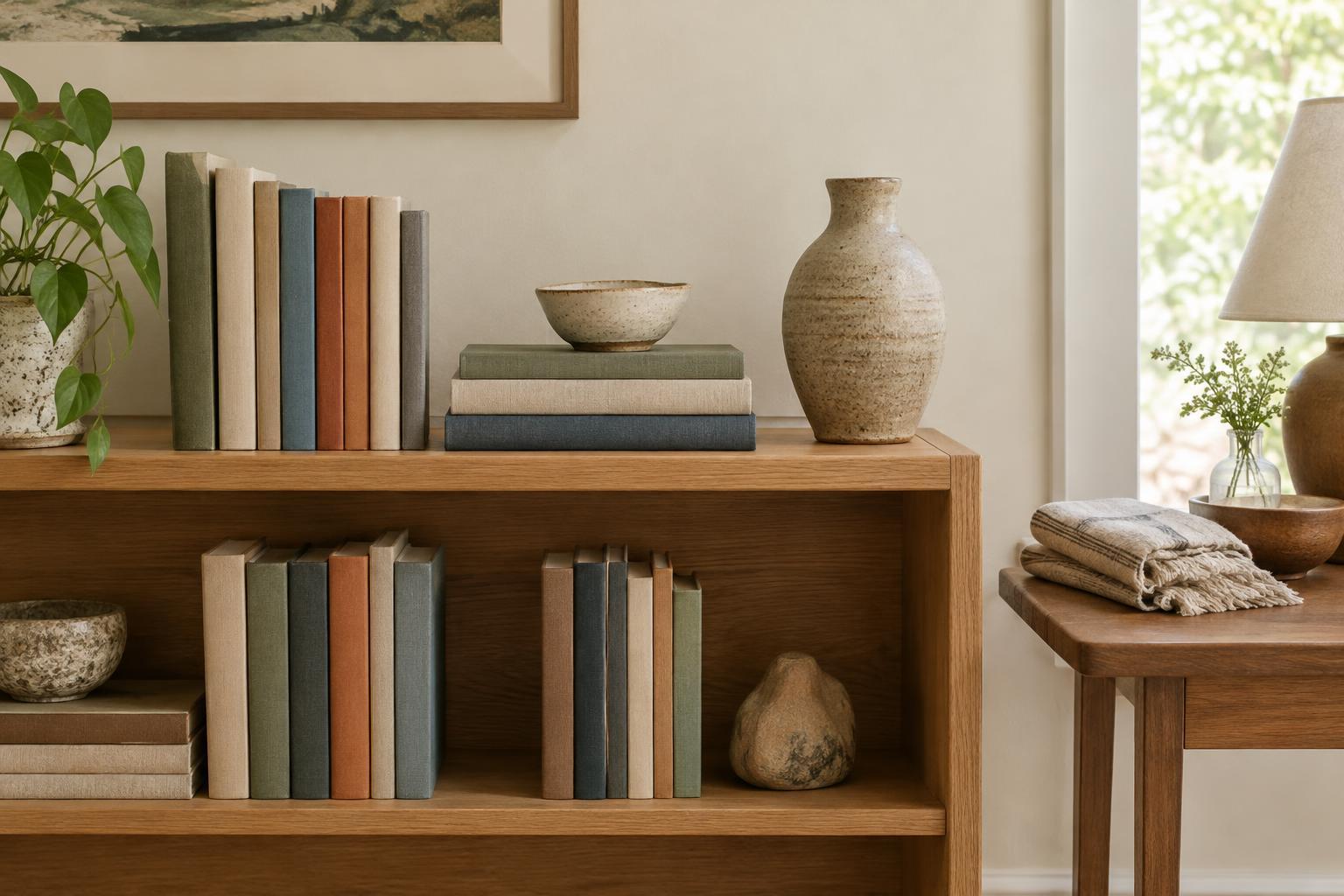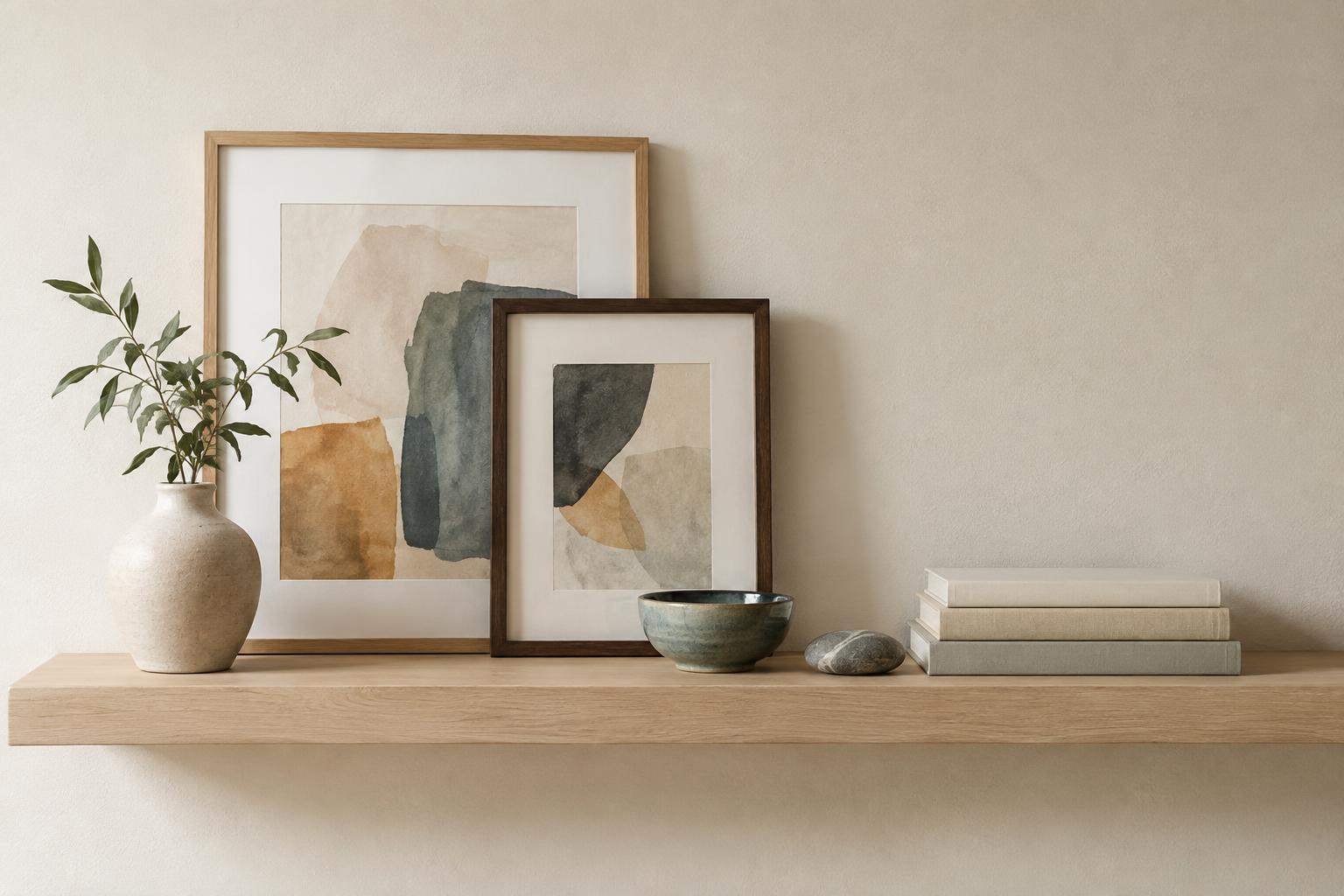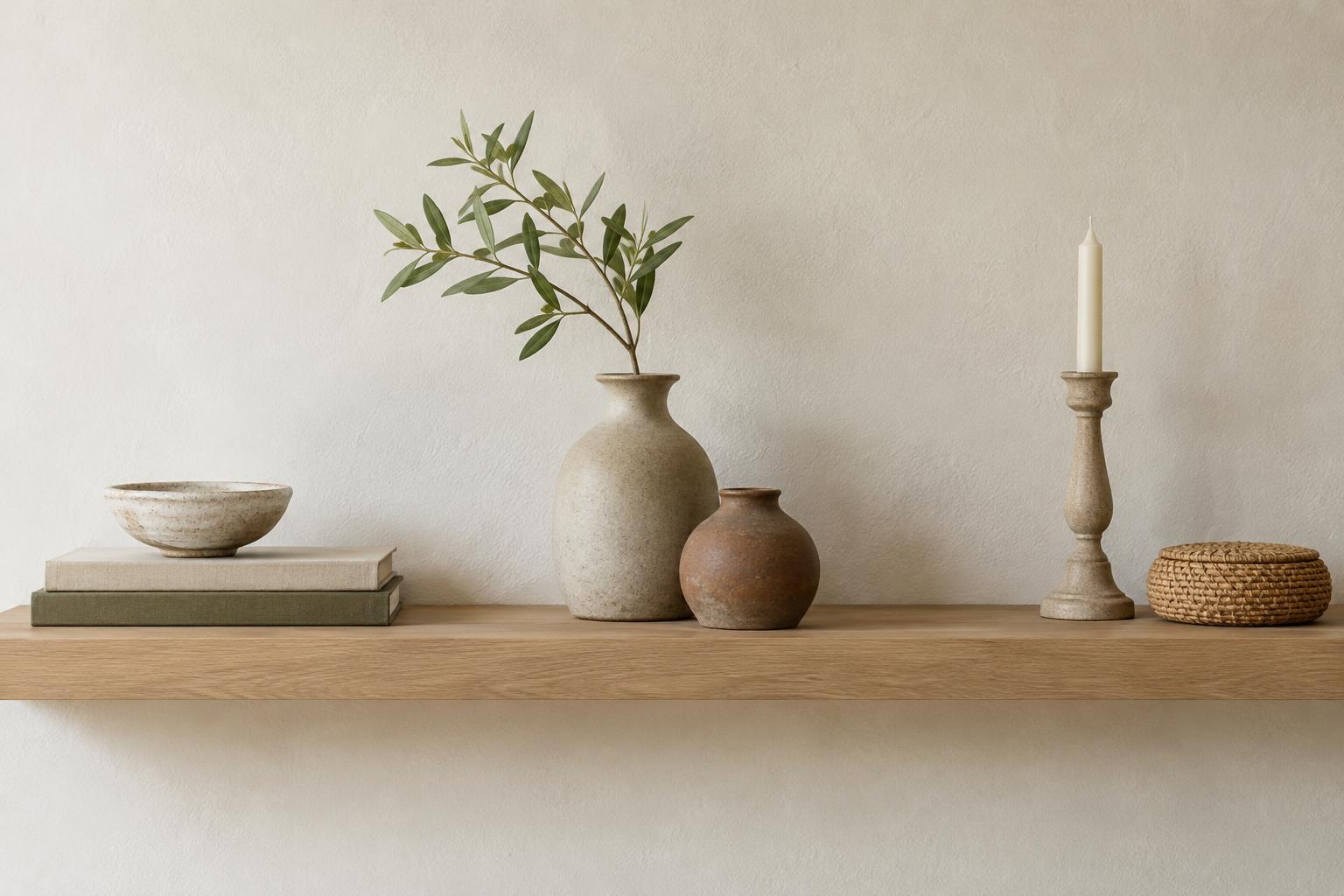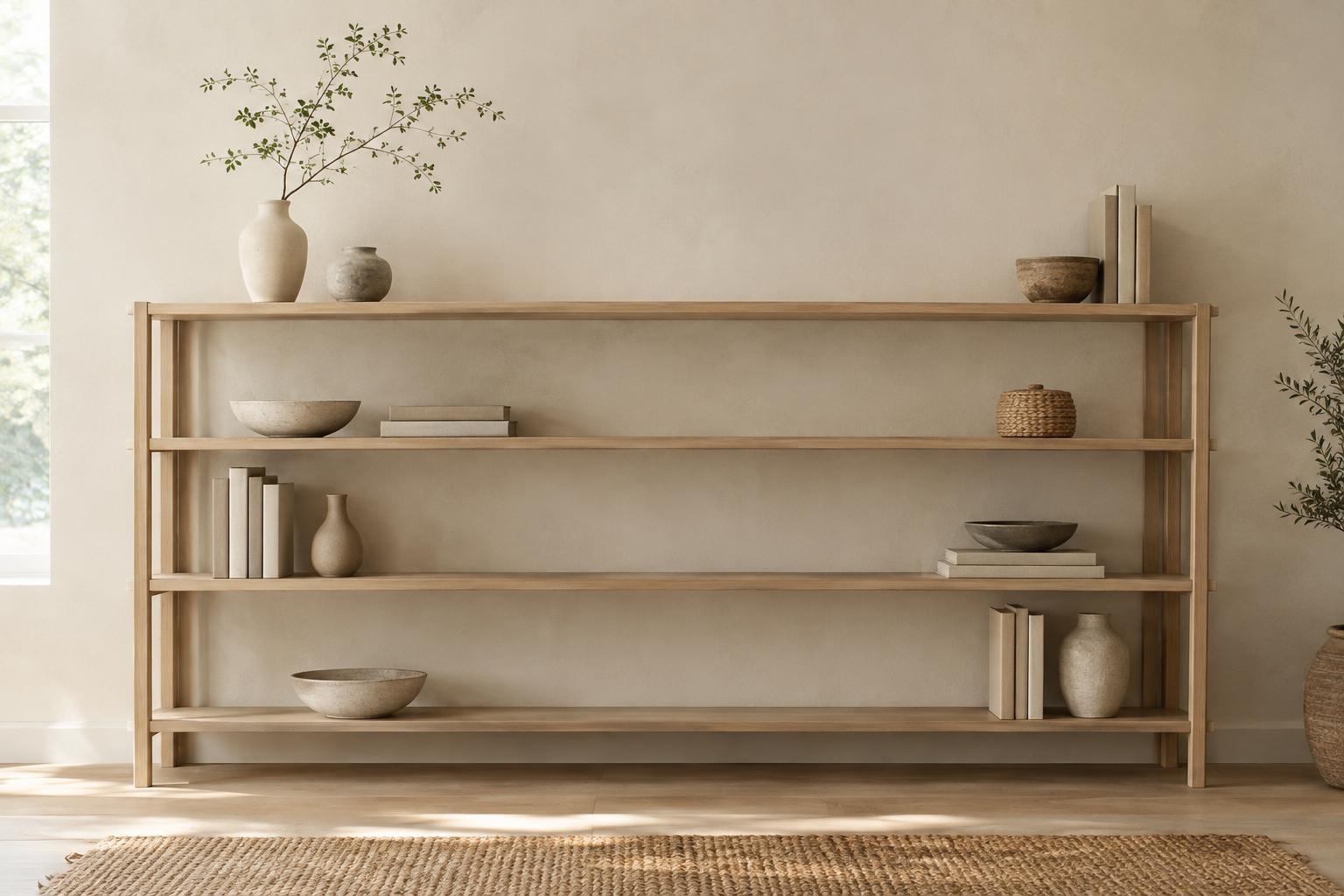
Start by looking at the empty shelf
Negative space is the open area around and between objects. On a shelf, it includes the visible wall behind a collection, the gap above a low bowl and the stretch of clear surface beside a stack of books. These spaces are part of the arrangement, not evidence that you need to buy or make something else. They help the eye recognize individual shapes and give favorite pieces a chance to be noticed.
Before styling, clear the shelf and look at its overall shape. Is it long and low, divided into compartments or set among other shelves? Notice what appears behind it, too. A patterned wall may already provide plenty of visual activity, while a plain wall can make simple outlines especially noticeable. This quick assessment helps you decide how much to display without following a fixed rule about how full a shelf should be.
Give objects room to form groups
Begin with a few pieces you genuinely want to see: perhaps a ceramic vessel, a short stack of books and a small framed work. Arrange them in separate groups rather than spreading every item evenly along the shelf. A group might contain one substantial object or two or three smaller ones that share a color, material or purpose. Leave a visible gap between groups so each reads as a deliberate composition.
The gaps do not all need to be the same width. A broader open area beside a striking vase can make its silhouette feel intentional; a narrower gap may be enough between two quiet book stacks. If everything looks isolated, move a few related items closer together. If the shelf looks crowded, remove one item from each busy area and compare the result. Working by subtraction is often easier than trying to reposition a full shelf.
Balance visual weight, not just physical size
A dark, glossy or strongly patterned piece can draw more attention than a larger pale one. That is its visual weight. Negative space gives a visually strong object breathing room and helps keep one end of a shelf from dominating the other. For example, a dark planter at one end might be balanced by a modest cluster of books and a small vessel farther along, with open shelf between them. The objects need not match or sit in mirror-image positions.
Height affects the empty space, too. Mixing a tall object with low, broad shapes creates different outlines against the wall. Try standing books upright beside a low bowl, or placing a small object on a stable stack of books to lift it into view. Avoid filling every gap above a short piece: that open area can provide a welcome pause. Step back to see whether your eye travels comfortably across the shelf rather than stopping at one crowded spot.
Use color and texture to connect separated pieces
Space between objects works best when the arrangement still feels connected. Repeating a muted color or material in two places can create that connection without adding more items. A glazed ceramic cup might echo a color in a book cover; a woven basket might relate to the texture of a small textile nearby. The connection can be subtle. It gives the eye a reason to move across the gaps instead of seeing each group as unrelated.
Consider the shelf surface and the wall behind it as part of the palette. Against a dark wall, pale objects may stand out clearly even when placed close together. Against a pale wall, similar-toned objects can look softer, so their outlines and the spaces around them may matter more. If a collection feels busy despite having plenty of room, try reducing the number of competing colors or turning a few book spines inward where that suits how you use them.
Check the arrangement in everyday use
Once you have a composition you like, view it from the places you usually see it: the doorway, a nearby chair or across the room. From a distance, small gaps may disappear and tightly packed objects may merge into one shape. Adjust the spacing with those views in mind, then check that books and frequently used items remain easy to reach.
A styled shelf does not have to stay unchanged. Leave enough clear surface to set down an object briefly or to add a new handmade piece later. Keep heavier objects on secure, well-supported surfaces, and make sure nothing sits where it is likely to be knocked off. When the shelf feels both pleasing and usable, stop arranging. The open areas are doing their job.